


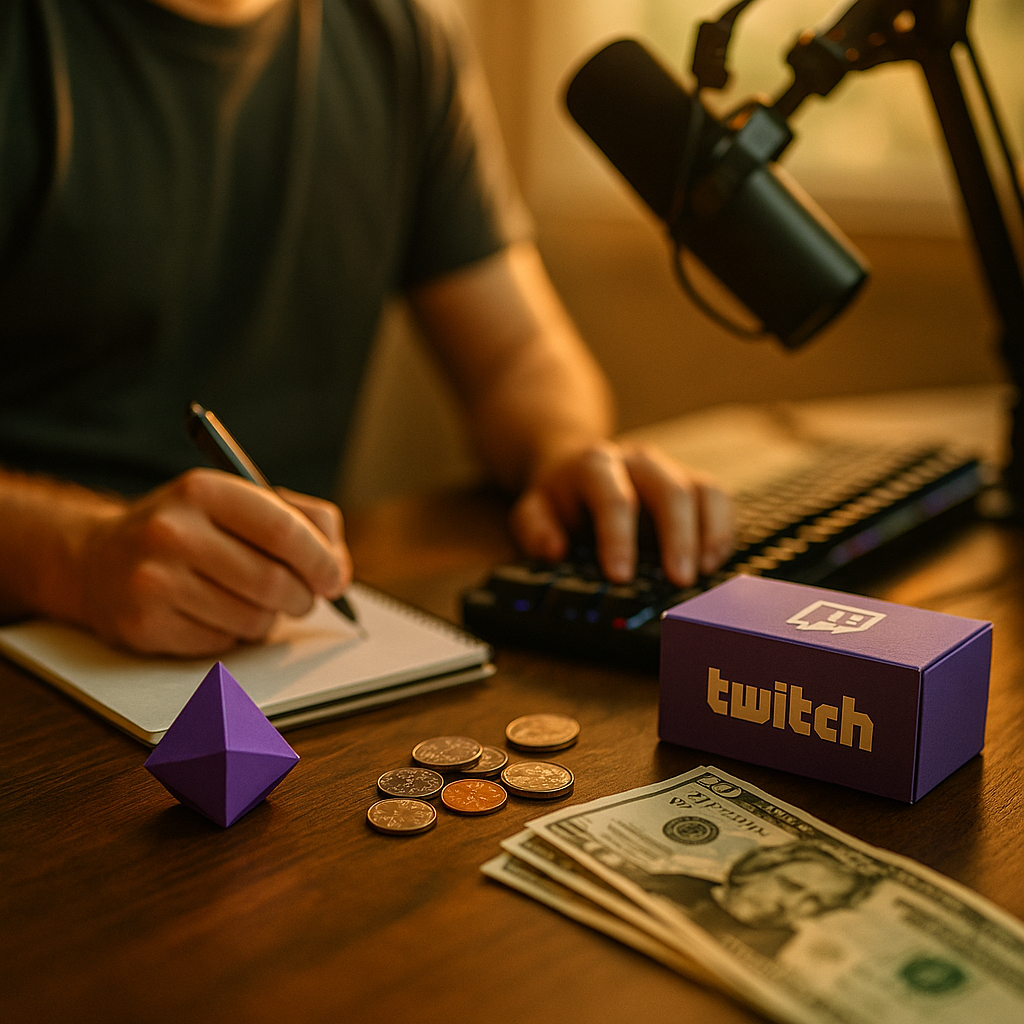
Twitch takes up to 50% of every subscription dollar and 30% of Bits revenue before a creator ever sees a cent. If your brand team is still benchmarking Twitch sponsorship rates against flat CPMs, you’re negotiating blind. The Twitch Bits and Subscriptions economy is the hidden layer underneath every streamer deal, and understanding it is the difference between a fair rate card and a wildly overpriced one.
Bits, Subs, and the Revenue Split Brands Never See
Twitch runs on three monetization rails: ad revenue, Subscriptions (Sub tiers at $4.99, $9.99, $24.99), and Bits, the platform’s virtual currency that viewers cash-purchase to “cheer” during streams. Each Bit is worth roughly one cent to the creator, and Twitch typically keeps 30% of that Bits revenue as its cut.
Subscriptions work differently but the split is just as steep. New and mid-tier partners often sit at a 50/50 split with Twitch, while top-tier partners can negotiate up to 70/30 in their favor after hitting certain thresholds. Amazon Prime members get one free channel sub per month, which counts toward a streamer’s total but pays out at a discounted rate.
A streamer with 3,000 paid subs at the base tier isn’t earning $15,000 a month. After Twitch’s cut, taxes, and Prime sub dilution, real take-home often lands closer to 40-55% of the gross figure.
Why does this matter to a brand buying a sponsorship? Because a creator’s platform income directly shapes their sponsorship floor. Streamers who rely heavily on Bits and Subs for baseline income will price integrations to fill the gap left by Twitch’s revenue share, not the other way around.
module.exports
How Sponsorship Deals Actually Stack on Top of Platform Payouts
Sponsorship money on Twitch rarely replaces platform revenue. It supplements it. Most mid-tier streamers (5,000 to 25,000 average concurrent viewers) treat brand deals as the layer that covers overhead, hardware, and taxes that Bits and Subs alone can’t absorb.
This changes how a brand should structure an offer. A flat sponsorship fee that ignores a creator’s existing Sub and Bits volume is a negotiation mistake. Smart buyers ask for a rough breakdown of platform income (many partners will share ballpark numbers if trust is established) and build the offer around filling the actual gap, not an arbitrary CPM benchmark pulled from YouTube or TikTok.
- Ask for average monthly Sub count and tier mix before quoting a rate.
- Factor in Bits-based cheer events tied to brand keywords or hashtags, since some sponsorships now bundle branded cheermotes.
- Clarify who owns the emote or cheermote IP if the deal includes custom Bits badges.
If you’re comparing Twitch economics against other platforms before locking a budget, the YouTube vs Twitch rates negotiation playbook breaks down where the CPM math diverges and why Twitch deals need their own pricing logic entirely.
Why Subscriber Counts Are a Weak Proxy for Brand Value
Here’s the uncomfortable truth: a channel with 10,000 subs can underperform a channel with 2,000 subs on actual sponsorship ROI. Sub count measures loyalty to the creator’s content, not attention to your brand’s message during a mid-roll read or panel placement.
What matters more is engagement density during the stream window your sponsorship occupies. A creator with a hyper-engaged 800-person Discord and consistent chat velocity often converts better than a creator coasting on inflated Sub numbers from a viral clip six months ago. For a deeper look at why raw audience size keeps losing to engagement quality in brand deals, see engagement density research, which applies just as directly to Twitch as it does to short-form platforms.
Bits activity is actually a stronger signal than Sub count for sponsorship forecasting. Cheer volume spikes during high-energy moments, meaning a brand integration timed around a known Bits-heavy segment (a boss fight, a reveal, a community challenge) tends to land with more attention than one buried in a quiet mid-stream lull.
Negotiating Around the Mechanics: What Smart Brands Do
Once you understand the Bits and Subs split, negotiation shifts from guesswork to leverage. A few tactics that consistently work for brand teams buying Twitch inventory:
- Tie part of the fee to a Sub-goal milestone. Offer a bonus if the stream hits a specific new-sub target during the sponsored segment. This aligns brand spend with platform growth the creator already wants.
- Bundle branded Bits campaigns. Sponsor a limited-time cheermote or Bits challenge (cheer 500 Bits, unlock a branded moment) to create measurable, trackable engagement instead of a passive logo placement.
- Negotiate exclusivity windows around Sub drives. Streamers often run subscription pushes around anniversaries or milestones. Locking sponsorship visibility into that window buys attention during peak viewer stickiness.
- Request raw analytics, not vanity metrics. Concurrent viewers during your specific segment, chat message rate, and Bits cheer volume during the read are far more predictive of ROI than total channel followers.
Rates have been volatile industry-wide, and Twitch is no exception. If your budget was built on last cycle’s numbers, it’s worth revisiting the current baseline. The Twitch rate drops renegotiation guide and the Twitch realized rate drop budget playbook both cover how gaming brands are adjusting spend as effective CPMs compress across the platform.
Compliance and Disclosure Risk in Bits-Funded Campaigns
Branded cheermotes and Bits-triggered brand moments introduce a disclosure wrinkle most legal teams haven’t priced in yet. If a viewer cheers Bits specifically to trigger a branded animation or unlock sponsored content, that interaction can blur the line between organic engagement and paid promotion under FTC guidance on endorsement and material connection disclosure.
The safest approach: require on-screen disclosure any time Bits cheering is tied to a brand mechanic, not just at the top of the stream. A single “#ad” in the stream title isn’t enough if the sponsored interaction happens 40 minutes later during a Bits-triggered segment. Twitch partners who’ve been burned by ambiguous disclosure timing have learned this the hard way, and brand legal teams are increasingly requiring mid-stream disclosure reminders as a contract clause.
Disclosure timing matters as much as disclosure wording. A brand mention disclosed once at stream start and never repeated during a two-hour session creates real compliance exposure.
This mirrors patterns seen on other platforms tightening branded content rules. YouTube’s approach to labeling, for instance, offers a useful template for how mid-content disclosure should work across any live or long-form format, as covered in YouTube’s branded content labeling playbook.
Where AI-Generated Content Complicates the Math
A growing wrinkle: some streamers now supplement live sponsorship reads with AI-assisted highlight clips or AI-generated recap content pushed to other platforms, monetized separately from the Bits and Subs stream economy. If your sponsorship contract only covers the live stream, you may be missing usage rights on the derivative content entirely. Brands running multi-platform amplification off a single Twitch sponsorship should review terms closely, and the considerations around AI-generated content and CPM economics are a useful reference point when scoping what “sponsorship” actually includes.
Industry data on creator monetization continues to shift fast. Platforms reporting on creator economy trends, including eMarketer’s creator economy coverage and Statista’s platform revenue tracking, are worth monitoring quarterly if your team runs recurring Twitch spend. Rates and split structures aren’t static, and neither should your rate cards be.
Next step: before your next Twitch sponsorship negotiation, ask the creator for their approximate Sub tier mix and average Bits cheer volume per stream. That single data point will tell you more about real audience value than any follower count on the profile page.
FAQs
What percentage of Twitch Subscriptions revenue do creators actually keep?
Most partners start at a 50/50 split with Twitch, meaning half of every subscription dollar goes to the platform. Top-tier partners who hit specific growth thresholds can negotiate up to a 70/30 split in their favor, though this requires sustained channel performance and direct negotiation with Twitch.
How much is a Twitch Bit worth to the creator?
Each Bit is worth approximately one cent, and Twitch typically retains around 30% of gross Bits revenue before payout. Viewers purchase Bits in bundles, and creators receive payouts once they cross the platform’s minimum payment threshold.
Should brand sponsorship fees factor in a streamer’s Sub and Bits income?
Yes. Streamers who rely heavily on platform revenue often price sponsorships to cover the gap left after Twitch’s cut, taxes, and Prime sub dilution. Ignoring this context leads brands to either overpay relative to actual reach or lowball creators who then decline future deals.
Are branded cheermotes considered sponsored content under disclosure rules?
If a viewer’s Bits cheer triggers a branded animation, badge, or sponsored moment, that interaction likely qualifies as paid promotion and requires clear, repeated on-stream disclosure, not just a one-time mention at the start of the broadcast.
Is Sub count a reliable metric for evaluating Twitch sponsorship value?
Not on its own. Sub count reflects loyalty to the creator, not attention during a specific sponsored segment. Chat engagement rate, concurrent viewership during the brand mention, and Bits cheer activity are stronger predictors of sponsorship ROI than total subscriber totals.
Top Influencer Marketing Agencies
The leading agencies shaping influencer marketing in 2026
Agencies ranked by campaign performance, client diversity, platform expertise, proven ROI, industry recognition, and client satisfaction. Assessed through verified case studies, reviews, and industry consultations.
Moburst

-
2

The Shelf
Boutique Beauty & Lifestyle Influencer AgencyA data-driven boutique agency specializing exclusively in beauty, wellness, and lifestyle influencer campaigns on Instagram and TikTok. Best for brands already focused on the beauty/personal care space that need curated, aesthetic-driven content.Clients: Pepsi, The Honest Company, Hims, Elf Cosmetics, Pure LeafVisit The Shelf → -
3

Audiencly
Niche Gaming & Esports Influencer AgencyA specialized agency focused exclusively on gaming and esports creators on YouTube, Twitch, and TikTok. Ideal if your campaign is 100% gaming-focused — from game launches to hardware and esports events.Clients: Epic Games, NordVPN, Ubisoft, Wargaming, Tencent GamesVisit Audiencly → -
4

Viral Nation
Global Influencer Marketing & Talent AgencyA dual talent management and marketing agency with proprietary brand safety tools and a global creator network spanning nano-influencers to celebrities across all major platforms.Clients: Meta, Activision Blizzard, Energizer, Aston Martin, WalmartVisit Viral Nation → -
5

The Influencer Marketing Factory
TikTok, Instagram & YouTube CampaignsA full-service agency with strong TikTok expertise, offering end-to-end campaign management from influencer discovery through performance reporting with a focus on platform-native content.Clients: Google, Snapchat, Universal Music, Bumble, YelpVisit TIMF → -
6

NeoReach
Enterprise Analytics & Influencer CampaignsAn enterprise-focused agency combining managed campaigns with a powerful self-service data platform for influencer search, audience analytics, and attribution modeling.Clients: Amazon, Airbnb, Netflix, Honda, The New York TimesVisit NeoReach → -
7

Ubiquitous
Creator-First Marketing PlatformA tech-driven platform combining self-service tools with managed campaign options, emphasizing speed and scalability for brands managing multiple influencer relationships.Clients: Lyft, Disney, Target, American Eagle, NetflixVisit Ubiquitous → -
8

Obviously
Scalable Enterprise Influencer CampaignsA tech-enabled agency built for high-volume campaigns, coordinating hundreds of creators simultaneously with end-to-end logistics, content rights management, and product seeding.Clients: Google, Ulta Beauty, Converse, AmazonVisit Obviously →