


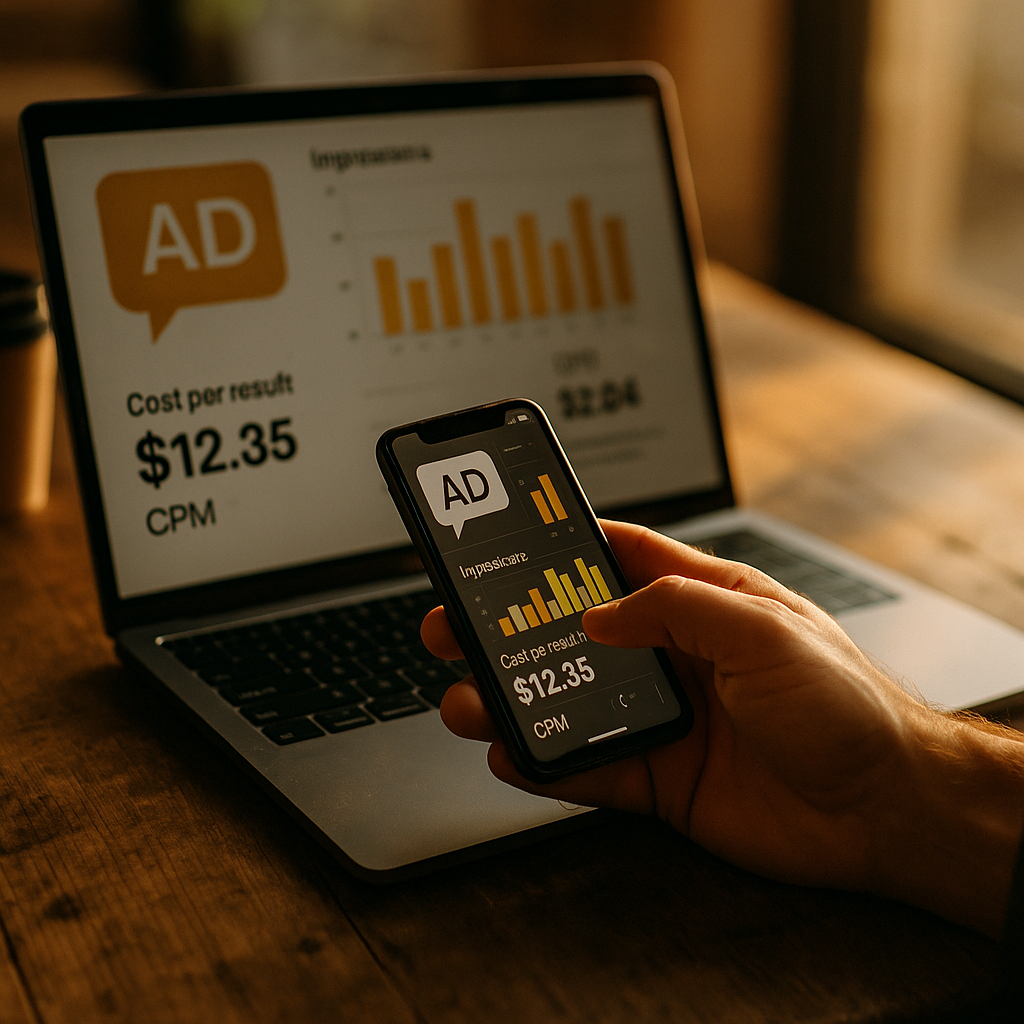
What if the cheapest reach on your media plan didn’t come from a platform algorithm, but from content that looks like it was never meant to be an ad? That’s the promise of AGC, or Ad-Generated Content: creator-style videos built specifically for paid distribution rather than organic posting. Brands running AGC through paid social are reporting meaningfully lower CPMs than polished branded video, and the reason has less to do with creative quality than with pattern interruption. Feeds are trained to skip ads. AGC doesn’t look like one.
What Is AGC, and Why Is It Eating Into Branded Video Budgets?
AGC sits in the gap between influencer marketing and traditional advertising. It’s not organic creator content boosted after the fact, and it’s not a studio-produced commercial. It’s content made to look native, shaky handheld footage, direct-to-camera talk, imperfect lighting, but engineered from the first frame for a media buy. Think of it as UGC’s more calculated cousin: same aesthetic cues, but built with hooks, pacing, and CTAs designed by a media buyer, not a creator chasing engagement for its own feed.
The distinction matters because platforms and audiences respond to it differently. Instagram and TikTok’s ad auctions reward content that keeps people watching, and native-looking creative simply performs better in that auction. Lower skip rates mean lower effective CPMs, because platforms like Meta and TikTok price impressions partly on predicted engagement. A polished 30-second brand spot might get skipped in the first two seconds. A shaky selfie-style AGC clip with a scroll-stopping hook often survives long enough to register a view, and that changes the entire cost structure of the buy.
AGC works because it exploits a simple truth: audiences don’t trust ads, but they do trust the visual language of a friend’s phone camera. Brands that can manufacture that language at scale get cheaper reach without waiting on creator goodwill.
The CPM Math Behind Ad-Generated Content
Here’s where it gets practical. Traditional branded video campaigns on Meta or TikTok often see CPMs climb as creative fatigue sets in, sometimes within a week or two of a campaign launch. AGC creative, because it’s cheaper to produce in volume and easier to refresh, lets media buyers rotate assets faster and keep frequency down. Lower frequency per user, spread across more variants, tends to hold CPMs flatter over a longer flight.
There’s also an auction-level effect. Platforms score ad relevance partly on predicted user interaction. Content that mimics organic posts, especially ones featuring real faces and casual delivery, tends to score higher on relevance signals than glossy studio work. That relevance score is a direct input into TikTok’s ad auction and Meta’s delivery system, and higher relevance generally means the platform charges less to win the same impression. It’s not magic. It’s the same mechanism that made engagement density more predictive of reach than raw follower counts: platforms increasingly price attention, not audience size.
None of this means AGC is automatically cheap. Bad AGC, content that reads as fake or overly staged, gets penalized just as hard as a weak traditional ad. The savings only materialize when the creative genuinely earns the “this isn’t an ad” read from the algorithm and the viewer simultaneously.
Building the Distribution Playbook
Most brands treat AGC as a creative decision. That’s a mistake. The real value shows up in distribution strategy, specifically in how you sequence paid spend against new-audience acquisition versus retargeting.
- Front-load AGC on cold audiences. New-audience prospecting is where CPM sensitivity is highest, and where native-feeling content earns the biggest relative discount versus polished ads.
- Reserve retargeting budget for higher-production creative. Once a user has clicked or engaged, a more traditional brand asset with clear product detail tends to convert better than another AGC-style clip.
- Rotate variants weekly, not monthly. AGC’s cost advantage depends on freshness. Platforms de-prioritize creative that starts showing frequency fatigue, and AGC fatigues faster because it relies on novelty.
- Test across formats before committing spend. A hook that works as a vertical short might flop as a feed post. Brands comparing Instagram against YouTube Shorts for paid reach have found format-specific creative outperforms one-size-fits-all cuts by a wide margin.
- Build a creator bench specifically for AGC production, separate from your organic influencer roster. The skills don’t fully overlap. Someone great at organic storytelling isn’t automatically great at producing hook-driven, ad-optimized clips on a tight turnaround.
This last point trips up a lot of brands. They assume their existing influencer partners can simply pivot into AGC production. Sometimes they can. But AGC creators need to think like direct-response copywriters with a camera, not like community builders. It’s a different brief, a different pay structure, and often a different person entirely.
Where AGC Fits Alongside Organic Creator Content
AGC isn’t a replacement for organic influencer programs. It’s a complementary channel that solves a different problem: efficient cold-audience reach at scale. Organic influencer content still does the heavy lifting on trust-building and long-tail discovery, particularly in categories like beauty and wellness where audiences actively seek out creator recommendations before purchase, similar to what’s driven brands to test emerging platforms early for exactly that kind of discovery behavior.
Think of AGC as your prospecting engine and organic creator work as your credibility engine. Blending both, with AGC feeding the top of funnel and creator-led organic content reinforcing brand affinity further down, tends to outperform either channel run in isolation. It’s the same logic that makes niche short-form video effective across platforms: match the content style to the stage of the funnel, not just to the platform.
Compliance and Disclosure Risks Nobody Talks About
Here’s the part that keeps legal teams up at night. AGC blurs the line between advertising and organic content by design, and that’s precisely the line the Federal Trade Commission cares about most. If content is paid media, it needs to be disclosed as paid media, regardless of how “native” it looks or feels. Brands that lean into the UGC aesthetic without proper labeling are exposing themselves to the same enforcement risk that’s already reshaped how platforms handle branded content.
YouTube’s branded content rules and the increasingly strict labeling requirements across Meta and TikTok mean AGC needs the same disclosure discipline as any influencer partnership. Brands that have already tightened their processes around branded content labeling are ahead here. Apply that same rigor to AGC. Just because a piece of content was produced in-house or through an agency rather than an organic creator doesn’t exempt it from disclosure requirements if it’s running as a paid ad featuring a person appearing to give a genuine recommendation.
There’s a reputational risk too. Audiences who feel tricked by content designed to look organic but revealed as an ad tend to react more negatively than they would to an obviously branded spot. The backlash isn’t hypothetical. It’s the predictable result of breaking an implicit trust contract with the viewer.
Measuring What Matters
CPM is the headline metric, but it’s not the only one that matters, and treating it as the finish line leads to bad optimization decisions. Track these alongside CPM:
- Hook rate (3-second view rate). This is the earliest signal that your AGC creative is actually mimicking organic content well enough to stop the scroll.
- Cost per new-to-file customer, not just cost per click. AGC’s real job is expanding your addressable audience, so measure whether it’s actually reaching people your existing creator program isn’t.
- Frequency decay rate. How fast does performance drop as the same user sees the ad multiple times? AGC generally decays faster than traditional branded video, and knowing your decay curve tells you exactly when to refresh.
- Disclosure compliance audits, run on a recurring basis, not just at campaign launch.
Platforms like Sprout Social and reporting from eMarketer both point to the same trend: attention-based metrics are becoming better predictors of media efficiency than reach alone. If your reporting dashboard still treats CPM as the sole efficiency metric, you’re missing half the picture AGC is supposed to improve.
Take the next step by running a small, controlled AGC test against your current top-of-funnel creative, isolate it in its own ad set, and compare cost per new-to-file customer, not just CPM, before scaling spend.
Frequently Asked Questions
What does AGC stand for in marketing?
AGC stands for Ad-Generated Content, which refers to creator-style video and image content that is produced specifically for paid distribution rather than organic social posting. It’s designed to look native to the platform feed while functioning as a paid ad.
How is AGC different from UGC?
UGC, or user-generated content, is typically created organically by real customers or creators without a media buying brief. AGC borrows the visual style of UGC but is intentionally produced with paid performance in mind, including scripted hooks, structured calls to action, and creative built for rapid rotation in ad auctions.
Why does AGC lower CPMs compared to traditional branded video?
Platform ad auctions reward creative that earns higher engagement and relevance scores. Because AGC mimics organic content, it often achieves lower skip rates and stronger early engagement than polished branded spots, which platforms reward with more efficient impression pricing.
Does AGC require the same disclosure rules as influencer content?
Yes. If content is running as paid media, it must be disclosed as such regardless of its aesthetic style. Brands should apply the same compliance standards used for branded content labeling and influencer disclosures to any AGC campaign.
Can existing influencer partners produce AGC content?
Some can, but the skill set is different. AGC production favors direct-response thinking and hook-driven scripting over the community-building style that many organic influencer partnerships rely on, so brands often need a separate creator bench for AGC work.
How often should AGC creative be refreshed?
Weekly rotation is a reasonable baseline. AGC’s cost advantage depends heavily on novelty, and frequency fatigue tends to set in faster with AGC than with traditional branded video.
Top Influencer Marketing Agencies
The leading agencies shaping influencer marketing in 2026
Agencies ranked by campaign performance, client diversity, platform expertise, proven ROI, industry recognition, and client satisfaction. Assessed through verified case studies, reviews, and industry consultations.
Moburst

-
2

The Shelf
Boutique Beauty & Lifestyle Influencer AgencyA data-driven boutique agency specializing exclusively in beauty, wellness, and lifestyle influencer campaigns on Instagram and TikTok. Best for brands already focused on the beauty/personal care space that need curated, aesthetic-driven content.Clients: Pepsi, The Honest Company, Hims, Elf Cosmetics, Pure LeafVisit The Shelf → -
3

Audiencly
Niche Gaming & Esports Influencer AgencyA specialized agency focused exclusively on gaming and esports creators on YouTube, Twitch, and TikTok. Ideal if your campaign is 100% gaming-focused — from game launches to hardware and esports events.Clients: Epic Games, NordVPN, Ubisoft, Wargaming, Tencent GamesVisit Audiencly → -
4

Viral Nation
Global Influencer Marketing & Talent AgencyA dual talent management and marketing agency with proprietary brand safety tools and a global creator network spanning nano-influencers to celebrities across all major platforms.Clients: Meta, Activision Blizzard, Energizer, Aston Martin, WalmartVisit Viral Nation → -
5

The Influencer Marketing Factory
TikTok, Instagram & YouTube CampaignsA full-service agency with strong TikTok expertise, offering end-to-end campaign management from influencer discovery through performance reporting with a focus on platform-native content.Clients: Google, Snapchat, Universal Music, Bumble, YelpVisit TIMF → -
6

NeoReach
Enterprise Analytics & Influencer CampaignsAn enterprise-focused agency combining managed campaigns with a powerful self-service data platform for influencer search, audience analytics, and attribution modeling.Clients: Amazon, Airbnb, Netflix, Honda, The New York TimesVisit NeoReach → -
7

Ubiquitous
Creator-First Marketing PlatformA tech-driven platform combining self-service tools with managed campaign options, emphasizing speed and scalability for brands managing multiple influencer relationships.Clients: Lyft, Disney, Target, American Eagle, NetflixVisit Ubiquitous → -
8

Obviously
Scalable Enterprise Influencer CampaignsA tech-enabled agency built for high-volume campaigns, coordinating hundreds of creators simultaneously with end-to-end logistics, content rights management, and product seeding.Clients: Google, Ulta Beauty, Converse, AmazonVisit Obviously →