


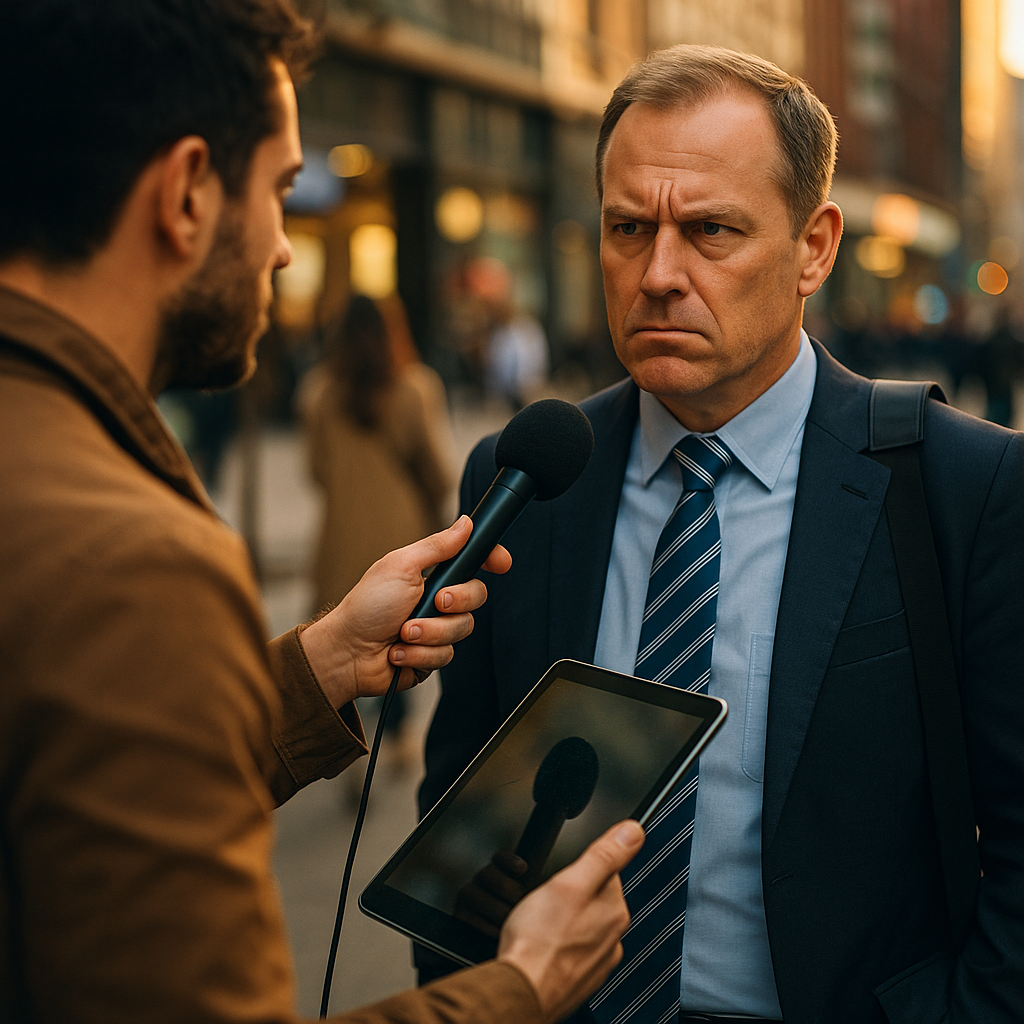
Skip-through rates on polished influencer ads now top 76% among B2B buyers, according to recent eMarketer research on video ad fatigue. Yet street interview ads, the shaky, unscripted, mic-in-a-stranger’s-face format, are converting at rates brand teams haven’t seen since native content first broke through. If your standard creative keeps getting scrolled past, a street interview ads brief might be the unlock your next campaign needs.
Why Buyers Trust Strangers More Than Your Spokesperson
Here’s the uncomfortable truth: your target buyer doesn’t trust your brand voice anymore. They trust randomness. A street interview format works because it mimics the one thing algorithms and audiences both reward: unscripted proof. When a real person on a sidewalk says “honestly, I didn’t expect it to work this well,” that lands harder than any testimonial your legal team pre-approved.
We covered the initial wave of this trend in the cold reach test brands are winning, and the data since then has only gotten stronger. B2B and B2C brands alike are running these as top-of-funnel cold traffic ads because they defeat banner blindness. People stop scrolling because they think it’s a real interview, not an ad. That three-second pattern interrupt is worth more than most creative teams give it credit for.
Street interview ads don’t sell the product first. They sell the reaction. The product is almost incidental until the last five seconds.
The Creative Brief Template: Section by Section
Most creative briefs fail because they’re written for polished shoots, not for chaos-friendly formats. Street interview ads need a different document entirely. Here’s the structure we recommend to clients building this into their always-on ad mix.
1. Objective and Buyer Segment (Not Just “Awareness”)
Vague objectives kill this format faster than anything else. Don’t write “drive awareness.” Write “get skeptical mid-market buyers who’ve never heard of us to watch past the three-second mark.” Name the exact buyer persona you’re chasing: their job title, their objections, the specific skepticism they walk around with. Street interviews work because they neutralize objections in real time, so your brief needs to name those objections explicitly.
Location Selection: Where You Film Changes Who You Reach
This is the section most briefs skip, and it’s the one that determines everything else. Filming outside a SaaS conference gets you different reactions than filming outside a Trader Joe’s. If you’re selling to marketing directors, consider trade show floors, coworking hubs, or downtown business districts during lunch hours. We saw similar location logic play out in trade show micro vlogs, where floor chaos became the credibility signal rather than a liability.
Spell out in the brief: neighborhood type, time of day, foot traffic density, and whether you want visible brand context (a conference badge, a store entrance) in frame. This isn’t a minor production detail. It’s targeting.
2. The Question Bank (Not a Script)
Scripts kill authenticity. Question banks preserve it. Your brief should include 8 to 12 open-ended questions, ranked by priority, that interviewers can pull from depending on how the conversation flows. Bad question: “Do you like our product?” Good question: “What’s the most annoying part of your current workflow that nobody talks about?”
Build in a mandatory objection question. Something like “what would make you skeptical of a tool like this?” The answer becomes your best social proof clip, because you’re capturing the objection and letting the next interviewee (or a follow-up cutaway) resolve it on camera.
3. Talent and Interviewer Guidelines
The interviewer matters as much as the interviewee. Energy, pacing, and follow-up instincts separate a viral clip from dead air. Your brief needs:
- Tone guidance (playful, deadpan, earnest) matched to brand voice
- A rule on redirecting boring answers without leading the witness
- Disclosure language if compensation or product samples are involved, per FTC endorsement guidelines
- A consent and release process for on-street participants, non-negotiable
Skipping the release process is the single most common compliance failure we see in this format. Get signed releases on-site, every time, no exceptions.
What Standard Creative Briefs Get Wrong Here
Traditional influencer briefs are built around control: approved talking points, brand-safe messaging, a shot list. Street interview ads punish that instinct. The moment an interviewee sounds coached, the format collapses and viewers bounce. Your brief has to explicitly grant creative looseness while still protecting legal and brand safety guardrails.
That tension, structure without scripting, is the hardest thing for brand marketers to accept. Compare it to how founder mode videos handle raw authenticity at scale: the brief sets boundaries, not lines. Same principle applies here, just with strangers instead of your CEO.
Editing Direction: Keep the Mess, Cut the Dead Air
Editors used to cutting for polish will over-trim these clips and kill the authenticity that made them work. Your brief needs explicit editing notes: preserve natural pauses, keep at least one “bad take” moment per cut if it reads as genuine, and resist the urge to smooth out stumbles. The goal is documentary pacing, not commercial pacing.
Specify caption strategy too. Most viewers watch sound-off initially. If your captions do the selling, the audio becomes a bonus layer rather than a requirement, a lesson we detailed in silent selling ads.
Measuring Success: Different KPIs for a Different Format
Don’t judge street interview ads by the same metrics you use for produced brand films. Watch time and hook retention matter more than completion rate here, because the format’s job is stopping the scroll, not delivering a full narrative arc. Track:
- Three-second and ten-second retention rates
- Comment sentiment (this format generates unusually high comment volume)
- Cost per click on cold audiences versus warm retargeting lists
- Save and share rates as a proxy for perceived authenticity
If you’re running this alongside hook testing infrastructure, treat every question in your bank as a separate hook variant. The logic from hook testing at scale applies directly: rotate questions the way media buyers rotate ad copy, and let performance data tell you which objection resonates before you scale spend behind it.
Treat every interview question as a hook variant. The ones that generate real objections in response are your best-performing creative, not the ones that get polite praise.
Budget and Production Realities
This format is cheap to shoot and expensive to waste if you skip the planning. A single street day with one interviewer, one camera operator, and a release-signing assistant can produce 15 to 20 usable clips. Compare that cost per asset to a traditional influencer shoot and the math favors street interviews heavily, especially for top-of-funnel testing where you need volume to find winning hooks.
Where brands overspend is post-production. Resist the urge to add heavy motion graphics or music beds that feel produced. According to Sprout Social’s ongoing research on short-form engagement, lower production polish consistently correlates with higher perceived trust in unscripted formats. Save your production budget for the versioning and localization work instead, particularly if you’re running this across multiple regions. The approach outlined in one shoot, ten markets pairs well here: shoot once, then adapt captions and voiceover regionally rather than reshooting for every market.
Common Mistakes That Sink the Format
- Over-scripting interviewees until answers sound rehearsed
- Filming in locations that don’t match the target buyer’s actual environment
- Skipping consent and release documentation
- Editing out the awkward pauses that make it feel real
- Judging performance by completion rate instead of early retention
Any one of these can turn a promising format into a wasted production day. The brief exists precisely to prevent them.
Next Step
Pull the template above into your next creative brief, run a single test day with 15 to 20 interviews, and let three-second retention data pick your winning question before you commit media spend at scale.
FAQs
What makes street interview ads different from standard influencer content?
Street interview ads rely on unscripted, real-time reactions from strangers rather than polished, pre-approved talent messaging. The format works because it mimics organic content, which lowers viewer defenses and increases early watch-through rates on cold audiences.
How do I stay compliant with disclosure rules when filming strangers?
Always secure signed releases on-site before using any footage, and follow FTC endorsement guidance if participants receive compensation, samples, or incentives of any kind. Build consent language directly into your creative brief so field teams never skip this step under time pressure.
What KPIs should I track for street interview ad campaigns?
Prioritize three-second and ten-second retention, comment sentiment, and cold audience click-through cost over traditional completion rate metrics. This format’s job is stopping the scroll and building trust quickly, not delivering a full narrative arc.
How much should a street interview ad shoot cost?
A single day with one interviewer and one camera operator typically produces 15 to 20 usable clips, making cost per asset significantly lower than traditional influencer or studio production. Budget more heavily for question bank development and post-shoot versioning than for on-site production value.
Can this format work for B2B brands, not just consumer products?
Yes, particularly when filmed at trade shows, business districts, or conference venues where your actual buyer persona is present. Location selection becomes the primary targeting mechanism, so match the filming environment to where your real buyers spend time.
Top Influencer Marketing Agencies
The leading agencies shaping influencer marketing in 2026
Agencies ranked by campaign performance, client diversity, platform expertise, proven ROI, industry recognition, and client satisfaction. Assessed through verified case studies, reviews, and industry consultations.
Moburst

-
2

The Shelf
Boutique Beauty & Lifestyle Influencer AgencyA data-driven boutique agency specializing exclusively in beauty, wellness, and lifestyle influencer campaigns on Instagram and TikTok. Best for brands already focused on the beauty/personal care space that need curated, aesthetic-driven content.Clients: Pepsi, The Honest Company, Hims, Elf Cosmetics, Pure LeafVisit The Shelf → -
3

Audiencly
Niche Gaming & Esports Influencer AgencyA specialized agency focused exclusively on gaming and esports creators on YouTube, Twitch, and TikTok. Ideal if your campaign is 100% gaming-focused — from game launches to hardware and esports events.Clients: Epic Games, NordVPN, Ubisoft, Wargaming, Tencent GamesVisit Audiencly → -
4

Viral Nation
Global Influencer Marketing & Talent AgencyA dual talent management and marketing agency with proprietary brand safety tools and a global creator network spanning nano-influencers to celebrities across all major platforms.Clients: Meta, Activision Blizzard, Energizer, Aston Martin, WalmartVisit Viral Nation → -
5

The Influencer Marketing Factory
TikTok, Instagram & YouTube CampaignsA full-service agency with strong TikTok expertise, offering end-to-end campaign management from influencer discovery through performance reporting with a focus on platform-native content.Clients: Google, Snapchat, Universal Music, Bumble, YelpVisit TIMF → -
6

NeoReach
Enterprise Analytics & Influencer CampaignsAn enterprise-focused agency combining managed campaigns with a powerful self-service data platform for influencer search, audience analytics, and attribution modeling.Clients: Amazon, Airbnb, Netflix, Honda, The New York TimesVisit NeoReach → -
7

Ubiquitous
Creator-First Marketing PlatformA tech-driven platform combining self-service tools with managed campaign options, emphasizing speed and scalability for brands managing multiple influencer relationships.Clients: Lyft, Disney, Target, American Eagle, NetflixVisit Ubiquitous → -
8

Obviously
Scalable Enterprise Influencer CampaignsA tech-enabled agency built for high-volume campaigns, coordinating hundreds of creators simultaneously with end-to-end logistics, content rights management, and product seeding.Clients: Google, Ulta Beauty, Converse, AmazonVisit Obviously →