


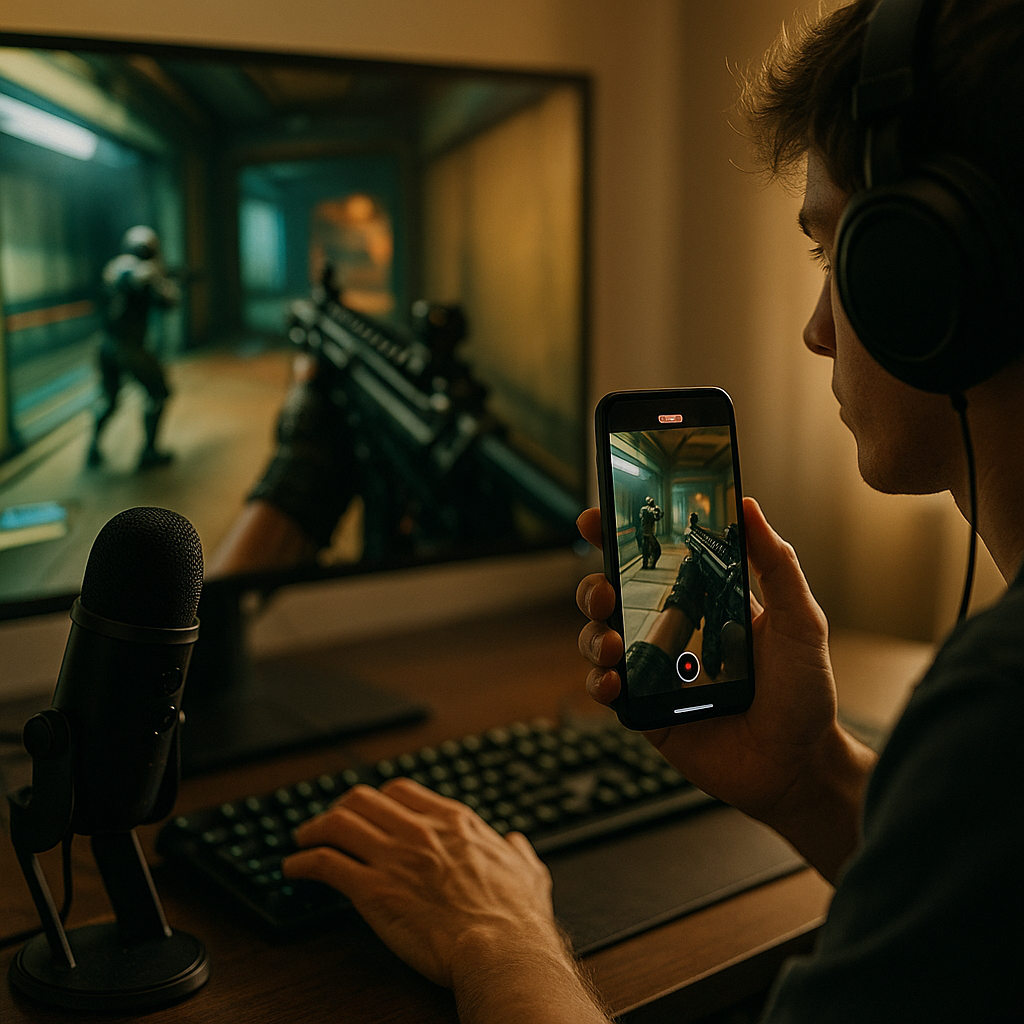
Twitch streamers average 3 to 5 hours per broadcast. Nobody on TikTok is watching that. Brands funding gaming livestreams are sitting on a goldmine of clippable moments, yet most sponsorship budgets still pay for the stream and ignore the shorts strategy that actually drives impressions. Gaming let’s play shorts, the practice of slicing long-form gameplay into 60-second (or shorter) vertical hooks, have quietly become the highest-ROI line item in creator gaming deals.
Why the Stream Is Just Raw Material Now
A three-hour Twitch VOD is not a marketing asset. It’s inventory. The actual marketing asset is whatever gets extracted from it and pushed to TikTok, YouTube Shorts, and Instagram Reels within hours of the broadcast ending. Brands that treat the livestream as the deliverable are leaving 80% of the value on the table, because the algorithmic discovery happens downstream, not on the stream itself.
Think about how a viewer actually finds a gaming creator today. It’s rarely through Twitch’s front page. It’s a 40-second clip of a clutch play, a rage moment, or a genuinely funny reaction that surfaces in a Shorts feed. That clip either has your product visible, your sponsor read intact, or your brand mention baked in, or it doesn’t. If your contract doesn’t specify clipping rights and cadence, you’re sponsoring content nobody outside the existing fanbase will ever see.
A single viral clip from a sponsored stream can generate more brand impressions in 48 hours than the entire original broadcast did in real time.
What Actually Makes a Clip Work
Not every moment clips well. Editors who work gaming content full-time will tell you the same thing every media buyer already knows: the hook has to land in the first two seconds or the scroll wins. This is the exact same logic media buyers apply to hook testing at scale, and gaming clippers have basically reverse-engineered it from years of trial and error.
The moments that convert into shareable shorts tend to fall into a few repeatable buckets:
- The clutch or the fail. High-stakes gameplay moments with a clear win or loss, no context needed.
- The reaction. Genuine surprise, frustration, or laughter, ideally with the creator’s face visible via webcam overlay.
- The banter. Cohost or chat interaction that’s funny independent of the game being played.
- The product beat. The moment a sponsor integration happens naturally, like a branded energy drink can on the desk or a verbal callout during a lull.
Editors scrub the VOD looking for these beats, then build a short around them with captions, a punchy title card, and a cut that respects the platform’s native pacing. It sounds simple. It’s not. A good clipper watches the full stream, which is why agencies increasingly staff dedicated clipping teams or use AI-assisted timestamp detection tools to flag high-engagement moments (spikes in chat velocity, for example) before a human ever touches the footage.
The Volume Math Brands Underestimate
One three-hour stream can realistically yield 15 to 30 usable shorts if you’re doing it right. That’s not a stretch, that’s standard practice for full-time clipping operations working with mid-tier and large streamers. If your sponsorship deal only budgets for three or four clips per stream, you are massively underutilizing the content you already paid for.
This is where the math gets interesting for CFOs and media buyers who think in cost-per-impression. A sponsored stream might cost $8,000 to $25,000 depending on the creator’s tier. The stream itself might reach 5,000 to 40,000 concurrent viewers. But 25 shorts distributed across TikTok, Shorts, and Reels, each with even modest performance, can multiply total impressions several times over for essentially zero incremental production cost. You already paid for the gameplay. Clipping is editing labor, not content creation from scratch.
This is the same logic behind the three layer video stack framework that treats long-form as the foundation, mid-form as the connective layer, and shorts as the distribution multiplier. Gaming content just happens to be one of the richest sources of raw material for that stack, because the volume of footage per session is enormous.
Who Owns the Clip Rights? Get This in Writing.
This is the part legal teams love to skip past and then panic about six months later. When a brand sponsors a stream, does the brand own the resulting clips, does the creator, or is it shared? Ambiguity here creates real risk, especially when a clip performs well and someone wants to run it as a paid dark post or repurpose it into a display ad.
Best practice, and what most experienced agencies now build into gaming creator contracts:
- Explicit clipping rights granted to the brand for a defined usage window (commonly 6 to 12 months).
- Clear specification of which platforms the brand can repost or boost clips on.
- Whether the brand can strip audio, add voiceover, or re-caption for localization.
- Whitelisting or spark ad permissions if the brand wants to run the clip as paid media through the creator’s handle.
If you’re planning to push clips into paid social as dark post ad creative, this needs to be spelled out before the stream, not negotiated after a clip goes viral and suddenly has leverage on both sides. The FTC’s endorsement guidance still applies to clipped content too, disclosure has to travel with the clip, not just live in the original stream’s description. Review the FTC’s endorsement guidelines before finalizing usage terms, because a disclosure buried in a three-hour VOD description does not satisfy requirements on a 45-second repost.
Building a Clipping Pipeline That Doesn’t Bottleneck
Speed matters more in gaming than almost any other vertical. A clip from a stream that happened three days ago is old news. Gaming audiences reward immediacy, and the platforms’ recommendation algorithms do too, favoring freshness in the first 24 to 48 hours after upload.
A workable pipeline usually looks like this:
- Live flagging. A producer or the creator’s mod team timestamps notable moments during the stream itself, using chat spikes and their own judgment as signals.
- Rapid rough cuts. Editors pull the flagged segments within hours, not days, and produce vertical-ready rough cuts.
- Caption and hook pass. Add burned-in captions (sound-off viewing is still the majority behavior on Shorts and Reels) and a title card that front-loads the payoff.
- Platform-specific formatting. TikTok, YouTube Shorts, and Reels each reward slightly different pacing and aspect handling, so a true one-size cut underperforms a version tailored per platform.
- Staggered release. Don’t dump all 25 clips at once. Spread them across the week following the stream to sustain a presence rather than a single spike.
Some agencies now lean on AI-assisted editing tools to accelerate steps two through four, using speech-to-text for instant captioning and automated highlight detection to shortlist candidate moments before a human editor makes the final call. It’s not full automation, gaming humor and context still need a human eye, but it compresses turnaround from days to hours. That efficiency mirrors what’s happening with ultra short AI clip pipelines in other content categories, where machine-assisted triage handles volume and humans handle judgment.
Measuring What Actually Matters
Views are the vanity metric everyone defaults to, and they’re the least useful number in this format. What brands should actually track:
- Completion rate on the short itself, a proxy for whether the hook and pacing actually worked.
- Click-through to the original stream or channel, which tells you whether the short is doing its job as a top-of-funnel discovery tool.
- Brand mention visibility duration, meaning how many seconds of the clip actually show the product or sponsor read clearly.
- Cross-platform reach per stream, aggregating views across every clip derived from a single broadcast rather than looking at each short in isolation.
That last metric is the one most reporting dashboards get wrong. A brand manager looking at a single clip with 40,000 views is missing the forest. The real number is the sum across all 20-plus derivative shorts from that stream, which is often the only way to justify the sponsorship spend to finance. According to eMarketer, short-form video continues to command the largest share of daily time spent on social platforms among 18 to 34 year olds, which is precisely the demographic most gaming sponsorships are chasing.
Where This Fits Alongside Other Livestream Formats
Gaming clipping doesn’t exist in a vacuum. It’s part of a broader shift where brands treat every long-form livestream, whether it’s gaming, shopping, or a multi-host livestream, as raw footage for a shorts distribution layer. The same logic that governs livestream cohost scripts around disclosure and dead air applies here: plan for the clip before the stream starts, not after.
If your team is still briefing gaming sponsorships as a single deliverable (one stream, one invoice, done), you’re structuring the deal backwards. The stream should be scoped from day one as a content farm for a defined volume of shorts, with rights, disclosure, and platform destinations locked before the creator ever goes live. Check HubSpot’s resources on video marketing benchmarks if you need internal buy-in numbers to make that case to finance.
The Takeaway
Stop paying for streams and hoping clips happen organically. Build clipping volume, rights, and distribution cadence into the sponsorship brief itself, and treat every hour of gameplay as 8 to 10 potential shorts waiting to be found.
FAQs
How many shorts can realistically come from a single gaming stream?
Most full-time clipping operations pull 15 to 30 usable shorts from a three-hour stream, depending on how eventful the session was and how many editors are working the footage.
Who owns the rights to clips made from a sponsored stream?
It depends entirely on the contract. Brands should negotiate explicit clipping and usage rights before the stream, including which platforms clips can be posted to and whether they can be boosted as paid media.
Do disclosure requirements apply to clipped content, not just the original stream?
Yes. FTC guidance requires disclosure to be clear within each piece of content a consumer sees, so a sponsor mention buried in the original stream doesn’t cover a repurposed 45-second clip on TikTok.
What’s the ideal turnaround time between a stream ending and clips going live?
Within 24 to 48 hours is the standard for maximizing algorithmic freshness on TikTok, YouTube Shorts, and Reels. Waiting longer significantly reduces discovery potential.
Should brands use AI tools for gaming clip editing?
AI-assisted tools help with highlight detection and captioning to speed up the rough cut process, but gaming humor and context still benefit from a human editor’s final judgment before publishing.
Top Influencer Marketing Agencies
The leading agencies shaping influencer marketing in 2026
Agencies ranked by campaign performance, client diversity, platform expertise, proven ROI, industry recognition, and client satisfaction. Assessed through verified case studies, reviews, and industry consultations.
Moburst

-
2

The Shelf
Boutique Beauty & Lifestyle Influencer AgencyA data-driven boutique agency specializing exclusively in beauty, wellness, and lifestyle influencer campaigns on Instagram and TikTok. Best for brands already focused on the beauty/personal care space that need curated, aesthetic-driven content.Clients: Pepsi, The Honest Company, Hims, Elf Cosmetics, Pure LeafVisit The Shelf → -
3

Audiencly
Niche Gaming & Esports Influencer AgencyA specialized agency focused exclusively on gaming and esports creators on YouTube, Twitch, and TikTok. Ideal if your campaign is 100% gaming-focused — from game launches to hardware and esports events.Clients: Epic Games, NordVPN, Ubisoft, Wargaming, Tencent GamesVisit Audiencly → -
4

Viral Nation
Global Influencer Marketing & Talent AgencyA dual talent management and marketing agency with proprietary brand safety tools and a global creator network spanning nano-influencers to celebrities across all major platforms.Clients: Meta, Activision Blizzard, Energizer, Aston Martin, WalmartVisit Viral Nation → -
5

The Influencer Marketing Factory
TikTok, Instagram & YouTube CampaignsA full-service agency with strong TikTok expertise, offering end-to-end campaign management from influencer discovery through performance reporting with a focus on platform-native content.Clients: Google, Snapchat, Universal Music, Bumble, YelpVisit TIMF → -
6

NeoReach
Enterprise Analytics & Influencer CampaignsAn enterprise-focused agency combining managed campaigns with a powerful self-service data platform for influencer search, audience analytics, and attribution modeling.Clients: Amazon, Airbnb, Netflix, Honda, The New York TimesVisit NeoReach → -
7

Ubiquitous
Creator-First Marketing PlatformA tech-driven platform combining self-service tools with managed campaign options, emphasizing speed and scalability for brands managing multiple influencer relationships.Clients: Lyft, Disney, Target, American Eagle, NetflixVisit Ubiquitous → -
8

Obviously
Scalable Enterprise Influencer CampaignsA tech-enabled agency built for high-volume campaigns, coordinating hundreds of creators simultaneously with end-to-end logistics, content rights management, and product seeding.Clients: Google, Ulta Beauty, Converse, AmazonVisit Obviously →