


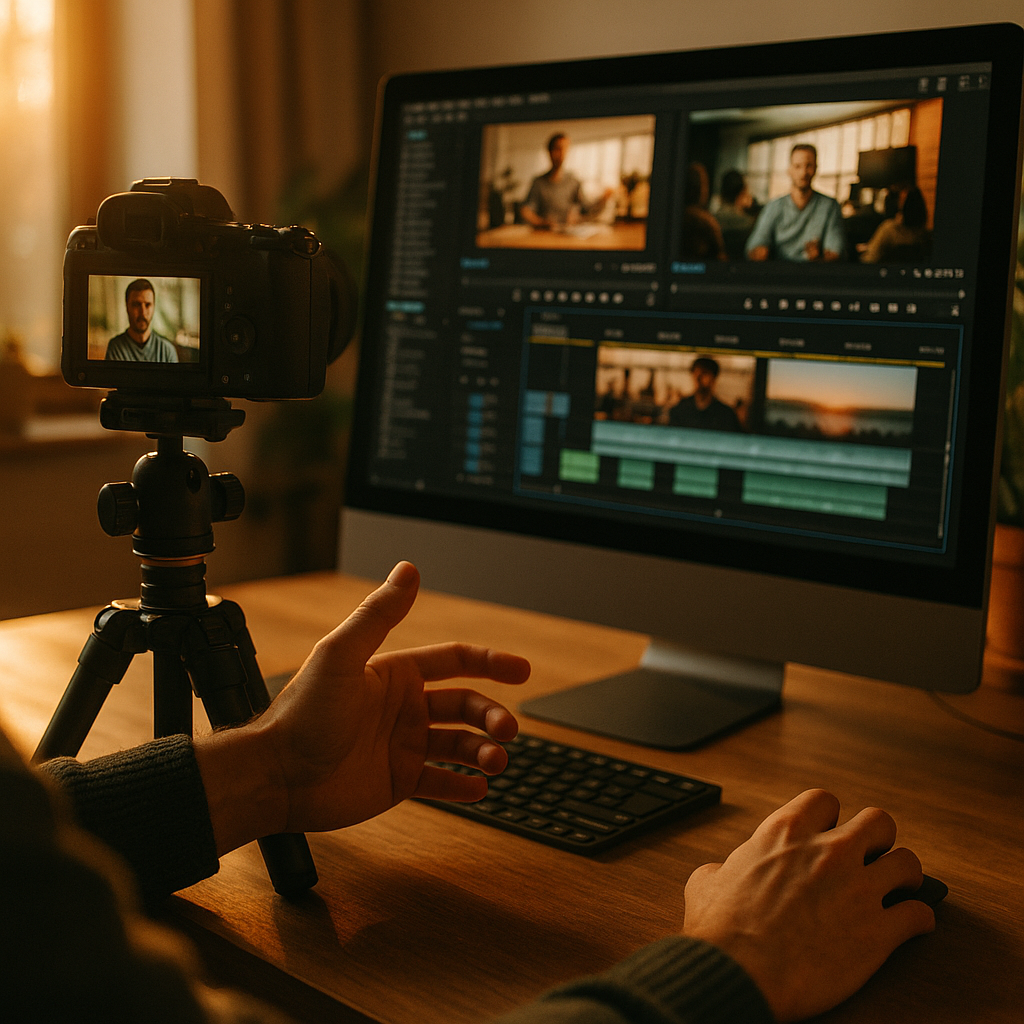
Brands running single-format video strategies are capping their own reach, and the data backs it up. Platforms increasingly reward accounts that publish across formats, not just frequency within one. So what happens when you stop treating live, short, and long form video as competing budget lines and start treating them as one system? That’s the question this reach maximization framework answers.
Why Single-Format Video Strategies Leave Reach on the Table
Most brand video budgets still get allocated the way they were in 2019: a big chunk to short-form UGC ads, a smaller line for the occasional livestream, and long form treated as an afterthought that “someone should probably do.” That’s a mistake, and platform algorithms are increasingly punishing it.
TikTok, YouTube, and Instagram all now weight distribution partly on format diversity and session behavior. A creator or brand account that only posts fifteen-second clips gets treated differently than one that mixes clips with livestreams and longer explainers, because the platform can’t build a full picture of audience intent. Short form drives discovery. Live drives urgency and trust. Long form drives depth and conversion. Skip any one, and you’re leaving a stage of the funnel unmanaged.
Brands that combine at least two video formats in a single campaign consistently report higher completion rates and lower cost per engaged view than single-format campaigns, according to industry benchmarks tracked by eMarketer.
The fix isn’t more content. It’s smarter sequencing.
The Three-Layer Video Stack, Explained
Think of the framework as three layers stacked on top of each other, each doing a job the others can’t.
- Short form (under 90 seconds): This is your top-of-funnel discovery engine. It’s built for cold audiences, algorithmic distribution, and hook testing. Its job is reach, not depth.
- Live: This is your trust accelerator. Real-time Q&A, product demos, and unscripted moments build credibility fast because viewers know it’s not edited to hide flaws.
- Long form (5 minutes plus): This is your conversion and retention layer. It’s where you answer objections, show proof, and build the kind of relationship that survives a price increase or a competitor’s ad.
None of these formats is inherently “better.” A brand that only does long form misses the cold-audience reach short clips generate. A brand that only does short form never builds the depth that turns a viewer into a repeat customer. The framework works because each layer feeds the next.
How the Formats Actually Feed Each Other
Here’s where most teams get the sequencing backwards. They treat live, short, and long form as parallel tracks instead of a relay.
The better model looks like this: a livestream or long-form shoot generates raw footage. That footage gets cut into a dozen short clips for cold-audience discovery. The best-performing clips then get retargeted with a CTA pointing back to the full long-form asset or the next live event. It’s a closed loop, not three separate content calendars.
This is exactly the logic behind product launch simulcasts, where a single live event gets simultaneously distributed and clipped for multiple platforms in real time. One shoot, three reach curves. Brands running simulcasts report significantly lower production cost per format because the heavy lifting (talent, location, lighting) only happens once.
The same logic applies to livestream commerce. A multi-host livestream generates hours of footage, most of which never gets touched after the broadcast ends. That’s wasted inventory. Smart teams pull the sharpest thirty-second moments (a surprising reaction, a hard question answered well) and push them out as short clips within hours, while the live stream is still fresh in the algorithm’s memory.
Building the Framework: A Practical Rollout
Here’s how to actually implement this without blowing up your production budget or your team’s sanity.
Step 1: Anchor the Calendar Around Long Form or Live
Start with your biggest content investment, whether that’s a quarterly long-form brand documentary, a founder interview series, or a recurring livestream. This is your anchor asset. Everything else gets built from it.
A founder-led long form video is a good anchor because it’s inherently rich in unscripted, quotable moments that clip well. You’re not producing three separate pieces of content. You’re producing one and mining it three ways.
Step 2: Build the Clip Pipeline Before You Shoot
Don’t wait until after the shoot to figure out what gets clipped. Brief your editor (or your AI clipping tool) on hook criteria before production starts: what counts as a strong opening line, what moments signal controversy or surprise, what runs under fifteen seconds cleanly. This is the same discipline covered in ultra short AI clip pipelines, and it applies just as well to live and long form source material as it does to scripted shoots.
Step 3: Sequence the Release, Don’t Dump It All at Once
Release short clips first to build reach and test hooks. Once you know which clips are resonating (based on completion rate and shares, not just views), push retargeting ads toward the long-form asset or the next live event for the audiences who engaged. This sequencing mirrors the logic in hook testing at scale: cheap, fast tests inform where the bigger spend goes.
Step 4: Use Long Form and Live to Extend Retention
Short clips are disposable by nature. Long form and live are where retention gets built. A vertical mini series or a cliffhanger series format gives audiences a reason to come back episode over episode, something a standalone fifteen-second ad can never do. Pair that with a recurring livestream (say, monthly Q&A or a live shopping event) and you’ve built an owned rhythm that doesn’t depend entirely on algorithmic luck.
Measurement: Stop Judging Each Format by the Same Metric
This is where a lot of frameworks fall apart in execution. Marketing teams keep applying one KPI (usually views or CPM) across formats that were never designed to be measured the same way.
- Short form: Judge on hook rate, completion rate, and cost per thousand reached. It’s a top-funnel awareness metric, not a conversion metric.
- Live: Judge on concurrent viewership, chat engagement rate, and conversion during the live window. Live’s value is urgency, so measure the urgency it created.
- Long form: Judge on watch-through percentage, return visits, and assisted conversions in your attribution model. This is where Sprout Social and similar platforms can help tie social watch behavior to downstream site actions.
Budget allocation should follow the same logic. Most brands find a rough 50/30/20 split works as a starting point: roughly half the budget to short-form production and distribution, a third to live event production and promotion, and the remainder to long-form assets that get repurposed across quarters. Your ratio will shift based on category. A financial services brand leaning on trust-building might invest more in long form and live; a fast-moving consumer brand might tilt toward short form for pure reach.
The brands seeing the strongest lift aren’t the ones spending the most on video. They’re the ones getting three to five distinct assets out of every single production shoot.
Where This Breaks: Common Mistakes and Compliance Risks
A few failure patterns show up repeatedly when brands attempt this framework without proper planning.
Treating clips as an afterthought. If clipping happens as a rushed task after the “real” content is done, quality suffers and hooks feel forced. Build it into the production brief from day one.
Ignoring disclosure consistency across formats. A sponsored long-form video, its short clips, and any livestream mentions all need consistent disclosure language. The FTC’s endorsement guidelines apply regardless of format or length, and inconsistent disclosure across a content family is an easy compliance gap to miss. This risk compounds in livestream cohost scripts where multiple speakers might handle disclosure differently in the moment.
Not localizing across markets. If your anchor long-form asset is running in multiple regions, dubbing and subtitling need to be planned alongside the clipping strategy, not bolted on after. The approach outlined in AI video localization is worth building into the same production sprint as your clip pipeline.
Assuming one platform’s best practices apply everywhere. A hook that works on TikTok won’t automatically translate to YouTube Shorts or Instagram Reels distribution logic. Check platform-specific guidance directly, such as TikTok’s ad specs or Meta’s business tools, before assuming cross-platform parity.
FAQs
Frequently Asked Questions
What is the reach maximization framework for video marketing?
It’s an approach where brands produce short, live, and long form video from a single content source, sequencing distribution so short clips drive discovery, live builds trust, and long form drives conversion and retention.
How do I decide which format to invest in first?
Start with your anchor asset, usually a long-form shoot or a recurring live event, since it generates the richest raw material for clipping. Short form should rarely be produced in isolation without a larger source to pull from.
What budget split works best across formats?
A common starting ratio is roughly half to short-form production and distribution, a third to live, and the remainder to long form, though this shifts by category and campaign goal.
Can small brands realistically run all three formats?
Yes, if they treat production as one shoot generating multiple assets rather than three separate content calendars. The efficiency gain comes from repurposing, not from tripling production budget.
How should measurement differ across the three formats?
Short form should be judged on hook and completion rates, live on concurrent viewership and real-time conversion, and long form on watch-through and assisted conversions rather than raw view counts.
Start with one anchor shoot this quarter, live or long form, and commit to clipping it into at least three short-form assets before you produce anything new from scratch. That single habit change is where most of the reach gains in this framework actually come from.
Top Influencer Marketing Agencies
The leading agencies shaping influencer marketing in 2026
Agencies ranked by campaign performance, client diversity, platform expertise, proven ROI, industry recognition, and client satisfaction. Assessed through verified case studies, reviews, and industry consultations.
Moburst

-
2

The Shelf
Boutique Beauty & Lifestyle Influencer AgencyA data-driven boutique agency specializing exclusively in beauty, wellness, and lifestyle influencer campaigns on Instagram and TikTok. Best for brands already focused on the beauty/personal care space that need curated, aesthetic-driven content.Clients: Pepsi, The Honest Company, Hims, Elf Cosmetics, Pure LeafVisit The Shelf → -
3

Audiencly
Niche Gaming & Esports Influencer AgencyA specialized agency focused exclusively on gaming and esports creators on YouTube, Twitch, and TikTok. Ideal if your campaign is 100% gaming-focused — from game launches to hardware and esports events.Clients: Epic Games, NordVPN, Ubisoft, Wargaming, Tencent GamesVisit Audiencly → -
4

Viral Nation
Global Influencer Marketing & Talent AgencyA dual talent management and marketing agency with proprietary brand safety tools and a global creator network spanning nano-influencers to celebrities across all major platforms.Clients: Meta, Activision Blizzard, Energizer, Aston Martin, WalmartVisit Viral Nation → -
5

The Influencer Marketing Factory
TikTok, Instagram & YouTube CampaignsA full-service agency with strong TikTok expertise, offering end-to-end campaign management from influencer discovery through performance reporting with a focus on platform-native content.Clients: Google, Snapchat, Universal Music, Bumble, YelpVisit TIMF → -
6

NeoReach
Enterprise Analytics & Influencer CampaignsAn enterprise-focused agency combining managed campaigns with a powerful self-service data platform for influencer search, audience analytics, and attribution modeling.Clients: Amazon, Airbnb, Netflix, Honda, The New York TimesVisit NeoReach → -
7

Ubiquitous
Creator-First Marketing PlatformA tech-driven platform combining self-service tools with managed campaign options, emphasizing speed and scalability for brands managing multiple influencer relationships.Clients: Lyft, Disney, Target, American Eagle, NetflixVisit Ubiquitous → -
8

Obviously
Scalable Enterprise Influencer CampaignsA tech-enabled agency built for high-volume campaigns, coordinating hundreds of creators simultaneously with end-to-end logistics, content rights management, and product seeding.Clients: Google, Ulta Beauty, Converse, AmazonVisit Obviously →