


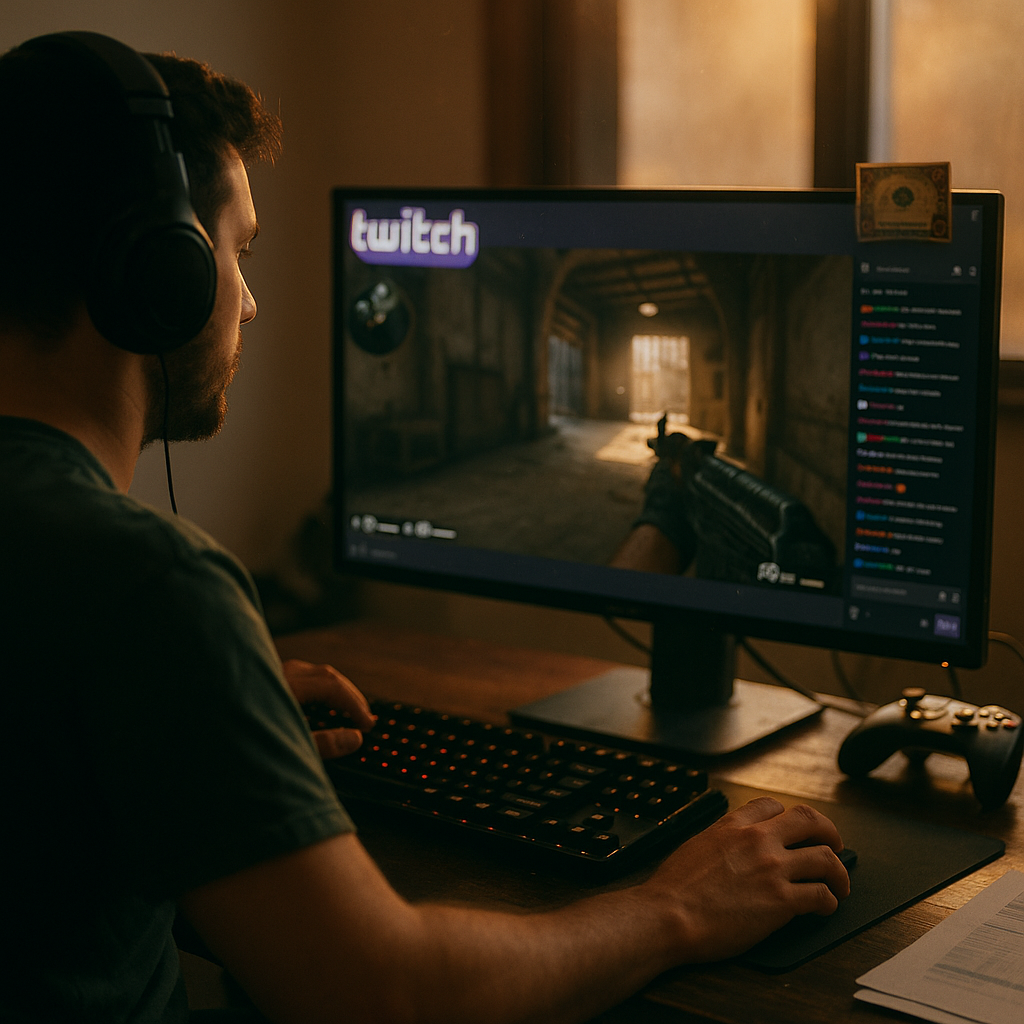
Only 32 cents of every advertised dollar on Twitch is landing as a realized rate today, down from levels north of 45% two years ago. That collapse isn’t a rounding error, it’s a signal. For gaming brands that built entire media plans around Twitch’s live, always-on audience, the question isn’t whether to notice this, it’s what to do about it. Should budgets shift toward YouTube, where realized rates and monetization infrastructure look sturdier by comparison?
What “Realized Rate” Actually Measures
Realized rate is the gap between what a brand pays on a rate card or CPM basis and what it actually captures in delivered, viewable, monetizable impressions. Think of it as yield efficiency: you buy 100 impressions, but only 32 of them clear the bar for viewability, fraud filtering, and completed delivery that advertisers actually pay for at full value.
On Twitch, this number has been sliding for a few reasons. Ad load has increased as the platform chases revenue, but viewer ad-blocking and skip behavior have increased right alongside it. Amazon’s ad stack for Twitch has also gone through repeated restructuring, and each transition tends to introduce measurement gaps that show up as lower realized yield. Brands buying programmatically through Twitch’s marketplace are, in effect, paying rate card prices for an audience that’s shrinking in real, countable terms.
A realized rate of 32% means brands are effectively paying premium CPMs for roughly a third of the delivery they think they’re buying, a gap most media plans were never built to absorb.
Why This Hits Gaming Brands Harder Than Most
Gaming and esports advertisers have historically over-indexed on Twitch because that’s where the audience lived. Sponsorship deals, drops campaigns, and co-streamed launches were built around Twitch’s live-chat culture. But live doesn’t mean measurable, and measurable is what finance teams demand when budgets tighten. A CMO can tolerate soft attribution when realized rates are healthy. When yield craters to a third of face value, that same soft attribution becomes a line item nobody can defend in a budget review.
It’s also worth remembering that gaming audiences are increasingly multi-platform anyway. A player watching a Twitch stream at 9 p.m. is often the same person clipping highlights on YouTube the next morning. The question is less “where does the audience exist” and more “where does the dollar actually convert.”
Is YouTube Really the Safer Bet?
YouTube isn’t perfect, but its ad infrastructure benefits from over a decade of Google’s measurement tooling, first-party data signals, and a much larger advertiser marketplace driving competitive fill rates. That maturity shows up in more predictable realized yield, even if headline CPMs run higher than Twitch’s.
YouTube also gives gaming brands format flexibility that Twitch doesn’t: long-form let’s-plays, Shorts for discovery, live premieres for launch moments, and increasingly sophisticated Shopping integrations. According to eMarketer’s connected TV and video ad spend tracking, YouTube continues to capture a growing share of video budgets precisely because measurement confidence, not just reach, drives allocation decisions.
That said, YouTube isn’t a blank check either. Ad load fatigue is real, brand safety adjacency issues persist in comment sections and creator content, and the platform’s new first-frame view rule has already forced brands to rewrite creative briefs to avoid losing counted views in the first few seconds. Any reallocation plan needs to account for these friction points rather than assume YouTube is a frictionless upgrade.
The Reallocation Math, Broken Down
Before shifting spend, run the numbers the way a media buyer actually would, not the way a headline stat suggests you should. A few things to model:
- Effective CPM after realized rate. A $20 CPM on Twitch at 32% realization behaves more like a $62 effective CPM once you back out unmonetized delivery. Compare that against YouTube’s realized CPM using your own campaign data, not industry averages.
- Format substitution costs. Twitch drops and live co-streams don’t translate one-to-one into YouTube formats. You may need to rebuild creative for Shorts or long-form, which carries production cost that a straight budget shift doesn’t capture.
- Audience overlap. If your Twitch and YouTube audiences already overlap 40 to 60%, as is common in gaming verticals, you’re not necessarily reaching new people, you’re paying differently for the same eyeballs.
- Attribution windows. Twitch’s live, chat-driven engagement produces different attribution patterns than YouTube’s search-and-discovery model. Compare like-for-like conversion windows before declaring a winner.
Brands running this math against their own campaign data, rather than trusting platform-reported benchmarks, consistently find the answer is a rebalance, not a wholesale exit. Pure reallocation without testing is just as risky as staying put.
A Practical Reallocation Framework
Rather than an all-or-nothing move, treat this as a phased test with clear kill criteria.
- Audit your current realized rate on Twitch. Pull delivery reports directly from your DSP or Amazon’s ad console rather than relying on rate-card assumptions. If your number is close to the reported 32% average, you have your baseline.
- Shift 15 to 20% of spend to YouTube as a controlled test. Keep creative comparable in tone and length so you’re isolating platform performance, not creative variance.
- Track realized CPM, not just impressions delivered. Use third-party verification where possible, similar to the practices outlined by Sprout Social’s guidance on cross-platform measurement consistency.
- Reassess creator partnerships separately from platform spend. Many gaming creators stream on Twitch and publish on YouTube simultaneously. A platform shift doesn’t have to mean severing a relationship, it can mean renegotiating deliverables toward the channel with better realized yield.
- Set a 90-day review checkpoint. Compare blended CPA and realized CPM across both platforms before making the shift permanent.
The brands winning this transition aren’t abandoning Twitch, they’re renegotiating deliverables toward whichever channel actually converts, then letting the data set the split.
Where Creator Relationships Complicate the Decision
Platform-level ad buying is only half the picture. Most gaming brand deals run through creator sponsorships, and creators themselves are diversifying. A top Twitch streamer with a strong YouTube upload cadence gives brands leverage: you can structure a deal that pays based on blended performance across both platforms rather than betting everything on one feed. This is where engagement density metrics matter more than raw follower counts, a creator with modest Twitch numbers but high-density YouTube engagement might deliver better realized value than a bigger name spread thin across both.
Brands also need to keep disclosure compliance tight regardless of platform. YouTube’s branded content labeling requirements differ meaningfully from Twitch’s sponsorship disclosure norms, and getting this wrong invites regulatory risk under FTC endorsement guidelines. Review the specifics in this brand compliance playbook before shifting creator contracts wholesale.
Gaming-adjacent platforms are also part of this equation. Brands running activations inside Fortnite Creative or similar branded-world experiences are already comfortable measuring ROI outside traditional video ad buys, which makes them more willing to treat Twitch and YouTube as interchangeable line items rather than sacred budget categories.
What This Means for Budget Planning Going Forward
The realistic outcome for most gaming brands isn’t a full migration, it’s a structural rebalance. Expect Twitch to remain valuable for live launch moments, community-building drops, and real-time engagement during major releases. Expect YouTube to absorb a growing share of always-on, evergreen, and discovery-driven spend, particularly as its ad measurement tooling continues to outpace Twitch’s.
Brands comparing paid reach across video formats more broadly should also look at how YouTube Shorts stacks up against Instagram’s ad API for reach efficiency, since short-form is increasingly where incremental gaming audience growth is happening. Treating platform selection as an ongoing measurement exercise, rather than a one-time budget decision, is the only sustainable way to manage a realized rate collapse like Twitch’s.
For benchmarking purposes, keep an eye on aggregate ad spend and CPM trend data from Statista and product-level guidance from Google’s ad support documentation, both of which update frequently enough to catch shifts before they show up in your own campaign reports.
FAQs
What caused Twitch’s realized rate to collapse to 32%?
A combination of rising ad load, increased ad-blocking and skip behavior among viewers, and repeated restructuring of Amazon’s ad stack for Twitch has widened the gap between rate-card pricing and actually delivered, monetizable impressions.
Should gaming brands move all their budget from Twitch to YouTube?
No. Most brands see better results from a phased, tested reallocation of 15 to 20% of spend rather than a full exit, since Twitch still performs well for live launch and community moments while YouTube tends to win on always-on and discovery-driven spend.
How is realized rate different from CPM?
CPM reflects the price paid per thousand impressions purchased. Realized rate reflects the percentage of those purchased impressions that actually clear viewability, fraud, and delivery filters, which determines the true effective cost of the campaign.
Do creator partnerships need to change if a brand shifts platform spend?
Not necessarily. Many gaming creators already publish across both Twitch and YouTube, so brands can renegotiate deliverables toward the higher-performing channel without ending the relationship entirely.
What’s the fastest way to test YouTube performance against Twitch?
Run a controlled test with comparable creative, track realized CPM and blended CPA rather than raw impressions, and set a 90-day checkpoint before committing to a permanent budget shift.
FAQs
See visible FAQ section above for the same content.
Next step: Pull your last quarter’s Twitch delivery report, calculate your actual realized rate, and run a 90-day, 20% budget test on YouTube before committing to anything bigger. Let the data set the split, not the headline.
Top Influencer Marketing Agencies
The leading agencies shaping influencer marketing in 2026
Agencies ranked by campaign performance, client diversity, platform expertise, proven ROI, industry recognition, and client satisfaction. Assessed through verified case studies, reviews, and industry consultations.
Moburst

-
2

The Shelf
Boutique Beauty & Lifestyle Influencer AgencyA data-driven boutique agency specializing exclusively in beauty, wellness, and lifestyle influencer campaigns on Instagram and TikTok. Best for brands already focused on the beauty/personal care space that need curated, aesthetic-driven content.Clients: Pepsi, The Honest Company, Hims, Elf Cosmetics, Pure LeafVisit The Shelf → -
3

Audiencly
Niche Gaming & Esports Influencer AgencyA specialized agency focused exclusively on gaming and esports creators on YouTube, Twitch, and TikTok. Ideal if your campaign is 100% gaming-focused — from game launches to hardware and esports events.Clients: Epic Games, NordVPN, Ubisoft, Wargaming, Tencent GamesVisit Audiencly → -
4

Viral Nation
Global Influencer Marketing & Talent AgencyA dual talent management and marketing agency with proprietary brand safety tools and a global creator network spanning nano-influencers to celebrities across all major platforms.Clients: Meta, Activision Blizzard, Energizer, Aston Martin, WalmartVisit Viral Nation → -
5

The Influencer Marketing Factory
TikTok, Instagram & YouTube CampaignsA full-service agency with strong TikTok expertise, offering end-to-end campaign management from influencer discovery through performance reporting with a focus on platform-native content.Clients: Google, Snapchat, Universal Music, Bumble, YelpVisit TIMF → -
6

NeoReach
Enterprise Analytics & Influencer CampaignsAn enterprise-focused agency combining managed campaigns with a powerful self-service data platform for influencer search, audience analytics, and attribution modeling.Clients: Amazon, Airbnb, Netflix, Honda, The New York TimesVisit NeoReach → -
7

Ubiquitous
Creator-First Marketing PlatformA tech-driven platform combining self-service tools with managed campaign options, emphasizing speed and scalability for brands managing multiple influencer relationships.Clients: Lyft, Disney, Target, American Eagle, NetflixVisit Ubiquitous → -
8

Obviously
Scalable Enterprise Influencer CampaignsA tech-enabled agency built for high-volume campaigns, coordinating hundreds of creators simultaneously with end-to-end logistics, content rights management, and product seeding.Clients: Google, Ulta Beauty, Converse, AmazonVisit Obviously →