


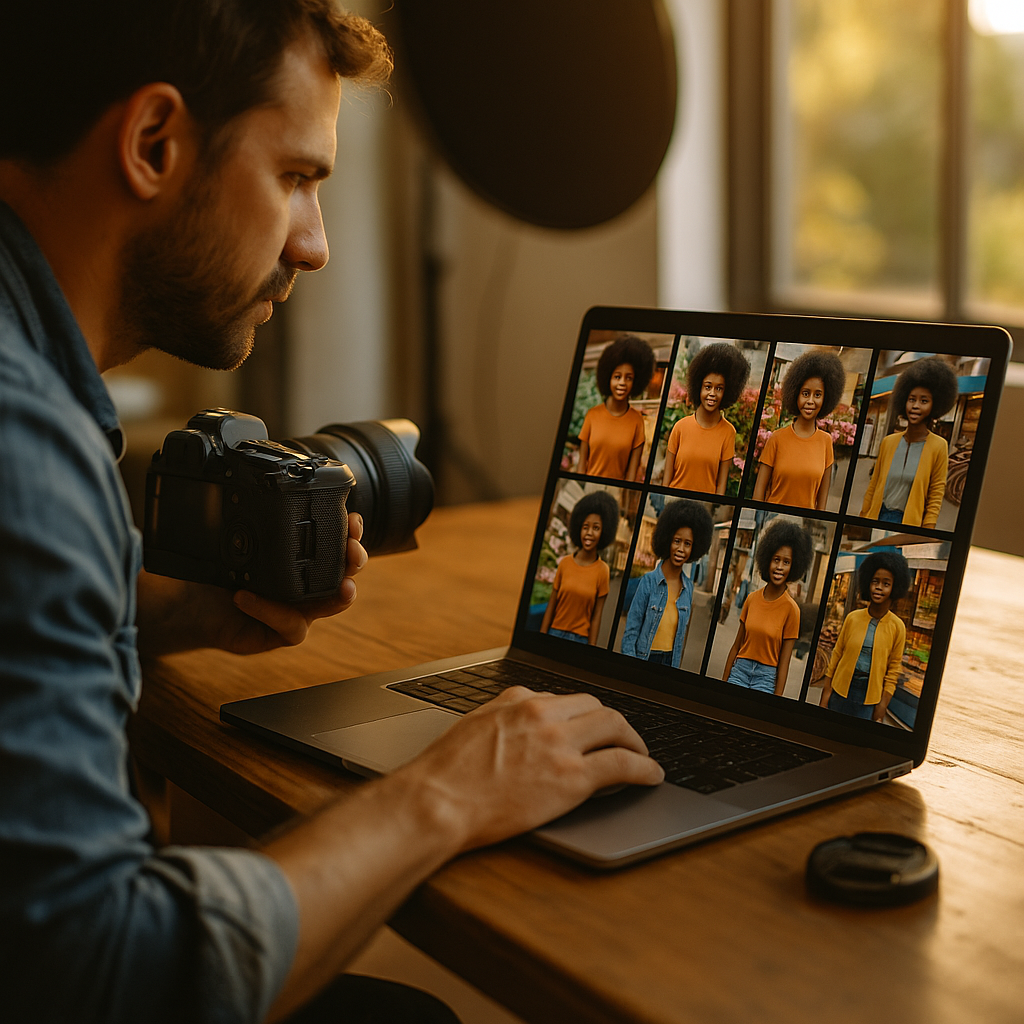
One shoot. Ten markets. Zero reshoots. That’s the pitch behind localized AI video versioning, and it’s no longer a lab experiment. Brands running multi-market influencer programs are already cutting production costs by 60-70% using this exact model, according to workflow benchmarks circulating among enterprise creative teams in late 2025. The question isn’t whether this works. It’s whether your team knows how to build the pipeline correctly.
The Math Problem With One Shoot, Ten Markets
Here’s the old math. A global brand wants localized creator content for the UK, Germany, Brazil, Japan, Mexico, France, South Korea, Indonesia, Saudi Arabia, and the US. Traditional approach: hire local creators or dub agencies in each market, coordinate ten separate shoots or ten separate voiceover sessions, manage ten sets of legal review, and pray the messaging stays consistent. That’s easily $150,000 to $400,000 depending on production complexity, and a timeline stretching eight to twelve weeks.
Now the new math. One creator shoot. One clean master file with isolated dialogue, isolated B-roll, and a locked script. Then AI handles voice cloning, lip resync, and localized on-screen text for each market cut. The creator shoots once. The versioning engine does the rest.
Teams that separate “creator performance” from “market localization” at the shoot stage cut post-production time by more than half compared to teams that try to localize after the fact.
That’s the entire premise. It’s not about replacing creators with AI avatars (that’s a different conversation, and a riskier one). It’s about capturing one authentic performance and re-rendering it across languages, dialects, and cultural contexts without dragging the same creator through ten shoot days.
What Actually Gets Versioned (And What Doesn’t)
Not everything in a video should change per market. Knowing what to lock versus what to localize is the difference between a scalable system and a compliance nightmare.
- Locked across all markets: product shots, brand logo placement, core narrative arc, hook structure, CTA timing.
- Localized per market: spoken dialogue (via AI dubbing or voice cloning), on-screen captions, currency and pricing references, cultural references or idioms, disclosure language for that region’s ad regulations.
- Sometimes localized: creator selection. Some brands swap in a regional micro-influencer’s face using consent-based likeness licensing for markets where the original talent has zero recognition. This is legally sensitive territory and requires explicit contractual coverage.
This is where a lot of teams stumble. They treat “localization” as a translation task when it’s actually a compliance and cultural-fit task wrapped in a translation task. A word-for-word dub of a US-style hard sell will flop in Japan and might trigger regulatory flags in Germany, where influencer disclosure rules are stricter than in the US. Our earlier deep dive on multi-language dubbing briefs covers the exact spec sheet legal teams should require before any AI dub goes live.
Building the Workflow, Step by Step
Here’s the actual pipeline, the one that’s replacing ten-shoot campaigns at agencies working with mid-market and enterprise brands.
- Shoot with versioning in mind. The creator delivers a clean take with minimal ad-libbed slang, isolated audio tracks, and generous B-roll coverage. Sloppy audio capture at this stage means every downstream version inherits the noise.
- Lock the master script and get legal sign-off once. This is the single biggest time saver. Approve the core claims and disclosures at the source, not per market.
- Run AI voice cloning or dubbing per target language. Tools like ElevenLabs, HeyGen, and Synthesia handle voice cloning and lip resync at production quality now, a significant jump from the uncanny-valley dubs of a couple of years ago.
- Localize on-screen text and captions separately from audio. Caption timing rarely matches dubbed audio timing one-to-one, so treat this as its own QA pass.
- Route each cut through regional compliance review. Disclosure wording, claims substantiation, and platform-specific ad labeling differ by country. The FTC’s endorsement guidelines and the UK’s ICO guidance are useful baselines, but they are not identical to EU or APAC frameworks.
- Publish with platform-native specs. Vertical crop for Reels and TikTok, square crop for feed placements, and don’t forget sound-off viewing defaults. Roughly eMarketer data suggests a majority of mobile video is still watched with sound off in-app, which is why caption quality matters as much as dub quality.
Steps three through five are where most of the time savings live. A team that used to need six weeks for dub coordination across ten markets can now turn the same batch around in five to seven business days.
Where This Breaks: Voice, Trust, and Brand Fit
AI voice cloning is good. It is not universally good. Tonal languages like Mandarin or Vietnamese still expose weaknesses in lip-sync accuracy, and regional accents within a single language (think Mexican Spanish versus Castilian Spanish) get flattened by generic dubbing models if you don’t specify dialect explicitly in your brief.
There’s also a trust question. Audiences are getting sharper at spotting AI-voiced content, and undisclosed synthetic voice work is starting to draw the same scrutiny as undisclosed sponsorships. If a viewer in Brazil watches a video and the mouth movement doesn’t quite match the Portuguese audio, that’s not just an aesthetic miss. It’s a credibility hit for the brand and the creator both.
This is why some agencies pair AI dubbing with a light human layer, a regional producer who reviews each cut for tone before it ships. It’s not full reshoot cost, but it’s not zero human oversight either. That hybrid model is exactly what we broke down in hybrid AI and human UGC production, and the logic transfers directly to versioning workflows.
The ROI Case Your CFO Actually Wants
Let’s talk numbers, because that’s what gets budget approved. A single high-production creator shoot with full usage rights might run $15,000 to $40,000 depending on talent tier and deliverables. Multiply that by ten markets under the old model, and you’re at $150,000 to $400,000 before media spend even enters the conversation.
Under the versioning model, you pay for the one shoot at full rate, then add per-language AI processing costs, typically a few hundred to a few thousand dollars per market depending on video length and dubbing complexity, plus a lighter compliance review pass. Total cost for ten market cuts often lands between $25,000 and $60,000 all-in. That’s not a marginal efficiency gain. That’s a structural shift in what a global influencer program can afford to run.
Brands that adopt versioning workflows aren’t just saving money, they’re running more test variants per market because the marginal cost of an extra cut drops close to zero.
That last point matters more than the raw savings. When a tenth market cut costs a fraction of the first, teams start A/B testing hooks, CTAs, and thumbnail variants per region instead of shipping one static version everywhere. That’s a genuine strategic upgrade, not just a cost cut. Related formats worth testing across these localized cuts include vertical mini series structures for retention-heavy markets and silent product demo formats for regions with heavy sound-off consumption habits.
What This Means for Your Creator Contracts
One overlooked wrinkle: usage rights language written for a single-market shoot rarely covers AI-based voice cloning and derivative versioning across ten regions. Update your contracts before you touch this workflow. Specify that the creator’s likeness and voice may be used as a source for AI-generated dubs, define the geographic scope, define the usage window, and define compensation terms for derivative versions. Creators are increasingly asking for this clarity themselves, and platforms like Meta for Business and TikTok for Business have both signaled tighter scrutiny on AI-generated content labeling in ad placements. Get ahead of it contractually rather than reactively.
For deeper background on the twelve-language production model this workflow builds on, see our companion piece on AI video localization at production scale.
Next step: before your next multi-market campaign brief goes out, add one line item: “master shoot with isolated audio and locked script for AI versioning.” That single spec decision is what makes the ten-market math actually work.
FAQs
What is localized AI video versioning?
It’s a production workflow where a brand shoots one creator video, then uses AI tools for voice cloning, dubbing, and localized text to produce multiple region-specific cuts from that single shoot, instead of reshooting content in every target market.
How much does AI video versioning save compared to traditional multi-market shoots?
Teams typically report cost reductions of 60% to 80% when moving from ten separate market shoots to one master shoot plus AI-driven localization, largely because dubbing and re-editing cost far less than repeat production and travel.
Does AI dubbing require creator disclosure?
In most regions, yes. If a creator’s voice is synthetically generated or cloned, platforms and regulators increasingly expect clear disclosure, similar to sponsorship disclosure rules. Check FTC guidance and local equivalents before publishing.
Which markets are hardest to version accurately with AI dubbing?
Tonal languages such as Mandarin and Vietnamese, along with regional dialect variations within a single language, tend to expose the biggest gaps in lip-sync accuracy and natural phrasing, and usually need a human review pass.
Do I need separate creator contracts for AI-versioned content?
Yes. Standard single-market usage rights rarely cover AI voice cloning or multi-region derivative use. Contracts should explicitly define geographic scope, AI usage permissions, and compensation for each derivative version.
Top Influencer Marketing Agencies
The leading agencies shaping influencer marketing in 2026
Agencies ranked by campaign performance, client diversity, platform expertise, proven ROI, industry recognition, and client satisfaction. Assessed through verified case studies, reviews, and industry consultations.
Moburst

-
2

The Shelf
Boutique Beauty & Lifestyle Influencer AgencyA data-driven boutique agency specializing exclusively in beauty, wellness, and lifestyle influencer campaigns on Instagram and TikTok. Best for brands already focused on the beauty/personal care space that need curated, aesthetic-driven content.Clients: Pepsi, The Honest Company, Hims, Elf Cosmetics, Pure LeafVisit The Shelf → -
3

Audiencly
Niche Gaming & Esports Influencer AgencyA specialized agency focused exclusively on gaming and esports creators on YouTube, Twitch, and TikTok. Ideal if your campaign is 100% gaming-focused — from game launches to hardware and esports events.Clients: Epic Games, NordVPN, Ubisoft, Wargaming, Tencent GamesVisit Audiencly → -
4

Viral Nation
Global Influencer Marketing & Talent AgencyA dual talent management and marketing agency with proprietary brand safety tools and a global creator network spanning nano-influencers to celebrities across all major platforms.Clients: Meta, Activision Blizzard, Energizer, Aston Martin, WalmartVisit Viral Nation → -
5

The Influencer Marketing Factory
TikTok, Instagram & YouTube CampaignsA full-service agency with strong TikTok expertise, offering end-to-end campaign management from influencer discovery through performance reporting with a focus on platform-native content.Clients: Google, Snapchat, Universal Music, Bumble, YelpVisit TIMF → -
6

NeoReach
Enterprise Analytics & Influencer CampaignsAn enterprise-focused agency combining managed campaigns with a powerful self-service data platform for influencer search, audience analytics, and attribution modeling.Clients: Amazon, Airbnb, Netflix, Honda, The New York TimesVisit NeoReach → -
7

Ubiquitous
Creator-First Marketing PlatformA tech-driven platform combining self-service tools with managed campaign options, emphasizing speed and scalability for brands managing multiple influencer relationships.Clients: Lyft, Disney, Target, American Eagle, NetflixVisit Ubiquitous → -
8

Obviously
Scalable Enterprise Influencer CampaignsA tech-enabled agency built for high-volume campaigns, coordinating hundreds of creators simultaneously with end-to-end logistics, content rights management, and product seeding.Clients: Google, Ulta Beauty, Converse, AmazonVisit Obviously →