


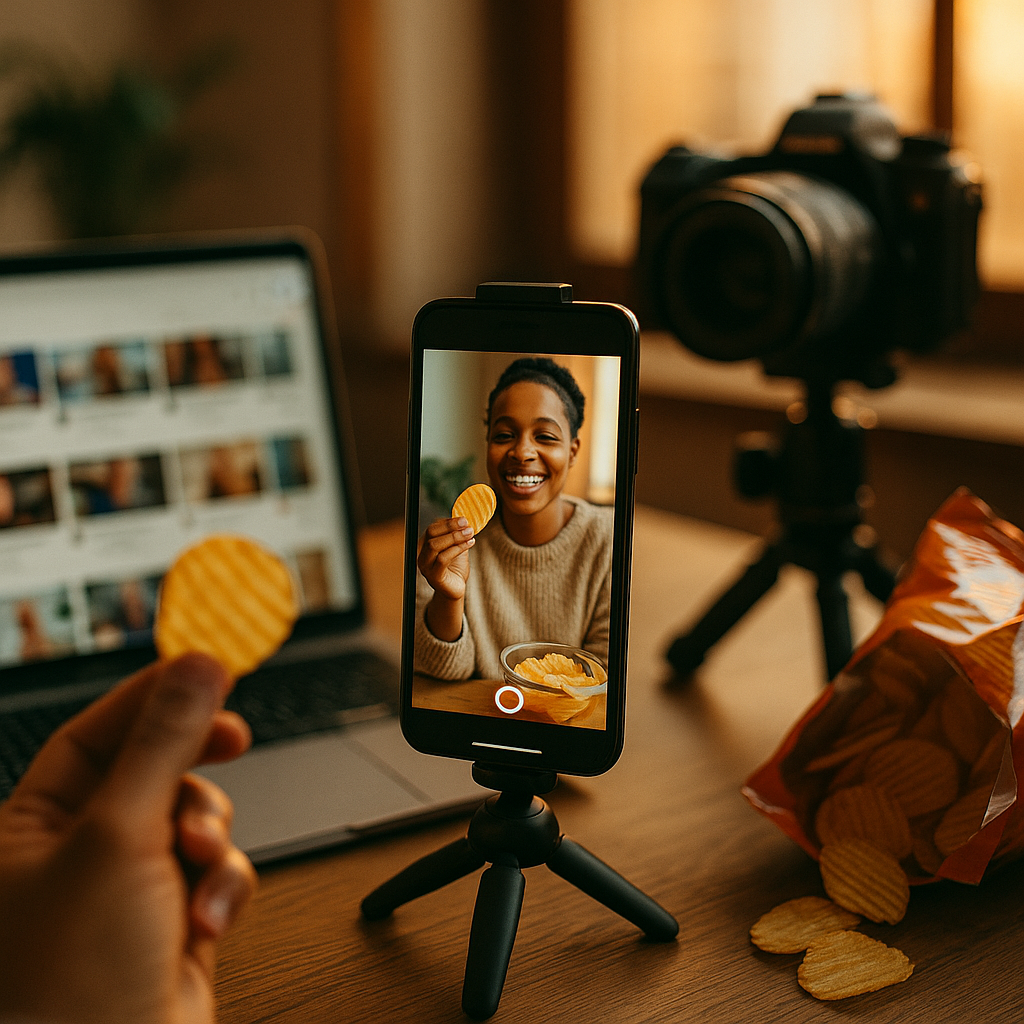
Here’s an uncomfortable number for anyone still treating TikTok as the whole short-form game: eMarketer data shows YouTube Shorts and Instagram Reels now collectively command more daily short-form watch time among adults 25-54 than TikTok does. If your snackable niche video strategy lives on one platform, you’re leaving reach, and revenue, on the table. This playbook breaks down how the algorithms actually differ, and what brands need to do about it.
TikTok Isn’t the Whole Game Anymore
TikTok built the short-form playbook. Fair enough. But the platform’s regulatory uncertainty in the US, combined with the sheer scale of competing feeds, means brands who over-index on one app are running a single point of failure strategy. YouTube Shorts crossed 200 billion daily views globally per Google’s own reporting. Instagram Reels quietly became Meta’s fastest-growing ad inventory. Snapchat Spotlight pays out directly to creators and rewards niche authenticity over polish.
None of this means abandon TikTok. It means stop treating “short-form strategy” as synonymous with “TikTok strategy.” They’re not the same job anymore.
Brands running identical clips across TikTok, Reels, and Shorts without adjusting for each platform’s ranking logic are essentially throwing darts blindfolded, and wondering why engagement rates keep sliding.
Why Niche Beats Broad on Short Form
Broad, lowest-common-denominator content used to win on reach. It still can, briefly. But the algorithms across every major short-form platform have shifted toward satisfying tightly defined interest communities rather than chasing viral mass appeal. That’s a gift for B2B and niche consumer brands who spent years assuming short-form video wasn’t “their” channel.
Think about it from the platform’s incentive structure. TikTok, Reels, and Shorts all make money by keeping people scrolling. The fastest way to do that isn’t showing everyone the same viral dance. It’s building a session where every third clip feels like it was made specifically for that viewer. A woodworking tool brand posting to woodworking-adjacent niche pockets will outperform a generic “satisfying content” account every time, because the algorithm rewards session-level relevance, not raw view counts.
- Niche content earns higher completion rates because it’s pre-qualified for interest.
- Higher completion rates signal quality to the recommendation engine.
- That signal gets your next video shown to a warmer, more specific audience.
It’s a flywheel. Generic content breaks it at step one.
The Algorithm Signals That Actually Matter (And They’re Not the Same Everywhere)
This is where most brand teams get lazy. They assume “watch time” is watch time, everywhere. It isn’t.
TikTok still weighs completion rate and rewatches heavily, but its search function has become a discovery engine in its own right. If your video doesn’t answer a searchable intent in the first three seconds, you’re invisible to a growing chunk of TikTok’s traffic. Our team covered this shift in depth in TikTok’s search bidding dynamics, which matters more for short-form discoverability than most brands realize.
YouTube Shorts now enforces what amounts to a first-frame accountability rule: the platform’s view-counting logic has tightened around what actually qualifies as a genuine impression versus a passive scroll-by. Brands briefing creators without accounting for this are wasting production budget on clips that get counted differently than they expect. We broke down the mechanics in our piece on the YouTube first-frame view rule.
Instagram Reels rewards saves and shares over likes, full stop. Meta has said as much repeatedly in its creator-facing documentation. If your niche video isn’t save-worthy (a reference tool, a checklist, a “how-to” moment), it’s fighting an uphill battle against content built specifically to be bookmarked.
Snapchat Spotlight operates almost entirely outside the follower-graph logic that governs the other three. It’s a cold-discovery engine that rewards raw completion and originality, which is why it’s become a cheap testing ground for Gen Z-facing brands. We’ve written about how brands are using the Snapchat Creator Marketplace to get reach at a fraction of TikTok’s CPM.
Building a Cross-Platform Snackable Content Engine
Here’s the operational reality: most in-house teams can’t produce four completely distinct short-form strategies with four completely distinct production pipelines. Nor should they try. The fix is a modular content system, not four separate content plans.
- Shoot once, cut for intent. Capture raw footage with enough coverage that editors can produce a search-optimized TikTok cut, a save-worthy Reels cut, and a raw-feeling Spotlight cut from the same session.
- Brief creators on platform-native hooks, not generic scripts. A hook that works for TikTok’s search behavior often falls flat on Shorts, where autoplay context is different.
- Build a niche content calendar around recurring community questions, not brand campaign moments. Niche audiences reward consistency and specificity over big splashy launches.
- Test format before spend. Run organic niche content for two to three weeks before layering paid amplification. The algorithm’s organic response tells you which cuts are worth boosting.
This is essentially the same operational logic behind creator ambassador programs that scale without losing authenticity. If you’re building a repeatable creator pipeline for niche audiences, the structure outlined in our Notion ambassador program breakdown translates well to short-form niche campaigns, even outside SaaS.
Where Brands Get This Wrong
Let’s be honest about the failure modes, because they’re predictable.
Chasing trends instead of owning a lane. Jumping on every trending sound dilutes the niche signal the algorithm is trying to build around your account. Pick a lane. Stay in it. Let the algorithm learn who you’re for.
Ignoring emerging platforms entirely. Lemon8, for instance, has become a proving ground for beauty and lifestyle brands specifically because its algorithm still rewards early, niche-authentic content before the space gets crowded. We covered why beauty brands are testing early in the Lemon8 marketing playbook, and the underlying logic applies to any brand willing to move before a platform saturates.
Treating short-form as a top-of-funnel-only channel. The retention layer matters just as much. YouTube’s Community tab, for example, lets brands re-engage viewers between Shorts drops without burning production budget, something we detailed in our piece on the YouTube Community tab. Most brands ignore it entirely.
Measuring the wrong thing. Views are vanity unless they’re converting into saves, shares, profile visits, or link clicks. Sprout Social’s benchmarking data consistently shows engagement rate and save rate correlate far more strongly with downstream conversion than raw view count.
Measuring ROI Beyond Views
If your reporting dashboard still leads with total views, you’re optimizing for the wrong outcome. Niche snackable video needs a different scorecard:
- Save rate: the strongest predictor of algorithmic favor on Reels and a decent proxy for content utility elsewhere.
- Completion rate by niche segment: not blended across your whole audience, segmented by the interest cluster the algorithm is actually serving you to.
- Comment sentiment quality: niche audiences leave detailed, specific comments. Generic “love this” comments signal you’ve drifted broad again.
- Cross-platform attribution: track whether a Spotlight-native viewer eventually converts on a landing page, not just whether they watched the clip.
HubSpot’s attribution modeling guidance is a useful starting framework if your team is still stitching together short-form data from four separate platform dashboards.
The brands winning niche short-form right now aren’t the ones with the biggest budgets. They’re the ones who stopped treating every platform’s algorithm like the same black box.
Frequently Asked Questions
FAQs
What makes a video “snackable” in algorithm terms?
A snackable video is short, front-loads its value in the first two to three seconds, and delivers a complete payoff without requiring context from previous content. Algorithms reward this format because it produces higher completion rates, which most short-form ranking systems treat as their strongest quality signal.
Is TikTok still the best platform for niche short-form content?
TikTok remains strong for discovery and search-driven niche content, but YouTube Shorts, Instagram Reels, and Snapchat Spotlight each reward niche specificity through different mechanisms. Brands get better overall reach by distributing across at least two or three platforms rather than concentrating entirely on one.
How long should niche short-form video be?
Most platforms still favor content between fifteen and thirty seconds for maximum completion rate, though YouTube Shorts has shown more tolerance for slightly longer clips (up to sixty seconds) when the content maintains strong retention throughout.
How often should brands post niche short-form content?
Consistency matters more than volume. Three to five posts per week on a primary platform, sustained over months, builds a stronger algorithmic profile than sporadic bursts of daily posting followed by silence.
Can small or B2B brands compete in niche short-form video?
Yes, and often more easily than broad consumer brands. Niche short-form algorithms reward relevance to a defined audience over mass appeal, which favors specialized brands with a clearly defined community over generalist accounts chasing viral reach.
Stop asking which platform “wins” short-form and start building a modular content system that respects how each algorithm actually ranks niche relevance. Pick one platform to test the framework above for the next thirty days, measure save rate and segmented completion rate instead of total views, then expand what works to a second channel.
Top Influencer Marketing Agencies
The leading agencies shaping influencer marketing in 2026
Agencies ranked by campaign performance, client diversity, platform expertise, proven ROI, industry recognition, and client satisfaction. Assessed through verified case studies, reviews, and industry consultations.
Moburst

-
2

The Shelf
Boutique Beauty & Lifestyle Influencer AgencyA data-driven boutique agency specializing exclusively in beauty, wellness, and lifestyle influencer campaigns on Instagram and TikTok. Best for brands already focused on the beauty/personal care space that need curated, aesthetic-driven content.Clients: Pepsi, The Honest Company, Hims, Elf Cosmetics, Pure LeafVisit The Shelf → -
3

Audiencly
Niche Gaming & Esports Influencer AgencyA specialized agency focused exclusively on gaming and esports creators on YouTube, Twitch, and TikTok. Ideal if your campaign is 100% gaming-focused — from game launches to hardware and esports events.Clients: Epic Games, NordVPN, Ubisoft, Wargaming, Tencent GamesVisit Audiencly → -
4

Viral Nation
Global Influencer Marketing & Talent AgencyA dual talent management and marketing agency with proprietary brand safety tools and a global creator network spanning nano-influencers to celebrities across all major platforms.Clients: Meta, Activision Blizzard, Energizer, Aston Martin, WalmartVisit Viral Nation → -
5

The Influencer Marketing Factory
TikTok, Instagram & YouTube CampaignsA full-service agency with strong TikTok expertise, offering end-to-end campaign management from influencer discovery through performance reporting with a focus on platform-native content.Clients: Google, Snapchat, Universal Music, Bumble, YelpVisit TIMF → -
6

NeoReach
Enterprise Analytics & Influencer CampaignsAn enterprise-focused agency combining managed campaigns with a powerful self-service data platform for influencer search, audience analytics, and attribution modeling.Clients: Amazon, Airbnb, Netflix, Honda, The New York TimesVisit NeoReach → -
7

Ubiquitous
Creator-First Marketing PlatformA tech-driven platform combining self-service tools with managed campaign options, emphasizing speed and scalability for brands managing multiple influencer relationships.Clients: Lyft, Disney, Target, American Eagle, NetflixVisit Ubiquitous → -
8

Obviously
Scalable Enterprise Influencer CampaignsA tech-enabled agency built for high-volume campaigns, coordinating hundreds of creators simultaneously with end-to-end logistics, content rights management, and product seeding.Clients: Google, Ulta Beauty, Converse, AmazonVisit Obviously →