


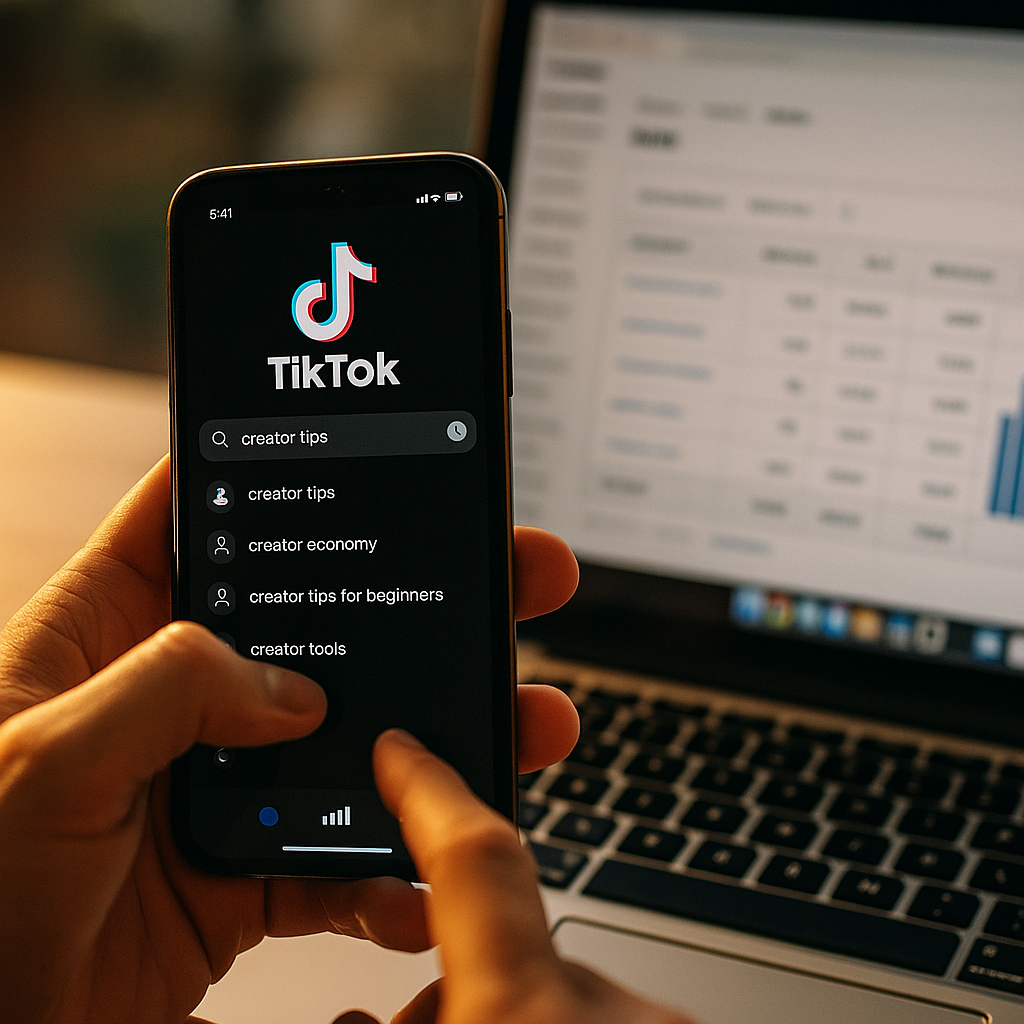
TikTok Search Ads now sit next to organic results for roughly 40% of the platform’s users who skip the “For You” feed entirely and go straight to the search bar looking for product recommendations, reviews, and “is this worth it” verdicts from creators. If your media plan still treats TikTok as a pure discovery-feed play, you’re leaving intent-rich inventory on the table for competitors who figured out that search behavior on this app looks nothing like Google.
Why Creator-Driven Search Is the New Battleground
TikTok trained an entire generation to search differently. Instead of typing “best running shoes,” users type “running shoes that actually fit wide feet tiktok made me buy” or search a creator’s handle plus a product category. These queries carry commercial intent, but they’re wrapped in creator language, not keyword-tool language. That distinction matters enormously for bidding strategy.
When someone searches a creator name alongside a product category, they’re not casually browsing. They’ve likely already seen a video, formed an opinion, and are now verifying or comparison-shopping. Brands that show up in that moment with a relevant search ad convert at a meaningfully higher rate than those relying purely on feed placements. TikTok’s own advertising documentation confirms search ad units now appear across both the search results page and as suggested terms beneath organic videos, which means the surface area for creator-adjacent queries keeps expanding.
The brands winning on TikTok Search aren’t bidding on products. They’re bidding on the exact phrases creators use to describe those products, because that’s the language their audience searches in.
How This Differs From Traditional Search Advertising
Google Ads rewards you for anticipating what a stranger might type when they have a problem. TikTok Search rewards you for anticipating what a fan might type after watching a specific creator solve that problem. The keyword research process is inverted. You’re not starting with a product and working backward to intent, you’re starting with creator content and working forward to the phrases that content generates.
This is also why agencies that treat TikTok Search as an afterthought inside a broader paid social buy tend to underperform. It requires its own research process, its own creative, and honestly its own mindset. Tools like Sprout Social’s listening features can help surface the exact phrasing audiences use around a creator or trend, which is far more useful here than a standard SEO keyword planner.
Building the Bidding Playbook
Here’s where most teams stumble: they import their Google Ads bidding logic wholesale and wonder why CPCs spike or impressions stall. TikTok Search auctions behave differently because the competitive set is different. You’re not just bidding against direct competitors, you’re bidding against the creators themselves and against other brands who partnered with the same creator.
- Start with branded creator pairs. Bid on queries combining your brand name with a creator’s handle or common nickname. These have low competition and high intent, making them the cheapest wins available.
- Layer in “dupe” and comparison language. Queries like “[creator] alternative” or “cheaper version of [product creator reviewed]” convert surprisingly well and are almost never contested by the original brand.
- Bid on trend-adjacent phrasing during the first 72 hours. When a creator video starts trending, search volume around its specific phrasing spikes fast and fades faster. Early bidding captures cheap impressions before competitors notice the spike.
- Use exact match sparingly. Broad and phrase match capture the messy, misspelled, slang-heavy way people actually search on TikTok. Exact match alone will starve your campaign.
Bid strategy should flex by funnel stage too. For top-of-funnel creator discovery queries, a lower target CPA with broader reach makes sense because you’re building association, not closing sales. For bottom-funnel queries (brand name plus “worth it” or “review”), push bids higher because that searcher is one tap from checkout.
What Queries Are Actually Worth Bidding On?
Not every creator mention deserves ad spend. Prioritize queries where search volume is rising week over week, where the creator has genuine category authority (a skincare creator’s audience searching skincare terms, not random tangential content), and where your product or service can credibly answer the query within three seconds of landing page load. TikTok users bounce fast if the ad promises a creator vibe and the landing page delivers generic e-commerce boilerplate.
Run a monthly audit pulling your top 50 converting search terms and cross-reference them against which creators drove that language. You’ll usually find 60% to 70% of your best terms trace back to fewer than ten creators. That’s your bidding priority list, not a broad net across every micro-influencer who mentioned your category once.
Budget Allocation Without Guesswork
A reasonable starting split for teams new to TikTok Search Ads: 50% toward branded and creator-paired terms, 30% toward category and comparison terms, and 20% held as a reactive fund for emerging trend spikes. Adjust monthly based on which bucket delivers the lowest cost per acquisition, but resist the urge to abandon the reactive fund entirely. Trend-chasing on TikTok is volatile, but the ROI on catching a spike early is often the best of the quarter.
Enterprise brands running six-figure monthly budgets should also consider dayparting around creator posting schedules. If a partnered creator consistently posts at 7pm, search volume around associated terms typically peaks two to four hours later. Shifting bid pacing to match that window stretches budget further than flat, all-day delivery.
Search interest tied to a single viral creator video can spike 300% within a day and collapse just as fast. Treat your reactive budget bucket as an always-on trigger, not a quarterly line item.
Mistakes That Quietly Drain Budget
The most common failure isn’t bad bidding math, it’s mismatched creative. If your search ad copy sounds like a corporate press release and the query that triggered it came from a Gen Z creator’s slang-heavy review, the click-through rate collapses regardless of bid. Match tone to the query source, not to your brand style guide.
Second mistake: ignoring disclosure requirements when bidding on queries tied to sponsored creator content. If the underlying organic post was a paid partnership, your search ad referencing that creator needs to reflect the same transparency standards outlined by the Federal Trade Commission. Regulators have made clear that paid promotion needs clear disclosure regardless of which ad surface it appears on, and that includes search units built around influencer content.
Third, teams often forget to refresh negative keyword lists. Creator slang shifts fast. A phrase that was neutral last month can become associated with a controversy or a competing brand’s campaign this month, and your ad showing up next to it does real reputational damage. Weekly negative keyword reviews aren’t optional on this platform, they’re basic hygiene.
Measurement That Actually Reflects Reality
Standard last-click attribution undersells TikTok Search performance badly. Someone searches a creator-driven query, clicks your ad, doesn’t convert that session, then returns three days later via direct traffic to complete the purchase. If you’re only crediting last-click, you’re systematically underfunding a channel that’s actually working. Use TikTok’s own attribution windows generously (7-day click, 1-day view at minimum) and cross-reference with post-purchase surveys asking “how did you hear about us.”
Platforms like HubSpot and most modern CDPs can help stitch this multi-touch behavior together, but even a simple UTM-tagged landing page with a survey field gets you 80% of the insight for a fraction of the tooling cost. Data from eMarketer and Statista continues to show social search behavior growing fastest among users under 25, which means the attribution problem isn’t going away. It’s going to get more central to how you justify budget.
Comparable lessons apply across other creator-led platforms. Just as brands building in creator partnerships and KPIs on immersive platforms have learned to measure beyond surface engagement, TikTok Search demands the same discipline: track downstream behavior, not just the click. The operational parallels to measuring real ROI in other creator ecosystems are closer than most media planners assume.
Where This Fits Your Broader Creator Strategy
TikTok Search Ads shouldn’t run in isolation from your influencer program. The best-performing accounts treat search bidding as the paid amplification layer sitting directly beneath organic creator content, not a separate channel with its own strategy. When you brief creators, ask what phrases they expect their audience to search after watching. That’s not usually part of a standard content brief, but it should be, because it hands your media team a head start on keyword research before the video even publishes.
This same cross-functional thinking shows up in how leading teams approach building immersive creator experiences and retention on other platforms, where paid and organic strategy get planned together rather than in separate workstreams. It also mirrors the logic behind retention-focused creator channels on YouTube: the paid layer works best when it’s built to extend something organic that’s already resonating, not to manufacture interest from nothing.
Coordination between influencer teams and paid media buyers also reduces waste. If the influencer team knows a campaign is launching Tuesday, the paid team can pre-load search bids for the anticipated query spike instead of reacting a day late once CPCs have already climbed. Full visit to TikTok’s ads platform documentation on search placements is worth a quarterly review, since inventory rules and bid mechanics shift more often than most teams realize.
FAQs
What makes TikTok Search Ads different from standard TikTok feed ads?
Search ads target explicit intent, appearing when users actively type a query, while feed ads interrupt passive scrolling. Search ads on TikTok also frequently trigger off creator-specific language rather than generic product keywords, which changes both targeting and creative requirements.
How much budget should a brand start with for creator-driven search queries?
Most teams see reliable signal after spending at least $3,000 to $5,000 monthly split across branded, category, and reactive trend buckets. Below that threshold, auction data is often too thin to optimize bidding confidently.
Do I need creator permission to bid on their name in search ads?
Bidding on a creator’s name as a search term doesn’t require permission in the same way running their likeness in ad creative does. However, using a creator’s image, video content, or direct endorsement inside the ad itself typically requires a licensing agreement or usage rights clause in your influencer contract.
How often should negative keyword lists be updated for TikTok Search campaigns?
Weekly at minimum. Creator slang and trend-adjacent phrasing shift quickly, and a term that was safe last week can become reputationally risky within days.
Can small and mid-sized brands compete with larger advertisers on creator-driven search terms?
Yes, particularly on long-tail, creator-paired queries where larger brands haven’t bothered bidding. Niche creator audiences often have lower competition and cheaper CPCs than broad category terms dominated by enterprise budgets.
Start small: pick your top three brand-affiliated creators, build a search campaign around the exact phrases their audiences use, and measure with a 7-day attribution window before scaling spend further.
Top Influencer Marketing Agencies
The leading agencies shaping influencer marketing in 2026
Agencies ranked by campaign performance, client diversity, platform expertise, proven ROI, industry recognition, and client satisfaction. Assessed through verified case studies, reviews, and industry consultations.
Moburst

-
2

The Shelf
Boutique Beauty & Lifestyle Influencer AgencyA data-driven boutique agency specializing exclusively in beauty, wellness, and lifestyle influencer campaigns on Instagram and TikTok. Best for brands already focused on the beauty/personal care space that need curated, aesthetic-driven content.Clients: Pepsi, The Honest Company, Hims, Elf Cosmetics, Pure LeafVisit The Shelf → -
3

Audiencly
Niche Gaming & Esports Influencer AgencyA specialized agency focused exclusively on gaming and esports creators on YouTube, Twitch, and TikTok. Ideal if your campaign is 100% gaming-focused — from game launches to hardware and esports events.Clients: Epic Games, NordVPN, Ubisoft, Wargaming, Tencent GamesVisit Audiencly → -
4

Viral Nation
Global Influencer Marketing & Talent AgencyA dual talent management and marketing agency with proprietary brand safety tools and a global creator network spanning nano-influencers to celebrities across all major platforms.Clients: Meta, Activision Blizzard, Energizer, Aston Martin, WalmartVisit Viral Nation → -
5

The Influencer Marketing Factory
TikTok, Instagram & YouTube CampaignsA full-service agency with strong TikTok expertise, offering end-to-end campaign management from influencer discovery through performance reporting with a focus on platform-native content.Clients: Google, Snapchat, Universal Music, Bumble, YelpVisit TIMF → -
6

NeoReach
Enterprise Analytics & Influencer CampaignsAn enterprise-focused agency combining managed campaigns with a powerful self-service data platform for influencer search, audience analytics, and attribution modeling.Clients: Amazon, Airbnb, Netflix, Honda, The New York TimesVisit NeoReach → -
7

Ubiquitous
Creator-First Marketing PlatformA tech-driven platform combining self-service tools with managed campaign options, emphasizing speed and scalability for brands managing multiple influencer relationships.Clients: Lyft, Disney, Target, American Eagle, NetflixVisit Ubiquitous → -
8

Obviously
Scalable Enterprise Influencer CampaignsA tech-enabled agency built for high-volume campaigns, coordinating hundreds of creators simultaneously with end-to-end logistics, content rights management, and product seeding.Clients: Google, Ulta Beauty, Converse, AmazonVisit Obviously →