


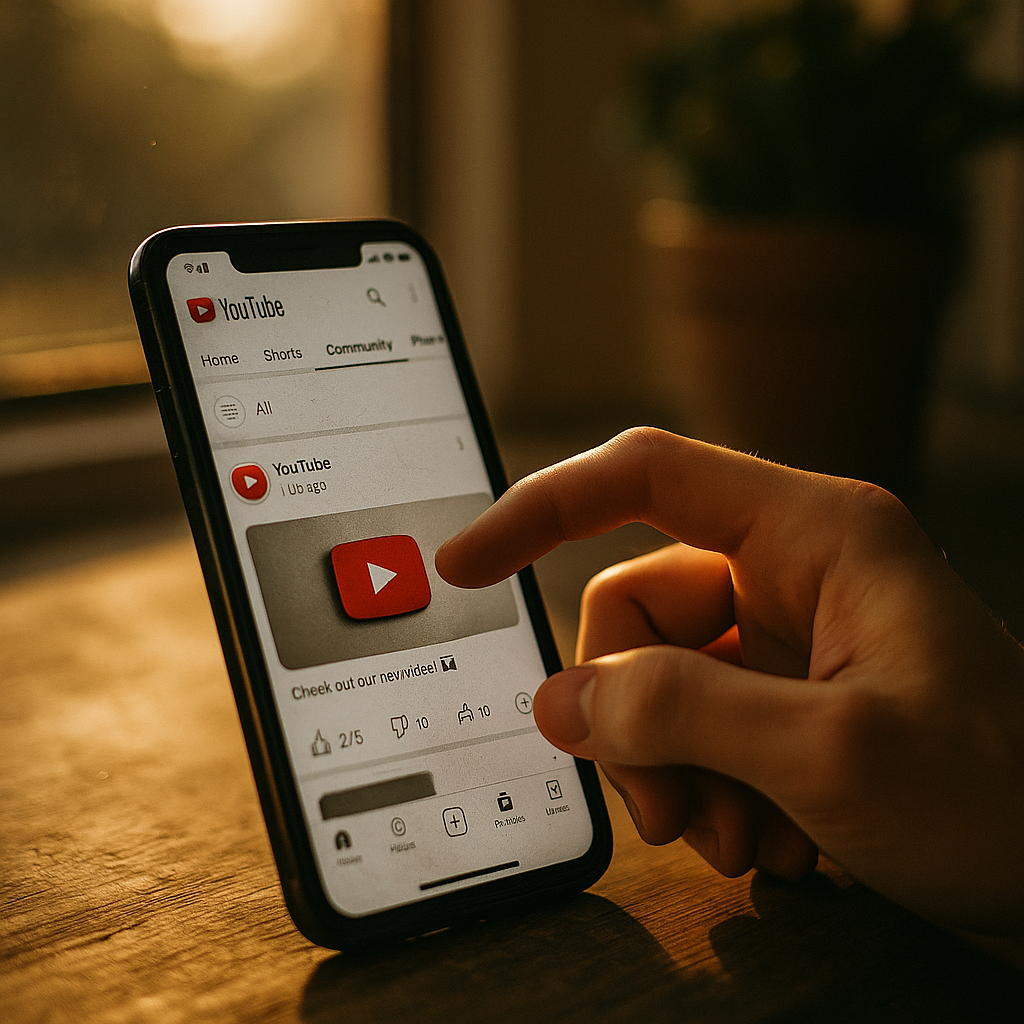
Channels with active Community Tab posting see measurably higher subscriber return rates than those that don’t touch it, according to creator analytics platforms tracking watch-time patterns. Yet ask ten brand marketers what their YouTube Community Tab strategy is, and nine will stare blankly. The YouTube Community Tab sits underneath the video grid, ignored by budgets that flow entirely toward production and paid promotion. That’s a retention channel left on the table.
What Is the Community Tab, and Why Do Brands Skip It?
The Community Tab is YouTube’s native posting feed, available once a channel crosses roughly 500 subscribers. Text updates, polls, images, GIFs, and now short video snippets all live there, appearing in subscribers’ feeds and sometimes their home tab between video uploads. It functions less like a social feed and more like a retention nudge, a way to stay present in a viewer’s algorithmic orbit without asking them to commit to a full watch session.
Brands ignore it for a predictable reason: it doesn’t map cleanly to a media plan. There’s no CPM, no boosted reach option, no obvious line item in a campaign deck. Agencies pitch video concepts, influencers deliver videos, and everyone moves on. The Community Tab feels like homework nobody assigned. But that’s precisely why it’s underused, and precisely why the brands that do use it well are quietly winning retention battles their competitors aren’t even fighting.
The Retention Math Nobody’s Running
YouTube’s own creator guidance has long emphasized session duration and returning viewership as ranking signals, documented in YouTube’s creator support resources. A Community Tab post doesn’t need to convert into a click. Its job is simpler: remind the algorithm and the subscriber that the channel is alive. Every poll answered, every comment left, every heart tapped on a post is an engagement signal that keeps the channel warm between uploads.
A subscriber who engages with even one Community Tab post per week is statistically more likely to watch the next video within 48 hours of upload, tightening the early-engagement window that YouTube’s recommendation system rewards most heavily.
For brands running always-on influencer partnerships rather than one-off drops, this matters enormously. Retention isn’t just about the creator you paid. It’s about whether that creator’s audience stays activated across the gaps between sponsored content. A channel that posts video once every ten days but keeps a Community Tab pulse running weekly behaves very differently, algorithmically and behaviorally, than one that goes dark in between.
Five Post Formats That Actually Drive Watch Time
Not all Community Tab content performs equally. Text-only updates get the least traction. The formats worth building into a brand playbook are more deliberate:
- Polls tied to upcoming content. Ask the audience to choose between two thumbnail concepts or two product angles before the next sponsored video drops. This isn’t just engagement bait, it’s audience research you’re getting for free.
- Behind-the-scenes stills. A single production photo posted the day before a branded video goes live primes the algorithm and the audience simultaneously.
- Short video teasers. Fifteen to thirty seconds, native to the Community Tab, functioning as a pre-roll for the main upload without needing Shorts-specific production.
- Direct questions in comments. Creators who ask their audience a genuine question (“what should we test next with this product?”) and reply to top comments generate outsized engagement relative to effort.
- Milestone and gratitude posts. Subscriber count celebrations or campaign wrap-ups humanize the partnership and reliably outperform generic promotional text.
The common thread: every high-performing post either sets up upcoming content or invites a low-friction response. Brands briefing creators should treat Community Tab cadence as part of the deliverable list, not an afterthought left to the creator’s discretion.
Compliance and Disclosure Inside the Community Tab
Here’s where a lot of legal teams get nervous, and reasonably so. If a Community Tab post promotes a product, mentions a discount code, or teases sponsored content, FTC disclosure rules still apply. The FTC’s endorsement guidance doesn’t carve out exceptions for secondary feeds. A poll asking “which flavor should we feature next?” sponsored by a brand needs the same #ad or #sponsored language a video description would carry.
This is an area brand compliance teams frequently miss because Community Tab posts feel informal, almost like a creator’s personal aside rather than branded content. Build disclosure language into creator contracts explicitly covering Community Tab posts, not just video and Shorts. It’s a small addition to a briefing document that prevents a much larger headache later. The same logic that applies across creator experience builds on other platforms, disclosure baked into the contract rather than bolted on after the fact, holds here too, and it’s a pattern covered in our ROI and compliance guide for immersive creator campaigns.
Building Cadence Without Burning Out Your Creator Relationships
A brand that demands daily Community Tab posts from every partnered creator will burn goodwill fast. Creators already juggle video production, Shorts, livestreams, and often TikTok simultaneously. The Community Tab needs to be additive, not another obligation stacked onto an already stretched schedule.
The workable cadence most agencies land on: two to three Community Tab posts per week, timed around upload schedules rather than randomly distributed. One pre-upload teaser, one mid-week engagement post (a poll or question), and one post-upload follow-up thanking the audience or highlighting a top comment. That rhythm takes a creator ten minutes a week and keeps the channel active between the heavier lifts.
Brands running multi-creator programs should also resist the urge to standardize post copy across every partner. Templated Community Tab posts read as obviously branded and underperform. Give creators a content calendar with themes, not scripts.
Measuring What Matters
The Community Tab doesn’t show up in most third-party analytics dashboards the way video metrics do, which is part of why brands undervalue it. YouTube Studio does surface post-level engagement (views, likes, comments) under the Community tab of the analytics dashboard, and that’s the data worth pulling into monthly reporting.
Track three things specifically: engagement rate per post relative to subscriber count, the time gap between a Community Tab post and the next video’s view velocity, and comment sentiment on posts that reference the brand. None of these are vanity metrics. Together they tell you whether the Community Tab is actually doing its retention job or just sitting there unused, which according to platform benchmarking from Sprout Social’s engagement research, is still the default state for most brand-partnered channels.
For brands comparing retention tactics across platforms, the underlying principle mirrors what works in other creator ecosystems: engagement mechanics that live between the “big” content moments compound over time. It’s the same logic behind our retention and compliance playbook for Roblox experiences, where in-world touchpoints between major drops keep audiences anchored. Cross-platform creator strategy increasingly rewards brands that think in terms of scaling creator programs rather than isolated campaign bursts, and the Community Tab is a low-cost way to apply that thinking on YouTube specifically.
Market data from eMarketer’s creator economy tracking continues to show YouTube holding disproportionate share of long-form watch time compared to competing platforms, which makes every retention lever on the platform, including ones as unglamorous as the Community Tab, worth a second look. And for brands benchmarking creator economy spend more broadly, Statista’s platform usage data remains a useful sanity check when building the business case internally.
Building this into a brief also means aligning with agencies that already think about creator experience strategies holistically rather than platform by platform. The tab is a small piece of a larger retention architecture, but it’s a piece that’s currently free real estate for anyone willing to brief it properly.
FAQs
Does the YouTube Community Tab affect channel monetization or ad revenue directly?
No, Community Tab posts don’t carry their own ad monetization. Their value is indirect: they drive engagement signals and returning viewership that improve how videos perform after upload, which is where the ad revenue actually lives.
How many subscribers does a channel need before the Community Tab unlocks?
YouTube generally makes the Community Tab available once a channel reaches around 500 subscribers, though eligibility criteria can shift, so brands should confirm current thresholds with creators before building it into a campaign plan.
Should sponsored Community Tab posts always carry disclosure language?
Yes. If the post promotes a product, service, code, or upcoming sponsored video, FTC disclosure expectations apply the same way they do to video content and captions.
How often should brands ask creators to post on the Community Tab?
Two to three posts per week tied to the upload schedule tends to balance engagement value against creator workload. Daily posting requests usually backfire and read as forced.
Can brands measure Community Tab performance without creator login access?
Only partially. Public engagement (likes, comment counts) is visible to anyone, but deeper reach and impression data lives inside YouTube Studio, so campaign contracts should include a reporting clause covering this data.
Add Community Tab cadence to your next creator brief as a named deliverable, not an assumption, and start tracking the engagement gap between posts and video launches within thirty days.
FAQs
Does the YouTube Community Tab affect channel monetization or ad revenue directly?
No, Community Tab posts don’t carry their own ad monetization. Their value is indirect: they drive engagement signals and returning viewership that improve how videos perform after upload, which is where the ad revenue actually lives.
How many subscribers does a channel need before the Community Tab unlocks?
YouTube generally makes the Community Tab available once a channel reaches around 500 subscribers, though eligibility criteria can shift, so brands should confirm current thresholds with creators before building it into a campaign plan.
Should sponsored Community Tab posts always carry disclosure language?
Yes. If the post promotes a product, service, code, or upcoming sponsored video, FTC disclosure expectations apply the same way they do to video content and captions.
How often should brands ask creators to post on the Community Tab?
Two to three posts per week tied to the upload schedule tends to balance engagement value against creator workload. Daily posting requests usually backfire and read as forced.
Can brands measure Community Tab performance without creator login access?
Only partially. Public engagement (likes, comment counts) is visible to anyone, but deeper reach and impression data lives inside YouTube Studio, so campaign contracts should include a reporting clause covering this data.
Top Influencer Marketing Agencies
The leading agencies shaping influencer marketing in 2026
Agencies ranked by campaign performance, client diversity, platform expertise, proven ROI, industry recognition, and client satisfaction. Assessed through verified case studies, reviews, and industry consultations.
Moburst

-
2

The Shelf
Boutique Beauty & Lifestyle Influencer AgencyA data-driven boutique agency specializing exclusively in beauty, wellness, and lifestyle influencer campaigns on Instagram and TikTok. Best for brands already focused on the beauty/personal care space that need curated, aesthetic-driven content.Clients: Pepsi, The Honest Company, Hims, Elf Cosmetics, Pure LeafVisit The Shelf → -
3

Audiencly
Niche Gaming & Esports Influencer AgencyA specialized agency focused exclusively on gaming and esports creators on YouTube, Twitch, and TikTok. Ideal if your campaign is 100% gaming-focused — from game launches to hardware and esports events.Clients: Epic Games, NordVPN, Ubisoft, Wargaming, Tencent GamesVisit Audiencly → -
4

Viral Nation
Global Influencer Marketing & Talent AgencyA dual talent management and marketing agency with proprietary brand safety tools and a global creator network spanning nano-influencers to celebrities across all major platforms.Clients: Meta, Activision Blizzard, Energizer, Aston Martin, WalmartVisit Viral Nation → -
5

The Influencer Marketing Factory
TikTok, Instagram & YouTube CampaignsA full-service agency with strong TikTok expertise, offering end-to-end campaign management from influencer discovery through performance reporting with a focus on platform-native content.Clients: Google, Snapchat, Universal Music, Bumble, YelpVisit TIMF → -
6

NeoReach
Enterprise Analytics & Influencer CampaignsAn enterprise-focused agency combining managed campaigns with a powerful self-service data platform for influencer search, audience analytics, and attribution modeling.Clients: Amazon, Airbnb, Netflix, Honda, The New York TimesVisit NeoReach → -
7

Ubiquitous
Creator-First Marketing PlatformA tech-driven platform combining self-service tools with managed campaign options, emphasizing speed and scalability for brands managing multiple influencer relationships.Clients: Lyft, Disney, Target, American Eagle, NetflixVisit Ubiquitous → -
8

Obviously
Scalable Enterprise Influencer CampaignsA tech-enabled agency built for high-volume campaigns, coordinating hundreds of creators simultaneously with end-to-end logistics, content rights management, and product seeding.Clients: Google, Ulta Beauty, Converse, AmazonVisit Obviously →