


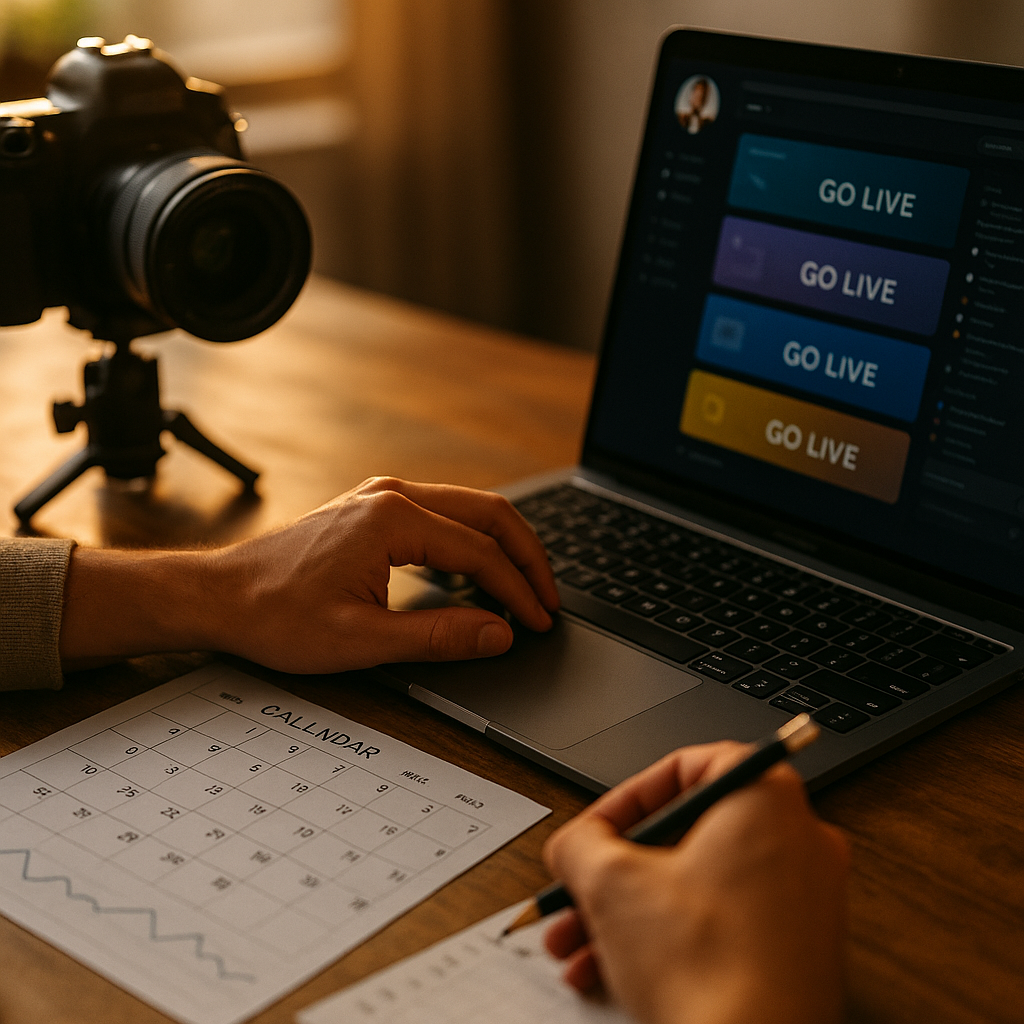
Brands running livestream commerce on a campaign-by-campaign basis are leaving revenue on the table every single quarter. A quarterly planning model for creator commerce drops tied to livestream calendars isn’t a nice-to-have anymore. It’s the difference between a shopping event that converts and one that fizzles because the creator, the inventory, and the audience never lined up at the same time.
Ask any category manager who’s tried to launch a flash drop with three weeks of lead time how that went. Chances are the answer involves a scramble, a creator who wasn’t briefed properly, and a fulfillment team caught flat-footed. Quarterly planning fixes that by forcing the calendar, the catalog, and the creator roster into the same document, months before go-live.
Why Ad Hoc Drops Keep Failing
Livestream commerce in Western markets is still maturing, but the pattern is already clear: brands that treat drops as one-off marketing moments underperform brands that treat them as a recurring operating rhythm. eMarketer’s live shopping research has repeatedly flagged that repeat viewership and repeat purchase rates climb sharply once a brand establishes a predictable cadence. Viewers show up because they know something’s happening on the third Thursday of the month, not because they stumbled into a surprise.
The ad hoc approach also punishes creators. When a brand pings a livestream host with six weeks’ notice for a “big drop,” that creator has no time to tease the moment to their audience, no time to negotiate fair compensation, and no incentive to prioritize your brand over a competitor who planned better. Our earlier breakdown of livestream hosting program costs makes the same point from a budget angle: rushed bookings almost always cost more per stream than planned ones.
Brands that plan livestream drops a full quarter out see meaningfully higher repeat-viewer rates than brands booking creators inside a six-week window, because creators can build anticipation instead of scrambling to fill a slot.
The Quarterly Drop Model, Explained
The model is simple in structure, harder in execution. It has four layers that get built in sequence, roughly ninety days before the quarter starts.
- Commerce calendar lock: Merchandising confirms which SKUs, bundles, or limited releases are eligible for livestream drops that quarter. No drop gets scheduled without confirmed inventory and margin sign-off.
- Livestream cadence map: Marketing ops lays out a recurring schedule, weekly, biweekly, or monthly, and locks the dates before creator outreach begins.
- Creator roster assignment: Each drop gets matched to a specific creator or small pool based on category fit, past conversion data, and audience overlap with the SKU being pushed.
- Content and compliance buffer: A two-week window before each stream reserved for approvals, disclosure checks, and rehearsal, so nothing goes live unreviewed.
Notice what’s missing: last-minute creativity. That’s intentional. Quarterly planning trades spontaneity for predictability, and in commerce, predictability converts better than novelty. TikTok’s own guidance for sellers on TikTok Shop advertising emphasizes consistent scheduling as one of the strongest levers for building a repeat shopper base, which lines up with what most brands running these programs quietly admit: the calendar is the strategy.
Mapping Drops to the Livestream Calendar
Here’s where most teams get tripped up. They build a beautiful content calendar and a separate commerce calendar, then try to reconcile the two after the fact. Flip that order. Start with the livestream calendar as the fixed variable, then slot commerce drops into it.
A workable quarterly grid looks like this: twelve to thirteen livestream slots across the quarter, each tagged with a theme (new arrivals, restock, bundle exclusive, flash discount), a creator assignment, and a target GMV. Every slot gets reviewed at the midpoint of the quarter against actual performance, and underperforming slots get reassigned to a different creator or theme before the next quarter locks. This is essentially the same discipline brands use in the 90 day live commerce launch roadmap, just applied on a rolling basis instead of a single onboarding push.
One detail that trips up finance teams: creator fees for recurring livestream slots should be negotiated as a quarterly retainer, not per-event. It’s cheaper for the brand and gives the creator income stability, which in turn makes them more willing to commit calendar space months in advance. If your team is still negotiating rates stream by stream, you’re paying a premium for the uncertainty. The creator fee benchmark model is worth revisiting here, since retainer pricing usually closes a meaningful chunk of that rate gap.
Who Owns the Calendar?
This is where most quarterly planning models quietly break down. Too many cooks, no single owner, and the calendar drifts. The fix is assigning a single accountable owner, typically the role we’ve described elsewhere as a category operations manager, who has authority over both the merchandising calendar and the creator booking calendar. Without that single point of accountability, you get exactly what happens today at most mid-market brands: marketing books a creator, merchandising changes the SKU lineup two weeks later, and nobody tells the creator until three days before the stream.
If your org chart doesn’t have a role like this yet, it’s worth reading through the six roles that drive creator commerce revenue before you attempt a full quarterly rollout. Trying to run this model without dedicated ownership is like trying to run a TV network without a programming director.
Budget Sequencing Across the Quarter
Quarterly planning also forces a budget conversation that ad hoc drops conveniently avoid: how much of the influencer budget should be locked to livestream versus held back for reactive, platform-specific spend? Most brands running mature programs split budget roughly 60/40, with the majority locked to the confirmed livestream calendar and the remainder flexible for trend-responsive posts or paid amplification of high-performing streams.
That split maps closely to the logic in our realization rate framework for splitting creator budgets by platform. The core idea transfers directly: commit budget where performance data already exists, keep a smaller reserve for experimentation. Livestream drops with a full quarter of prior data are the closest thing influencer marketing has to a known quantity, so they deserve the bulk of committed spend.
Don’t skip the reconciliation step either. At the end of each quarter, pull actual GMV per stream, cost per creator, and repeat-viewer rate, then feed that straight into next quarter’s roster assignments. Sprout Social’s reporting on livestream engagement patterns is a decent benchmark source if you don’t yet have enough internal history to judge what “good” looks like.
Risk and Compliance Don’t Pause for Speed
Speed is the whole appeal of quarterly planning, but speed without a compliance buffer is how brands end up with an FTC complaint or a disclosure gap on a high-traffic stream. Build the review window into the calendar itself, not as an afterthought. The FTC’s endorsement guidance applies just as much to a livestream drop as it does to a static post, and regulators have shown no patience for “we didn’t have time to check” as an excuse.
Payment terms deserve the same rigor. A quarterly calendar only works if creators trust that they’ll be paid on the agreed schedule, especially when you’re asking them to commit three months of calendar space upfront. If your payment process still runs on net-60 terms, read through fixing late pay before it costs you before you ask any creator to lock in a quarter’s worth of streams. Late payment is the single fastest way to lose your best livestream talent to a competitor’s calendar.
What Success Actually Looks Like
Three quarters into a well-run model, the signs are obvious. Creators start pitching drop ideas to you instead of waiting for a brief. Repeat viewership climbs because the audience has internalized the schedule. And finance stops asking why livestream spend is “unpredictable,” because it isn’t anymore, it’s a locked line item with quarter-over-quarter comparables. That last part matters more than it sounds. Once livestream commerce shows up as a forecastable revenue line rather than a marketing experiment, it gets protected in budget cuts instead of being the first thing trimmed.
Get the next step right and the rest compounds: assign a single calendar owner, lock creator retainers a full quarter ahead, and build your compliance buffer into the schedule rather than bolting it on after a stream goes live.
Frequently Asked Questions
How far in advance should a quarterly creator commerce calendar be built?
Most brands start building the next quarter’s calendar about six to eight weeks before the current quarter ends, so creator retainers and inventory commitments can be locked before the new quarter starts.
Should every livestream slot in the quarter have a paid creator drop attached?
No. A mix works better: reserve most slots for confirmed commerce drops with committed creators, but leave a small percentage flexible for reactive content or trend-driven streams that couldn’t be planned three months out.
What’s the biggest reason quarterly livestream calendars fail?
Lack of a single accountable owner. When merchandising, marketing, and creator booking teams each control part of the calendar independently, schedules drift and creators get briefed too late to prepare properly.
How should creator fees be structured for recurring quarterly livestream slots?
Quarterly retainers generally work better than per-event fees. Retainers give creators income predictability, which makes them more willing to commit calendar space early, and they’re typically cheaper for the brand than rushed, per-stream negotiations.
What metrics should feed into the following quarter’s planning?
GMV per stream, cost per creator, repeat-viewer rate, and conversion rate by product category are the core inputs. These should be reviewed at the midpoint and end of each quarter to reassign underperforming slots.
FAQs
How far in advance should a quarterly creator commerce calendar be built?
Most brands start building the next quarter’s calendar about six to eight weeks before the current quarter ends, so creator retainers and inventory commitments can be locked before the new quarter starts.
Should every livestream slot in the quarter have a paid creator drop attached?
No. A mix works better: reserve most slots for confirmed commerce drops with committed creators, but leave a small percentage flexible for reactive content or trend-driven streams that couldn’t be planned three months out.
What’s the biggest reason quarterly livestream calendars fail?
Lack of a single accountable owner. When merchandising, marketing, and creator booking teams each control part of the calendar independently, schedules drift and creators get briefed too late to prepare properly.
How should creator fees be structured for recurring quarterly livestream slots?
Quarterly retainers generally work better than per-event fees. Retainers give creators income predictability, which makes them more willing to commit calendar space early, and they’re typically cheaper for the brand than rushed, per-stream negotiations.
What metrics should feed into the following quarter’s planning?
GMV per stream, cost per creator, repeat-viewer rate, and conversion rate by product category are the core inputs. These should be reviewed at the midpoint and end of each quarter to reassign underperforming slots.
Top Influencer Marketing Agencies
The leading agencies shaping influencer marketing in 2026
Agencies ranked by campaign performance, client diversity, platform expertise, proven ROI, industry recognition, and client satisfaction. Assessed through verified case studies, reviews, and industry consultations.
Moburst

-
2

The Shelf
Boutique Beauty & Lifestyle Influencer AgencyA data-driven boutique agency specializing exclusively in beauty, wellness, and lifestyle influencer campaigns on Instagram and TikTok. Best for brands already focused on the beauty/personal care space that need curated, aesthetic-driven content.Clients: Pepsi, The Honest Company, Hims, Elf Cosmetics, Pure LeafVisit The Shelf → -
3

Audiencly
Niche Gaming & Esports Influencer AgencyA specialized agency focused exclusively on gaming and esports creators on YouTube, Twitch, and TikTok. Ideal if your campaign is 100% gaming-focused — from game launches to hardware and esports events.Clients: Epic Games, NordVPN, Ubisoft, Wargaming, Tencent GamesVisit Audiencly → -
4

Viral Nation
Global Influencer Marketing & Talent AgencyA dual talent management and marketing agency with proprietary brand safety tools and a global creator network spanning nano-influencers to celebrities across all major platforms.Clients: Meta, Activision Blizzard, Energizer, Aston Martin, WalmartVisit Viral Nation → -
5

The Influencer Marketing Factory
TikTok, Instagram & YouTube CampaignsA full-service agency with strong TikTok expertise, offering end-to-end campaign management from influencer discovery through performance reporting with a focus on platform-native content.Clients: Google, Snapchat, Universal Music, Bumble, YelpVisit TIMF → -
6

NeoReach
Enterprise Analytics & Influencer CampaignsAn enterprise-focused agency combining managed campaigns with a powerful self-service data platform for influencer search, audience analytics, and attribution modeling.Clients: Amazon, Airbnb, Netflix, Honda, The New York TimesVisit NeoReach → -
7

Ubiquitous
Creator-First Marketing PlatformA tech-driven platform combining self-service tools with managed campaign options, emphasizing speed and scalability for brands managing multiple influencer relationships.Clients: Lyft, Disney, Target, American Eagle, NetflixVisit Ubiquitous → -
8

Obviously
Scalable Enterprise Influencer CampaignsA tech-enabled agency built for high-volume campaigns, coordinating hundreds of creators simultaneously with end-to-end logistics, content rights management, and product seeding.Clients: Google, Ulta Beauty, Converse, AmazonVisit Obviously →