


A mid-market snack brand just beat Google Ads on cost-per-acquisition — using creators with fewer than 8,000 followers. While competitors poured budget into ever-pricier paid search auctions, this CPG challenger routed spend into AI-matched nano-creators and cut its blended CPA by 41%. This case study breaks down exactly how they did it, and why the math is starting to work against paid search across the category.
The Setup: A Brand Priced Out of Its Own Category
The brand — a plant-based snack company doing roughly $40 million in annual revenue — had a familiar problem. Its paid search CPA had crept up 34% over eighteen months as bigger CPG players with bigger budgets bid up branded and category keywords. Meta and TikTok paid social weren’t much better; auction costs in the food and beverage vertical had become brutal for anyone without nine-figure ad budgets.
The marketing team, six people total, needed a channel that didn’t require outbidding General Mills. So they tested something unglamorous: nano-creators, defined as accounts with 1,000 to 10,000 followers, matched to the brand using an AI-driven creator platform rather than manual outreach or agency placements.
This isn’t a new idea. Liquid Death has already proven that nano-creator seeding can undercut paid search CAC. What makes this case distinct is the mid-market context — no cult brand status, no viral head start, just a snack company competing in a crowded shelf category with a modest budget and a spreadsheet-driven CFO who wanted proof before renewing spend.
Why AI Matching Changed the Economics
Manual nano-creator sourcing is a time sink. Finding a few hundred relevant micro-accounts, vetting engagement quality, and negotiating individually can eat weeks of a lean team’s bandwidth. That’s the real barrier most mid-market brands hit — not whether nano-creators work, but whether the operational cost of finding them cancels out the savings.
The brand used an AI matching layer (similar to tools now offered by platforms like GRIN and Aspire) that scored creators against three variables: audience overlap with the brand’s existing customer data, historical engagement rate on food/wellness content, and a “authenticity index” measuring comment sentiment versus follower count. Instead of a media buyer manually reviewing profiles, the algorithm surfaced roughly 400 qualified nano-creators in the first sourcing pass, cutting what would have been a six-week manual vetting process down to four days.
The brand’s fully loaded CPA through nano-creator seeding landed at $18.40 per new customer, compared to $31.20 through paid search over the same quarter — a 41% gap that held even after accounting for platform fees and content licensing.
That’s the number that got the CFO’s attention. Not engagement rate, not reach — cost per acquisition, measured the same way the finance team already measured search spend.
How the Program Actually Ran
The mechanics were deliberately simple, built to scale without a large internal team:
- Seeding, not paid posts: Product was sent free to matched creators with no payment required, only a content usage license for organic posting and limited paid amplification.
- Volume over polish: Roughly 180 nano-creators posted per month, versus the 6-8 mid-tier influencers the brand had used previously. Lower individual reach, but far higher aggregate authenticity.
- UGC whitelisting: Top-performing organic posts were whitelisted and run as paid ads through the creators’ handles, a tactic that consistently outperforms brand-owned creative on cost-per-click.
- Attribution via unique codes and pixel tracking: Each creator got a trackable link and discount code, letting the team tie sales directly back to individual creator cohorts rather than guessing at “brand lift.”
The unique-code layer mattered more than it sounds. Without it, this would be another unmeasurable “brand awareness” play that finance teams rightly distrust. With it, the brand could report CPA with the same rigor as a Google Ads dashboard — which is exactly what made the budget reallocation conversation possible.
What the Content Actually Looked Like
No studio shoots. No brand guidelines deck. Creators filmed pantry restocks, lunchbox packing videos, and “what I eat in a day” content that happened to feature the product. This mirrors what’s worked for other CPG brands: Aldi’s nano-creator grocery hauls and Chamberlain Coffee’s shelf-space push both leaned on unpolished, high-frequency content over produced campaigns.
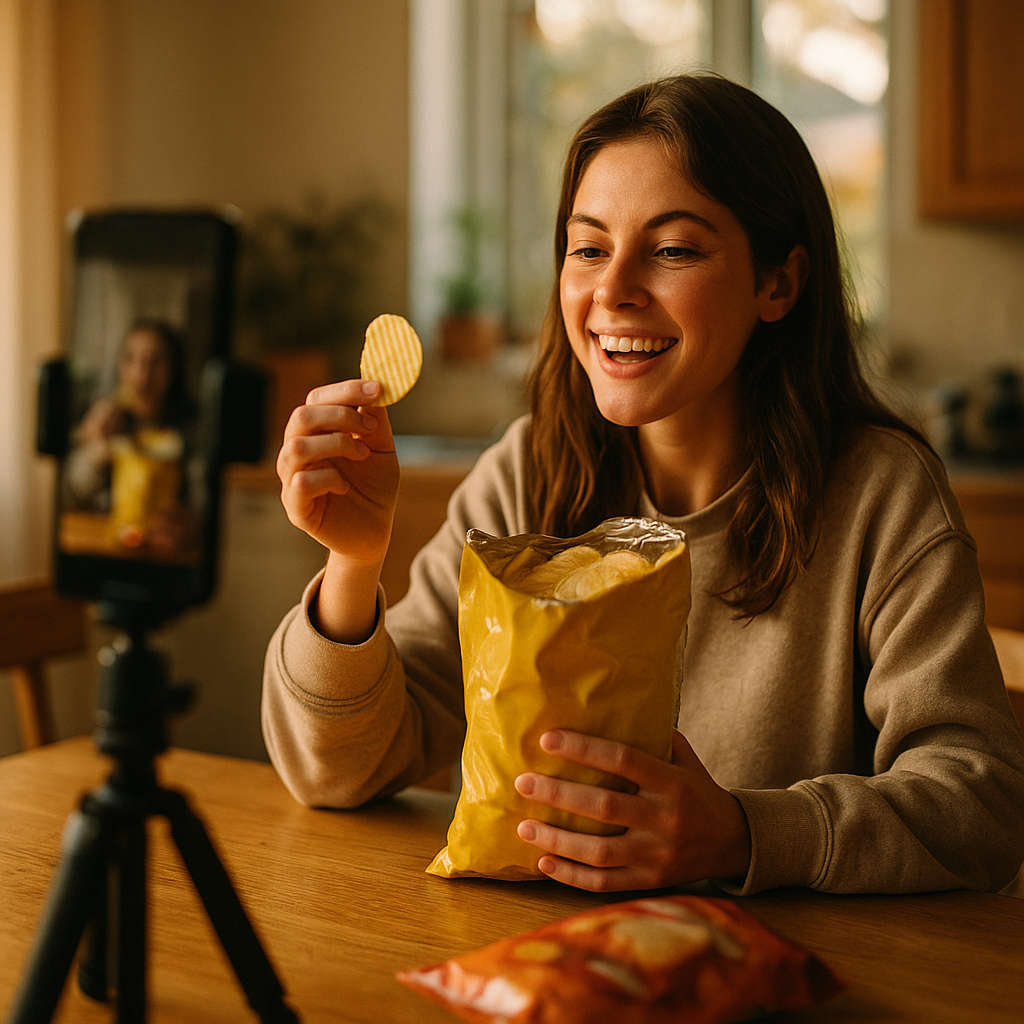
The lack of polish is the point. Paid search ads and traditional influencer content both signal “this is an ad.” Nano-creator content, filmed on a phone in a real kitchen, doesn’t trigger the same skepticism. That’s not a soft claim — it shows up in the numbers. Click-through rate on whitelisted nano-creator ads ran 2.3x higher than the brand’s standard paid social creative over the same period.
Where Paid Search Still Won
Worth being honest here: paid search wasn’t abandoned, and it shouldn’t be. Bottom-funnel, high-intent branded search terms still converted at a lower CPA than nano-creator content for customers already familiar with the brand. The nano-creator channel won on new customer acquisition, specifically cold audiences who’d never heard of the brand before.
That distinction matters for any brand reading this looking to copy the playbook. The team didn’t kill their Google Ads account. They reallocated roughly 35% of what had been prospecting search budget into the nano-creator program, while keeping branded search and retargeting spend intact. Total blended CPA across both channels dropped, but each channel kept doing the job it was actually good at.
The Compliance Layer Nobody Skips Anymore
Running 180+ creators a month without payment still triggers FTC disclosure requirements. Free product counts as material connection, full stop. The brand required #ad or #gifted disclosure on every post as a non-negotiable term of the content license, and used automated scanning tools to flag non-compliant posts before they could be whitelisted for paid spend.
This isn’t optional housekeeping. The FTC’s endorsement guidelines apply regardless of creator size or whether money changed hands. Brands running nano-creator programs at volume need automated disclosure checks baked into the workflow, not manual review, because manual review doesn’t scale past a few dozen creators a month.
Measurement: The Part Most Teams Get Wrong
The brand’s analytics stack combined UTM-tagged links, unique promo codes, and a Meta Conversions API integration to stitch together a full-funnel view. Without that combination, they’d have been stuck reporting reach and engagement — vanity metrics that don’t survive a budget review. Data from eMarketer shows brands citing measurement gaps as the top reason creator programs get cut during budget season, well ahead of “creator content doesn’t perform.”
Getting CPA-level attribution on nano-creator content isn’t trivial, but it’s also not new territory. Warby Parker’s try-on video program and ThredUp’s resale hauls both used similar code-and-pixel tracking setups to prove out CPA against paid social benchmarks. The tooling exists. The discipline to implement it consistently is the actual bottleneck.
What This Means for Mid-Market Marketing Teams
Nano-creator programs used to be dismissed as a nice-to-have for brands that couldn’t afford “real” influencer partnerships. That framing is outdated. For mid-market CPG specifically — brands squeezed between category giants with unlimited ad budgets and DTC-native challengers with cult followings — nano-creators paired with AI matching are becoming the more defensible channel on unit economics, not the cheaper backup option.
The catch is operational, not strategic. Running this at scale requires matching technology, disclosure automation, and attribution infrastructure that most six-person marketing teams don’t have off the shelf. Brands that treat nano-creator seeding as a side project, run manually by whoever has spare time, tend to get side-project results. Brands that build it as an actual operating channel, with the same rigor applied to paid search, are the ones posting numbers like the ones above.
For context on how this plays out at scale, Ryobi’s nano-creator network and HubSpot’s broader research on creator marketing ROI both point the same direction: volume and authenticity are beating polish and reach, especially in categories where trust is the actual conversion barrier.
FAQs
What counts as a nano-creator?
Nano-creators typically have between 1,000 and 10,000 followers. They sit below micro-influencers (10,000–100,000) and are valued for high engagement rates and audience trust rather than reach.
How does AI creator matching actually work?
AI matching platforms score creators against a brand’s target audience data, historical engagement patterns, and content authenticity signals, then surface ranked shortlists automatically instead of requiring manual profile review one by one.
Can nano-creator programs really beat paid search on CPA?
In this case, yes, for new customer acquisition specifically. Branded and retargeting search still outperformed on existing-customer conversions, so most brands run both channels rather than replacing search entirely.
Do brands still need FTC disclosure for unpaid product seeding?
Yes. Free product in exchange for content is a material connection under FTC guidelines, requiring clear disclosure like #ad or #gifted regardless of whether cash payment occurred.
What’s the biggest operational challenge in scaling nano-creator programs?
Measurement and disclosure compliance at volume. Running 150+ creators a month without automated tracking and disclosure scanning quickly becomes unmanageable for lean marketing teams.
Next step: Before reallocating search budget, run a four-to-six week pilot with 50-100 AI-matched nano-creators, unique tracking codes, and automated disclosure checks, then compare blended CPA against your current paid search benchmark before scaling further.
FAQs
What counts as a nano-creator?
Nano-creators typically have between 1,000 and 10,000 followers. They sit below micro-influencers (10,000–100,000) and are valued for high engagement rates and audience trust rather than reach.
How does AI creator matching actually work?
AI matching platforms score creators against a brand’s target audience data, historical engagement patterns, and content authenticity signals, then surface ranked shortlists automatically instead of requiring manual profile review one by one.
Can nano-creator programs really beat paid search on CPA?
In this case, yes, for new customer acquisition specifically. Branded and retargeting search still outperformed on existing-customer conversions, so most brands run both channels rather than replacing search entirely.
Do brands still need FTC disclosure for unpaid product seeding?
Yes. Free product in exchange for content is a material connection under FTC guidelines, requiring clear disclosure like #ad or #gifted regardless of whether cash payment occurred.
What’s the biggest operational challenge in scaling nano-creator programs?
Measurement and disclosure compliance at volume. Running 150+ creators a month without automated tracking and disclosure scanning quickly becomes unmanageable for lean marketing teams.
Top Influencer Marketing Agencies
The leading agencies shaping influencer marketing in 2026
Agencies ranked by campaign performance, client diversity, platform expertise, proven ROI, industry recognition, and client satisfaction. Assessed through verified case studies, reviews, and industry consultations.
Moburst

-
2

The Shelf
Boutique Beauty & Lifestyle Influencer AgencyA data-driven boutique agency specializing exclusively in beauty, wellness, and lifestyle influencer campaigns on Instagram and TikTok. Best for brands already focused on the beauty/personal care space that need curated, aesthetic-driven content.Clients: Pepsi, The Honest Company, Hims, Elf Cosmetics, Pure LeafVisit The Shelf → -
3

Audiencly
Niche Gaming & Esports Influencer AgencyA specialized agency focused exclusively on gaming and esports creators on YouTube, Twitch, and TikTok. Ideal if your campaign is 100% gaming-focused — from game launches to hardware and esports events.Clients: Epic Games, NordVPN, Ubisoft, Wargaming, Tencent GamesVisit Audiencly → -
4

Viral Nation
Global Influencer Marketing & Talent AgencyA dual talent management and marketing agency with proprietary brand safety tools and a global creator network spanning nano-influencers to celebrities across all major platforms.Clients: Meta, Activision Blizzard, Energizer, Aston Martin, WalmartVisit Viral Nation → -
5

The Influencer Marketing Factory
TikTok, Instagram & YouTube CampaignsA full-service agency with strong TikTok expertise, offering end-to-end campaign management from influencer discovery through performance reporting with a focus on platform-native content.Clients: Google, Snapchat, Universal Music, Bumble, YelpVisit TIMF → -
6

NeoReach
Enterprise Analytics & Influencer CampaignsAn enterprise-focused agency combining managed campaigns with a powerful self-service data platform for influencer search, audience analytics, and attribution modeling.Clients: Amazon, Airbnb, Netflix, Honda, The New York TimesVisit NeoReach → -
7

Ubiquitous
Creator-First Marketing PlatformA tech-driven platform combining self-service tools with managed campaign options, emphasizing speed and scalability for brands managing multiple influencer relationships.Clients: Lyft, Disney, Target, American Eagle, NetflixVisit Ubiquitous → -
8

Obviously
Scalable Enterprise Influencer CampaignsA tech-enabled agency built for high-volume campaigns, coordinating hundreds of creators simultaneously with end-to-end logistics, content rights management, and product seeding.Clients: Google, Ulta Beauty, Converse, AmazonVisit Obviously →