


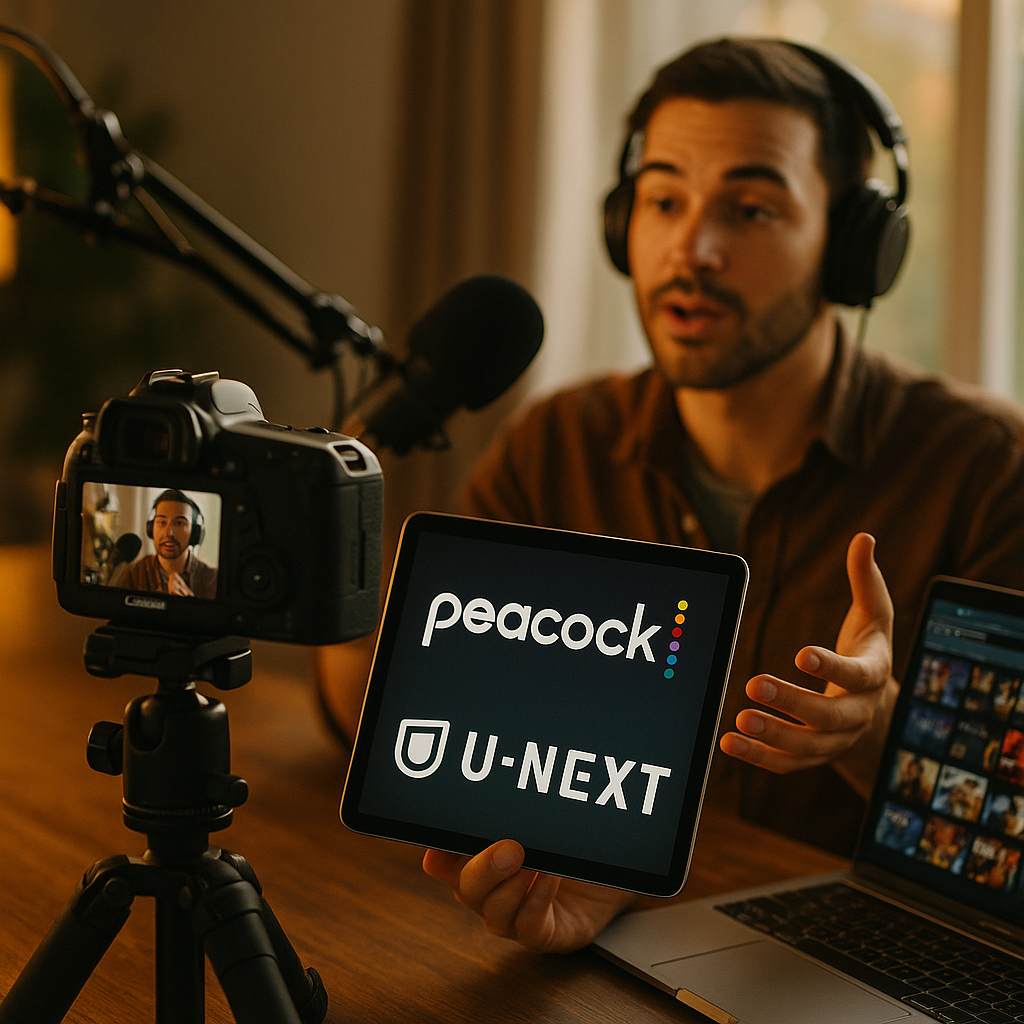
Japan’s creator economy generated more than 30 billion dollars in advertiser spend last year, yet most global streaming platforms still treat the market as a licensing afterthought. NBCUniversal’s partnership with U-Next flips that script, pairing premium streaming content with a built-in creator distribution engine instead of bolting influencer marketing on after the fact. For brand and agency teams watching Japan as a growth market, this deal is less a content story and more a blueprint for how streaming-creator distribution could work everywhere else.
What NBCUniversal and U-Next Actually Built
U-Next (styled U-NEXT) has spent years building one of Japan’s largest subscription video platforms, competing against Netflix and Amazon Prime Video on a catalog that leans heavily into anime, drama, and licensed Hollywood content. NBCUniversal’s arrangement extends beyond a standard content licensing agreement. It ties distribution rights to a structured creator activation layer, meaning shows and franchises don’t just land on the platform, they arrive with a pre-built network of Japanese creators briefed to cover them.
That distinction matters. A typical streaming licensing deal ends at the transaction: NBCUniversal delivers the content, U-Next pays for the rights, marketing is whoever’s budget line covers it. This model treats creator distribution as part of the content supply chain itself, not a downstream marketing decision made after launch dates are locked.
Bundling creator distribution into the licensing agreement itself, rather than treating it as a separate marketing spend, is what makes this a distribution model rather than a media buy.
Why Japan’s Creator Economy Needed This Bridge
Japan’s influencer landscape has a structural quirk that trips up Western brands constantly: talent agencies still control a huge share of creator relationships, and platform-native creator discovery tools that work in the U.S. or U.K. often underperform there. YouTube and X remain dominant for entertainment content discovery in Japan, while TikTok’s creator base skews younger and less aligned with the demo streaming platforms actually monetize.
For a studio trying to launch a prestige drama or a returning franchise title, that means building creator relationships market by market, often through intermediaries who take a cut and add weeks to campaign timelines. NBCUniversal sidestepping that by embedding creator distribution into the U-Next partnership solves a real operational headache: speed to market on a fragmented, agency-heavy creator landscape.
According to eMarketer’s coverage of APAC creator spend trends, brands entering Japan without localized creator infrastructure typically see campaign ramp times two to three times longer than in U.S. launches. That lag is exactly what this partnership is designed to eliminate.
The Operational Playbook: IP Licensing Meets Creator Seeding
Strip away the press release language and the mechanics look familiar to anyone who’s run a creator seeding program for a CPG launch. NBCUniversal supplies the IP and early access windows. U-Next supplies platform data on viewer segments and regional demand. A curated creator roster, vetted for brand safety and audience overlap, gets briefed and seeded ahead of a title’s launch window.
- Pre-launch seeding to niche creators for early buzz and search visibility
- Coordinated launch-day content drops tied to platform premiere dates
- Performance data shared back to NBCUniversal to inform future title selection for the Japanese market
This isn’t dramatically different from how brands like Stanley or Feastables scaled through staged micro-creator waves, except here the “product” is a TV franchise and the retail shelf is a streaming homepage. The operational logic transfers cleanly: seed early, layer creators by audience tier, measure what converts to platform sign-ups instead of purchases.
What’s notable is the infrastructure behind it. Reports on similar production-and-distribution tech investments, like QYOU Media’s production tech bet, show a broader pattern of media companies building the plumbing to connect content pipelines directly to creator networks rather than treating each as a separate vendor relationship.
Compliance Is the Part Everyone Underestimates
Here’s where marketers need to pay closer attention than the headlines suggest. Japan’s Consumer Affairs Agency enforces stealth marketing regulations that are stricter than most brands expect, requiring clear disclosure any time a business compensates a creator for coverage, including seeded product or early access. A streaming platform coordinating creator content at scale is exactly the kind of activity regulators watch closely.
NBCUniversal and U-Next building disclosure requirements into the creator briefing process from day one isn’t just good practice, it’s the only way this model survives regulatory scrutiny. Compare that to how U.S. brands have had to course-correct after the fact: Poppi’s FTC settlement is the cautionary tale every legal team should be citing when they push back on “we’ll add disclosure later” campaign timelines. The FTC’s endorsement guidelines and Japan’s stealth marketing rules aren’t identical, but the operational lesson is the same: build disclosure into the workflow, don’t retrofit it.
Any streaming-creator distribution model that skips disclosure infrastructure at launch is building a liability, not a growth engine.
What This Means for Global Brands and Agencies
If you’re a brand strategist watching this from outside the entertainment vertical, the takeaway isn’t “go license a TV show.” It’s that the deal structure itself is portable. Any brand with a content licensing arrangement, whether it’s a sports league partnership, a gaming IP tie-in, or a co-branded product launch, could theoretically negotiate creator distribution terms into the licensing agreement rather than treating creator spend as a separate line item negotiated later and usually under time pressure.
That has real budget implications. Baking creator distribution into a licensing deal changes the cost structure: instead of paying full market rate for creator outreach after launch, brands can negotiate bundled rates as part of the broader content agreement, similar to how vetted creator networks reduce DTC launch costs by pre-negotiating terms at scale rather than one-off.
Agencies managing fragmented platform relationships across regions should also take note of how consolidation plays into this. The pattern mirrors what’s happened domestically as martech platforms roll up capabilities, as seen in how one company built a unified creator platform through acquisitions. NBCUniversal and U-Next are essentially doing the same thing through partnership rather than acquisition: unifying content distribution and creator activation under one operational umbrella instead of managing them as separate vendor relationships.
Brands running fragmented media stacks across markets should study this closely. The lesson echoes what Newell Brands learned unifying its own media stack: disconnected systems cost more in operational drag than they save in vendor flexibility.
Is This a Template for Other Markets?
Probably, but not without adaptation. Japan’s creator ecosystem has specific structural features, agency control, platform preferences, regulatory posture, that make this model work there. Southeast Asia, South Korea, and parts of Latin America have their own quirks that would require different creator vetting and compliance frameworks.
Still, the core principle holds regardless of market: pairing content distribution rights with creator activation infrastructure reduces launch friction and gives brands better data on what’s actually driving conversion. Statista’s ongoing tracking of global creator economy spend suggests markets outside the U.S. and Europe are where the next wave of structured, platform-embedded creator programs will emerge, precisely because those markets lack the mature, self-serve influencer marketplaces American brands take for granted.
Marketers evaluating vendor and platform decisions for regional expansion should treat data infrastructure as a prerequisite, not an afterthought. The same principle applies here that applies to any performance claim: as outlined in how one skincare brand proved creator ROI with a data lakehouse, you need unified measurement before you can defend budget allocation to finance. A streaming-creator distribution deal is only as good as the reporting layer behind it.
The Bottom Line for Budget Owners
Don’t wait for a full case study with hard revenue numbers before you act on this. Ask your current content licensing and platform partners in Asia-Pacific markets whether creator distribution terms can be negotiated into the deal itself, and require disclosure protocols to be specified in the contract, not left to the campaign team to figure out later.
Frequently Asked Questions
What is the NBCUniversal and U-Next partnership?
It’s a content licensing and distribution arrangement in which NBCUniversal’s streaming titles reach U-Next’s Japanese subscriber base alongside a coordinated creator activation program, rather than a standard licensing deal with marketing handled separately afterward.
Why does this matter for brand marketers outside the entertainment industry?
The deal structure, bundling creator distribution into a licensing or partnership agreement, is portable to other industries with IP licensing, co-branding, or platform partnership deals, offering a way to reduce launch friction and negotiate better creator rates upfront.
How does Japan’s stealth marketing regulation affect creator campaigns like this?
Japan’s Consumer Affairs Agency requires clear disclosure whenever a creator is compensated for coverage, including seeded products or early access. Any structured creator distribution program operating in Japan needs disclosure protocols built into the briefing process from the start to avoid regulatory exposure.
Is this model likely to expand to other markets?
The core structure, pairing distribution rights with creator activation, is adaptable, but execution needs to account for each market’s creator ecosystem, agency dynamics, and regulatory environment rather than copying the Japan model directly.
What should brands ask their platform partners after seeing this deal?
Whether creator distribution terms can be negotiated as part of existing content, licensing, or platform partnership agreements, and whether disclosure and compliance requirements are specified contractually rather than left to campaign execution teams.
Top Influencer Marketing Agencies
The leading agencies shaping influencer marketing in 2026
Agencies ranked by campaign performance, client diversity, platform expertise, proven ROI, industry recognition, and client satisfaction. Assessed through verified case studies, reviews, and industry consultations.
Moburst

-
2

The Shelf
Boutique Beauty & Lifestyle Influencer AgencyA data-driven boutique agency specializing exclusively in beauty, wellness, and lifestyle influencer campaigns on Instagram and TikTok. Best for brands already focused on the beauty/personal care space that need curated, aesthetic-driven content.Clients: Pepsi, The Honest Company, Hims, Elf Cosmetics, Pure LeafVisit The Shelf → -
3

Audiencly
Niche Gaming & Esports Influencer AgencyA specialized agency focused exclusively on gaming and esports creators on YouTube, Twitch, and TikTok. Ideal if your campaign is 100% gaming-focused — from game launches to hardware and esports events.Clients: Epic Games, NordVPN, Ubisoft, Wargaming, Tencent GamesVisit Audiencly → -
4

Viral Nation
Global Influencer Marketing & Talent AgencyA dual talent management and marketing agency with proprietary brand safety tools and a global creator network spanning nano-influencers to celebrities across all major platforms.Clients: Meta, Activision Blizzard, Energizer, Aston Martin, WalmartVisit Viral Nation → -
5

The Influencer Marketing Factory
TikTok, Instagram & YouTube CampaignsA full-service agency with strong TikTok expertise, offering end-to-end campaign management from influencer discovery through performance reporting with a focus on platform-native content.Clients: Google, Snapchat, Universal Music, Bumble, YelpVisit TIMF → -
6

NeoReach
Enterprise Analytics & Influencer CampaignsAn enterprise-focused agency combining managed campaigns with a powerful self-service data platform for influencer search, audience analytics, and attribution modeling.Clients: Amazon, Airbnb, Netflix, Honda, The New York TimesVisit NeoReach → -
7

Ubiquitous
Creator-First Marketing PlatformA tech-driven platform combining self-service tools with managed campaign options, emphasizing speed and scalability for brands managing multiple influencer relationships.Clients: Lyft, Disney, Target, American Eagle, NetflixVisit Ubiquitous → -
8

Obviously
Scalable Enterprise Influencer CampaignsA tech-enabled agency built for high-volume campaigns, coordinating hundreds of creators simultaneously with end-to-end logistics, content rights management, and product seeding.Clients: Google, Ulta Beauty, Converse, AmazonVisit Obviously →