


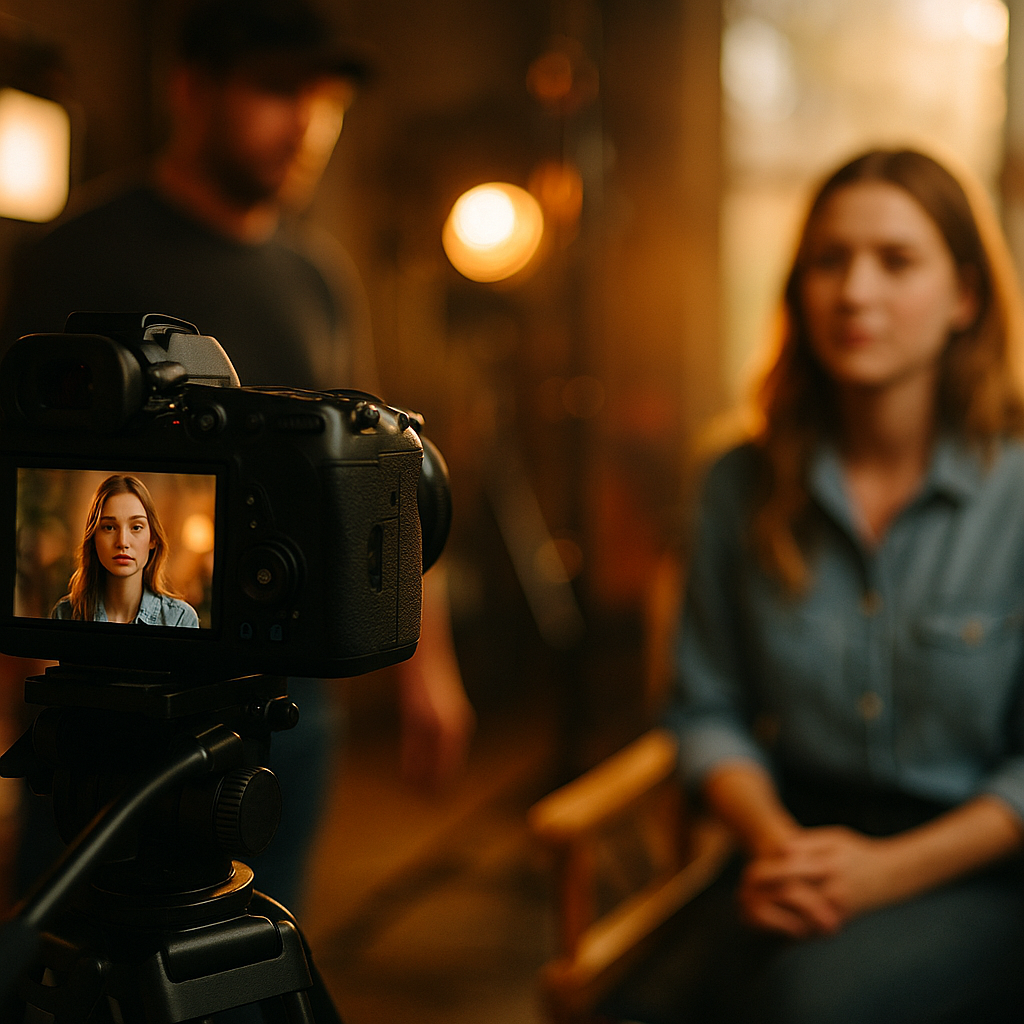
Reshoots kill margins. A single missing cutaway shot can stall a campaign for a week while you rebook a creator, reschedule a location, and burn budget that was supposed to go toward media spend. AI-generated B-roll is quietly solving this problem for brand teams who need volume without the calendar chaos, and the workflow behind it is simpler than most marketers assume.
The Reshoot Tax Nobody Budgets For
Ask any brand marketer running a multi-creator program what eats their timeline, and reshoots top the list almost every time. A creator delivers a strong hero clip, but the supporting footage, hands unboxing a product, a lifestyle cutaway, a texture close-up, is missing, blurry, or shot in the wrong aspect ratio. That gap forces a choice: ship a weaker edit, or pay for a second shoot day.
Neither option is great. Weak edits underperform on retention. Second shoots blow the budget line you’d earmarked for whitespace testing or paid amplification. Agencies quietly build a “reshoot buffer” into every SOW, often 15 to 20 percent of production cost, just to cover this exact scenario.
The real cost of a reshoot isn’t the day rate. It’s the two weeks of calendar drift that pushes your launch date and delays every downstream media decision.
What AI-Generated B-Roll Actually Means in Practice
This isn’t about replacing creators with synthetic talent. That’s a different conversation, one we’ve covered in faceless UGC formats. AI-generated B-roll refers specifically to the supporting, non-talking, non-hero footage that fills out an edit: establishing shots, texture inserts, environmental cutaways, product detail pans.
Tools like Runway, Pika, and Google’s Veo (accessible via Google’s product support resources) now generate short video segments from text prompts or reference images with enough visual coherence to sit inside a real creator edit without looking pasted in. Feed the model a still from the creator’s actual shoot, a specific lighting condition, a color palette, and you get generated footage that matches the source material closely enough to pass casual scrutiny on a six-second scroll.
The workflow, in order:
- Creator delivers hero footage plus a handful of reference stills from set.
- Editor identifies the B-roll gaps: what’s missing, what’s weak, what needs variation for A/B testing.
- Prompt engineer (often the same editor, using a house prompt library) generates 3 to 5 candidate clips per gap.
- Compliance and brand teams review for accuracy, disclosure needs, and platform policy fit.
- Editor cuts final sequence, blending real and generated footage.
The entire loop can run in under 48 hours for a standard campaign asset, versus the 5 to 10 days a reshoot typically requires once you factor in scheduling and shipping product back to the creator.
Why This Matters More at Scale Than On a Single Video
One video, the ROI case is marginal. Ten creators across three regions, each needing four platform-specific cuts, and the math changes fast. If your program produces 40 final assets a month and even a quarter of them need supplemental footage, you’re looking at 10 potential reshoots. At an average reshoot cost of 800 to 2,000 dollars depending on market, that’s real money.
eMarketer has tracked steady growth in brand spend on short-form video variants for testing purposes, meaning teams increasingly need five versions of the same concept, not one. AI-generated B-roll makes that variant testing viable because you’re not paying reshoot costs five times over. You generate five different opening cutaways, run them against the same hero clip, and let performance data pick the winner.
Programs producing 30+ creator assets monthly report cutting supplemental footage costs by roughly a third once AI-generated B-roll enters the standard workflow, freeing that budget for media spend instead of production overhead.
Where It Breaks: The Compliance and Authenticity Risk
Here’s the part brand teams skip at their peril. AI-generated footage that’s indistinguishable from real creator content raises disclosure questions the FTC has been increasingly vocal about. If a generated clip shows a hand using a product in a way that never actually happened on set, that’s a claim you need to be able to defend, especially in regulated categories like beauty, supplements, or finance.
The practical fix is a labeling discipline internally, even if it never reaches the viewer. Every generated clip gets tagged in your asset management system as synthetic, with a note on what reference material it was derived from. This isn’t just a legal safety net. It also protects you when a platform’s content policy shifts, which happens more often than most teams plan for, and you can read the current guidance directly at TikTok’s advertising policies hub or Meta’s business platform.
There’s also a subtler risk: over-polishing. AI-generated B-roll tends to render cleaner and more symmetrical than real handheld footage. Cut it next to a creator’s genuinely imperfect phone-camera shot and the seam shows. We’ve written before about why intentionally imperfect content converts better than polished ads, and the same logic applies here. If your generated B-roll looks too good, it breaks the authenticity signal the whole creator format depends on.
Building the Workflow Into Your Creator Briefs
The teams getting the most value from this aren’t treating AI B-roll as a post-production patch. They’re building it into the brief itself. That means telling creators upfront: shoot your hero moment, but also capture five to ten stills of the product, the setting, your hands, your space, specifically so the edit team has clean reference material to generate against later.
This is a small ask that saves enormous downstream friction. It’s the same principle behind messy content brief templates that prioritize flexibility over rigid shot lists. You’re not asking creators to shoot more footage. You’re asking them to shoot smarter reference material.
A practical brief addition looks like this:
- Request 5 to 10 stills of key surfaces, textures, and environments before wrapping the shoot.
- Specify lighting conditions in writing so generated clips can match color temperature.
- Flag which shots are “flex” (can be supplemented with AI) versus “must-have real” (talent-facing, product-in-hand claims).
- Build a 24-hour turnaround expectation into the SOW for supplemental generation, not weeks.
Pair this with structured pacing guidance, since B-roll timing matters as much as content quality. If you’re building for short-form, the retention math we outlined in structuring 15-second creator drops applies directly: generated cutaways should slot into the exact beats where attention naturally dips, typically the 3 to 5 second mark.
Measuring Whether It’s Actually Working
Don’t just track cost savings. Track completion rate and hold rate on assets that use AI-generated B-roll versus fully organic cuts. If generated footage is dragging retention down, even slightly, that’s a signal your prompts or reference stills need tightening, not a signal to abandon the workflow.
Sprout Social and similar analytics platforms let you segment performance by asset type if you tag your library correctly during upload, which loops back to the labeling discipline mentioned earlier. Good tagging isn’t bureaucratic overhead. It’s how you build the performance dataset that justifies expanding (or scaling back) the practice next quarter.
One more metric worth watching: creator sentiment. Some creators are uneasy about AI touching their footage, even supplemental cutaways. Loop them in on the process, show them the final cut before publish, and treat it as a transparency norm rather than a legal formality. Trust with your creator roster compounds over time, and it’s cheaper to protect than to rebuild.
Next Step
Start small: pick one recurring creator format in your current program, add a reference-still requirement to the brief, and test AI-generated B-roll against one gap in your next edit cycle before rolling it out program-wide.
FAQs
What is AI-generated B-roll in creator marketing?
It’s supplemental, non-talking footage, like product close-ups or environmental cutaways, generated by AI tools using reference stills from a real creator shoot, used to fill gaps in an edit without scheduling a reshoot.
Does using AI-generated B-roll require a disclosure to viewers?
It depends on the claim being made and your category’s regulatory exposure. Brands should maintain internal tagging of all synthetic footage and consult current FTC guidance, since disclosure expectations vary by whether the footage implies a factual product claim.
How much does AI-generated B-roll actually save versus a reshoot?
Programs running high creator volume report roughly a third reduction in supplemental production costs, with turnaround dropping from 5 to 10 days for a reshoot down to under 48 hours for generated alternatives.
Can AI-generated B-roll hurt authenticity and performance?
Yes, if the generated footage looks noticeably more polished than the creator’s real handheld shots. That mismatch breaks the authenticity signal viewers respond to, so match lighting, grain, and pacing closely to the source material.
What should brands ask creators to provide to support this workflow?
Request 5 to 10 reference stills of the product, setting, and lighting at the time of the original shoot. This gives editors clean source material for generation without requiring the creator to reshoot anything.
Top Influencer Marketing Agencies
The leading agencies shaping influencer marketing in 2026
Agencies ranked by campaign performance, client diversity, platform expertise, proven ROI, industry recognition, and client satisfaction. Assessed through verified case studies, reviews, and industry consultations.
Moburst

-
2

The Shelf
Boutique Beauty & Lifestyle Influencer AgencyA data-driven boutique agency specializing exclusively in beauty, wellness, and lifestyle influencer campaigns on Instagram and TikTok. Best for brands already focused on the beauty/personal care space that need curated, aesthetic-driven content.Clients: Pepsi, The Honest Company, Hims, Elf Cosmetics, Pure LeafVisit The Shelf → -
3

Audiencly
Niche Gaming & Esports Influencer AgencyA specialized agency focused exclusively on gaming and esports creators on YouTube, Twitch, and TikTok. Ideal if your campaign is 100% gaming-focused — from game launches to hardware and esports events.Clients: Epic Games, NordVPN, Ubisoft, Wargaming, Tencent GamesVisit Audiencly → -
4

Viral Nation
Global Influencer Marketing & Talent AgencyA dual talent management and marketing agency with proprietary brand safety tools and a global creator network spanning nano-influencers to celebrities across all major platforms.Clients: Meta, Activision Blizzard, Energizer, Aston Martin, WalmartVisit Viral Nation → -
5

The Influencer Marketing Factory
TikTok, Instagram & YouTube CampaignsA full-service agency with strong TikTok expertise, offering end-to-end campaign management from influencer discovery through performance reporting with a focus on platform-native content.Clients: Google, Snapchat, Universal Music, Bumble, YelpVisit TIMF → -
6

NeoReach
Enterprise Analytics & Influencer CampaignsAn enterprise-focused agency combining managed campaigns with a powerful self-service data platform for influencer search, audience analytics, and attribution modeling.Clients: Amazon, Airbnb, Netflix, Honda, The New York TimesVisit NeoReach → -
7

Ubiquitous
Creator-First Marketing PlatformA tech-driven platform combining self-service tools with managed campaign options, emphasizing speed and scalability for brands managing multiple influencer relationships.Clients: Lyft, Disney, Target, American Eagle, NetflixVisit Ubiquitous → -
8

Obviously
Scalable Enterprise Influencer CampaignsA tech-enabled agency built for high-volume campaigns, coordinating hundreds of creators simultaneously with end-to-end logistics, content rights management, and product seeding.Clients: Google, Ulta Beauty, Converse, AmazonVisit Obviously →