


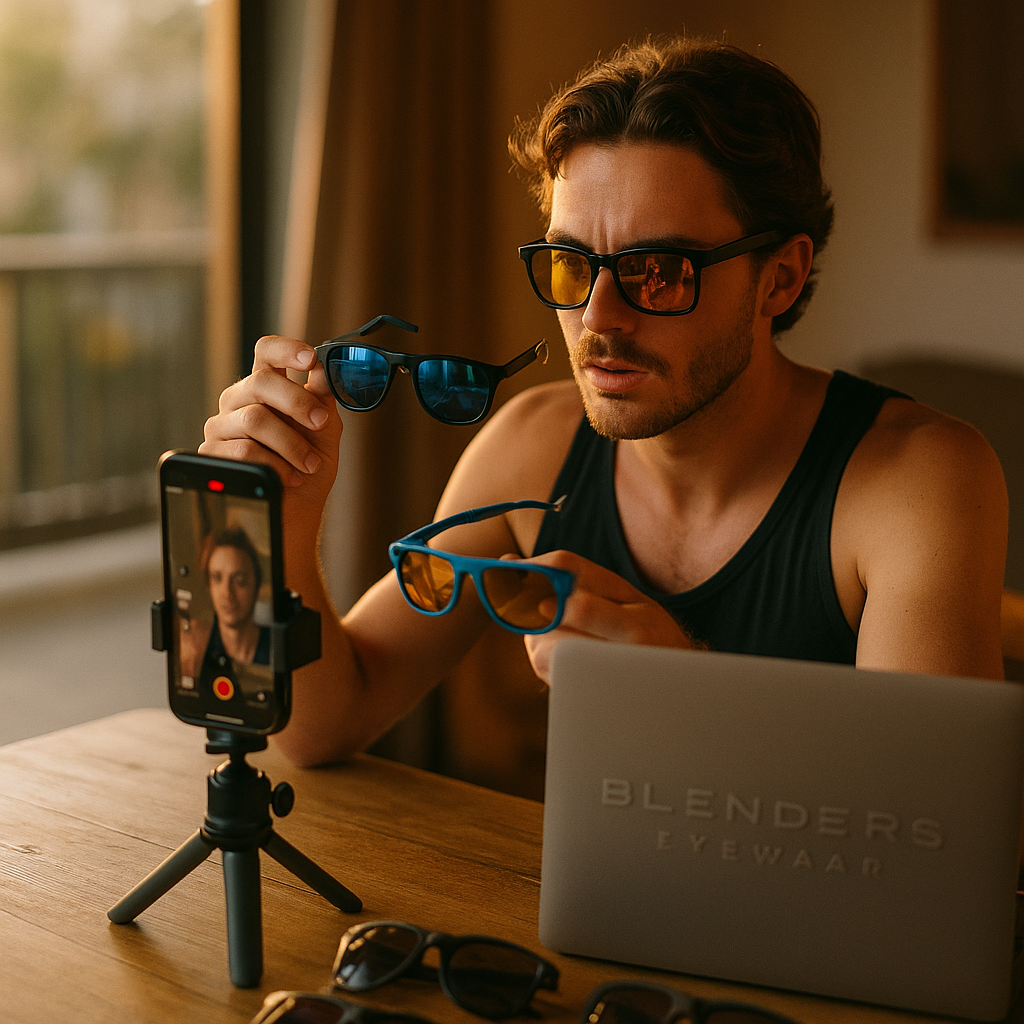
One sunglasses brand just proved that a TikTok creator can do more for product development than a six-figure market research contract. When Blenders Eyewear brought TikTok star Jordan the Stallion into its orbit as a creative partner, the brand didn’t just get another face for ad reads. It got a built-in focus group, a content engine, and a product roadmap shaped by someone who actually knows what makes his 20 million-plus followers stop scrolling.
That distinction matters. Most brands still treat creator hires as media buys. Blenders treated this one as an operating decision, and the results are rewriting how the company thinks about social content and product drops alike.
From TikTok Fame to Title: What Blenders Actually Did
Jordan the Stallion built his following on quick, comedic “did you know” style videos, the kind of content that feels native to TikTok rather than bolted onto it. Blenders didn’t ask him to read a script about polarized lenses. Instead, the eyewear brand folded him into the creative process itself, giving him a say in content direction and, notably, product input that went beyond a one-off collab drop.
This is a meaningful departure from the standard influencer retainer. Most brands sign a creator for a campaign window, collect the deliverables, and move on. Blenders structured the relationship more like an ongoing creative partnership, closer to what you’d see with an in-house creative director than a sponsored post schedule.
The shift from “pay for a post” to “pay for a perspective” is the single biggest change happening in brand-creator relationships right now, and most marketing teams haven’t adjusted their contracts, budgets, or org charts to reflect it.
It’s a pattern worth watching closely. Other brands have made similar moves recently, treating creators less like media and more like staff. ServiceNow’s recent creator hire signaled the same thing happening in B2B paid media, a space that’s traditionally been allergic to anything resembling influencer marketing.
The Social Strategy Rewrite
Before this partnership, Blenders ran a fairly conventional eyewear playbook: lifestyle imagery, seasonal promos, a mix of macro and micro creators posting product try-ons. Functional, but not particularly differentiated in a category where every brand’s feed looks like a beach commercial.
The rewrite centered on three things.
- Faster content cycles. Instead of quarterly campaign planning, the brand leaned into the rhythm Jordan already uses, quick-turn, trend-responsive videos that go live within days, not weeks.
- Comedy over polish. Blenders pulled back on glossy lifestyle shots in favor of formats that mirror what actually performs on TikTok and Instagram Reels: skits, bits, and self-aware humor about the sunglasses category itself.
- Creator-led storytelling, not creator-fronted ads. The content doesn’t feel like Jordan endorsing a product. It feels like Jordan building a bit, with the sunglasses as a prop that happens to be for sale.
That third point is the one most brands get wrong. According to Sprout Social’s research on social media trust, audiences consistently rate creator content as more trustworthy than brand-produced ads, but only when it doesn’t feel like an ad. The moment a creator’s voice gets sanded down into brand-safe marketing speak, the trust premium evaporates.
Blenders avoided that trap by giving Jordan real creative latitude rather than a talking-points deck.
This approach echoes what’s worked for other direct-to-consumer brands navigating the same tension. Liquid Death’s approach to raw creator clips shows a similar philosophy: let the content stay unpolished, then decide later what gets boosted into paid media.
Product Strategy Gets a Creator’s Fingerprint
Here’s where the Blenders move gets more interesting than a typical influencer story. Jordan’s involvement reportedly extended into actual product decisions, not just which colorway to push in a campaign, but feedback on fit, styling direction, and what resonates with his specific audience segment.
That’s a meaningfully different value exchange than most creator deals.
Think about what this replaces. Traditional product feedback loops run through surveys, focus groups, or retail sell-through data that arrives months after a design decision is locked. A creator embedded in the process can flag what’s going to land with a younger, trend-driven audience before the product ever ships, because he’s already living in the comments section where that audience tells him exactly what they think.
This isn’t entirely new territory. Brands like e.l.f. Beauty have built structured systems for pulling creator and community input into product and content decisions at scale. e.l.f.’s nano creator vetting process uses thousands of smaller voices to validate direction before scaling spend. Blenders is running a more concentrated version of the same idea: one highly influential voice, deeply embedded, rather than thousands of smaller signals aggregated through software.
Both models work. The question for brand strategists is which one fits your category, your budget, and your risk tolerance.
Does Hiring a Creator as an Executive Actually Work?
It’s fair to be skeptical here. Plenty of brands have handed creators oversized creative control and watched the content drift away from what actually sells. So what makes this different?
A few operational realities make the model defensible from an ROI standpoint:
- Content production costs drop. When a creator is embedded rather than booked per campaign, brands avoid repeated negotiation, repeated briefing, and the overhead of managing a rotating cast of talent.
- Retention beats reach. A long-term creative partner builds audience familiarity over time. Viewers start to associate the creator’s voice with the brand itself, which is a much stickier form of brand recall than a single sponsored post.
- Product-market signal arrives earlier. Instead of waiting for post-launch analytics, the brand gets real-time read on what’s resonating, straight from someone with a direct pipeline to the target demo.
This logic mirrors what’s driving other brands toward longer creator commitments instead of one-off deals. Ryse Supplements’ retention-based creator model pays for ongoing presence rather than isolated posts, betting that consistency builds more brand equity than reach alone. Blenders is essentially applying that same retention logic, just with a creative title attached instead of a payout structure.
Industry data backs the broader shift. eMarketer’s creator economy research has tracked steady growth in brands allocating influencer budget toward longer-term ambassador relationships rather than campaign-based spend, a trend that’s been building for several years and shows no sign of reversing.
The Risk Side Brands Don’t Talk About
None of this is risk-free, and marketing leaders considering a similar move need to think through the downside before copying the playbook.
First, there’s dependency risk. When a creator becomes synonymous with your brand’s voice, what happens if that relationship ends, or worse, if the creator becomes embroiled in controversy? Brands need contractual protections and content ownership clauses that account for this, not an afterthought bolted on after signing.
Second, disclosure compliance doesn’t disappear just because the relationship looks more like employment than endorsement. The FTC’s endorsement guidelines still apply to material connections between brands and creators, regardless of title. A “creative partner” or “chief creative advisor” credit doesn’t exempt the content from disclosure requirements if compensation or product value is involved.
Legal and compliance teams should be looped into these structures from day one, not after the content is already published.
Treating a creator as an embedded executive doesn’t remove the need for disclosure, contracts, or brand safety review. It raises the stakes on all three, because the output volume and brand association are both higher than a typical campaign.
Third, there’s the scalability question. This model worked for Blenders partly because the fit between Jordan’s comedic style and the eyewear category’s fairly low-stakes purchase decision was natural. A financial services brand or a B2B SaaS company trying to replicate this exact approach would face a much steeper credibility gap. Fit matters more than fame.
What This Means for Brand and Agency Teams
If you’re weighing a similar move, start smaller than a full creative title. Pilot a structured, longer-term collaboration with one creator whose audience overlaps tightly with your buyer. Measure not just engagement, but whether product feedback from that relationship actually changes a decision before launch, not after.
That’s the real test of whether this is a creative gimmick or a genuine operational upgrade.
Brands in adjacent categories have found success with similarly structured, always-on casting rather than one-off bursts. Sephora Squads’ always-on casting model offers a useful comparison point for teams building a creator bench rather than betting everything on a single high-profile hire. Diversify the relationship structure, even if one creator becomes the anchor.
For teams still relying on manual tracking across these partnerships, platforms like HubSpot’s marketing tools can help connect creator content performance to actual funnel metrics, something a lot of influencer programs still struggle to prove.
Takeaway
Blenders Eyewear’s bet is simple: stop renting a creator’s audience and start borrowing their creative judgment. Brands weighing a similar move should pilot the relationship structure before the title, lock in disclosure and ownership terms early, and measure whether the partnership actually changes a product or content decision, not just a post count.
FAQs
What did Blenders Eyewear actually change with its Jordan the Stallion hire?
Blenders moved from a standard campaign-based influencer model to an embedded creative partnership, giving the creator input into both content direction and product decisions rather than a single sponsored post arrangement.
Is hiring a creator as a quasi-executive a replacement for traditional influencer marketing?
No. It’s a complementary model best suited to brands with a strong cultural fit between the creator’s audience and the product category. Most brands still need a broader creator bench alongside any anchor partnership.
Do FTC disclosure rules still apply when a creator holds a brand title?
Yes. Any material connection between a brand and a creator, including embedded creative roles, still falls under FTC endorsement guidelines and requires clear disclosure regardless of job title.
What’s the biggest risk in this type of creator partnership?
Over-dependence on a single creator’s voice and reputation. Brands should build contractual protections around content ownership and have a contingency plan if the relationship ends or the creator faces controversy.
How can smaller brands test this model without a major budget commitment?
Start with a structured, longer-term pilot with one creator whose audience closely matches the target buyer, then measure whether their feedback actually changes a product or content decision before scaling the relationship.
FAQs
Top Influencer Marketing Agencies
The leading agencies shaping influencer marketing in 2026
Agencies ranked by campaign performance, client diversity, platform expertise, proven ROI, industry recognition, and client satisfaction. Assessed through verified case studies, reviews, and industry consultations.
Moburst

-
2

The Shelf
Boutique Beauty & Lifestyle Influencer AgencyA data-driven boutique agency specializing exclusively in beauty, wellness, and lifestyle influencer campaigns on Instagram and TikTok. Best for brands already focused on the beauty/personal care space that need curated, aesthetic-driven content.Clients: Pepsi, The Honest Company, Hims, Elf Cosmetics, Pure LeafVisit The Shelf → -
3

Audiencly
Niche Gaming & Esports Influencer AgencyA specialized agency focused exclusively on gaming and esports creators on YouTube, Twitch, and TikTok. Ideal if your campaign is 100% gaming-focused — from game launches to hardware and esports events.Clients: Epic Games, NordVPN, Ubisoft, Wargaming, Tencent GamesVisit Audiencly → -
4

Viral Nation
Global Influencer Marketing & Talent AgencyA dual talent management and marketing agency with proprietary brand safety tools and a global creator network spanning nano-influencers to celebrities across all major platforms.Clients: Meta, Activision Blizzard, Energizer, Aston Martin, WalmartVisit Viral Nation → -
5

The Influencer Marketing Factory
TikTok, Instagram & YouTube CampaignsA full-service agency with strong TikTok expertise, offering end-to-end campaign management from influencer discovery through performance reporting with a focus on platform-native content.Clients: Google, Snapchat, Universal Music, Bumble, YelpVisit TIMF → -
6

NeoReach
Enterprise Analytics & Influencer CampaignsAn enterprise-focused agency combining managed campaigns with a powerful self-service data platform for influencer search, audience analytics, and attribution modeling.Clients: Amazon, Airbnb, Netflix, Honda, The New York TimesVisit NeoReach → -
7

Ubiquitous
Creator-First Marketing PlatformA tech-driven platform combining self-service tools with managed campaign options, emphasizing speed and scalability for brands managing multiple influencer relationships.Clients: Lyft, Disney, Target, American Eagle, NetflixVisit Ubiquitous → -
8

Obviously
Scalable Enterprise Influencer CampaignsA tech-enabled agency built for high-volume campaigns, coordinating hundreds of creators simultaneously with end-to-end logistics, content rights management, and product seeding.Clients: Google, Ulta Beauty, Converse, AmazonVisit Obviously →