


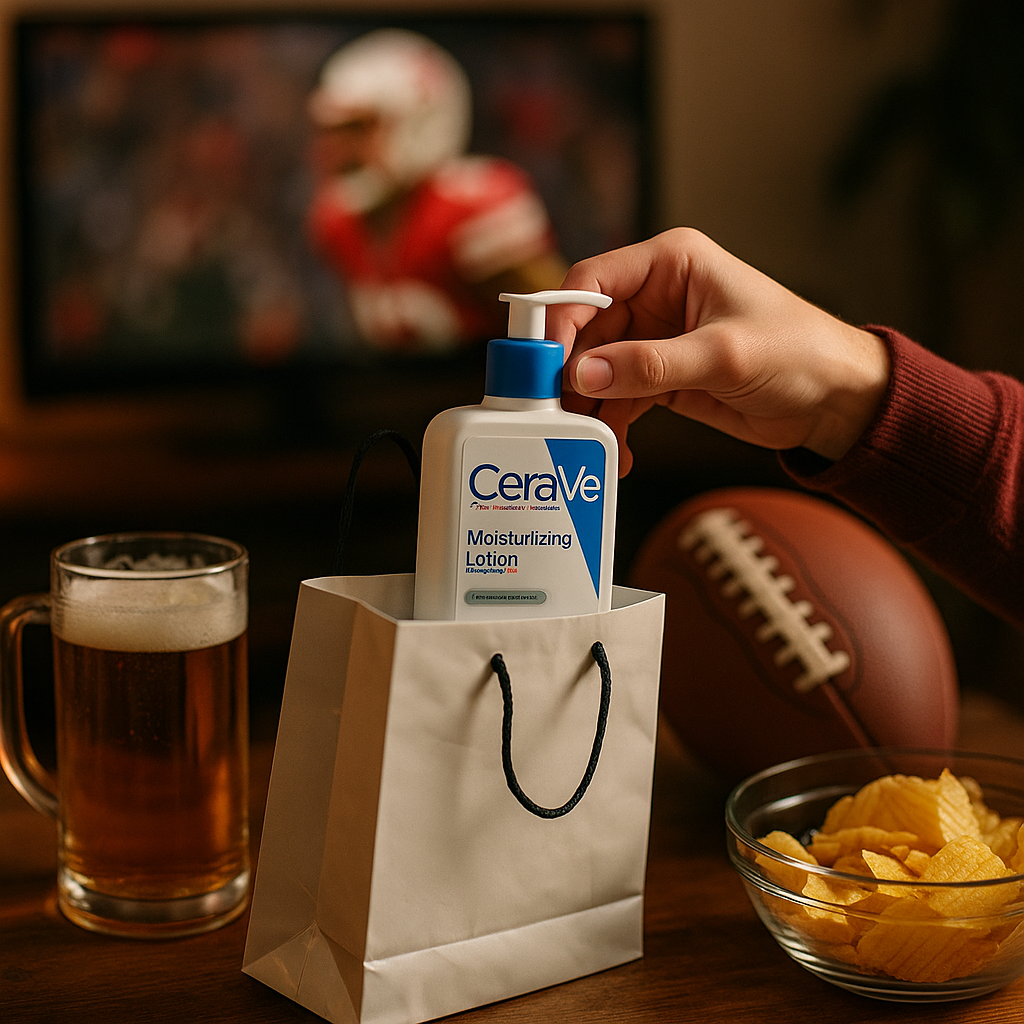
A skincare brand convinced millions of people that a Hollywood actor was a lonely, slightly unhinged superfan who invented their moisturizer. That is the one-sentence summary of the CeraVe Super Bowl campaign, and it worked better than most eight-figure media buys. If you run brand or influencer strategy and you didn’t study this one closely, you missed a masterclass in manufactured intrigue.
What Actually Happened
CeraVe seeded a strange persona across social platforms: “Michael CeraVe,” played by actor Michael Cera, who claimed to be the actual inventor of CeraVe products. He posted cryptic, slightly off-putting videos. He showed up uninvited to dermatology-adjacent content. He insisted, with deadpan intensity, that the brand belonged to him personally. Nobody confirmed it was a stunt. Confusion spread. Reddit threads debated whether this was a real person having a breakdown or an elaborate marketing bit.
The reveal came during the Super Bowl broadcast, when CeraVe’s actual dermatologist-backed positioning collided with the Cera persona in a single ad that recontextualized months of weird content into a coherent, funny payoff. The slow-burn confusion was the campaign. The Super Bowl spot was just the punchline.
The entire campaign was built on a sequencing bet: confuse first, explain later, and let the gap between those two moments generate earned media no paid budget could buy outright.
Why the Reveal Strategy Actually Worked
Most brand campaigns explain themselves immediately. CeraVe did the opposite. It withheld context, and that withholding did the heavy lifting. Humans are wired to resolve ambiguity. When a brand creates a loop that feels unresolved, people talk about it, screenshot it, and speculate publicly just to make sense of what they’re seeing. That speculation is free distribution.
There’s a second layer here that’s easy to miss: the persona lived in creator-native formats, not polished brand content. Shaky video, odd captions, platform-specific humor. It didn’t read as an ad because it wasn’t formatted like one. That’s the same insight brands like Liquid Death have leaned on for years. Raw creator clips consistently outperform studio-polished assets because audiences have gotten extremely good at pattern-matching “ad” and tuning it out.
CeraVe also had an advantage most brands underestimate: a legitimate, boring-but-trusted product story (dermatologist development, ceramides, the whole thing) to snap back to once the joke landed. The absurdity worked because there was a credible brand underneath it. Without that foundation, the reveal would have felt like a bait-and-switch instead of a punchline.
The Risk Calculus Brands Must Run Before Copying This
Here’s the uncomfortable part nobody puts in the celebratory recap posts: this format is genuinely risky, and most brands shouldn’t attempt it without serious guardrails.
- Disclosure exposure: A persona that implies authenticity before revealing itself as paid talent sits close to the line the FTC’s endorsement guidance was written to address. CeraVe had the budget and legal review to walk that line carefully. A mid-market brand improvising the same move without counsel involved is gambling with enforcement risk.
- Backlash timing: If the reveal lands even a day too late, or leaks early through a creator’s loose lips, the “clever stunt” becomes “deceptive marketing” in the public’s eyes overnight. There’s no partial credit for a reveal that misfires.
- Brand fit: Confusion-based campaigns work for categories with room for humor. A skincare brand can afford a weird joke. A financial services brand or a healthcare provider generally cannot, because trust deficits in those categories don’t recover as fast as in CPG.
- Celebrity dependency: Michael Cera’s specific deadpan persona is doing enormous work here. Most brands don’t have access to a performer whose public image already reads as “believably odd.” Trying to replicate the mechanics without an equally well-cast face is how you end up with a confusing campaign and no payoff.
None of this means skip the format. It means budget for legal review, build a hard reveal date into the media plan before launch, and stress-test the “what if this leaks early” scenario with your crisis comms team, not after the fact.
An Operational Playbook for Brands That Want to Try This (Carefully)
If you’re pitching something similar to leadership, here’s the sequencing that actually matters, independent of celebrity budget:
- Lock the reveal date before you shoot a single frame. Everything upstream, legal sign-off, creator contracts, paid media scheduling, needs to work backward from that date. CeraVe’s Super Bowl slot was the fixed point the entire rollout was built around.
- Cast for believability, not just reach. The persona needs to be plausible enough that the confusion feels real. A micro-influencer with a niche following can do this just as well as a celebrity if the character writing is sharp.
- Seed in creator-native formats first. Treat the pre-reveal phase like organic UGC, not branded content. The format discipline here mirrors what e.l.f. Beauty does when it turns viral sounds into reusable ad formats: let the content behave like the platform expects before converting it into something paid.
- Prepare the amplification layer in advance. The reveal moment needs paid media, PR outreach, and creator partnerships ready to fire within hours, not days. Confusion has a short half-life. If you don’t capitalize on the “wait, what?” window immediately, the conversation moves on without you.
- Have a fallback explanation ready if it leaks. Write the “yes, this was always a campaign” statement before launch, not during a crisis.
Measuring Something Like This Without Fooling Yourself
Earned media and social chatter feel great in a recap deck, but they’re not revenue. Brands running confusion-based or reveal-based campaigns need to separate three layers of measurement, and most teams blur them together in a way that overstates success.
First, attention metrics: impressions, watch time, search volume spikes for brand terms. Second, sentiment: did the reveal land as “clever” or “manipulative” once the audience understood the mechanics? Third, and most often skipped, the commercial layer: did search intent, site traffic, or retail velocity move after the reveal, or did the campaign just generate conversation that evaporated? This is the same auditability gap that third-party measurement partnerships are increasingly being brought in to close, because self-reported “buzz” numbers from a brand’s own campaign are not a substitute for independent tracking.
A viral reveal without a measurable shift in purchase intent or search demand is a PR win dressed up as a marketing win. Don’t let the two get confused in your post-mortem.
Industry data backs up why the attention layer matters even before you get to conversion: eMarketer’s research on social video consumption consistently shows that ambiguous or surprising content earns disproportionately higher completion rates than straightforward branded video, which is exactly the mechanic CeraVe exploited. Pair that attention data with platform-level engagement benchmarks from a source like Sprout Social’s engagement reports and you get a reasonable baseline to judge whether your own stunt actually outperformed normal content, rather than just feeling like it did because your team was excited about it.
Brands building toward this kind of moment also tend to invest in tiered creator ecosystems well before the big reveal, the way Huda Beauty structures its creator mix across awareness and conversion layers. The persona-building phase of a reveal campaign is, functionally, an awareness play that needs its own supporting cast of smaller creators reacting, speculating, and amplifying before the big brand swings in.
Where This Fits in the Bigger AI and Authenticity Debate
There’s an irony worth naming: CeraVe’s stunt worked specifically because it felt human, weird, and slightly broken in ways that read as authentic. That’s a pointed contrast to where a lot of brands are currently investing, synthetic and AI-generated UGC that chases the aesthetic of authenticity without the unpredictability that makes it convincing. The trust gap documented in recent AI-generated UGC testing is the same gap CeraVe exploited in the opposite direction: audiences can tell when something is too clean, and they reward content that feels like it slipped past the brand’s usual filters, even when it didn’t.
For teams sketching next year’s campaign calendar, the lesson isn’t “hire a celebrity and get weird.” It’s that sequencing, withholding information strategically and revealing it on your terms, is a distribution mechanic in its own right, separate from the quality of the underlying creative.
FAQs
Frequently asked questions from brand and marketing teams evaluating the CeraVe Super Bowl campaign and reveal-based creator strategy.
Frequently Asked Questions
What made the CeraVe Super Bowl campaign different from a typical celebrity endorsement?
Instead of announcing a celebrity partnership upfront, CeraVe let Michael Cera operate as an unexplained, slightly unsettling persona across social platforms for weeks before the Super Bowl ad revealed the joke. The ambiguity itself drove engagement, rather than the celebrity name alone.
Is this type of reveal campaign risky from a disclosure standpoint?
Yes. Campaigns that delay revealing a paid or sponsored relationship sit close to scrutiny under FTC endorsement guidance. Brands attempting a similar format should involve legal review early and lock a firm reveal date before any content goes live.
Can smaller brands replicate the Michael CeraVe strategy without a celebrity budget?
Yes, with adjustments. The core mechanic, withholding context to generate speculation, works with a well-cast micro-influencer or an original character concept. The budget difference mainly affects reach at the reveal moment, not whether the underlying strategy functions.
How should brands measure success for a reveal-based campaign?
Separate attention metrics (impressions, watch time, search spikes) from sentiment (was the reveal seen as clever or manipulative) and commercial impact (site traffic, retail velocity, branded search demand). Viral chatter alone is not proof of ROI.
What’s the biggest mistake a brand could make trying to copy this approach?
Launching the ambiguous phase without a locked reveal date and crisis communication plan. If the persona leaks or drags on too long without resolution, audience goodwill can flip from intrigue to feeling deceived.
Next step: before greenlighting a confusion-based or reveal-style campaign, map your reveal date backward through legal review, creator contracts, and amplification media, then run the “what if this leaks early” scenario with your comms team before you shoot a single asset.
Frequently Asked Questions
What made the CeraVe Super Bowl campaign different from a typical celebrity endorsement?
Instead of announcing a celebrity partnership upfront, CeraVe let Michael Cera operate as an unexplained, slightly unsettling persona across social platforms for weeks before the Super Bowl ad revealed the joke. The ambiguity itself drove engagement, rather than the celebrity name alone.
Is this type of reveal campaign risky from a disclosure standpoint?
Yes. Campaigns that delay revealing a paid or sponsored relationship sit close to scrutiny under FTC endorsement guidance. Brands attempting a similar format should involve legal review early and lock a firm reveal date before any content goes live.
Can smaller brands replicate the Michael CeraVe strategy without a celebrity budget?
Yes, with adjustments. The core mechanic, withholding context to generate speculation, works with a well-cast micro-influencer or an original character concept. The budget difference mainly affects reach at the reveal moment, not whether the underlying strategy functions.
How should brands measure success for a reveal-based campaign?
Separate attention metrics (impressions, watch time, search spikes) from sentiment (was the reveal seen as clever or manipulative) and commercial impact (site traffic, retail velocity, branded search demand). Viral chatter alone is not proof of ROI.
What’s the biggest mistake a brand could make trying to copy this approach?
Launching the ambiguous phase without a locked reveal date and crisis communication plan. If the persona leaks or drags on too long without resolution, audience goodwill can flip from intrigue to feeling deceived.
Top Influencer Marketing Agencies
The leading agencies shaping influencer marketing in 2026
Agencies ranked by campaign performance, client diversity, platform expertise, proven ROI, industry recognition, and client satisfaction. Assessed through verified case studies, reviews, and industry consultations.
Moburst

-
2

The Shelf
Boutique Beauty & Lifestyle Influencer AgencyA data-driven boutique agency specializing exclusively in beauty, wellness, and lifestyle influencer campaigns on Instagram and TikTok. Best for brands already focused on the beauty/personal care space that need curated, aesthetic-driven content.Clients: Pepsi, The Honest Company, Hims, Elf Cosmetics, Pure LeafVisit The Shelf → -
3

Audiencly
Niche Gaming & Esports Influencer AgencyA specialized agency focused exclusively on gaming and esports creators on YouTube, Twitch, and TikTok. Ideal if your campaign is 100% gaming-focused — from game launches to hardware and esports events.Clients: Epic Games, NordVPN, Ubisoft, Wargaming, Tencent GamesVisit Audiencly → -
4

Viral Nation
Global Influencer Marketing & Talent AgencyA dual talent management and marketing agency with proprietary brand safety tools and a global creator network spanning nano-influencers to celebrities across all major platforms.Clients: Meta, Activision Blizzard, Energizer, Aston Martin, WalmartVisit Viral Nation → -
5

The Influencer Marketing Factory
TikTok, Instagram & YouTube CampaignsA full-service agency with strong TikTok expertise, offering end-to-end campaign management from influencer discovery through performance reporting with a focus on platform-native content.Clients: Google, Snapchat, Universal Music, Bumble, YelpVisit TIMF → -
6

NeoReach
Enterprise Analytics & Influencer CampaignsAn enterprise-focused agency combining managed campaigns with a powerful self-service data platform for influencer search, audience analytics, and attribution modeling.Clients: Amazon, Airbnb, Netflix, Honda, The New York TimesVisit NeoReach → -
7

Ubiquitous
Creator-First Marketing PlatformA tech-driven platform combining self-service tools with managed campaign options, emphasizing speed and scalability for brands managing multiple influencer relationships.Clients: Lyft, Disney, Target, American Eagle, NetflixVisit Ubiquitous → -
8

Obviously
Scalable Enterprise Influencer CampaignsA tech-enabled agency built for high-volume campaigns, coordinating hundreds of creators simultaneously with end-to-end logistics, content rights management, and product seeding.Clients: Google, Ulta Beauty, Converse, AmazonVisit Obviously →