


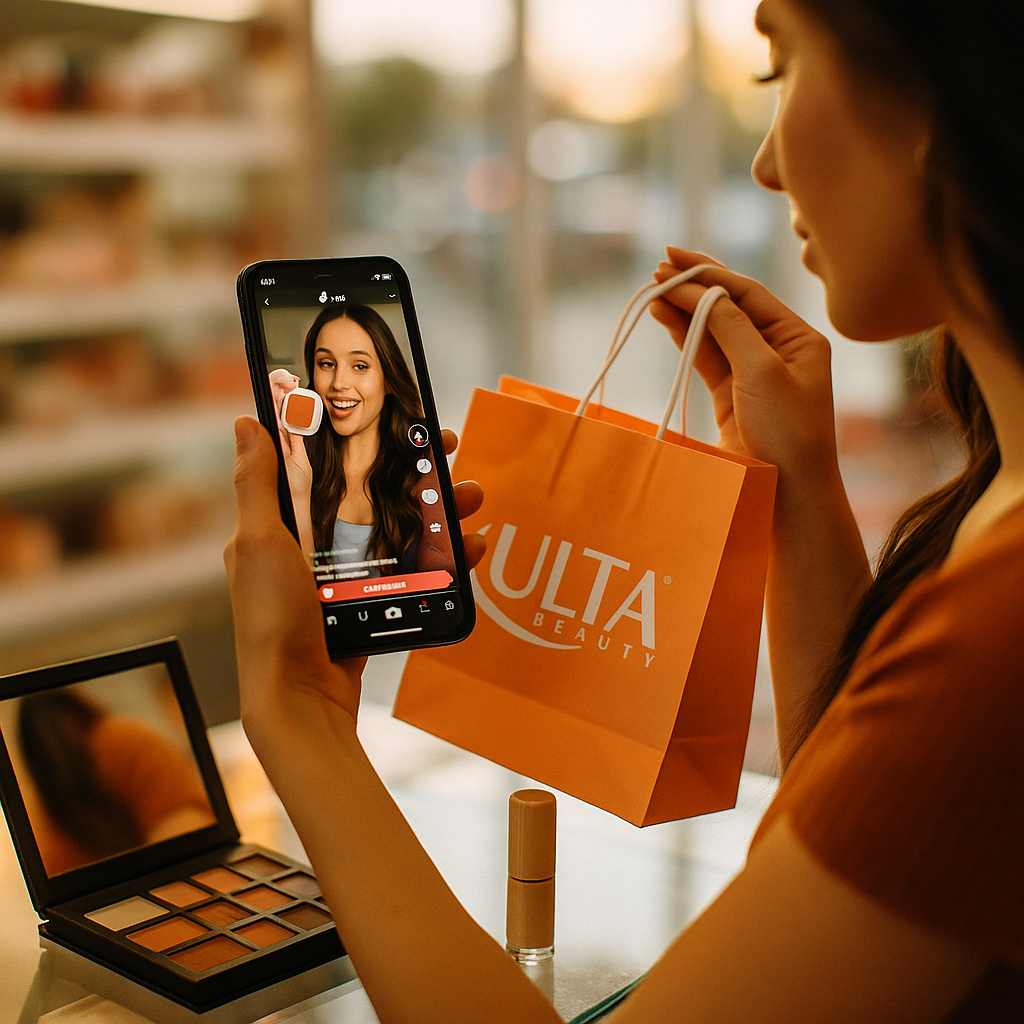
Ulta Beauty’s TikTok Shop strategy generated over $1 billion in beauty category GMV on the platform in a single year — and Ulta didn’t get there by accident. Here’s the architectural breakdown behind that number.
Why Ulta Treated TikTok Shop as a Separate Revenue Channel, Not a Redirect
Most retailers make the same mistake: they point TikTok traffic back to their owned site and call it a social commerce strategy. Ulta took the opposite position. The team built TikTok Shop as a genuinely incremental channel, with its own storefront architecture, its own product catalog logic, and commission structures designed to attract the right creators rather than just any creators.
The distinction matters because eMarketer data consistently shows that social commerce buyers are not the same cohort as direct e-commerce buyers. They have different discovery patterns, different conversion triggers, and shorter consideration windows. Trying to force them through a traditional DTC funnel is a friction problem masquerading as a traffic problem.
Ulta’s merchandising team mapped their TikTok Shop storefront to the platform’s actual consumption behavior, not their own site’s navigation schema. That’s the architectural decision most brands miss entirely.
Storefront Architecture: Built for Discovery, Not Navigation
A TikTok Shop storefront isn’t a product grid. It’s a discovery surface. Ulta’s team structured their storefront around editorial moments rather than category taxonomy. Instead of organizing by “skincare” and “haircare” the way their website does, they built collections around creator-native concepts: “skin barrier repair,” “glass skin routine,” “heat-free styling.” Vocabulary that lives in TikTok content, not retail planograms.
This matters operationally because TikTok’s algorithm surfaces storefronts through content engagement, not keyword search the way Google does. If your storefront labels don’t match the language creators and consumers actually use in videos, the platform’s native recommendation engine deprioritizes your listings in favor of competitors whose catalog language does match.
Storefront architecture on TikTok Shop should mirror creator vocabulary, not retail category logic. Brands that map collections to trending content themes, not internal SKU hierarchies, see measurably higher organic listing impressions.
Ulta also ran a lean catalog strategy. They didn’t upload their full 25,000-SKU assortment. They curated a TikTok-specific catalog of high-velocity SKUs, prestige items with strong visual storytelling potential, and trend-reactive products that creators were already organically mentioning. SKU discipline is underrated in social commerce. Too many options fracture creator focus and dilute storefront authority in TikTok’s ranking signals.
Product Catalog Integration: The Technical Layer Most Brands Get Wrong
The operational backbone of Ulta’s TikTok Shop success was clean catalog integration. This is where a lot of enterprise retailers stall out. TikTok Shop’s product catalog sync requires accurate real-time inventory data, compliant product titles, and image assets optimized for mobile-first viewing — not the same asset specs used for web PDPs.
Ulta worked through TikTok’s Commerce Manager and integrated with their existing product information management (PIM) system to maintain sync. The critical operational requirement: inventory accuracy at the variant level. If a shade sells out on the owned site but the TikTok Shop listing still shows it as available, that’s a customer experience failure that damages both channel conversion and creator reputation simultaneously.
For brands evaluating this build, the practical checklist includes: automated inventory sync with sub-hourly refresh rates, mobile-optimized hero images with clean white or neutral backgrounds, price parity logic that accounts for TikTok’s occasional promotional fee structures, and compliant product descriptions that satisfy both TikTok’s content policies and FTC disclosure requirements. The FTC’s guidelines on endorsements apply to affiliate-linked storefront purchases just as much as they apply to sponsored posts.
Creator Commission Structure: Tiered by Intent, Not Just Follower Count
This is where Ulta’s strategy genuinely diverges from the industry default. Most brands set a flat affiliate commission rate for TikTok Shop (typically 5–10%) and let TikTok’s Open Collaboration system do the rest. Ulta built a tiered structure that segmented creators by content intent, not audience size.
The framework roughly organized into three tiers. First, open affiliate participation through TikTok Shop’s standard creator marketplace, accessible to any creator meeting baseline metrics, earning standard category commission rates. Second, a managed creator tier for mid-level creators with demonstrated beauty purchase intent audiences, receiving elevated commission rates (often in the 15–20% range), early access to new SKU drops, and product seeding. Third, a strategic partner tier for top-performing creators, where Ulta negotiated co-created storefront collections, exclusive bundles, and performance bonuses tied to GMV thresholds rather than just post-level metrics.
The strategic logic here is sound. Flat commission structures reward volume. Tiered structures reward quality of audience and intent. A creator with 80,000 followers whose audience is actively shopping beauty hauls on TikTok Shop is worth more to Ulta than a creator with 800,000 followers whose audience skews toward entertainment content with low purchase intent. This thinking aligns closely with the micro-creator CAC advantages that CPG brands have been demonstrating consistently.
The elevated tiers also created a retention mechanism. Creators earning meaningfully more from Ulta’s program than from comparable beauty brands had financial incentive to prioritize Ulta SKUs in their content planning. That’s how you build a creator program that compounds over time rather than churning through the same faces every quarter.
Attribution and Incrementality: The Question Every CFO Will Ask
Here’s the uncomfortable truth about multi-channel social commerce: proving incrementality is hard. If a creator drives a TikTok Shop purchase from a customer who also regularly buys from Ulta.com, is that a new sale or a cannibalized one?
Ulta’s team addressed this by implementing basket-level analysis comparing TikTok Shop purchaser cohorts against owned-channel buyer cohorts. Key metrics they tracked: first-time buyer rate on TikTok Shop versus owned channel, average order value differential, category mix (were TikTok Shop buyers purchasing different SKUs than .com buyers?), and 90-day repurchase behavior across channels.
The data pointed to genuine incrementality. TikTok Shop buyers skewed younger and showed higher rates of first-time Ulta purchases overall. Categories like skincare tools and prestige fragrance overperformed on TikTok Shop relative to their share of Ulta’s owned-channel mix, suggesting the platform was surfacing product discovery for segments not well served by traditional search or loyalty channels. Similar attribution dynamics appear in category-disrupting TikTok Shop plays across adjacent verticals.
TikTok Shop incrementality is most defensible when your buyer cohort analysis shows a meaningful first-time purchase rate and a category mix that doesn’t mirror your owned-channel bestseller list. Both signals appeared in Ulta’s program data.
For measurement infrastructure, Ulta leveraged TikTok Shop’s native analytics alongside third-party attribution tools to reconcile cross-channel customer journeys. The social commerce analytics ecosystem has matured enough that this level of cohort analysis is now accessible to mid-market brands, not just enterprise retailers with custom data science teams.
What This Means for Brands Building Their Own TikTok Shop Program
Ulta’s architecture isn’t replicable at 1:1 scale for every brand, but the strategic principles are. Curate your catalog for the platform rather than duplicating your full assortment. Build commission structures that segment by audience intent, not vanity metrics. Invest in the technical infrastructure to keep inventory data clean. And measure incrementality at the cohort level before claiming TikTok Shop as a net-new revenue contribution.
The brands getting this right, from Ulta to the mid-tier creator programs at e.l.f. Beauty, share one operational characteristic: they treat social commerce as a distinct channel with its own logic, not a downstream extension of their existing e-commerce stack. That mindset shift is the actual unlock.
If you’re building or overhauling a TikTok Shop program, start with the catalog architecture and commission tier logic before you recruit a single creator. The infrastructure determines the ceiling on what any creator can achieve for your program.
Frequently Asked Questions
How did Ulta Beauty structure its TikTok Shop storefront differently from its main website?
Ulta organized its TikTok Shop storefront around creator-native content themes like “glass skin routine” and “skin barrier repair” rather than traditional retail category labels like “skincare” or “haircare.” This approach aligned the storefront with TikTok’s algorithm, which surfaces products based on content engagement and vocabulary used in videos, not keyword search behavior.
What commission rates did Ulta Beauty offer TikTok Shop creators?
Ulta used a tiered commission structure rather than a flat rate. Open affiliate participants received standard category rates (typically 5–10%), a managed creator tier received elevated rates in the 15–20% range plus early product access, and strategic partners received co-created collection opportunities and GMV-based performance bonuses on top of elevated commissions.
How did Ulta prove TikTok Shop revenue was incremental and not cannibalized from its own site?
Ulta ran basket-level cohort analysis comparing TikTok Shop buyers against owned-channel buyers, tracking first-time buyer rates, average order value, category mix, and 90-day repurchase behavior. TikTok Shop buyers showed higher first-time Ulta purchase rates and a category mix that differed from .com bestsellers, supporting an incrementality argument.
How many SKUs should a brand list on TikTok Shop?
Ulta’s approach favored catalog curation over completeness. Rather than uploading their full assortment, they selected high-velocity SKUs with strong visual storytelling potential and trend-reactive products already being discussed organically by creators. A leaner, curated catalog tends to perform better on TikTok Shop because it concentrates creator attention and strengthens the storefront’s authority signals within TikTok’s ranking system.
What are the key technical requirements for a TikTok Shop catalog integration?
Critical technical requirements include automated inventory sync with sub-hourly refresh rates at the variant level, mobile-optimized product images, price parity logic that accounts for TikTok’s promotional structures, and product descriptions that comply with both TikTok’s content policies and FTC endorsement disclosure requirements.
Top Influencer Marketing Agencies
The leading agencies shaping influencer marketing in 2026
Agencies ranked by campaign performance, client diversity, platform expertise, proven ROI, industry recognition, and client satisfaction. Assessed through verified case studies, reviews, and industry consultations.
Moburst

-
2

The Shelf
Boutique Beauty & Lifestyle Influencer AgencyA data-driven boutique agency specializing exclusively in beauty, wellness, and lifestyle influencer campaigns on Instagram and TikTok. Best for brands already focused on the beauty/personal care space that need curated, aesthetic-driven content.Clients: Pepsi, The Honest Company, Hims, Elf Cosmetics, Pure LeafVisit The Shelf → -
3

Audiencly
Niche Gaming & Esports Influencer AgencyA specialized agency focused exclusively on gaming and esports creators on YouTube, Twitch, and TikTok. Ideal if your campaign is 100% gaming-focused — from game launches to hardware and esports events.Clients: Epic Games, NordVPN, Ubisoft, Wargaming, Tencent GamesVisit Audiencly → -
4

Viral Nation
Global Influencer Marketing & Talent AgencyA dual talent management and marketing agency with proprietary brand safety tools and a global creator network spanning nano-influencers to celebrities across all major platforms.Clients: Meta, Activision Blizzard, Energizer, Aston Martin, WalmartVisit Viral Nation → -
5

The Influencer Marketing Factory
TikTok, Instagram & YouTube CampaignsA full-service agency with strong TikTok expertise, offering end-to-end campaign management from influencer discovery through performance reporting with a focus on platform-native content.Clients: Google, Snapchat, Universal Music, Bumble, YelpVisit TIMF → -
6

NeoReach
Enterprise Analytics & Influencer CampaignsAn enterprise-focused agency combining managed campaigns with a powerful self-service data platform for influencer search, audience analytics, and attribution modeling.Clients: Amazon, Airbnb, Netflix, Honda, The New York TimesVisit NeoReach → -
7

Ubiquitous
Creator-First Marketing PlatformA tech-driven platform combining self-service tools with managed campaign options, emphasizing speed and scalability for brands managing multiple influencer relationships.Clients: Lyft, Disney, Target, American Eagle, NetflixVisit Ubiquitous → -
8

Obviously
Scalable Enterprise Influencer CampaignsA tech-enabled agency built for high-volume campaigns, coordinating hundreds of creators simultaneously with end-to-end logistics, content rights management, and product seeding.Clients: Google, Ulta Beauty, Converse, AmazonVisit Obviously →