


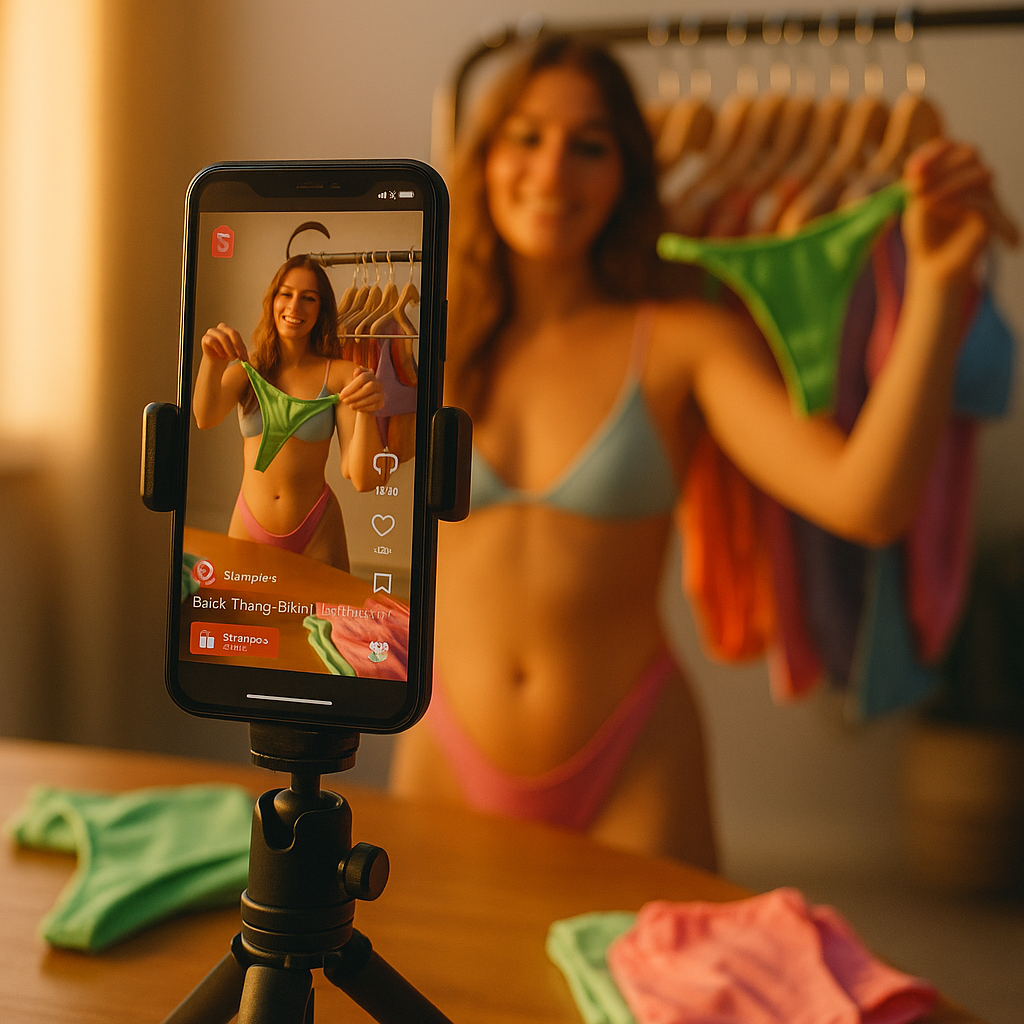
Zero Ad Spend. Number One on TikTok Shop.
Skimpies built the top-ranked brand on TikTok Shop without spending a dollar on paid amplification. No Spark Ads. No TopView. No paid seeding budgets. Just a disciplined, algorithm-first content strategy that most brand teams talk about but never actually execute. Here is exactly how they did it — and what your team can replicate.
Why Organic-First on TikTok Shop Is Harder Than It Looks
Most brands treat organic TikTok as a warm-up act for paid. Post something, see if it sticks, then boost the winners. Skimpies flipped that model entirely and committed to earning distribution rather than buying it. That distinction matters more than it sounds.
TikTok’s For You Page algorithm prioritizes content signals — watch time, replay rate, comment velocity, and product link clicks — over account authority or follower count. A brand with 800 followers posting algorithm-optimized content will consistently outperform a brand with 80,000 followers posting brand-centric content that loses viewers in the first three seconds. Skimpies understood this from launch. They engineered every video around retention metrics first, product messaging second.
For brand strategists evaluating TikTok active attention strategy, this sequencing is critical. Attention is the input. Retention is the signal. Conversion is the output. Confuse the order and the algorithm never gives you the distribution to convert anyone.
The Watch-Time Architecture Behind the Wins
Skimpies built what their team called a “hook-hold-convert” structure across every piece of content. The first two seconds establish a visual tension or question. The next eight to twelve seconds hold attention through movement, contrast, or a narrative promise. The final seconds resolve that tension with a product reveal or result.
This is not accidental. TikTok’s own ads guidance confirms that average watch time and completion rate are the strongest signals for organic content distribution. Skimpies’ content team reportedly tracked average watch percentage by video format, iterating weekly. Low-performing formats were cut within two posting cycles. High-performing hooks were templated and reused with different product variations.
The operational discipline here is worth pausing on. Most brand content teams do not have a feedback loop tight enough to make format-level decisions week over week. Skimpies treated their content calendar less like an editorial schedule and more like a performance marketing test matrix.
Skimpies tracked average watch percentage by video format and killed underperforming structures within two posting cycles — a feedback loop most brand teams lack entirely.
Before-and-After: The Format That Drove Product Discovery
The before-and-after format is not new. But Skimpies executed it with a specificity that most brands miss. They did not show vague lifestyle transformation. They showed exact, measurable fit differences — what a product looks like off versus on, unstyled versus styled, before adjustment versus after. The specificity created credibility. The credibility created saves and shares.
Saves are a deeply undervalued TikTok signal. A save indicates purchase intent far more reliably than a like. When users save a before-and-after video, they are essentially bookmarking a buying decision. Skimpies’ format choice directly fed a metric that TikTok’s algorithm uses to push content into shopping-intent audiences.
This is the same principle at work in Ulta Beauty’s TikTok Shop approach, where creator content anchored in tangible product demonstration consistently outperformed aspirational brand content on conversion metrics. Demonstration beats declaration every time in a commerce context.
Critically, Skimpies kept their before-and-after videos short. Most ran under thirty seconds. That compression forced clarity. Every frame had to earn its place or the retention curve dropped. Their editing discipline was as important as their format choice.
Algorithm-First Seeding: How They Built Velocity Without Paying for It
Seeding strategy is where Skimpies diverged most sharply from conventional brand playbooks. Rather than gifting product to high-follower accounts and hoping for coverage, they seeded to micro-creators with demonstrated high completion rates in adjacent product categories. They were not buying reach. They were recruiting content signals.
This is a meaningful strategic distinction. A creator with 4,000 followers and consistent 85% completion rates on product videos is more valuable to an algorithm-first seeding strategy than a creator with 400,000 followers and 18% completion rates. Skimpies reportedly identified candidates by manually reviewing completion rate proxies — comment-to-view ratios, share velocity, and video retention patterns — before reaching out.
The approach mirrors what agencies like BPCM have documented in structured creator seeding campaigns: volume of high-signal content beats the prestige of high-follower placements when TikTok Shop ranking is the goal. Skimpies seeded broadly and consistently rather than making big bets on a handful of accounts.
They also briefed creators tightly on format. Creators were not given open briefs to “show the product however feels natural.” They were given specific structural guidance — hook style, product placement timing, CTA language — while retaining voice and visual autonomy. That balance kept content authentic while ensuring the algorithm-critical elements were present.
For reference on how micro-creator strategies cut acquisition costs, the data consistently points toward this model: structured briefs, high volume, and retention-optimized formats outperform low-volume celebrity placements on cost-per-acquisition at scale.
What TikTok Shop Ranking Actually Rewards
TikTok Shop’s ranking algorithm weights several factors that Skimpies systematically gamed in the most legitimate sense of that word. Product click-through rate from video, add-to-cart rate, conversion rate, review velocity, and fulfillment speed all feed the ranking engine. Skimpies optimized every single one.
Their product page copy was written for conversion, not brand voice. Their review solicitation process was built into post-purchase email flows. Their fulfillment partner was selected partly on dispatch speed because eMarketer research and TikTok’s own merchant documentation both indicate that fulfillment reliability affects shop ranking. They treated TikTok Shop as a search and commerce engine with an algorithm to be understood, not a social platform with a storefront bolted on.
That framing change is significant. Brands that approach TikTok Shop as “social commerce” often under-invest in the commerce mechanics. Brands that approach it as a platform with algorithmic ranking logic and conversion optimization requirements tend to outperform. Skimpies was firmly in the second camp.
TikTok Shop rewards fulfillment speed, review velocity, and video-to-cart conversion — not just content quality. Skimpies optimized every layer of that stack, not just the creative.
Replicating the Model: What Brand Teams Need to Do Differently
The Skimpies case is instructive but not magic. The underlying mechanics are reproducible if brand teams are willing to restructure how they measure and manage creator content. Three operational changes matter most.
- Switch your primary content KPI from reach to retention. Average watch percentage and completion rate should be the metrics your content team optimizes against, not impressions or follower growth. If your reporting dashboard does not surface these metrics by format, fix the dashboard first.
- Build a seeding roster based on signal quality, not follower count. Use tools like Sprout Social or dedicated influencer platforms to assess engagement quality before outreach. Look for creators whose audiences actually watch, not just scroll past.
- Treat creator briefs as performance assets. The brief is not an administrative document. It is the mechanism that ensures every seeded creator produces algorithm-compatible content. Invest in brief quality the way you would invest in ad copy quality. The connection between brief architecture and timing and actual content performance is direct and measurable.
Also worth acknowledging: zero paid spend is a model that works exceptionally well in the growth phase for a brand with strong product-market fit and a highly visual product. It is not a permanent strategic posture for most brands at scale. Organic briefs can beat paid campaigns in specific contexts, but the two approaches are most powerful in combination once a brand has identified its highest-converting formats through organic testing.
Skimpies proved the organic-first model works. The smarter question for most brand teams is: how long do you stay in organic-only mode before layering in paid amplification on your proven formats? That sequencing decision is where sophisticated TikTok Shop strategy lives.
If your team is evaluating this approach, start by auditing your current TikTok content’s average watch percentage by format. That single metric will tell you more about your algorithmic health than your follower count, your engagement rate, or your last paid campaign’s ROAS.
Frequently Asked Questions
How did Skimpies reach number one on TikTok Shop without paid ads?
Skimpies used a combination of watch-time-optimized video structures, high-converting before-and-after formats, and algorithm-first creator seeding with micro-creators selected for content signal quality rather than follower count. They also optimized their TikTok Shop listing mechanics including product page conversion, review velocity, and fulfillment speed, which directly influence platform ranking.
What is algorithm-first creator seeding and how does it differ from standard influencer seeding?
Algorithm-first seeding prioritizes creators whose content generates strong algorithmic signals — high completion rates, saves, and share velocity — over creators with large audiences. Rather than buying reach through high-follower accounts, algorithm-first seeding recruits content signals that the platform’s distribution engine rewards with organic reach.
Why does TikTok’s algorithm reward watch time so heavily for commerce content?
TikTok’s For You Page algorithm uses watch time and completion rate as proxies for content quality and audience relevance. For TikTok Shop specifically, high watch time on product videos correlates with higher click-through and add-to-cart rates, which feeds the commerce ranking engine. Content that loses viewers early signals poor relevance and receives reduced distribution.
Can large brands replicate Skimpies’ zero-paid-ad strategy?
The organic-first model works best for brands with visual products and strong product-market fit at the growth stage. Larger brands can apply the watch-time optimization and brief architecture principles, but typically benefit from layering paid amplification onto proven organic formats once the highest-converting content structures are identified through organic testing.
What metrics should brand teams track to assess TikTok organic content health?
Average watch percentage and video completion rate by format are the most important primary metrics. Secondary indicators include saves-to-views ratio (which signals purchase intent), comment velocity, and share rate. Product link click-through rate and add-to-cart rate from video are critical for TikTok Shop ranking specifically.
Top Influencer Marketing Agencies
The leading agencies shaping influencer marketing in 2026
Agencies ranked by campaign performance, client diversity, platform expertise, proven ROI, industry recognition, and client satisfaction. Assessed through verified case studies, reviews, and industry consultations.
Moburst

-
2

The Shelf
Boutique Beauty & Lifestyle Influencer AgencyA data-driven boutique agency specializing exclusively in beauty, wellness, and lifestyle influencer campaigns on Instagram and TikTok. Best for brands already focused on the beauty/personal care space that need curated, aesthetic-driven content.Clients: Pepsi, The Honest Company, Hims, Elf Cosmetics, Pure LeafVisit The Shelf → -
3

Audiencly
Niche Gaming & Esports Influencer AgencyA specialized agency focused exclusively on gaming and esports creators on YouTube, Twitch, and TikTok. Ideal if your campaign is 100% gaming-focused — from game launches to hardware and esports events.Clients: Epic Games, NordVPN, Ubisoft, Wargaming, Tencent GamesVisit Audiencly → -
4

Viral Nation
Global Influencer Marketing & Talent AgencyA dual talent management and marketing agency with proprietary brand safety tools and a global creator network spanning nano-influencers to celebrities across all major platforms.Clients: Meta, Activision Blizzard, Energizer, Aston Martin, WalmartVisit Viral Nation → -
5

The Influencer Marketing Factory
TikTok, Instagram & YouTube CampaignsA full-service agency with strong TikTok expertise, offering end-to-end campaign management from influencer discovery through performance reporting with a focus on platform-native content.Clients: Google, Snapchat, Universal Music, Bumble, YelpVisit TIMF → -
6

NeoReach
Enterprise Analytics & Influencer CampaignsAn enterprise-focused agency combining managed campaigns with a powerful self-service data platform for influencer search, audience analytics, and attribution modeling.Clients: Amazon, Airbnb, Netflix, Honda, The New York TimesVisit NeoReach → -
7

Ubiquitous
Creator-First Marketing PlatformA tech-driven platform combining self-service tools with managed campaign options, emphasizing speed and scalability for brands managing multiple influencer relationships.Clients: Lyft, Disney, Target, American Eagle, NetflixVisit Ubiquitous → -
8

Obviously
Scalable Enterprise Influencer CampaignsA tech-enabled agency built for high-volume campaigns, coordinating hundreds of creators simultaneously with end-to-end logistics, content rights management, and product seeding.Clients: Google, Ulta Beauty, Converse, AmazonVisit Obviously →