


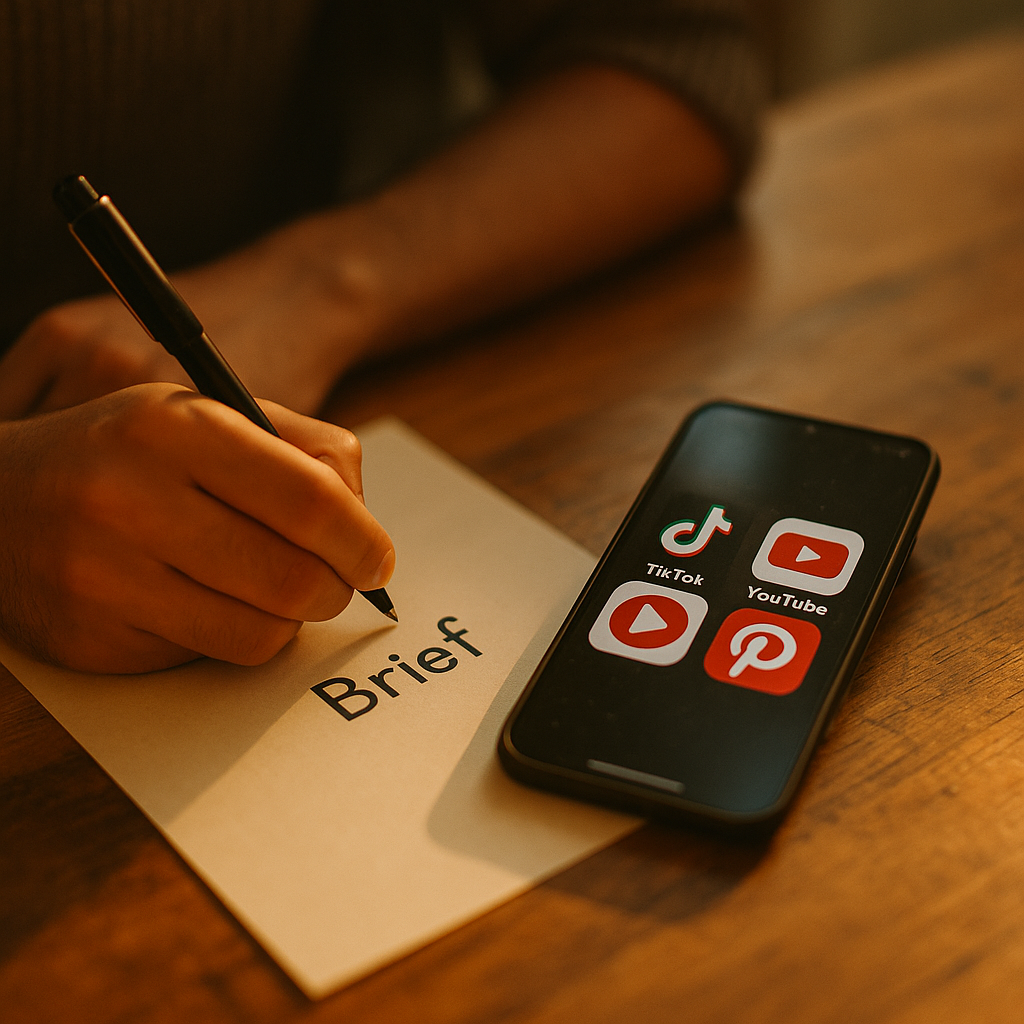
One Brief, Three Algorithms, Zero Extra Shoot Days
Brands running multi-platform influencer campaigns waste an average of 34% of production budgets on platform-specific reshoots that could have been avoided at the brief stage. The AI-curated feed brief is the fix. It is a single production document that embeds the distinct discovery signals TikTok, YouTube, and Pinterest each use to surface organic content, without requiring your creator to show up on set three separate times.
Why Platforms Optimize for Completely Different Things
Before you can write a unified brief, you need to accept an uncomfortable truth: TikTok, YouTube, and Pinterest are not competing versions of the same product. They are structurally different discovery engines, and their algorithms reflect that.
TikTok’s recommendation engine is interest-graph-first. It cares about completion rate, shares, and replay loops. The first two seconds of a video determine whether TikTok’s system classifies it as retain-worthy. According to TikTok for Business, videos that hook viewers within 1.5 seconds see up to 3x higher completion rates. That’s the entire algorithmic game on the platform.
YouTube’s algorithm, especially for Shorts, is built around satisfaction signals: likes relative to views, subscribe-after-view rates, and session extension (does watching your video lead someone to watch more YouTube?). As covered in our breakdown of YouTube Shorts creator briefs, YouTube’s 2x-speed behavior is reshaping what “good pacing” even means for short-form content.
Pinterest is a different beast entirely. It is a visual search engine running on keyword taxonomy and save behavior. The platform’s AI scans image and video metadata, board context, and pin descriptions to determine discovery. A Pinterest pin without descriptive keyword text in the caption is essentially invisible to new audiences. The Pinterest AI commerce strategy shows just how deeply keyword architecture shapes organic reach.
The Architecture of a Unified Brief
A unified brief is not a compromise document that waters down platform-specific requirements. It is a layered production guide that tells the creator what to capture, in what sequence, with what textual and behavioral signals baked into the execution itself.
Structure the brief in four layers:
- Core narrative layer: The story or demonstration that works across all three platforms. This is your product moment, your transformation arc, your “before and after” — whatever the campaign idea is. Write it once.
- Hook variants layer: Three versions of the opening two seconds. One for TikTok (pattern interrupt, text overlay, jump cut). One for YouTube (slightly slower, context-setting, strong first-frame composition). One for Pinterest (clean product-forward visual, high contrast, works as a static thumbnail).
- Textual signal layer: On-screen captions and spoken keywords differ by platform. TikTok captions front-load trend language and emotional hooks. YouTube captions and descriptions load chapter markers and searchable terms. Pinterest descriptions use long-tail keyword phrases structured like search queries.
- Asset specification layer: Aspect ratio callouts, safe zones for UI overlays, thumbnail moments for YouTube, and static frame extractions for Pinterest. This is where your post-production team translates one shoot into platform-native deliverables.
The brief is not a script. It is a decision tree that tells the creator what choices to make on camera so the editor has options — not obligations — when slicing for each platform.
Embedding Algorithm Signals Without Over-Directing the Creator
Here is where most creative directors overcorrect. They try to embed every algorithm variable into the brief as a hard directive, and the result is stilted, inauthentic content that performs poorly on all three platforms because it reads as manufactured.
The better approach is constraint-based direction. Specify the outcome the algorithm rewards, then let the creator find their own path to it.
For TikTok, instead of writing “start with a jump cut at frame one,” write: “The viewer should have an unanswered question in their head by second two. How you create that question is your call.” That maps to TikTok’s retention signal without turning the creator into a robot. For platform algorithm nuance, the latest algorithm change roundup is required reading before you finalize any brief.
For YouTube, the brief should specify “include a verbal or visual payoff at the 60% mark that earns a rewatch or a subscribe impulse.” That maps to satisfaction signals without prescribing a specific edit.
For Pinterest, the direction is simpler but often skipped entirely: “Capture at least three clean, well-lit product frames where the item is unobstructed by hands, faces, or motion blur. These become pin assets.” Pinterest’s visual AI surfaces static quality as much as video quality.
The Keyword Architecture Problem
Separate from visuals, the textual layer of a brief is where brands consistently underprepare. Most creative briefs include rough caption guidance. A unified AI-curated feed brief includes a keyword architecture document attached as an appendix.
For TikTok, pull your keyword seeds from TikTok Creative Center and TikTok Symphony, which now generates keyword recommendations based on product category and trending search behavior. For YouTube, use YouTube Studio’s Search Insights to identify terms with high search volume and low creator saturation in your category. For Pinterest, use Pinterest Trends and the Pinterest keyword tool inside Ads Manager. Each platform surfaces different language for the same product because their user search behavior is different.
A skincare brand, for example, might target “glass skin routine” on TikTok, “how to get glowy skin without makeup” on YouTube, and “natural dewy skin look morning skincare” on Pinterest. Same campaign. Same product. Radically different keyword framing, all of which can be scripted into a single shoot with the right brief structure.
If your team is using TikTok Symphony for creator matching, note that Symphony’s AI also generates caption scaffolds that can anchor your TikTok keyword layer directly.
Production Direction Specifics That Actually Change the Edit
A brief is only as good as its translation into production behavior. Here are the specific directives that change how editors work with unified footage:
- Shoot in 9:16 with headroom. Pinterest and YouTube thumbnails require different crop ratios. Shooting with more vertical headroom gives you flexibility to reframe without losing the subject.
- Record clean audio with a separate mic track. TikTok’s trending audio layer competes with spoken content; you need a clean voice track for YouTube where dialogue clarity drives retention.
- Include a “silent visual” pass. At least 30 seconds of footage where the creator demonstrates the product without speaking. This is gold for Pinterest video pins and TikTok silent-mode viewers.
- Capture a thumbnail moment on purpose. Brief the creator to hold a “money shot” pose for three full seconds — product visible, face forward, good light. YouTube thumbnails are not afterthoughts; they are the first algorithm signal.
Most unified briefs fail not in strategy but in production logistics. If the creator doesn’t know a thumbnail moment is needed, they never create one — and the editor can’t manufacture it in post.
Disclosure and Compliance Inside the Brief
One section that belongs in every unified brief and is almost always missing: platform-specific disclosure requirements. TikTok, YouTube, and Pinterest each have distinct labeled partnership requirements and native disclosure tools. Embedding disclosure directives into the brief, rather than relying on creators to self-manage, is both a compliance necessity and a brand protection move. The cross-platform disclosure audit framework is a useful reference for structuring these requirements by platform in a brief appendix.
The FTC’s endorsement guidelines apply regardless of platform, but execution varies. Brief for all of them explicitly.
Measuring Whether the Brief Worked
The validation question is straightforward: did each platform version achieve above-average organic reach without paid amplification? If your TikTok cut isn’t surfacing beyond existing followers, the hook layer failed. If your YouTube Shorts version has low subscribe-after-view rates, the satisfaction signal wasn’t embedded. If your Pinterest pins aren’t being saved by non-followers, the keyword layer or visual quality didn’t meet the platform’s AI thresholds.
Track these metrics by platform independently, even though the content originated from one shoot. Attribution modeling for organic versus paid discovery differs enough that conflating them will give you false confidence. For deeper measurement thinking, attribution window strategy for creator content is worth applying here.
Reference benchmarks from Sprout Social and HubSpot for platform-specific engagement rate baselines by content category. Compare your unified brief output against category norms, not just your own historical performance.
For broader trend context on how platforms are evolving their discovery models, eMarketer’s social commerce data is the most consistently reliable external benchmark available to brand teams.
Your next action: Pull your last three multi-platform campaigns and map each deliverable back to the brief. If the brief didn’t specify hook variants, keyword layers, and thumbnail moments by platform, you weren’t producing unified content. You were producing one piece of content and distributing it three ways. That’s the gap the AI-curated feed brief closes.
FAQs
What is an AI-curated feed brief?
An AI-curated feed brief is a single production document designed to embed the distinct algorithmic discovery signals used by platforms like TikTok, YouTube, and Pinterest into one creator shoot. Rather than producing separate content for each platform, the brief layers hook variants, keyword architecture, and asset specifications so that one shoot generates platform-native deliverables for each channel.
Why can’t brands just repurpose one video across TikTok, YouTube, and Pinterest?
Simple repurposing ignores the fact that each platform’s algorithm prioritizes different behavioral signals. TikTok rewards completion rates and replays, YouTube rewards satisfaction signals like subscribe-after-view, and Pinterest rewards visual quality and keyword-matched metadata. A video optimized for one platform will underperform on the others unless the brief was written to embed those signals from the start of production.
How does keyword architecture differ across the three platforms?
TikTok keyword strategy draws from trending search terms and interest-graph language surfaced in TikTok Creative Center. YouTube keyword strategy targets search-volume terms with lower creator saturation, identified via YouTube Studio Search Insights. Pinterest keyword strategy uses long-tail, query-style phrases that mirror how users search for inspiration. The same product will require distinct keyword framing on each platform.
What specific production directives should be in a unified brief?
A unified brief should specify shooting in 9:16 with extra headroom, recording a clean separate audio track, including a silent visual demonstration pass, and capturing an intentional thumbnail moment held for at least three seconds. These directives ensure editors have the raw material to optimize each platform cut without returning to set.
How do you measure whether a unified brief delivered results?
Track organic reach, completion rate, save rate, and subscribe-after-view independently on each platform. If TikTok isn’t surfacing beyond existing followers, the hook layer failed. If Pinterest pins aren’t being saved by non-followers, the keyword or visual quality layer needs revision. Attribution should be tracked separately by platform to avoid conflating paid and organic discovery signals.
Top Influencer Marketing Agencies
The leading agencies shaping influencer marketing in 2026
Agencies ranked by campaign performance, client diversity, platform expertise, proven ROI, industry recognition, and client satisfaction. Assessed through verified case studies, reviews, and industry consultations.
Moburst

-
2

The Shelf
Boutique Beauty & Lifestyle Influencer AgencyA data-driven boutique agency specializing exclusively in beauty, wellness, and lifestyle influencer campaigns on Instagram and TikTok. Best for brands already focused on the beauty/personal care space that need curated, aesthetic-driven content.Clients: Pepsi, The Honest Company, Hims, Elf Cosmetics, Pure LeafVisit The Shelf → -
3

Audiencly
Niche Gaming & Esports Influencer AgencyA specialized agency focused exclusively on gaming and esports creators on YouTube, Twitch, and TikTok. Ideal if your campaign is 100% gaming-focused — from game launches to hardware and esports events.Clients: Epic Games, NordVPN, Ubisoft, Wargaming, Tencent GamesVisit Audiencly → -
4

Viral Nation
Global Influencer Marketing & Talent AgencyA dual talent management and marketing agency with proprietary brand safety tools and a global creator network spanning nano-influencers to celebrities across all major platforms.Clients: Meta, Activision Blizzard, Energizer, Aston Martin, WalmartVisit Viral Nation → -
5

The Influencer Marketing Factory
TikTok, Instagram & YouTube CampaignsA full-service agency with strong TikTok expertise, offering end-to-end campaign management from influencer discovery through performance reporting with a focus on platform-native content.Clients: Google, Snapchat, Universal Music, Bumble, YelpVisit TIMF → -
6

NeoReach
Enterprise Analytics & Influencer CampaignsAn enterprise-focused agency combining managed campaigns with a powerful self-service data platform for influencer search, audience analytics, and attribution modeling.Clients: Amazon, Airbnb, Netflix, Honda, The New York TimesVisit NeoReach → -
7

Ubiquitous
Creator-First Marketing PlatformA tech-driven platform combining self-service tools with managed campaign options, emphasizing speed and scalability for brands managing multiple influencer relationships.Clients: Lyft, Disney, Target, American Eagle, NetflixVisit Ubiquitous → -
8

Obviously
Scalable Enterprise Influencer CampaignsA tech-enabled agency built for high-volume campaigns, coordinating hundreds of creators simultaneously with end-to-end logistics, content rights management, and product seeding.Clients: Google, Ulta Beauty, Converse, AmazonVisit Obviously →