


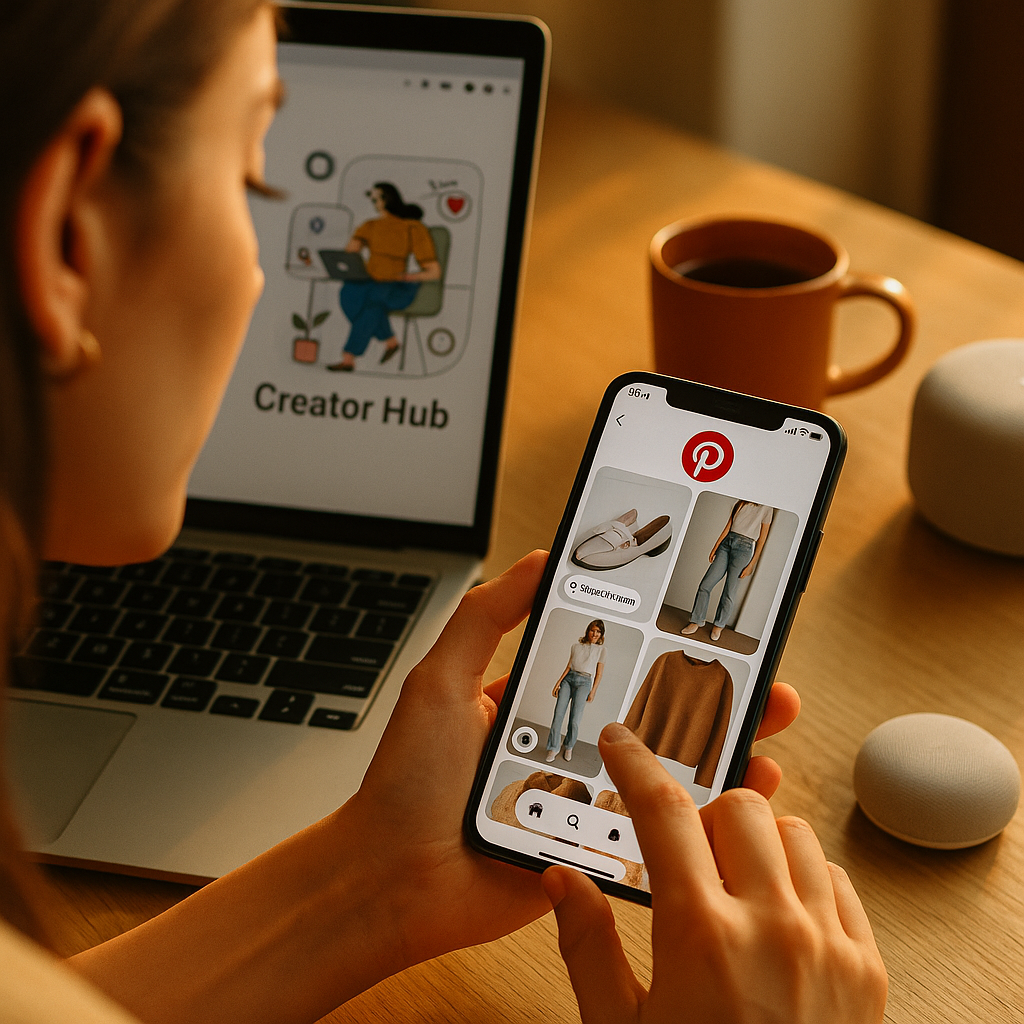
Pinterest Drives More Purchase Intent Than Most Brands Give It Credit For
Nearly 85% of weekly Pinterest users say they’ve purchased something based on Pins they saw from brands. That number alone should prompt every commerce-focused marketing team to revisit where Pinterest sits in their creator distribution stack — especially as TikTok shoppable ads and Instagram’s commerce layer get more expensive and more competitive by the quarter.
Pinterest is not a nostalgia play. It’s a high-intent discovery surface with an architecture specifically built for commerce, and its AI-powered signals are maturing fast. The question isn’t whether Pinterest belongs in your creator mix. It’s whether your brand is equipped to use it correctly.
Understanding Pinterest’s Shoppable Pin Architecture
The structural difference between Pinterest and every other major social platform is the pin’s permanence and searchability. On TikTok or Instagram, a creator post has a shelf life measured in days. A well-optimized shoppable Pin keeps driving discovery for months, sometimes years. That’s a fundamentally different value equation for campaign ROI modeling.
Pinterest’s shoppable Pin infrastructure includes real-time pricing, inventory data pulled directly from a brand’s product catalog, and direct checkout pathways. For brands with a Shopify or WooCommerce backend, catalog sync is straightforward. The Pinterest Shopify integration has matured considerably, reducing the technical lift that previously made mid-market brands hesitate.
There are three Pin types brands should map into their creator briefs:
- Product Pins: Auto-updated with live pricing and availability from your catalog feed
- Collection Pins: Allow a hero image with supporting product images below — ideal for lifestyle creator content
- Idea Pins (with linked products): Pinterest’s multi-page format, closest to a Story, where creators can embed shoppable tags throughout a narrative sequence
The operational implication: your creator briefs need to specify which Pin format aligns with the campaign objective. A broad awareness play fits Collection Pins. A how-to or recipe integration fits Idea Pins. Conflating these formats in a brief is the fastest way to waste budget on misaligned content.
The Creator Hub: What It Actually Offers Brand Partners
Pinterest’s Creator Hub is where the platform’s creator commerce strategy becomes concrete for brand strategists. The Hub gives creators access to analytics, affiliate-style product tagging through the Pinterest Creator Rewards program, and collaborative board features that brands can co-manage.
For brand teams, the relevant infrastructure is the Paid Partnership tool, which allows creators to label sponsored content and connects that content directly to a brand’s advertising account for boosting. This matters for two reasons: compliance and amplification. On the compliance side, the paid partnership label satisfies FTC disclosure requirements — something worth cross-referencing against your broader ad disclosure audit process across platforms.
Pinterest’s Paid Partnership tool doesn’t just solve a compliance problem — it converts a creator’s organic Pin into a boostable asset under your ad account, giving brands paid distribution leverage on top of organic creator reach.
On the amplification side, linking creator content to your ad account means you can put paid reach behind a creator’s Pin without running a separate brand-side creative asset. This is an efficiency play that most brands underuse. If a creator’s Pin is generating strong organic engagement in the first 48 hours, that’s a signal to activate paid amplification before the organic momentum peaks.
One honest caveat: Pinterest’s creator monetization tools are less mature than TikTok’s affiliate infrastructure or Instagram’s Collabs feature. Creators who primarily operate on TikTok or Instagram may need onboarding support and additional incentive to build out Pinterest content natively. Budget for that relationship-building time in your creator agreements.
AI Discovery Signals: Pinterest’s Underrated Competitive Advantage
Pinterest’s recommendation algorithm operates differently from TikTok’s interest graph or Instagram’s GEM system. Where TikTok optimizes for watch time and engagement velocity, Pinterest’s AI is built around intent signals derived from search, save behavior, and board context. A user who saves a Pin to a board titled “spring kitchen renovation” is telling Pinterest something precise about purchase intent. That contextual layering is what makes Pinterest’s targeting unusually actionable for brands in home, fashion, beauty, food, and wellness verticals.
Pinterest’s Visual Search technology (Lens) allows users to photograph real-world objects and get shoppable Pin results. For creator campaigns in lifestyle categories, this creates an attribution opportunity: a creator’s video content on TikTok can drive a Pinterest visual search moment when a viewer tries to find the exact product shown. Brands that maintain strong catalog data on Pinterest capture that downstream intent even when the originating touchpoint was a different platform entirely.
This is the cross-platform argument brands should be making internally. Pinterest doesn’t need to be the platform where the creator post lives. It can function as the capture layer for purchase intent generated by creator content elsewhere. That reframe changes the ROI conversation considerably. For teams tracking attribution windows across creator contracts, Pinterest’s longer conversion cycle is actually an argument for broader attribution modeling, not a weakness.
Pinterest vs. TikTok and Instagram Commerce: Honest Platform Comparison
Let’s be direct about where Pinterest wins and where it doesn’t.
Where Pinterest has a structural edge:
- Longer content shelf life (pins compound traffic over time vs. social feed decay)
- Higher-income, higher-purchase-intent user base in specific verticals
- Lower creator content saturation compared to Instagram Reels or TikTok For You pages
- Search-native discovery reduces dependence on algorithmic reach
Where TikTok and Instagram still lead:
- Creator talent pool density and native commerce behavior (TikTok Shop’s in-feed purchase flow is frictionless in a way Pinterest hasn’t replicated at scale)
- Real-time trend amplification and viral velocity
- Video-first engagement formats that drive creator-brand chemistry
- Mature affiliate and commerce ROI tracking tools
The mistake brands make is treating these as competing allocations rather than complementary roles. A TikTok creator campaign drives awareness and purchase intent. A Pinterest presence captures that intent when users shift into planning and buying mode. According to Pinterest’s business data, users are 7x more likely to say Pinterest is the most influential platform in their purchase journey compared to social media broadly. That’s not a platform to ignore; it’s a platform to stage differently.
For brands currently investing in TikTok community strategies, the practical integration question is: how does your creator content on TikTok feed discoverable assets on Pinterest? That requires coordinating creator deliverables across platforms, ensuring product tagging is consistent, and maintaining live catalog data so shoppable Pins don’t serve broken or outdated product links.
Pinterest functions most powerfully not as a standalone creator channel, but as the intent-capture layer that makes your TikTok and Instagram creator spend work harder downstream.
Operational Checklist Before Activating Pinterest Creator Campaigns
Before briefing creators on Pinterest-specific deliverables, brand teams should confirm the following infrastructure is in place:
- Live product catalog connected (via Shopify, WooCommerce, or direct feed) with accurate pricing and inventory
- Pinterest Tag installed on your site for conversion tracking and audience building
- Brand account verified (Verified Merchant Program membership unlocks better catalog placement and the shopping spotlight)
- Creator agreements updated to include Pinterest-specific deliverables (Idea Pins, product tagging, Paid Partnership label activation)
- Attribution model aligned to account for Pinterest’s longer average conversion window (typically 30-90 days vs. TikTok’s 7-day default)
- Platform algorithm changes monitored alongside broader social algorithm updates that affect distribution
Skipping any of these steps undermines the ROI case. A creator produces a beautiful Idea Pin, users click through, and they land on a product page with outdated pricing or a broken catalog link. That’s not a creator performance failure. That’s an infrastructure gap that poisons the attribution data.
For measurement, align Pinterest campaign KPIs to the right funnel stage. Outbound click rate and closeup rate are meaningful early indicators. Don’t judge Pinterest creator content on the same 7-day ROAS window you’d apply to a TikTok Shop campaign. The platforms operate on different time horizons, and holding Pinterest to TikTok’s velocity metrics will always make it look underperforming.
According to eMarketer, Pinterest’s ad revenue continues to grow as brands recognize its unique position in the lower-funnel discovery stack. Sprout Social research reinforces that Pinterest users skew toward higher household incomes, particularly relevant for brands in premium or considered-purchase categories. The FTC’s endorsement guidelines apply fully to Pinterest creator partnerships, so disclosure tagging via the Creator Hub’s Paid Partnership label is non-negotiable.
Start with one vertical, one creator cohort, and a 90-day measurement window. Map Pinterest’s contribution to the full purchase journey using Pinterest Tag conversion data alongside your existing attribution stack. That test-and-learn cycle will give you the internal data to justify broader allocation.
Frequently Asked Questions
How does Pinterest’s shoppable Pin architecture differ from TikTok Shop or Instagram Shopping?
Pinterest’s shoppable Pins are search-indexed and persist in discovery indefinitely, whereas TikTok Shop and Instagram Shopping content is primarily surfaced through feed algorithms with short content shelf lives. Pinterest pulls live pricing and inventory from a connected product catalog, supports direct checkout on mobile, and is discoverable through both search and algorithmic recommendations. The key difference is intent: Pinterest users are often in planning or research mode, making them closer to a purchase decision than users passively scrolling a social feed.
What types of creators perform best in Pinterest campaigns?
Creators in home decor, food and recipes, fashion styling, beauty tutorials, and wellness perform strongest on Pinterest because these categories align directly with the platform’s core user intent clusters. Pinterest rewards visual storytelling and instructional content over personality-driven entertainment. Creators who produce high-quality still imagery or structured Idea Pin sequences tend to outperform those whose primary format is short-form video optimized for TikTok or Reels. Brands should evaluate a creator’s existing Pinterest presence and saved content behavior, not just their follower count on other platforms.
How should brands set attribution windows for Pinterest creator campaigns?
Pinterest’s conversion cycle is significantly longer than TikTok or Instagram. A 30-to-90-day attribution window is appropriate for most Pinterest creator campaigns, particularly in home, fashion, and high-consideration purchase categories. Applying a 7-day ROAS window will undervalue Pinterest’s contribution. Brands should use the Pinterest Tag for site-side conversion tracking and cross-reference with post-purchase surveys or multi-touch attribution models to capture Pinterest’s assist role in journeys that began on other platforms.
Is Pinterest’s Creator Hub suitable for large-scale influencer programs?
Pinterest’s Creator Hub is best suited for mid-tier to micro-creator programs rather than large-scale influencer activations that require sophisticated campaign management tooling. The Paid Partnership label and creator analytics are functional but less comprehensive than Meta’s branded content tools or TikTok’s Creator Marketplace. Brands running Pinterest alongside Instagram or TikTok programs should manage Pinterest creator relationships through their existing influencer platform stack (tools like Grin, Aspire, or Traackr) and use Pinterest’s native tools primarily for compliance labeling and paid amplification activation.
How does Pinterest’s AI discovery differ from Instagram’s or TikTok’s algorithm?
Pinterest’s AI prioritizes intent signals derived from search queries, board-save behavior, and contextual board naming rather than engagement velocity or watch time. This means content surfaces based on what users are actively planning or researching, not just what’s trending. For brands, this creates more predictable content discovery in relevant purchase categories. Unlike TikTok’s viral amplification model, Pinterest’s algorithm rewards consistent, well-tagged catalog content and creator Pins with strong keyword relevance, making SEO-aware content strategy more valuable on Pinterest than on any other major social platform.
Top Influencer Marketing Agencies
The leading agencies shaping influencer marketing in 2026
Agencies ranked by campaign performance, client diversity, platform expertise, proven ROI, industry recognition, and client satisfaction. Assessed through verified case studies, reviews, and industry consultations.
Moburst

-
2

The Shelf
Boutique Beauty & Lifestyle Influencer AgencyA data-driven boutique agency specializing exclusively in beauty, wellness, and lifestyle influencer campaigns on Instagram and TikTok. Best for brands already focused on the beauty/personal care space that need curated, aesthetic-driven content.Clients: Pepsi, The Honest Company, Hims, Elf Cosmetics, Pure LeafVisit The Shelf → -
3

Audiencly
Niche Gaming & Esports Influencer AgencyA specialized agency focused exclusively on gaming and esports creators on YouTube, Twitch, and TikTok. Ideal if your campaign is 100% gaming-focused — from game launches to hardware and esports events.Clients: Epic Games, NordVPN, Ubisoft, Wargaming, Tencent GamesVisit Audiencly → -
4

Viral Nation
Global Influencer Marketing & Talent AgencyA dual talent management and marketing agency with proprietary brand safety tools and a global creator network spanning nano-influencers to celebrities across all major platforms.Clients: Meta, Activision Blizzard, Energizer, Aston Martin, WalmartVisit Viral Nation → -
5

The Influencer Marketing Factory
TikTok, Instagram & YouTube CampaignsA full-service agency with strong TikTok expertise, offering end-to-end campaign management from influencer discovery through performance reporting with a focus on platform-native content.Clients: Google, Snapchat, Universal Music, Bumble, YelpVisit TIMF → -
6

NeoReach
Enterprise Analytics & Influencer CampaignsAn enterprise-focused agency combining managed campaigns with a powerful self-service data platform for influencer search, audience analytics, and attribution modeling.Clients: Amazon, Airbnb, Netflix, Honda, The New York TimesVisit NeoReach → -
7

Ubiquitous
Creator-First Marketing PlatformA tech-driven platform combining self-service tools with managed campaign options, emphasizing speed and scalability for brands managing multiple influencer relationships.Clients: Lyft, Disney, Target, American Eagle, NetflixVisit Ubiquitous → -
8

Obviously
Scalable Enterprise Influencer CampaignsA tech-enabled agency built for high-volume campaigns, coordinating hundreds of creators simultaneously with end-to-end logistics, content rights management, and product seeding.Clients: Google, Ulta Beauty, Converse, AmazonVisit Obviously →