


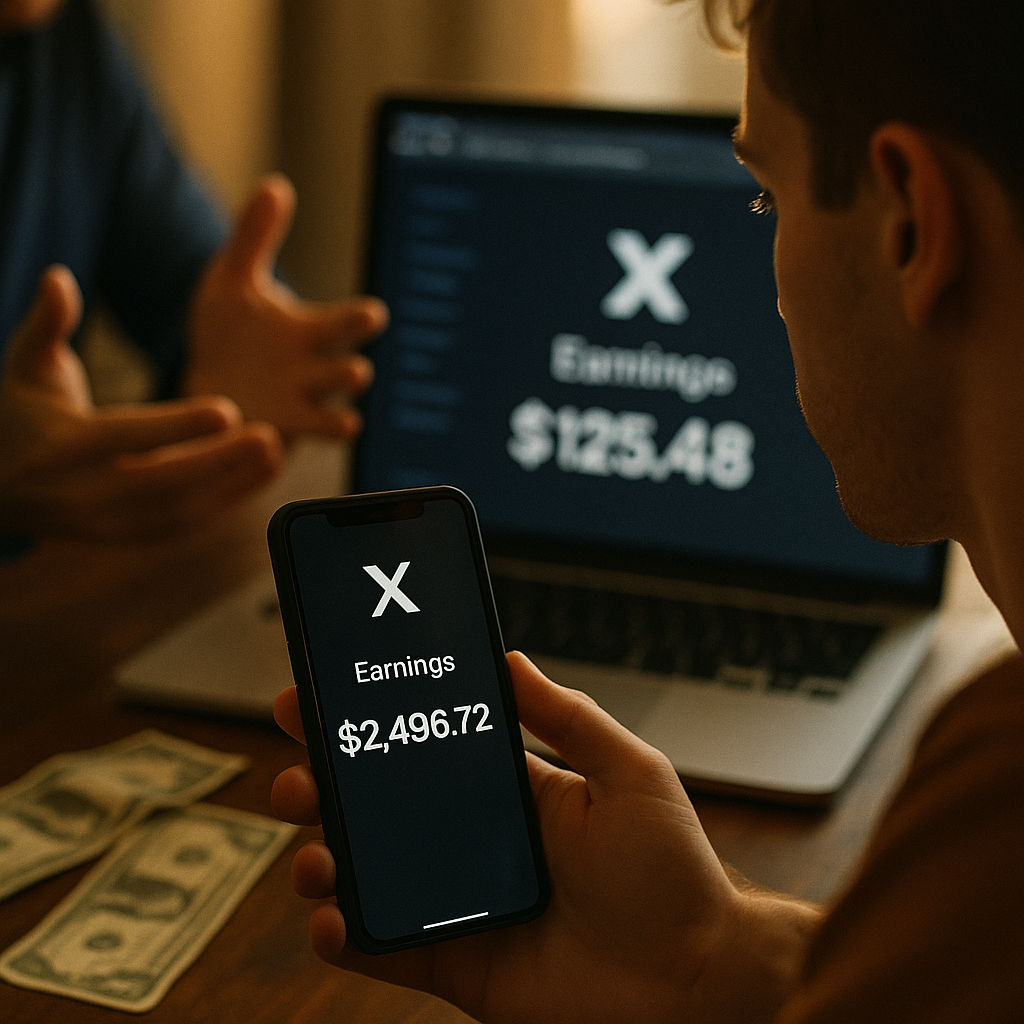
X now pays creators based on verified original engagement, not follower-count arbitrage — and the aggregator accounts that gamed the old system are watching their payouts evaporate in real time. If your influencer program still routes budget through repost networks or content farms, the X revenue-share overhaul should worry you. This isn’t a platform tweak. It’s a signal about where every major network is heading next.
The Quiet Part, Now Loud
For years, X’s ad-revenue-sharing program rewarded whoever generated the most impressions, regardless of whether they made the content. Aggregator accounts built entire businesses reposting viral tweets, screenshotting Reddit threads, or recycling clips from smaller creators who never saw a cent. It worked because the payout formula weighted reach and reply engagement, not originality.
That changed. X’s updated model now ties payouts more heavily to verified original posts, premium subscriber engagement, and content that keeps users on-platform rather than driving them to click through and bounce. Aggregators who once pulled four and five-figure monthly checks are reporting drops of 60-80%, according to creator forums and posts from affected accounts. Meanwhile, original creators with smaller but loyal audiences are seeing payout increases.
We covered the mechanics of this shift in detail in our breakdown of X’s repost payout cuts, but the bigger story is what it signals for brand strategy across every platform, not just X.
Platforms that once rewarded volume and repost velocity are recalibrating toward originality and verified engagement — and brands still paying for reach alone are funding the wrong side of that shift.
Why This Is Bigger Than One Platform’s Policy Change
X isn’t acting alone. It’s reacting to the same pressure every ad-supported platform faces: advertisers are demanding proof that spend reaches real humans producing real content, not laundered engagement. Meta’s shift toward engagement-weighted attribution, which we detailed in Meta’s attribution overhaul, follows the same logic. So does the broader move toward verified creator trust models across the industry.
Here’s the uncomfortable truth for brands: aggregator content was never disclosed properly, rarely met usage-rights standards, and created legal exposure nobody flagged until an FTC complaint or a copyright claim landed. Platforms cutting off aggregator payouts isn’t just an economic correction. It’s risk mitigation dressed up as a monetization update.
Ask yourself: how much of your current influencer spend flows to accounts that didn’t create the content they’re monetizing? If you don’t know the answer, that’s the actual problem.
What “Original” Actually Means Now
Platforms are getting more precise about what counts as original. X’s updated terms look at:
- First-publish timestamps and content fingerprinting to detect reposts
- Reply-to-original-poster engagement ratios, rewarding accounts whose audience responds to them directly
- Premium subscriber overlap, since paying users generate higher-value engagement signals
- Off-platform link behavior, penalizing accounts that exist purely to funnel traffic elsewhere
This mirrors what eMarketer has flagged repeatedly in creator economy forecasts: platforms are converging on authenticity signals as the primary currency, not raw reach. Sprout Social’s own social trend research backs this up, showing brand trust correlates far more strongly with perceived authenticity than follower count.
What This Means for Brand Budgets
If you’re allocating creator budget the way you did eighteen months ago, you’re probably overpaying for reach that no longer converts and underpaying the creators actually driving retail media outcomes. This isn’t a small line-item issue. It’s a structural misallocation.
Three shifts brands should make immediately:
- Audit your creator roster for originality, not just reach. Pull engagement data and check how much of a creator’s content is original versus curated or reposted. Tools that flag fake or inflated followings are just as necessary here, since aggregator accounts often pad numbers the same way.
- Reweight KPIs toward retention signals. Platforms are already doing this internally. Brands still measuring campaigns on force-fed video metrics are optimizing for a currency platforms no longer pay out on.
- Shift budget toward retainer relationships with original creators. The creator middle class retainer model aligns naturally with platform incentives now rewarding consistency and originality over one-off viral spikes.
The Compliance Angle Nobody’s Talking About
Here’s where this gets serious for legal and compliance teams. Aggregator content frequently violates usage rights. Repost accounts rarely secure licensing for the clips, screenshots, or quotes they redistribute. When a brand runs a paid partnership through an aggregator, it inherits that exposure.
The FTC’s endorsement guidelines already require clear disclosure between brands and the creators actually producing sponsored content. An aggregator reposting someone else’s video with a paid tag slapped on top muddies that chain of accountability. If a complaint surfaces, “we didn’t know the content was reposted” isn’t a defense regulators accept.
Platforms cutting aggregator payouts effectively de-incentivizes this behavior at the source. Fewer aggregators means fewer accounts brands can accidentally partner with in violation of disclosure rules. That’s a genuine risk-reduction benefit hiding inside what looks like a monetization tweak.
Original Creators Are Becoming Harder to Find (and Keep)
Ironically, the redistribution of payouts toward original creators is making those creators more expensive and more selective. When X pays original posters more directly, creators have less incentive to accept low brand-deal rates just to supplement platform revenue. Some are renegotiating existing brand contracts entirely.
This tracks with the broader creator attrition trend we’ve covered previously. Creators burned out by low payouts and inconsistent monetization have been leaving platforms altogether. A payout structure that finally rewards originality could reverse some of that churn, but it also means brands competing for the same shrinking pool of high-trust creators will pay a premium.
Brands that built relationships with aggregator-adjacent accounts because they were cheap and fast are about to find that shortcut closing. Original creators know their leverage just increased.
How to Audit Your Roster Before Budgets Reset
Don’t wait for quarterly planning to figure out who on your creator roster is actually original. Run this now:
- Pull first-publish dates on top-performing sponsored content and cross-reference against known original sources
- Check whether creators disclose partnerships clearly and consistently, not just when convenient
- Flag any accounts whose growth pattern looks suspiciously like inflated or force-fed metrics
- Compare engagement quality (replies, saves, shares) against raw impression counts, since platforms are now weighting the former
Marketing teams that build this audit into standard vetting will avoid the scramble other brands face when the next platform makes a similar move. And there will be a next one. HubSpot’s creator marketing research already points to authenticity-weighted algorithms becoming standard across networks, not an X-specific anomaly.
The Takeaway
Treat the X revenue-share overhaul as an early warning, not an isolated event. Audit your creator roster for originality now, reweight your KPIs toward retention and trust signals, and move budget toward the creators platforms are already betting on.
FAQs
What is the X revenue-share overhaul?
It’s an update to X’s creator monetization program that shifts payouts away from accounts that repost or aggregate content and toward creators who publish original, verified posts with strong engagement quality.
Why are aggregator accounts losing payouts on X?
X’s updated formula weighs original content, reply engagement, and premium subscriber interaction more heavily than raw impressions, which previously rewarded high-volume repost accounts regardless of who created the content.
How does this affect brand influencer budgets?
Brands relying on cheap, high-reach aggregator accounts for sponsored content will likely see those accounts lose relevance and platform incentive, pushing budgets toward original creators who now carry more leverage and higher rates.
Is this trend limited to X?
No. Meta, TikTok, and other platforms have made similar moves toward engagement-weighted and authenticity-based attribution, suggesting this is an industry-wide recalibration rather than a single-platform policy.
What compliance risks come from partnering with aggregator accounts?
Aggregator content often lacks proper usage rights and complicates FTC disclosure requirements, since the account monetizing a sponsored post may not be the original creator, creating legal exposure for brands.
Top Influencer Marketing Agencies
The leading agencies shaping influencer marketing in 2026
Agencies ranked by campaign performance, client diversity, platform expertise, proven ROI, industry recognition, and client satisfaction. Assessed through verified case studies, reviews, and industry consultations.
Moburst

-
2

The Shelf
Boutique Beauty & Lifestyle Influencer AgencyA data-driven boutique agency specializing exclusively in beauty, wellness, and lifestyle influencer campaigns on Instagram and TikTok. Best for brands already focused on the beauty/personal care space that need curated, aesthetic-driven content.Clients: Pepsi, The Honest Company, Hims, Elf Cosmetics, Pure LeafVisit The Shelf → -
3

Audiencly
Niche Gaming & Esports Influencer AgencyA specialized agency focused exclusively on gaming and esports creators on YouTube, Twitch, and TikTok. Ideal if your campaign is 100% gaming-focused — from game launches to hardware and esports events.Clients: Epic Games, NordVPN, Ubisoft, Wargaming, Tencent GamesVisit Audiencly → -
4

Viral Nation
Global Influencer Marketing & Talent AgencyA dual talent management and marketing agency with proprietary brand safety tools and a global creator network spanning nano-influencers to celebrities across all major platforms.Clients: Meta, Activision Blizzard, Energizer, Aston Martin, WalmartVisit Viral Nation → -
5

The Influencer Marketing Factory
TikTok, Instagram & YouTube CampaignsA full-service agency with strong TikTok expertise, offering end-to-end campaign management from influencer discovery through performance reporting with a focus on platform-native content.Clients: Google, Snapchat, Universal Music, Bumble, YelpVisit TIMF → -
6

NeoReach
Enterprise Analytics & Influencer CampaignsAn enterprise-focused agency combining managed campaigns with a powerful self-service data platform for influencer search, audience analytics, and attribution modeling.Clients: Amazon, Airbnb, Netflix, Honda, The New York TimesVisit NeoReach → -
7

Ubiquitous
Creator-First Marketing PlatformA tech-driven platform combining self-service tools with managed campaign options, emphasizing speed and scalability for brands managing multiple influencer relationships.Clients: Lyft, Disney, Target, American Eagle, NetflixVisit Ubiquitous → -
8

Obviously
Scalable Enterprise Influencer CampaignsA tech-enabled agency built for high-volume campaigns, coordinating hundreds of creators simultaneously with end-to-end logistics, content rights management, and product seeding.Clients: Google, Ulta Beauty, Converse, AmazonVisit Obviously →