


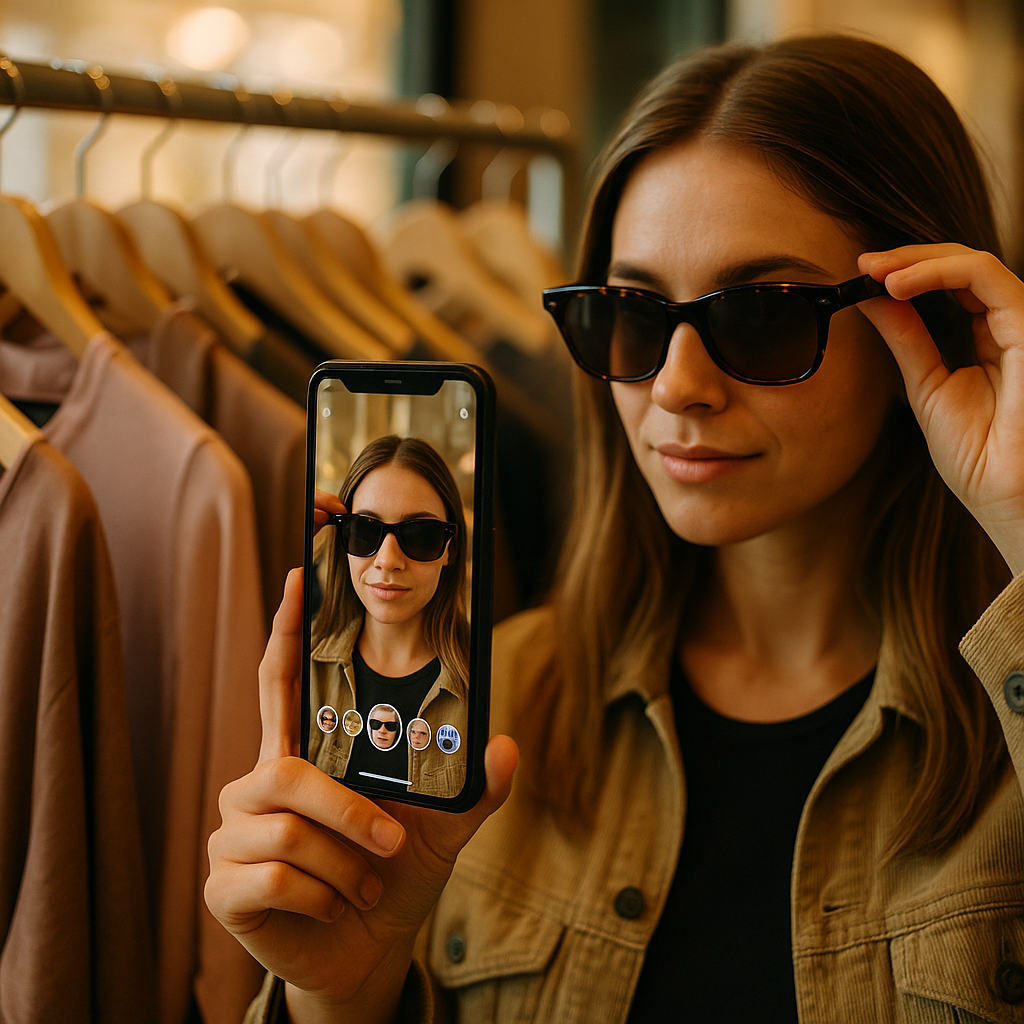
250 million people use Snapchat’s camera to shop, try on, and play with AR every month — and most retail marketers still treat the platform as a Gen Z afterthought. That’s a mistake. A well-built Snapchat AR lens campaign now drives measurable lift in purchase intent and in-store traffic, and the platform has quietly become one of the most efficient conversion tools in the social stack.
This playbook breaks down how retail brands should plan, budget, and measure AR lens campaigns this year — not the theory, the operational reality.
Why Snapchat AR Still Matters When Everyone’s Chasing TikTok
Ask a CMO where their discretionary social budget goes and TikTok Shop or Instagram Reels usually wins by default. Fair enough — those platforms have the reach headlines. But Snapchat holds something neither fully replicates: native, camera-first AR try-on infrastructure that’s been refined for over eight years.
Snap’s own data puts AR shoppers at roughly 1.5x more likely to make a purchase after an AR try-on experience compared to standard product views. That’s not a novelty stat. That’s a conversion lever most retail teams are leaving on the table because they assume “AR filter” means face-warping fun, not commerce infrastructure.
The demographic argument matters too. Snapchat’s core 13-34 audience skews toward the exact cohort retail brands struggle to reach through traditional paid search or even Meta ads anymore, thanks to rising CPMs and privacy-driven targeting limits.
Brands running Snapchat AR try-on lenses for apparel and beauty categories report add-to-cart rates significantly above static product ad benchmarks — because the shopper has already “tried” the product before clicking buy.
The Three Lens Formats That Actually Move Retail Metrics
Not all lenses are built equal, and treating them as interchangeable is where most campaigns waste budget. There are really three formats worth a retail brand’s attention this year.
Try-on lenses remain the gold standard for apparel, footwear, eyewear, and beauty. Snap’s Camera Kit and body-tracking tech let shoppers see products on their actual frame in real time — no guessing sizes, no returns-driven buyer’s remorse.
World lenses place 3D product renderings into a shopper’s physical environment. Furniture and home goods brands use these to answer the single biggest pre-purchase question: will this actually fit in my space? IKEA and Wayfair-style use cases translate well here, though smaller retailers can license similar templates through Snap’s Lens Studio at a fraction of custom-build cost.
Shoppable lenses embed a direct “Shop Now” swipe-up or product card inside the AR experience itself, collapsing the try-on-to-purchase funnel into a single swipe. This is the format retail teams should prioritize if the KPI is direct revenue rather than brand lift.
Which one you choose should come down to a blunt question: are you optimizing for consideration or for checkout? Try-on and world lenses build consideration. Shoppable lenses close.
Budgeting Reality: What This Actually Costs in 2026
Here’s where a lot of brand teams get sticker shock, then walk away from AR entirely. Custom lens development through Snap’s certified Lens Studio partners typically runs from the low five figures for a simple try-on filter to well into six figures for a fully branded world lens with custom 3D assets and animation.
That said, costs have come down. Snap’s self-serve Lens Studio and expanded template library mean smaller retail brands can now build serviceable try-on lenses in-house or with a freelance AR designer for a fraction of agency pricing. The template ecosystem has matured enough that “good enough for a seasonal campaign” no longer requires a six-figure production budget.
Media spend sits on top of that. Sponsored Lenses (the paid placement that surfaces your AR experience in Snapchat’s carousel) typically require a media buy in addition to production cost, and Snap’s account teams will usually push mid-market brands toward a bundled Lens-plus-media package.
Budget realistically like this: small seasonal try-on lens with modest media support, low five figures total. Flagship seasonal campaign with a custom world lens and paid amplification, mid-to-high five figures or more, depending on media weight and asset complexity.
Building the Brief: What Creative and Media Teams Need Upfront
A weak brief is the single biggest cause of AR campaigns that look impressive but convert nothing. Before any lens goes into production, retail marketers should lock down:
- Product catalog scope — which SKUs get AR treatment first. Don’t try to render your entire catalog; start with hero products or bestsellers where try-on friction is highest (denim fit, shade-matching in beauty, sunglasses).
- Body and face tracking requirements — apparel needs full-body tracking, beauty needs precise facial mapping. These require different technical builds and different QA timelines.
- Commerce integration — will the lens link to a Snapchat-native storefront, a Shopify catalog feed, or an external landing page? Each has different setup lead times.
- Success metrics defined before launch — swipe-up rate, average session duration, add-to-cart events, or offline foot traffic via Snap’s location-based measurement partners.
Skipping any of these means discovering the gap mid-campaign, usually right when a finance stakeholder asks why the lens has 2 million plays and no revenue attribution.
Measurement: Proving ROI to a Skeptical CFO
This is the section every performance marketer actually cares about. Snap provides native measurement through Snap Pixel and Conversions API, letting brands track view-through and click-through purchases tied directly to lens engagement. For retail brands with physical stores, Snap’s location attribution partnerships (through third-party measurement vendors) can tie AR lens plays to verified store visits — genuinely useful for brands who’ve struggled to prove offline lift from digital spend.
Compare this to influencer-driven UGC campaigns on other platforms, where attribution often relies on promo codes or vanity URLs. Snap’s in-app measurement stack is more direct, closer to what performance marketers get from Meta’s ad platform, minus some of the post-iOS tracking degradation that’s plagued Meta specifically.
Realistic benchmarks worth setting internally: swipe-up rate on shoppable lenses in the low-to-mid single digits is respectable; anything higher during a strong seasonal push is a good result. Average play time above 15 seconds signals genuine engagement rather than a passive scroll-through.
If your team is also running creator-driven AR content (having influencers demo the lens rather than relying purely on organic discovery), treat that as a distinct budget line with its own attribution logic, similar to how brands now separate shoppable Reels reach from standard organic reach in reporting decks.
Where AR Lenses Fit in the Broader Retail Social Stack
No retail brand should run Snapchat AR in isolation. It works best as one node in a broader creator and commerce strategy — the same logic that governs TikTok Shop livestream planning or Instagram shoppable carousel sequencing. The lens drives the try-on moment; other channels close the loop with reviews, urgency, and retargeting.
Younger-skewing retail brands in particular should look at how Snap’s Spotlight feed complements lens campaigns — a short-form video showing the lens in action can drive organic discovery before any media dollars go into Sponsored Lens placement. There’s a useful parallel in how brands approach Snapchat Spotlight for youth-focused brands, where organic content and paid AR work in tandem rather than competing for the same budget line.
Don’t ignore the compliance layer either. AR filters that alter facial appearance (skin, body shape) sit under increasing regulatory scrutiny, particularly in the EU and UK. Brands running beauty or apparel try-on lenses should review guidance from the ICO on biometric data handling and confirm Snap’s data processing terms align with regional privacy rules before launch, not after a legal team flags it post-launch.
Frequently Asked Questions
FAQs
How much does a Snapchat AR lens campaign cost for a retail brand?
Costs range from low five figures for a simple template-based try-on lens to six figures for a custom-built world lens with full 3D assets and paid Sponsored Lens amplification. Media spend for Sponsored Lens placement sits on top of production cost.
What’s the difference between a try-on lens and a shoppable lens?
A try-on lens lets shoppers visualize a product on themselves or in their space using body or facial tracking, primarily built for consideration. A shoppable lens embeds a direct purchase link or product card inside the AR experience, built to drive checkout.
Can small retail brands build AR lenses without an agency?
Yes. Snap’s Lens Studio offers self-serve templates that let smaller teams or freelance AR designers build a serviceable try-on lens without a full agency production budget, though custom 3D work still typically requires specialist help.
How do brands measure ROI on Snapchat AR campaigns?
Through Snap Pixel and Conversions API tracking view-through and click-through purchases, plus third-party location attribution partners that tie lens engagement to verified in-store visits for physical retail brands.
Are there privacy or compliance risks with AR try-on lenses?
Yes, particularly for beauty and apparel lenses using facial or body tracking, which can involve biometric data processing. Brands should review regional privacy guidance, including from the ICO in the UK, before launch.
Start small: pick one hero SKU with high return-rate friction, build a template-based try-on lens through Lens Studio, and measure swipe-up rate against a four-week baseline before committing to a custom build. If the numbers hold, scale the media spend — not the production complexity.
Top Influencer Marketing Agencies
The leading agencies shaping influencer marketing in 2026
Agencies ranked by campaign performance, client diversity, platform expertise, proven ROI, industry recognition, and client satisfaction. Assessed through verified case studies, reviews, and industry consultations.
Moburst

-
2

The Shelf
Boutique Beauty & Lifestyle Influencer AgencyA data-driven boutique agency specializing exclusively in beauty, wellness, and lifestyle influencer campaigns on Instagram and TikTok. Best for brands already focused on the beauty/personal care space that need curated, aesthetic-driven content.Clients: Pepsi, The Honest Company, Hims, Elf Cosmetics, Pure LeafVisit The Shelf → -
3

Audiencly
Niche Gaming & Esports Influencer AgencyA specialized agency focused exclusively on gaming and esports creators on YouTube, Twitch, and TikTok. Ideal if your campaign is 100% gaming-focused — from game launches to hardware and esports events.Clients: Epic Games, NordVPN, Ubisoft, Wargaming, Tencent GamesVisit Audiencly → -
4

Viral Nation
Global Influencer Marketing & Talent AgencyA dual talent management and marketing agency with proprietary brand safety tools and a global creator network spanning nano-influencers to celebrities across all major platforms.Clients: Meta, Activision Blizzard, Energizer, Aston Martin, WalmartVisit Viral Nation → -
5

The Influencer Marketing Factory
TikTok, Instagram & YouTube CampaignsA full-service agency with strong TikTok expertise, offering end-to-end campaign management from influencer discovery through performance reporting with a focus on platform-native content.Clients: Google, Snapchat, Universal Music, Bumble, YelpVisit TIMF → -
6

NeoReach
Enterprise Analytics & Influencer CampaignsAn enterprise-focused agency combining managed campaigns with a powerful self-service data platform for influencer search, audience analytics, and attribution modeling.Clients: Amazon, Airbnb, Netflix, Honda, The New York TimesVisit NeoReach → -
7

Ubiquitous
Creator-First Marketing PlatformA tech-driven platform combining self-service tools with managed campaign options, emphasizing speed and scalability for brands managing multiple influencer relationships.Clients: Lyft, Disney, Target, American Eagle, NetflixVisit Ubiquitous → -
8

Obviously
Scalable Enterprise Influencer CampaignsA tech-enabled agency built for high-volume campaigns, coordinating hundreds of creators simultaneously with end-to-end logistics, content rights management, and product seeding.Clients: Google, Ulta Beauty, Converse, AmazonVisit Obviously →