


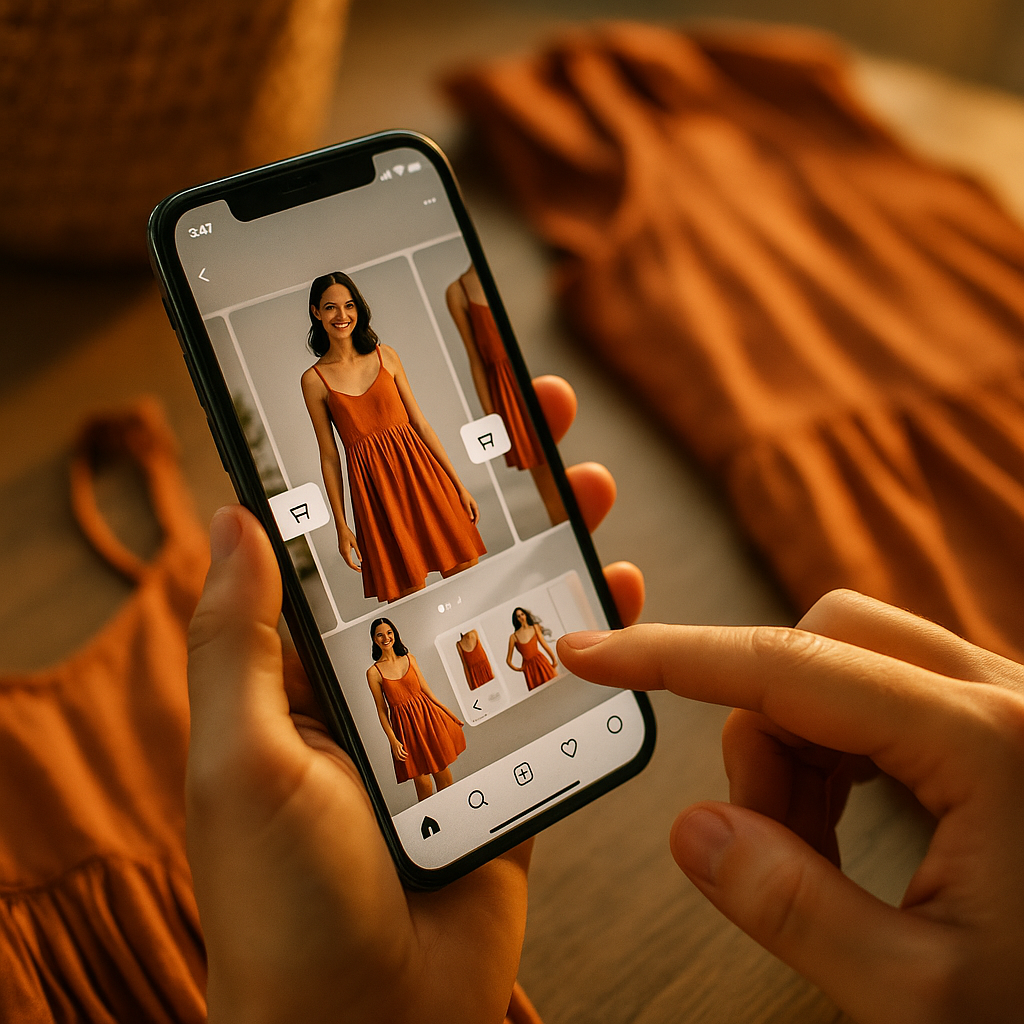
Single-image product ads on Instagram are dying a slow, expensive death. Meta’s own advertiser data shows carousel formats consistently pulling higher click-through rates than static image ads, and brands running Instagram shoppable carousel sequences report meaningfully lower cost-per-purchase when the sequencing is done right. The problem? Most brands still build carousels like slideshows, not stories. That’s the gap this playbook closes.
Why Single-Image Ads Are Losing the Attention War
A single product shot asks a lot of a scroller: understand the offer, feel the desire, and act, all in about 1.7 seconds. That’s roughly how long the average user spends looking at a piece of Instagram content before moving on, per multiple platform-behavior studies. One image has to do everything at once. It rarely does.
Carousels buy you room. Ten slides means ten chances to hook, educate, and close. But room is only valuable if you use it with intent. Most brands don’t. They upload product shot after product shot, no narrative thread, no reason to keep swiping past slide two. That’s not a carousel. That’s a catalog dump wearing a carousel’s clothes.
A shoppable carousel isn’t a gallery of products. It’s a compressed sales conversation, and every slide needs a job.
The Story Arc Structure That Actually Converts
Think in acts, not slides. The best-performing shoppable carousels we’ve seen from DTC brands and agency case studies follow a five-beat arc:
- Slide 1 — The hook. Not a product shot. A problem, a bold claim, or a scroll-stopping visual pattern interrupt. This slide’s only job is earning the next swipe.
- Slide 2-3 — The tension. Show the “before,” the friction, the annoying status quo your product removes. This is where you build the case, not the pitch.
- Slide 4-5 — The turn. Introduce the product as the resolution. First tagged shoppable slide usually lands here, not on slide one.
- Slide 6-8 — The proof. Social proof, UGC-style shots, before/after, or a creator using it in context. Tag products again here; repetition of the tag matters more than repetition of the same image.
- Slide 9-10 — The close. Clear CTA, urgency cue (limited stock, seasonal drop), and one final shoppable tag reinforcing the offer.
Notice what’s missing from slide one: the product. That’s deliberate. Leading with the hard sell kills swipe-through rate before the story even starts.
Why Tag Placement Matters More Than Tag Count
Meta lets you tag products on multiple carousel cards, and most brands either under-tag (one tag on the whole carousel) or over-tag (every slide, every product, all at once). Both hurt conversion. Under-tagging forces users to hunt for the buy point. Over-tagging turns the story back into a catalog.
The sweet spot: tag at the “turn” and again at the “close.” Two well-placed tags outperform six scattered ones, because each tag placement is a signal to the algorithm and the user about where in the journey a purchase decision makes sense. Tag too early and you’re asking for a commitment before you’ve made the case.
Sequencing Multiple Products Without Losing the Thread
Multi-product carousels are trickier. You’re not telling one story, you’re weaving several, and the temptation is to just alternate: product A, product B, product A, product B. Don’t. That reads as random to the eye and the algorithm both.
Instead, group by use-case, not by SKU. If you’re a skincare brand running a five-product routine carousel, sequence it as morning-to-night: cleanser, serum, moisturizer, SPF, night cream. The narrative becomes “here’s your day,” not “here’s our catalog.” Each product earns its slide because it earns its moment in the routine.
For apparel or accessory brands, sequence by occasion instead: work look, weekend look, evening look. Same principle, different frame. The story arc doesn’t change, it’s the connective tissue between products, whatever that thread happens to be for your category.
This is the same instinct that makes TikTok Shop livestream scripts work in the first ninety seconds: sequence by narrative logic, not by inventory logic. The platform is different, the underlying principle isn’t.
What the Data Actually Says
Meta’s advertiser guidance has long positioned carousel ads as a top-performing format for e-commerce, and third-party benchmarking from platforms like eMarketer continues to show shoppable formats gaining ad spend share as brands chase lower-funnel efficiency. Sprout Social’s own research on social commerce trends points to the same pattern: sequential, story-driven content consistently beats single-asset ads on engagement depth, which correlates with intent signals Meta’s algorithm rewards with cheaper delivery.
None of this is exotic. It’s the oldest rule in direct-response advertising, applied to a swipeable feed: attention, tension, resolution, proof, close. What’s changed is the mechanism. Instagram’s carousel format just happens to be a near-perfect container for that arc, if brands bother to build it that way.
The Mistake That Kills Otherwise-Good Carousels
Inconsistent visual pacing. If slide one is a moody lifestyle shot and slide four is a harshly lit product-on-white catalog image, you’ve broken the story’s visual grammar. Users feel the seam even if they can’t name it. Swipe-through drops.
Keep a consistent color grade, consistent framing logic, and consistent typography (if you’re using on-image text) across the full arc. Treat it like a mini brand campaign, not a set of loosely related assets pulled from a product shoot library.
Testing the Arc: What to Measure Beyond CTR
Click-through rate tells you the hook worked. It doesn’t tell you the story worked. Track swipe-through rate per slide (Meta Ads Manager surfaces this in carousel card performance breakdowns) to see exactly where users drop off. A steep cliff at slide three usually means your “tension” beats are boring or repetitive. A cliff at slide six often means the proof section feels like an ad within an ad.
Also track product-tag click distribution. If 90% of tag clicks come from a single slide, that’s not necessarily bad, it might mean you’ve found your hero slide, but it’s worth testing whether moving that product earlier or later in the arc changes total conversions. Small sequencing shifts can move purchase rate more than creative refreshes do.
Swipe-through-rate cliffs are diagnostic gold. They tell you exactly which beat of your story arc is failing, slide by slide.
Run this as a genuine A/B test, not a gut call. Build two versions of the same product set: one sequenced as a story arc, one as a straight catalog scroll. Same products, same copy tone, same CTA. Let the data settle the argument, because it usually settles it fast. Most brands see the gap within the first thousand impressions.
Operationalizing This Across a Content Calendar
The hardest part isn’t building one great carousel. It’s building this discipline into a recurring production workflow without burning out your creative team. A few operational notes from brands running this at scale:
- Template the arc, not the assets. Build a five-beat slide brief (hook, tension x2, turn, proof x2-3, close) that creative teams or freelance shooters fill in per product drop. The structure stays fixed; the visuals rotate.
- Batch by narrative, not by product. Shoot all “hook” style content in one session, all “proof” style UGC in another. It’s more efficient than reshooting a full arc per SKU.
- Repurpose creator content into the proof beats. If you’re already running influencer seeding, that UGC slots directly into slides six through eight. No need to shoot bespoke proof content every time.
- Build a tagging checklist. QA every carousel before publish to confirm tags sit on the “turn” and “close” slides, not scattered arbitrarily. This is the single most common execution error we see.
This kind of structured, story-first thinking isn’t unique to Instagram. The same discipline shows up in Pinterest shopping content built around AI curation, and in the sequencing logic behind Roblox storefront activations. Wherever a platform gives you multiple frames to work with, story beats beat static pitches. It’s a format-agnostic truth, Instagram just happens to reward it with cheaper CPMs right now.
For brand safety and compliance, remember that shoppable tags on paid carousels still fall under standard disclosure rules; if a creator’s content is repurposed into paid media, FTC endorsement guidance and platform-specific ad transparency requirements from Meta’s business tools both apply. Skipping that step isn’t worth the risk, however small the carousel test budget.
FAQs
Frequently Asked Questions
How many slides should a shoppable carousel have?
Most high-performing story-arc carousels run eight to ten slides. Fewer than six rarely leaves room for a proper tension-and-resolution arc; more than ten risks fatigue and rising drop-off, especially past slide seven.
Where should product tags be placed in the carousel?
Place tags at the “turn” (where the product is introduced as the solution) and again at the “close” (final CTA slide). Avoid tagging every slide, it dilutes the signal and turns the story back into a catalog scroll.
Do shoppable carousels actually outperform single-image ads?
Carousel formats generally show stronger engagement and swipe-through behavior than static single-image ads, per Meta’s own advertiser benchmarks and third-party research from firms like eMarketer. Performance gains depend heavily on sequencing quality, not the format alone.
Can I use creator or UGC content inside a paid shoppable carousel?
Yes, and it’s a strong fit for the “proof” slides in the story arc. Just ensure proper usage rights are secured and any required creator disclosures follow FTC endorsement guidance before the content goes into paid media.
What metric best diagnoses a weak carousel sequence?
Per-slide swipe-through rate, available in Meta Ads Manager’s carousel breakdown. A sharp drop-off at a specific slide tells you precisely which story beat is underperforming, so you can fix that slide rather than rebuilding the whole carousel.
Stop building carousels slide-by-slide and start building them beat-by-beat. Map your next product drop to the five-part arc, tag only the turn and close, and measure swipe-through per slide before you scale the spend.
Top Influencer Marketing Agencies
The leading agencies shaping influencer marketing in 2026
Agencies ranked by campaign performance, client diversity, platform expertise, proven ROI, industry recognition, and client satisfaction. Assessed through verified case studies, reviews, and industry consultations.
Moburst

-
2

The Shelf
Boutique Beauty & Lifestyle Influencer AgencyA data-driven boutique agency specializing exclusively in beauty, wellness, and lifestyle influencer campaigns on Instagram and TikTok. Best for brands already focused on the beauty/personal care space that need curated, aesthetic-driven content.Clients: Pepsi, The Honest Company, Hims, Elf Cosmetics, Pure LeafVisit The Shelf → -
3

Audiencly
Niche Gaming & Esports Influencer AgencyA specialized agency focused exclusively on gaming and esports creators on YouTube, Twitch, and TikTok. Ideal if your campaign is 100% gaming-focused — from game launches to hardware and esports events.Clients: Epic Games, NordVPN, Ubisoft, Wargaming, Tencent GamesVisit Audiencly → -
4

Viral Nation
Global Influencer Marketing & Talent AgencyA dual talent management and marketing agency with proprietary brand safety tools and a global creator network spanning nano-influencers to celebrities across all major platforms.Clients: Meta, Activision Blizzard, Energizer, Aston Martin, WalmartVisit Viral Nation → -
5

The Influencer Marketing Factory
TikTok, Instagram & YouTube CampaignsA full-service agency with strong TikTok expertise, offering end-to-end campaign management from influencer discovery through performance reporting with a focus on platform-native content.Clients: Google, Snapchat, Universal Music, Bumble, YelpVisit TIMF → -
6

NeoReach
Enterprise Analytics & Influencer CampaignsAn enterprise-focused agency combining managed campaigns with a powerful self-service data platform for influencer search, audience analytics, and attribution modeling.Clients: Amazon, Airbnb, Netflix, Honda, The New York TimesVisit NeoReach → -
7

Ubiquitous
Creator-First Marketing PlatformA tech-driven platform combining self-service tools with managed campaign options, emphasizing speed and scalability for brands managing multiple influencer relationships.Clients: Lyft, Disney, Target, American Eagle, NetflixVisit Ubiquitous → -
8

Obviously
Scalable Enterprise Influencer CampaignsA tech-enabled agency built for high-volume campaigns, coordinating hundreds of creators simultaneously with end-to-end logistics, content rights management, and product seeding.Clients: Google, Ulta Beauty, Converse, AmazonVisit Obviously →