


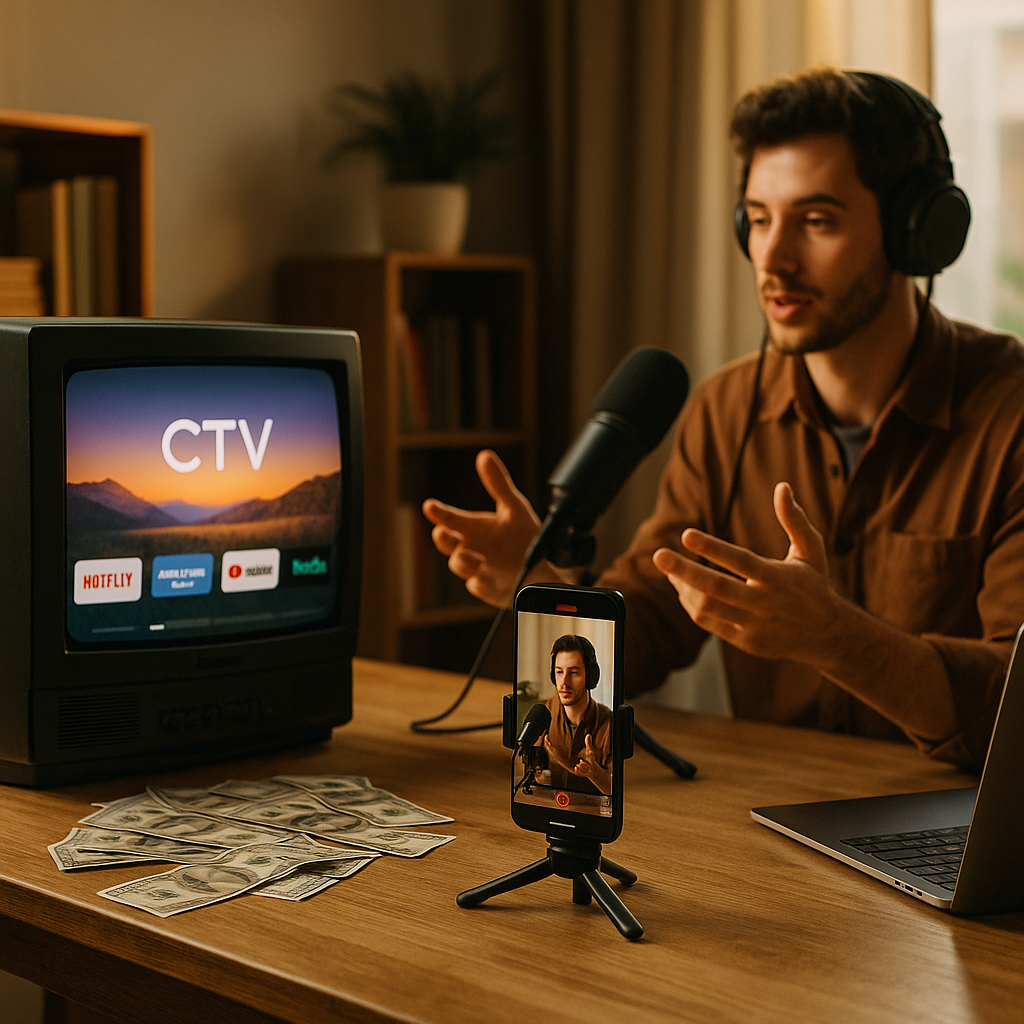
Linear TV upfronts closed with the lowest ad-volume commitment in over a decade, and nobody in the room seemed surprised. Brands are still writing nine-figure checks for guaranteed reach that keeps eroding. The real question for 2026 planning isn’t whether to move money out of linear. It’s how fast you can move it without breaking your reach curve, your CFO’s trust, or your Q3 numbers. Budget reallocation from linear TV needs a sequence, not a single dramatic reshuffle.
Why “Just Cut Linear” Is Bad Advice
Every LinkedIn post about killing your upfront commitment skips the part where reach doesn’t transfer 1:1. Linear still delivers mass simultaneous reach for launches, live sports adjacency, and category-defining moments. CTV and creator inventory deliver something different: precision, engagement, and attribution. Swap too fast and you’ll hit a reach gap that shows up in brand tracking studies before it shows up in sales.
The brands getting burned right now aren’t the ones holding onto linear. They’re the ones who reallocated 40% of upfront budget in a single cycle, then had no bridge plan when CTV frequency capping and creator lead times created delivery gaps. Sequencing beats speed.
Treat linear-to-CTV-to-creator reallocation as a two-cycle migration, not a one-time budget swap. Cycle one builds measurement infrastructure; cycle two scales spend against proven signal.
Cycle One: Build the Measurement Bridge Before You Move the Money
The first planning cycle is not about aggressive reallocation. It’s about earning the right to reallocate aggressively in cycle two. That means three things happening in parallel.
- Stand up unified measurement. You need one dashboard that puts linear GRPs, CTV completion rates, and creator engagement/conversion data on comparable terms. Without this, your cycle-two budget ask to finance will get shredded.
- Run a controlled CTV pilot at 15-20% of upfront dollars. Not a token test, not a full swap. Big enough to generate real signal, small enough that a bad quarter doesn’t sink the whole plan.
- Parallel-path a creator amplification pilot. Pair top-performing organic creator content with paid amplification dollars pulled from the linear pool, not from your existing always-on creator budget. This isolates the reallocation variable cleanly.
This mirrors the structure laid out in the quarterly framework to shift upfront budget, which treats the first two quarters as instrumentation, not scaling. Skip this step and your cycle-two numbers will be built on vibes, not evidence.
What Finance Actually Wants to See
CFOs don’t object to reallocation. They object to reallocation without a model. If you walk into a budget review saying “linear reach is declining, trust us,” you’ll get half your ask cut. Walk in with a zero-based creator budget model that shows cost-per-incremental-reach across all three channels, and you’ll get a very different conversation. Nielsen and comScore data can anchor the linear side; your own first-party attribution needs to anchor the CTV and creator side.
According to eMarketer, CTV ad spend continues to outpace linear TV growth by a wide margin, but the gap that matters for your budget review isn’t spend growth, it’s cost-per-completed-view versus cost-per-GRP. That’s the number finance actually cares about.
The Mid-Cycle Checkpoint Nobody Schedules
Most teams set a reallocation plan in January and don’t revisit it until the next annual cycle. That’s a mistake. Put a formal checkpoint at the midpoint of cycle one, roughly month six, specifically to review three things: pilot performance against linear benchmarks, creator content fatigue signals, and any upfront cancellation penalty exposure.
Upfront contracts often carry cancellation or make-good clauses. Know your exit costs before you commit cycle-two dollars, not after.
This checkpoint is also where you decide whether your organizational structure can even support the shift. Moving budget into creator and CTV inventory without adjusting team structure just creates bottlenecks. If your creator function still reports as a campaign line item rather than a channel with its own ops cadence, fix that before cycle two starts. The org structure that scales piece covers exactly this transition.
Cycle Two: Scale What Worked, Kill What Didn’t
By the second planning cycle, you should have twelve-plus months of comparative data. This is where reallocation gets aggressive, but aggressive with evidence behind it, not aggressive on faith.
A reasonable cycle-two target: shift another 25-35% of remaining linear budget into CTV and creator inventory, split according to what your cycle-one pilots actually proved. If CTV outperformed on completed-view cost but creator amplification outperformed on conversion lift, weight the split accordingly. Don’t default to a 50/50 split because it feels balanced. Follow the data.
- Renegotiate remaining linear commitments down to core moments only: live sports, major cultural tentpoles, category launches where mass reach genuinely matters.
- Formalize the creator amplification budget line as permanent, not experimental. The 12-month roadmap to shift creator budgets to amplification is a useful reference for how to structure this without cannibalizing organic creator relationships.
- Build CTV frequency and sequencing rules that mimic the reach discipline linear used to enforce automatically. CTV’s programmatic flexibility is a strength and a trap: without frequency caps across platforms, you’ll overspend on the same eyeballs.
Watch the Attribution Gap, Not Just the Reach Gap
Here’s the part brands underestimate: creator and CTV inventory demand fundamentally different attribution muscle than linear ever did. Linear let you get away with reach-and-frequency modeling and a healthy assumption of brand lift. CTV and creator spend get judged on harder metrics almost immediately, sales lift, view-through conversion, incremental site traffic.
If your measurement team isn’t already fluent in proving creator spend sales lift, cycle two will stall regardless of how good your media plan looks on paper.
This is also where the CFO conversation gets easier, not harder, if you’ve done cycle one properly. You’re no longer defending creator and CTV spend as an experiment. You’re presenting a channel mix with two full cycles of comparative performance data. That’s a fundamentally different pitch than defending creator budgets under pressure reactively.
Governance: The Part Everyone Skips Until It Breaks
Reallocating this much budget across channels without clear ownership creates the exact conditions for a compliance mess. Who approves creator contracts pulled from the reallocated pool? Who owns FTC disclosure compliance when amplification dollars turn organic posts into paid media? The FTC’s endorsement guidance applies the moment you put media dollars behind a creator post, and plenty of brands learn this the expensive way, after the fact.
Set this up during cycle one, not as a cycle-two afterthought. A governance charter that spells out ownership across legal, media, and creator teams prevents the kind of scramble that happens when a paid-amplified creator post gets flagged for missing disclosure.
The brands that stall out mid-reallocation almost always have a governance gap, not a media plan gap. Fix ownership before you fix the budget split.
What This Looks Like on a Calendar
Roughly mapped across two annual planning cycles:
- Months 1-3: Instrument measurement, negotiate reduced linear commitment with cancellation flexibility built in, launch CTV and creator pilots at 15-20% of upfront budget.
- Months 4-6: Mid-cycle checkpoint. Review pilot data, adjust org structure, confirm governance ownership.
- Months 7-12: Scale pilots that proved out, cut ones that didn’t, finalize cycle-one performance report for finance.
- Months 13-18: Renegotiate linear down to tentpole-only spend. Shift another 25-35% into the higher-performing channel per your data.
- Months 19-24: Formalize creator amplification and CTV as permanent line items with their own QBR cadence, not experimental sub-lines under “TV.”
That QBR cadence matters more than most teams realize. A QBR framework built for CFO scrutiny keeps this reallocation from quietly reverting to old habits the moment a new CMO or finance lead joins and asks “why isn’t this just working like TV used to?”
The Honest Risk Nobody Puts in the Deck
Reach fragmentation is real, and no amount of clever sequencing eliminates it entirely. You will lose some simultaneous mass reach moving out of linear, full stop. What you gain is efficiency, attribution clarity, and audience precision that linear never offered. The brands that win this transition aren’t the ones who avoid the tradeoff. They’re the ones who quantify it honestly, sequence the shift across two cycles instead of one panicked reallocation, and bring finance along with data at every checkpoint instead of a single annual pitch.
Frequently Asked Questions
FAQs
How much linear TV budget should brands reallocate in the first planning cycle?
Most brands should limit cycle-one reallocation to 15-20% of upfront budget, directed into controlled CTV and creator amplification pilots. This generates enough signal for decision-making without exposing the brand to a reach gap if the pilots underperform.
What’s the biggest mistake brands make when shifting from linear to CTV and creator inventory?
Moving budget before building comparable measurement across channels. Without a unified dashboard tracking cost-per-reach and conversion across linear, CTV, and creator spend, teams end up defending reallocation decisions with assumptions instead of evidence.
Should creator amplification spend come from the existing creator budget or the linear reallocation pool?
From the reallocation pool, at least initially. Pulling from existing always-on creator budgets muddies the comparison and makes it impossible to isolate whether the reallocated dollars are actually performing better than linear spend would have.
How long does a full linear-to-CTV-to-creator reallocation typically take?
Roughly two full planning cycles, about 24 months. Cycle one focuses on measurement infrastructure and pilot testing; cycle two focuses on scaling proven channels and formalizing them as permanent budget lines rather than experiments.
What compliance risks come with reallocating budget into creator amplification spend?
Paid amplification behind creator content triggers FTC disclosure requirements that don’t apply to organic posts. Brands need clear governance ownership over disclosure compliance before scaling amplification spend, not after a complaint or audit surfaces the gap.
Start cycle one now with a 15-20% pilot allocation and a shared measurement dashboard. Two disciplined cycles beat one dramatic budget swap every time.
Top Influencer Marketing Agencies
The leading agencies shaping influencer marketing in 2026
Agencies ranked by campaign performance, client diversity, platform expertise, proven ROI, industry recognition, and client satisfaction. Assessed through verified case studies, reviews, and industry consultations.
Moburst

-
2

The Shelf
Boutique Beauty & Lifestyle Influencer AgencyA data-driven boutique agency specializing exclusively in beauty, wellness, and lifestyle influencer campaigns on Instagram and TikTok. Best for brands already focused on the beauty/personal care space that need curated, aesthetic-driven content.Clients: Pepsi, The Honest Company, Hims, Elf Cosmetics, Pure LeafVisit The Shelf → -
3

Audiencly
Niche Gaming & Esports Influencer AgencyA specialized agency focused exclusively on gaming and esports creators on YouTube, Twitch, and TikTok. Ideal if your campaign is 100% gaming-focused — from game launches to hardware and esports events.Clients: Epic Games, NordVPN, Ubisoft, Wargaming, Tencent GamesVisit Audiencly → -
4

Viral Nation
Global Influencer Marketing & Talent AgencyA dual talent management and marketing agency with proprietary brand safety tools and a global creator network spanning nano-influencers to celebrities across all major platforms.Clients: Meta, Activision Blizzard, Energizer, Aston Martin, WalmartVisit Viral Nation → -
5

The Influencer Marketing Factory
TikTok, Instagram & YouTube CampaignsA full-service agency with strong TikTok expertise, offering end-to-end campaign management from influencer discovery through performance reporting with a focus on platform-native content.Clients: Google, Snapchat, Universal Music, Bumble, YelpVisit TIMF → -
6

NeoReach
Enterprise Analytics & Influencer CampaignsAn enterprise-focused agency combining managed campaigns with a powerful self-service data platform for influencer search, audience analytics, and attribution modeling.Clients: Amazon, Airbnb, Netflix, Honda, The New York TimesVisit NeoReach → -
7

Ubiquitous
Creator-First Marketing PlatformA tech-driven platform combining self-service tools with managed campaign options, emphasizing speed and scalability for brands managing multiple influencer relationships.Clients: Lyft, Disney, Target, American Eagle, NetflixVisit Ubiquitous → -
8

Obviously
Scalable Enterprise Influencer CampaignsA tech-enabled agency built for high-volume campaigns, coordinating hundreds of creators simultaneously with end-to-end logistics, content rights management, and product seeding.Clients: Google, Ulta Beauty, Converse, AmazonVisit Obviously →