


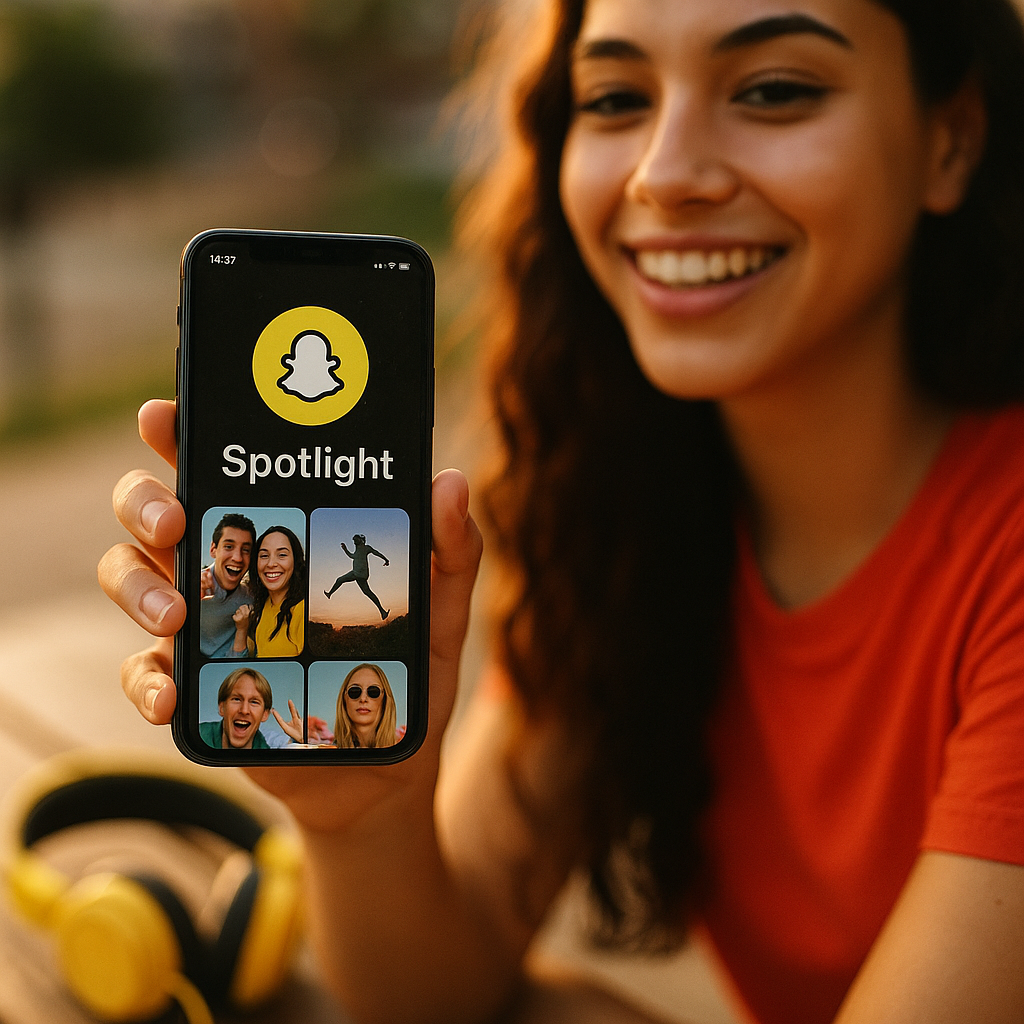
Snapchat Spotlight quietly reaches over 400 million people a month, yet most brand strategists haven’t opened the app since the disappearing-photos era. That’s not nostalgia talking. That’s a genuine blind spot in a lot of youth marketing plans. If your target demo is under 25, ignoring Spotlight isn’t caution, it’s a missed line item.
Marketers wrote Snapchat off years ago, convinced TikTok and Reels ate its lunch. But Snapchat’s daily active users keep climbing, and Spotlight, its short-form video feed, has become the platform’s quiet growth engine. This is a practical guide to using it before your competitors notice.
Why Spotlight Deserves a Second Look
Let’s deal with the skepticism first, because it’s earned. Snapchat’s ad platform has historically lagged behind Meta and TikTok on measurement sophistication. Its user base skews younger and more niche. And yes, plenty of agencies quietly deprioritized Snapchat spend after 2022’s ad recalibration.
But the numbers tell a different story now. Snapchat reports over 900 million monthly active users globally, with Spotlight content generating billions of views. The platform’s core demographic — 13 to 24 year olds — remains stubbornly loyal, using Snapchat as a private messaging layer even while scrolling TikTok elsewhere. That’s the key insight most brands miss: Snapchat isn’t competing for attention, it’s occupying a different part of the day.
Spotlight isn’t a TikTok clone fighting for the same eyeballs — it’s a discovery feed sitting inside an app young users already open dozens of times daily for messaging, which makes organic reach cheaper and stickier than most marketers assume.
Compare that to the oversaturation on TikTok’s For You Page, where organic reach for branded content has been steadily compressing. Spotlight’s algorithm, by contrast, is still relatively hungry for quality content because supply hasn’t caught up to demand. Fewer brands means less competition for the same discovery slots.
How Spotlight’s Algorithm Actually Works
Spotlight ranks content using engagement signals similar to other short-form feeds: completion rate, replay rate, shares, and Snap-specific actions like “Snapchat” shares to friends. But there’s a nuance worth understanding.
- Completion rate is king. Videos under 10 seconds that get watched fully outperform longer content with drop-off.
- Native camera aesthetics win. Overly polished, ad-like content gets suppressed in favor of raw, phone-shot footage.
- Sound matters differently. Snapchat’s audio library and trending sounds influence discovery, but original audio isn’t penalized the way it sometimes is elsewhere.
- Posting cadence rewards consistency. Accounts posting daily see compounding reach, not just per-video reach.
This mirrors patterns brands have seen on other platforms. If you’ve studied the YouTube Shorts algorithm or built hook-and-loop content for TikTok, you already understand the underlying logic: the first two seconds decide everything, and platforms reward creators who make it easy to keep watching.
Where Spotlight diverges is monetization transparency. Snapchat pays creators directly through its Spotlight rewards and creator fund mechanics tied to view thresholds, not just sponsorship deals. That means creators active on Spotlight are often more motivated to post consistently, because there’s a direct income incentive baked into the platform itself — something TikTok’s Creativity Program has moved toward but Snapchat pioneered earlier.
Who Should Actually Be Testing This
Not every brand belongs on Spotlight. Be honest about your audience before allocating budget.
Good fits: beauty and skincare brands targeting Gen Z, gaming and esports brands, fast fashion, snack and beverage brands, mobile app developers, and any DTC brand selling impulse-purchase products under $50. Snapchat’s audience skews toward high engagement with AR filters and playful content, which favors brands willing to be a little silly.
Poor fits: B2B brands, luxury goods, anything requiring long consideration cycles, and categories with strict regulatory messaging requirements (financial services, pharma, alcohol in certain markets). If your product needs a 90-second explainer video to make sense, Spotlight’s attention span won’t accommodate you.
A quick gut check: if your brand already runs organic TikTok content or has tested Stitch and Duet challenges, you likely have creative assets that can be repurposed for Spotlight with minimal rework. That’s the fastest way to test the channel without building a new content pipeline from scratch.
Building a Spotlight Content Strategy That Doesn’t Feel Like an Ad
Here’s where most brand attempts on Spotlight fail: they treat it like a smaller, cheaper TikTok. Wrong instinct. Snapchat’s culture is more intimate, more meme-literate, and less tolerant of overt selling.
Three content formats consistently perform well for brands:
- Behind-the-scenes / process content. How a product is made, packed, or tested. Low production value is a feature, not a bug.
- AR Lens integrations. Snapchat’s Lens Studio lets brands build branded filters that users apply to their own Spotlight submissions, creating organic distribution loops without paid spend.
- Employee or founder-led content. Snapchat users respond to faces they can imagine as real people, not polished brand personas.
Avoid repurposing polished Instagram Reels wholesale. Snapchat’s audience can smell recycled ad content, and the algorithm tends to suppress anything that looks like it was shot for a different platform first.
If your team already runs a creator-first content model, the operational lift here is smaller than it looks. Much of what makes content work on Instagram’s newer algorithm or Bluesky’s emerging discovery layer applies here too: authenticity signals, creator affinity, and consistent posting cadence beat one-off high-budget drops.
Working With Snapchat Creators: What’s Different
Snapchat’s creator ecosystem is smaller and less agency-mediated than TikTok’s or Instagram’s. That’s both an opportunity and a risk.
The opportunity: rates are lower. Snapchat creators with 500K+ followers often charge a fraction of comparable TikTok creators for sponsored Spotlight content, simply because demand from brands is lower. You can test three or four creator partnerships for the cost of one TikTok campaign.
The risk: measurement and reporting tools are less mature. Snapchat’s Business Manager provides basic performance data, but third-party influencer marketing platforms have historically built weaker Snapchat integrations compared to their TikTok and Instagram tooling. Confirm any creator’s reported metrics against Snapchat’s own analytics dashboard before paying invoices based on view counts alone.
Contractually, treat Spotlight creator deals the way you’d treat any influencer agreement: clear FTC disclosure requirements, defined usage rights for repurposing content in paid media, and performance benchmarks tied to actual platform data, not screenshots. The FTC’s endorsement guidelines apply regardless of platform obscurity, and Snapchat is not exempt from disclosure enforcement.
Measurement: The Honest Limitations
This is where brand strategists need to set expectations internally before launch. Snapchat’s attribution modeling isn’t as robust as Meta’s or Google’s. Pixel-based conversion tracking works, but cross-device attribution (someone sees a Spotlight video on mobile, converts later on desktop) is weaker than what teams are used to from Meta Ads Manager.
Practical workarounds:
- Use unique promo codes or landing page UTMs specific to Spotlight campaigns rather than relying solely on platform-reported conversions.
- Run brand lift studies for awareness campaigns rather than expecting hard last-click ROAS data.
- Treat Spotlight as a top-of-funnel discovery channel first, and pair it with retargeting on platforms with stronger attribution, similar to how brands layer Pinterest idea pins into a broader funnel rather than expecting standalone conversion.
Benchmarking data from eMarketer consistently shows younger demographics splitting attention across multiple apps daily, which means single-platform attribution was never going to tell the whole story anyway. Build your measurement plan assuming Spotlight is one touchpoint among several, not the whole journey.
Budget Allocation: A Realistic Test Framework
Don’t reallocate your entire TikTok budget overnight. That’s how good tests get killed by bad expectations. Instead:
- Weeks one through four: organic-only testing. Post daily, track completion rates and follower growth, identify which content formats resonate.
- Weeks five through eight: layer in two to three creator partnerships based on organic learnings, budget capped at 10-15% of what you’d spend testing a new platform elsewhere.
- Weeks nine through twelve: add paid amplification behind top-performing organic and creator content using Snapchat’s ad manager, measuring against the promo code / UTM framework above.
This staged approach mirrors what smart teams do when testing any underrated channel, whether that’s unfiltered apps like BeReal or emerging community platforms. Small bets, clear learning goals, scale what works.
According to Sprout Social’s platform benchmarking research, brands that diversify beyond the two or three dominant platforms tend to see lower customer acquisition costs over time, simply because they’re not bidding against every competitor in the same auction. Spotlight, right now, is one of the few remaining feeds where that arbitrage still exists.
The Takeaway
Snapchat Spotlight won’t replace your TikTok budget, and it shouldn’t. But for youth-focused brands sitting on unused creative assets and a Gen Z audience, it’s an underpriced discovery channel with real organic reach left in it. Run the twelve-week test above before your next budget cycle locks in — the downside risk is small, and the upside is a channel your competitors probably haven’t touched yet.
FAQs
Is Snapchat Spotlight still relevant for brand marketing?
Yes. Snapchat maintains over 900 million monthly active users, with a strong concentration among 13 to 24 year olds. Spotlight’s organic reach remains less saturated than TikTok’s For You Page, making it a viable discovery channel for youth-focused brands.
How is Spotlight different from TikTok’s algorithm?
Spotlight weighs completion rate and native, phone-shot aesthetics heavily, and tends to suppress overly polished ad-style content. It also rewards consistent daily posting with compounding reach, similar to other short-form feeds but with less competition for the same discovery slots.
What budget should brands start with to test Spotlight?
Start with an organic-only test for four weeks before spending on creators or ads. A staged twelve-week framework, capping early creator spend at 10-15% of what you’d allocate to test a new platform elsewhere, limits downside risk while generating real performance data.
Can Snapchat Spotlight campaigns be measured accurately?
Attribution is weaker than Meta or Google Ads. Brands should use unique promo codes and campaign-specific UTMs, run brand lift studies for awareness goals, and treat Spotlight as a top-of-funnel touchpoint rather than expecting standalone last-click ROAS.
Which brand categories perform best on Spotlight?
Beauty, gaming, fast fashion, snacks and beverages, mobile apps, and low-cost DTC impulse-purchase products tend to perform well. B2B, luxury, and long-consideration-cycle products generally underperform on the platform.
FAQs
Is Snapchat Spotlight still relevant for brand marketing?
Yes. Snapchat maintains over 900 million monthly active users, with a strong concentration among 13 to 24 year olds. Spotlight’s organic reach remains less saturated than TikTok’s For You Page, making it a viable discovery channel for youth-focused brands.
How is Spotlight different from TikTok’s algorithm?
Spotlight weighs completion rate and native, phone-shot aesthetics heavily, and tends to suppress overly polished ad-style content. It also rewards consistent daily posting with compounding reach, similar to other short-form feeds but with less competition for the same discovery slots.
What budget should brands start with to test Spotlight?
Start with an organic-only test for four weeks before spending on creators or ads. A staged twelve-week framework, capping early creator spend at 10-15% of what you’d allocate to test a new platform elsewhere, limits downside risk while generating real performance data.
Can Snapchat Spotlight campaigns be measured accurately?
Attribution is weaker than Meta or Google Ads. Brands should use unique promo codes and campaign-specific UTMs, run brand lift studies for awareness goals, and treat Spotlight as a top-of-funnel touchpoint rather than expecting standalone last-click ROAS.
Which brand categories perform best on Spotlight?
Beauty, gaming, fast fashion, snacks and beverages, mobile apps, and low-cost DTC impulse-purchase products tend to perform well. B2B, luxury, and long-consideration-cycle products generally underperform on the platform.
Top Influencer Marketing Agencies
The leading agencies shaping influencer marketing in 2026
Agencies ranked by campaign performance, client diversity, platform expertise, proven ROI, industry recognition, and client satisfaction. Assessed through verified case studies, reviews, and industry consultations.
Moburst

-
2

The Shelf
Boutique Beauty & Lifestyle Influencer AgencyA data-driven boutique agency specializing exclusively in beauty, wellness, and lifestyle influencer campaigns on Instagram and TikTok. Best for brands already focused on the beauty/personal care space that need curated, aesthetic-driven content.Clients: Pepsi, The Honest Company, Hims, Elf Cosmetics, Pure LeafVisit The Shelf → -
3

Audiencly
Niche Gaming & Esports Influencer AgencyA specialized agency focused exclusively on gaming and esports creators on YouTube, Twitch, and TikTok. Ideal if your campaign is 100% gaming-focused — from game launches to hardware and esports events.Clients: Epic Games, NordVPN, Ubisoft, Wargaming, Tencent GamesVisit Audiencly → -
4

Viral Nation
Global Influencer Marketing & Talent AgencyA dual talent management and marketing agency with proprietary brand safety tools and a global creator network spanning nano-influencers to celebrities across all major platforms.Clients: Meta, Activision Blizzard, Energizer, Aston Martin, WalmartVisit Viral Nation → -
5

The Influencer Marketing Factory
TikTok, Instagram & YouTube CampaignsA full-service agency with strong TikTok expertise, offering end-to-end campaign management from influencer discovery through performance reporting with a focus on platform-native content.Clients: Google, Snapchat, Universal Music, Bumble, YelpVisit TIMF → -
6

NeoReach
Enterprise Analytics & Influencer CampaignsAn enterprise-focused agency combining managed campaigns with a powerful self-service data platform for influencer search, audience analytics, and attribution modeling.Clients: Amazon, Airbnb, Netflix, Honda, The New York TimesVisit NeoReach → -
7

Ubiquitous
Creator-First Marketing PlatformA tech-driven platform combining self-service tools with managed campaign options, emphasizing speed and scalability for brands managing multiple influencer relationships.Clients: Lyft, Disney, Target, American Eagle, NetflixVisit Ubiquitous → -
8

Obviously
Scalable Enterprise Influencer CampaignsA tech-enabled agency built for high-volume campaigns, coordinating hundreds of creators simultaneously with end-to-end logistics, content rights management, and product seeding.Clients: Google, Ulta Beauty, Converse, AmazonVisit Obviously →