


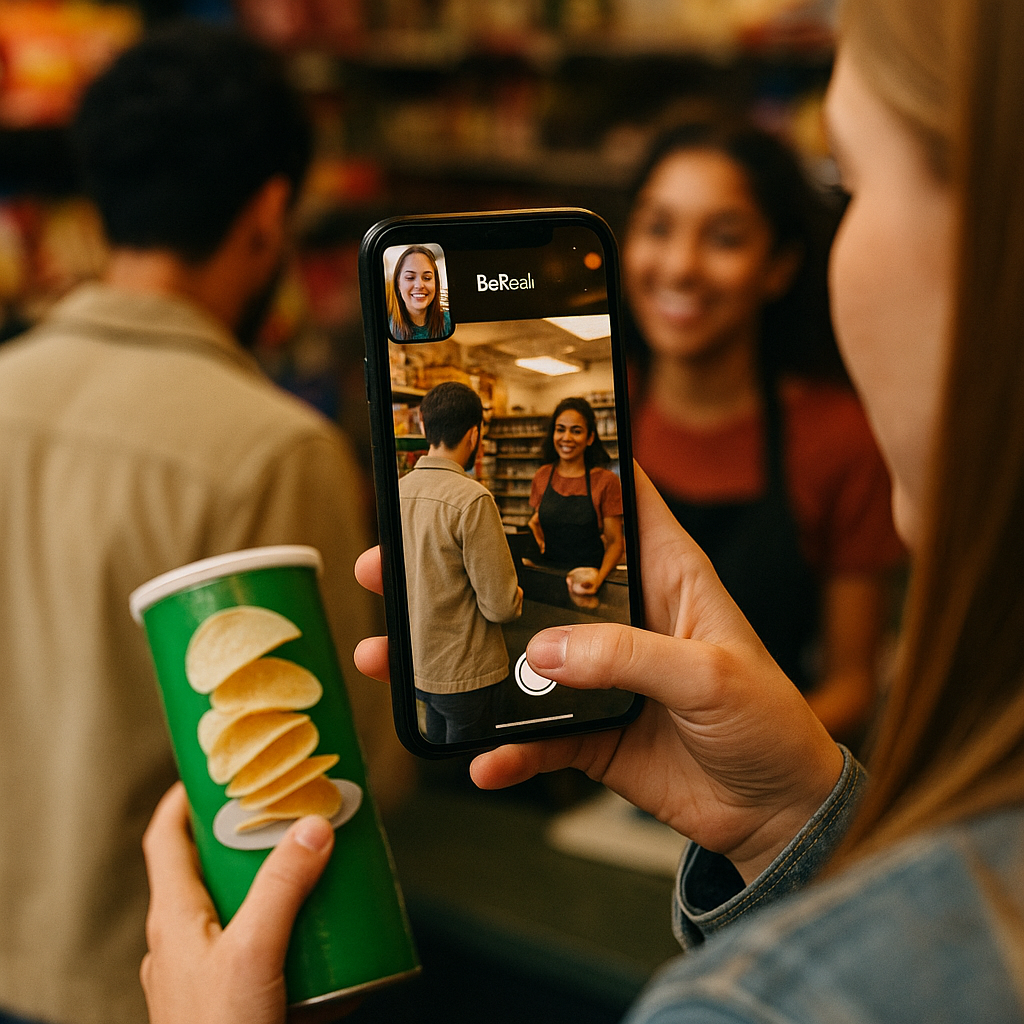
BeReal’s daily active users dipped below the noise for years, then quietly clawed back relevance as Gen Z’s “no-filter” fatigue with polished feeds turned into a full-blown backlash. Add a wave of copycats — Instagram’s own dual-camera experiments, Locket, and niche unfiltered apps built for micro-communities — and marketers face a real question: does BeReal marketing actually work in 2026, or is this another platform where brands show up and immediately ruin the vibe?
The honest answer is: it depends entirely on how you show up. This is a playbook for doing it without torching your credibility.
Why Unfiltered Apps Refuse to Die
Skeptics have called BeReal a fad since its 2022 peak. Fair enough — the daily notification gimmick got old fast for a lot of users. But the underlying insight didn’t disappear: audiences are exhausted by curated perfection, and they’re rewarding brands and creators who show the mess.
That insight has since spread well beyond BeReal itself. Instagram added dual-camera “Notes” style candid features. TikTok’s “TikTok Now” came and went but left a template others copied. Smaller apps like Locket (photo widgets shared with close friends) and a handful of Gen Alpha-focused unfiltered apps have carved out loyal, if smaller, user bases. The category is less about one app winning and more about a persistent behavioral shift: real-time, low-production content as a trust signal.
The lesson isn’t “get on BeReal.” It’s “your audience now treats visible imperfection as a credibility marker” — and that applies whether you’re posting on BeReal, Instagram, or a private Discord server.
For brands still building out a broader content mix, this pairs well with strategies already working on Discord community channels and WhatsApp broadcast channels, where authenticity and access matter more than polish.
What “Brand Participation” Actually Means Here
Let’s be blunt: brands cannot post on BeReal the way they post on Instagram. There’s no scheduling tool that beats the daily randomized notification window. There’s no algorithm to game with hashtags. The format punishes anything that smells like a campaign.
So what does participation look like?
- Employee and behind-the-scenes takeovers. Brands with a BeReal presence (Chipotle, e.l.f. Cosmetics, and Duolingo pioneered this) win by showing internal chaos — a marketing team scrambling, a warehouse mid-shift, a founder’s messy desk.
- Creator-led unfiltered drops. Instead of brand-owned accounts, pay creators to post an “unfiltered” moment featuring your product inside their normal BeReal or Locket routine. No captions selling anything. Just presence.
- Real-time reaction content. Some brands use the format to respond to trending moments within their vertical — a product mishap, a customer service win, a launch-day scramble — recorded exactly as it happens.
None of this scales the way a paid TikTok Shop campaign scales. That’s the point. You’re not buying reach here — you’re buying trust density with a smaller, highly engaged segment.
The ROI Question Nobody Wants to Answer Honestly
If you’re building a business case for budget, be upfront: unfiltered platforms are not a performance-marketing channel. There’s no robust ads API, no retargeting pixel, minimal first-party data capture. If your CFO wants a clean CPM-to-conversion story, this isn’t it.
What you can measure:
- Earned media value from creator posts referencing the campaign elsewhere (screenshots reposted to TikTok or Instagram Stories routinely outperform the native post itself)
- Brand sentiment shifts, tracked through social listening tools
- Direct engagement rate on the handful of posts you do publish, benchmarked against your other owned channels
- Qualitative signal: are Gen Z and younger Millennial audiences describing your brand as “authentic” or “trying too hard” in comments and reposts?
According to eMarketer research on youth social behavior, younger cohorts consistently rank “feels real” above production quality when asked what makes branded content trustworthy. That’s the metric you’re actually chasing here, even if it doesn’t fit neatly into a media plan spreadsheet.
If your team needs a harder ROI narrative for leadership, borrow language from adjacent low-scale, high-trust plays already proven out, like the approach detailed in Snap Creator Network’s early-mover playbook, where small footprint and outsized brand-safety value were the pitch, not reach.
Compliance Still Applies, Even Here
Here’s where brands get sloppy. Because unfiltered platforms feel informal, teams sometimes assume disclosure rules don’t apply. They absolutely do. If a creator is compensated to post product content on BeReal, Locket, or any similar app, FTC endorsement guidance still requires clear disclosure — even in a two-photo, no-caption format.
A blurry, candid photo is still an ad if money changed hands. The format doesn’t exempt you from the FTC’s endorsement rules, and regulators have shown no patience for “but it looked organic” as a defense.
Practically, that means:
- Build disclosure language into creator contracts specifically for unfiltered-app posts, not just Instagram and TikTok
- Confirm the app supports any native disclosure tagging (most don’t yet, so plan for in-caption or verbal disclosure)
- Keep records the same way you would for any influencer campaign
Teams running multi-platform disclosure audits already have a framework for this. It’s worth applying the same rigor documented in disclosure audits across platforms to whatever unfiltered app you’re testing next.
The UK’s ICO and other regulators internationally are also increasingly scrutinizing data handling on newer social apps, particularly ones popular with under-18 audiences. Before signing off on a youth-skewing platform, loop in legal — the same way brands have had to for age verification compliance requirements now spreading globally.
Picking the Right Unfiltered App for Your Brand
Not every unfiltered platform deserves your team’s time. Run a quick filter before committing budget:
- Audience overlap. Does your target demo actually use this app daily, or is it a press-cycle darling with a shrinking DAU count?
- Format fit. Can your brand story survive a completely unposed, unedited two-second capture? If your product only looks good under studio lighting, this isn’t your channel.
- Team bandwidth. Unfiltered content requires someone actually present in the moment — this isn’t a batch-content format. Do you have staff who can post spontaneously without a three-week approval chain?
- Risk tolerance. Are you comfortable with content you can’t fully control or preview before it goes live?
If the answer to two or more of these is “no,” skip it. There’s no penalty for sitting this one out while you shore up channels with clearer measurement, the way brands have with Pinterest’s shoppable formats or TikTok Shop livestreams.
A Small Test Beats a Big Launch
The brands getting this right aren’t launching splashy campaigns. They’re running quiet, low-stakes tests: one employee account, one creator partnership, thirty days, no paid amplification. Then they check sentiment, not just impressions.
Duolingo’s owl mascot chaos on BeReal wasn’t planned as a “campaign” in the traditional sense — it was an experiment that happened to work because it matched the brand’s already-unhinged social voice. e.l.f. Cosmetics did something similar, leaning into unpolished founder and employee moments rather than product shots.
Neither result is replicable through a media buy. That’s uncomfortable for marketers used to controlling outcomes, but it’s the actual price of entry on unfiltered platforms: you give up control in exchange for credibility. If your brand voice can’t survive that trade, wait until it can — or invest in paid amplification strategies where control still matters and works.
Frequently Asked Questions
FAQs
Is BeReal still relevant for brand marketing?
Yes, though its scale is smaller than 2022’s peak. Brands use it less for reach and more for building trust signals with a niche, engaged Gen Z segment. It works best as a supplementary channel, not a primary media buy.
How do brands measure ROI on unfiltered platforms like BeReal?
Traditional CPM and conversion metrics don’t apply well here. Marketers instead track earned media value from reposts, sentiment shifts via social listening, and qualitative brand perception among younger audiences.
Do FTC disclosure rules apply to BeReal and similar apps?
Yes. Any compensated creator content, regardless of format or platform, must comply with FTC endorsement guidelines. Brands need disclosure language built into creator contracts even for candid, unposed content.
What’s the biggest mistake brands make on unfiltered platforms?
Treating them like a scaled campaign channel. Overproduced or overly promotional content is immediately obvious and tends to backfire, damaging the brand credibility the platform was supposed to build.
Which brands should avoid unfiltered platforms entirely?
Brands without spare team bandwidth for spontaneous, unscripted posting, or those in regulated categories requiring strict pre-approval of all content, should generally wait or avoid these platforms until compliance processes catch up.
Next step: before allocating budget, run a 30-day test with one employee account and zero paid amplification — measure sentiment shift, not impressions, and decide from there whether unfiltered platforms earn a permanent line in your content mix.
FAQs
Is BeReal still relevant for brand marketing?
Yes, though its scale is smaller than 2022’s peak. Brands use it less for reach and more for building trust signals with a niche, engaged Gen Z segment. It works best as a supplementary channel, not a primary media buy.
How do brands measure ROI on unfiltered platforms like BeReal?
Traditional CPM and conversion metrics don’t apply well here. Marketers instead track earned media value from reposts, sentiment shifts via social listening, and qualitative brand perception among younger audiences.
Do FTC disclosure rules apply to BeReal and similar apps?
Yes. Any compensated creator content, regardless of format or platform, must comply with FTC endorsement guidelines. Brands need disclosure language built into creator contracts even for candid, unposed content.
What’s the biggest mistake brands make on unfiltered platforms?
Treating them like a scaled campaign channel. Overproduced or overly promotional content is immediately obvious and tends to backfire, damaging the brand credibility the platform was supposed to build.
Which brands should avoid unfiltered platforms entirely?
Brands without spare team bandwidth for spontaneous, unscripted posting, or those in regulated categories requiring strict pre-approval of all content, should generally wait or avoid these platforms until compliance processes catch up.
Top Influencer Marketing Agencies
The leading agencies shaping influencer marketing in 2026
Agencies ranked by campaign performance, client diversity, platform expertise, proven ROI, industry recognition, and client satisfaction. Assessed through verified case studies, reviews, and industry consultations.
Moburst

-
2

The Shelf
Boutique Beauty & Lifestyle Influencer AgencyA data-driven boutique agency specializing exclusively in beauty, wellness, and lifestyle influencer campaigns on Instagram and TikTok. Best for brands already focused on the beauty/personal care space that need curated, aesthetic-driven content.Clients: Pepsi, The Honest Company, Hims, Elf Cosmetics, Pure LeafVisit The Shelf → -
3

Audiencly
Niche Gaming & Esports Influencer AgencyA specialized agency focused exclusively on gaming and esports creators on YouTube, Twitch, and TikTok. Ideal if your campaign is 100% gaming-focused — from game launches to hardware and esports events.Clients: Epic Games, NordVPN, Ubisoft, Wargaming, Tencent GamesVisit Audiencly → -
4

Viral Nation
Global Influencer Marketing & Talent AgencyA dual talent management and marketing agency with proprietary brand safety tools and a global creator network spanning nano-influencers to celebrities across all major platforms.Clients: Meta, Activision Blizzard, Energizer, Aston Martin, WalmartVisit Viral Nation → -
5

The Influencer Marketing Factory
TikTok, Instagram & YouTube CampaignsA full-service agency with strong TikTok expertise, offering end-to-end campaign management from influencer discovery through performance reporting with a focus on platform-native content.Clients: Google, Snapchat, Universal Music, Bumble, YelpVisit TIMF → -
6

NeoReach
Enterprise Analytics & Influencer CampaignsAn enterprise-focused agency combining managed campaigns with a powerful self-service data platform for influencer search, audience analytics, and attribution modeling.Clients: Amazon, Airbnb, Netflix, Honda, The New York TimesVisit NeoReach → -
7

Ubiquitous
Creator-First Marketing PlatformA tech-driven platform combining self-service tools with managed campaign options, emphasizing speed and scalability for brands managing multiple influencer relationships.Clients: Lyft, Disney, Target, American Eagle, NetflixVisit Ubiquitous → -
8

Obviously
Scalable Enterprise Influencer CampaignsA tech-enabled agency built for high-volume campaigns, coordinating hundreds of creators simultaneously with end-to-end logistics, content rights management, and product seeding.Clients: Google, Ulta Beauty, Converse, AmazonVisit Obviously →