


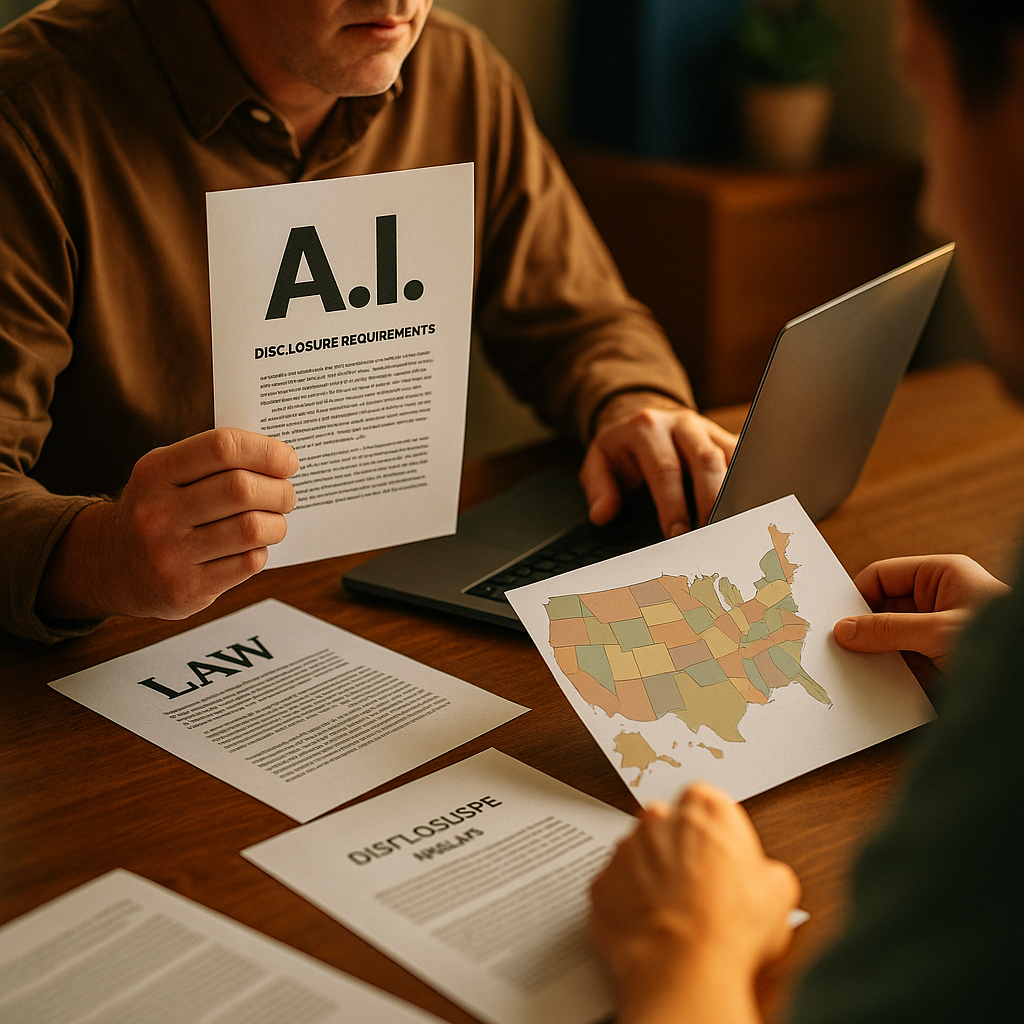
Twenty-two states now have live or pending AI disclosure statutes that touch influencer content. None of them use the same definitions, thresholds, or penalties. If your creator campaign runs in more than three states — and whose doesn’t? — you’re already navigating a state AI disclosure law patchwork that most legal teams haven’t fully mapped yet.
That gap is expensive. Not in theory — in actual enforcement dollars, in creator contract rewrites, in campaigns pulled mid-flight because a synthetic voiceover triggered a disclosure requirement nobody flagged.
Why One Federal Standard Isn’t Coming Anytime Soon
The FTC has its own disclosure guidance, sure. But the FTC regulates deceptive practices broadly — it doesn’t preempt state legislatures from writing their own AI-specific rules. And states have been writing fast. California, Colorado, Illinois, Texas, and New York have all passed or advanced legislation specifically addressing AI-generated content, synthetic media, and digital replicas in commercial contexts. Each bill was drafted independently, often in response to different local incidents (a deepfake political ad here, a synthetic influencer scandal there), which is exactly why the definitions don’t line up.
Some statutes only cover synthetic human likeness — think AI avatars or voice clones. Others sweep in any AI-assisted content used in advertising, including copy generated by tools like Jasper or ChatGPT. A few carve out explicit safe harbors for clearly-labeled parody or satire. Most don’t.
If you’re running a 12-state creator campaign right now, you likely have at least three different disclosure thresholds active simultaneously — and most contracts weren’t written to handle that.
The Matrix: How to Think About Fifty States Without Losing Your Mind
Nobody can memorize fifty individual statutes. But you can sort states into tiers based on how aggressive their AI disclosure requirements actually are. Here’s the practical grouping we use when advising brand compliance teams:
- Tier 1 — Comprehensive disclosure mandates: California, Colorado, and Illinois currently require explicit, conspicuous labeling for AI-generated or AI-modified content used in commercial advertising, including creator posts. Penalties range from per-violation civil fines to private right of action in some cases.
- Tier 2 — Likeness and voice-specific rules: Tennessee (via its ELVIS Act framework extensions), New York, and Washington focus narrowly on synthetic voice and digital replica protections, particularly where a real person’s likeness is simulated without consent.
- Tier 3 — Political and issue-ad carve-outs that bleed into commercial: Texas, Florida, and Michigan built AI disclosure rules primarily for political advertising, but the statutory language is broad enough that brand campaigns touching public policy topics or advocacy-adjacent content can get swept in.
- Tier 4 — Pending or study-committee states: A growing bloc — including Ohio, Virginia, and Georgia — has introduced bills or commissioned regulatory studies. Nothing enforceable yet, but expect movement within the next legislative cycle.
- Tier 5 — No AI-specific statute: The remaining states default to general consumer protection and existing FTC-aligned disclosure norms, which is actually the easier lane to operate in.
This tiering won’t replace legal review. But it gives your creative and partnerships team a fast triage tool: know which tier a campaign’s target states fall into before you brief creators, not after.
Where Brands Actually Get Tripped Up
It’s rarely the obvious stuff. Brands know not to run a fully synthetic AI spokesperson without labeling it. The real exposure sits in the gray zone — AI-assisted editing, voice enhancement, background generation, or script drafting that a creator used without telling the brand.
Here’s a scenario we’re seeing constantly: a brand hires a creator in Texas, the creator uses an AI tool to clean up audio or generate a thumbnail, and that creator cross-posts into a Colorado-based community group. Which state’s disclosure rule applies? Where was the content “made available”? Most brand legal teams don’t have an answer, because most contracts don’t ask the question.
This is precisely the ambiguity driving new attention to creator contract disclosure clauses as the actual enforcement mechanism, rather than relying on platform-level labeling alone.
What Enforcement Actually Looks Like So Far
State AGs aren’t waiting for perfect statutes to start acting. Several have used existing consumer protection authority to investigate AI-related disclosure failures even before AI-specific statutes took effect. The recent wave of state AG actions against platforms signals a broader appetite: regulators are willing to stretch existing law to cover AI harms, and brands are named as co-defendants or subpoena targets when creator content crosses the line.
That risk compounds when brands rely on third-party ad tech or influencer platforms to manage disclosure compliance. If your vendor’s labeling system fails, you don’t get to point fingers after the fact — regulators increasingly view the brand as the responsible party regardless of who built the tech stack. We’ve covered this dynamic in detail in our breakdown of vendor subpoena exposure, and the same logic applies to AI disclosure specifically.
Enforcement data from state AG offices shows a consistent pattern: brands, not creators, absorb the largest penalties, because brands are assumed to have the resources and duty to verify compliance before content goes live.
Building an Actual Compliance Workflow, Not Just a Spreadsheet
A 50-state matrix is useless if it lives in a PDF nobody opens. The brands managing this well have operationalized it into three checkpoints:
Pre-campaign geo-mapping. Before briefing creators, identify every state where content will be published, boosted, or paid-promoted — not just where the creator is based. Distribution state matters more than residency in most statutes.
Contract-level disclosure clauses. Every creator agreement should specify which AI tools are permissible, require creator disclosure of any AI assistance used in production, and assign clear liability if a creator fails to label AI content per platform or state rules. This is the same principle driving updates to multi-creator network agreements, where attribution and compliance responsibilities need to be explicit rather than assumed.
Platform-label cross-check. TikTok, Meta, and Google each have their own AI content labeling systems, and none of them automatically satisfy state law. A TikTok “AI-generated” tag doesn’t necessarily meet Colorado’s disclosure threshold. Brands need a cross-reference step that checks platform labels against state requirements before publishing, which is exactly the gap addressed in our TikTok AI label compliance guide and the parallel Meta AI disclosure audit framework.
A Quick Gut Check for Multi-State Campaigns
Ask your team these before launch:
Do we know every state where this content will run paid, not just organic? Have we confirmed with each creator whether AI tools touched any part of production — script, voice, visuals, editing? Does our contract language hold up if a creator publishes into a Tier 1 state we didn’t originally plan for? If the answer to any of these is “not sure,” you’re not ready to launch, regardless of how good the creative looks.
Compliance teams researching adjacent regulatory pressure should also look at how FTC rules intersect with TikTok Shop requirements, since commerce-linked content often triggers both federal and state scrutiny simultaneously. And for teams building out formal review processes, the cross-functional AI creative review model offers a practical template for catching these issues before legal has to.
The Real Cost of Getting This Wrong
Per-violation fines in Tier 1 states can run into five figures, and some statutes allow per-post penalties rather than per-campaign — meaning a single creator’s ten-post series without proper labeling could generate ten separate violations. According to industry benchmarking from eMarketer, influencer marketing spend continues climbing year over year, which means the dollar exposure tied to disclosure failures is climbing right alongside it. Data from Statista similarly shows creator partnership volume expanding across mid-market brands, not just enterprise advertisers, which means smaller marketing teams with thinner legal support are increasingly exposed to this same patchwork.
The FTC’s own endorsement guidance remains the federal floor, but it’s just that: a floor. State law is where the real variability, and the real risk, lives right now.
FAQs
Frequently Asked Questions
What is the state AI disclosure law patchwork?
It refers to the growing set of individual state laws requiring disclosure of AI-generated or AI-assisted content in advertising, each with different definitions, thresholds, and penalties, creating inconsistent compliance obligations for brands running campaigns across multiple states.
Which states currently have the strictest AI disclosure requirements?
California, Colorado, and Illinois currently have the most comprehensive mandates, requiring conspicuous labeling of AI-generated or AI-modified commercial content, with meaningful civil penalties for violations.
Does FTC guidance override state AI disclosure laws?
No. FTC guidance sets a federal baseline for endorsement and disclosure practices but does not preempt states from enacting stricter or more specific AI disclosure statutes.
Who is liable if a creator fails to disclose AI use in a sponsored post?
In most enforcement actions to date, brands bear significant liability alongside creators, since regulators generally expect brands to verify compliance before content is published, regardless of who created it.
Does a platform’s AI-generated label satisfy state law requirements?
Not automatically. Platform labels from TikTok, Meta, or Google are designed to meet platform policy, not necessarily state statutory thresholds, so brands need a separate cross-check step before publishing.
How should brands prepare creator contracts for this patchwork?
Contracts should specify approved AI tools, require creators to disclose any AI assistance used in production, and clearly assign compliance responsibility for labeling across every state where content will be distributed or promoted.
Stop treating this as a legal review checkbox and start treating it as a launch gate: no multi-state creator campaign goes live until someone has mapped distribution states against disclosure tiers and confirmed contract language covers it. The brands that build this into pre-production now will spend a lot less time explaining themselves to state AGs later.
Top Influencer Marketing Agencies
The leading agencies shaping influencer marketing in 2026
Agencies ranked by campaign performance, client diversity, platform expertise, proven ROI, industry recognition, and client satisfaction. Assessed through verified case studies, reviews, and industry consultations.
Moburst

-
2

The Shelf
Boutique Beauty & Lifestyle Influencer AgencyA data-driven boutique agency specializing exclusively in beauty, wellness, and lifestyle influencer campaigns on Instagram and TikTok. Best for brands already focused on the beauty/personal care space that need curated, aesthetic-driven content.Clients: Pepsi, The Honest Company, Hims, Elf Cosmetics, Pure LeafVisit The Shelf → -
3

Audiencly
Niche Gaming & Esports Influencer AgencyA specialized agency focused exclusively on gaming and esports creators on YouTube, Twitch, and TikTok. Ideal if your campaign is 100% gaming-focused — from game launches to hardware and esports events.Clients: Epic Games, NordVPN, Ubisoft, Wargaming, Tencent GamesVisit Audiencly → -
4

Viral Nation
Global Influencer Marketing & Talent AgencyA dual talent management and marketing agency with proprietary brand safety tools and a global creator network spanning nano-influencers to celebrities across all major platforms.Clients: Meta, Activision Blizzard, Energizer, Aston Martin, WalmartVisit Viral Nation → -
5

The Influencer Marketing Factory
TikTok, Instagram & YouTube CampaignsA full-service agency with strong TikTok expertise, offering end-to-end campaign management from influencer discovery through performance reporting with a focus on platform-native content.Clients: Google, Snapchat, Universal Music, Bumble, YelpVisit TIMF → -
6

NeoReach
Enterprise Analytics & Influencer CampaignsAn enterprise-focused agency combining managed campaigns with a powerful self-service data platform for influencer search, audience analytics, and attribution modeling.Clients: Amazon, Airbnb, Netflix, Honda, The New York TimesVisit NeoReach → -
7

Ubiquitous
Creator-First Marketing PlatformA tech-driven platform combining self-service tools with managed campaign options, emphasizing speed and scalability for brands managing multiple influencer relationships.Clients: Lyft, Disney, Target, American Eagle, NetflixVisit Ubiquitous → -
8

Obviously
Scalable Enterprise Influencer CampaignsA tech-enabled agency built for high-volume campaigns, coordinating hundreds of creators simultaneously with end-to-end logistics, content rights management, and product seeding.Clients: Google, Ulta Beauty, Converse, AmazonVisit Obviously →