


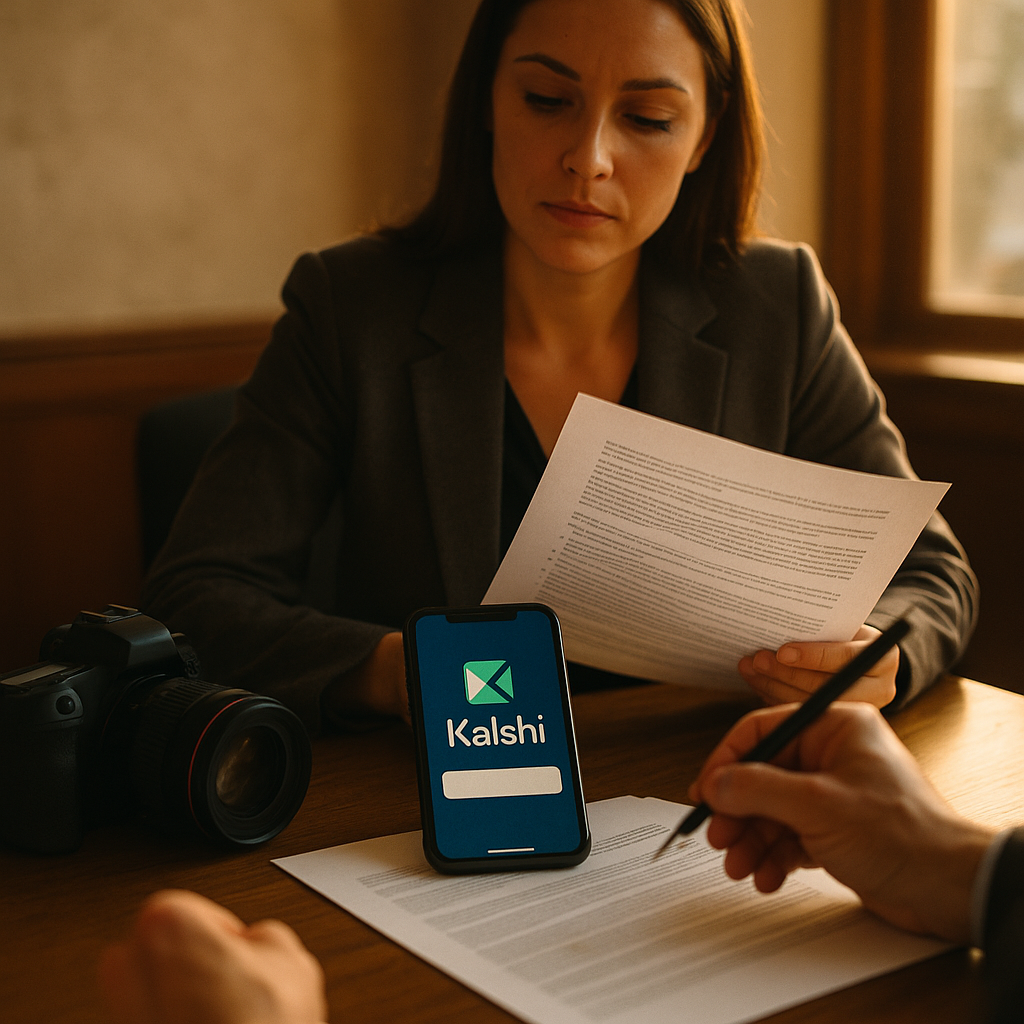
One quiet referral letter from the National Advertising Division just rewrote the risk calculus for every brand running influencer campaigns in a regulatory gray zone. The Kalshi undisclosed sponsorship case didn’t make front-page news, but inside compliance and legal teams, it’s become required reading. Here’s why it matters more than the headlines suggest.
What Actually Happened
Kalshi, the CFTC-regulated prediction market that’s spent the past two years aggressively courting creator audiences, ran into a problem familiar to any brand scaling influencer spend fast: its creator partnerships outpaced its disclosure controls. Multiple creators posted content promoting Kalshi’s trading platform without clear, conspicuous sponsorship labels. Some used affiliate links buried in bios. Others discussed the platform in ways that read as organic commentary rather than paid promotion.
A competitor or watchdog group (the exact complainant details remain outside public record in most reporting) flagged the pattern to NAD, the advertising industry’s self-regulatory body operated under BBB National Programs. NAD reviewed the case, found the disclosures inadequate under its own standards, and did something it doesn’t do often: it referred the matter to the Federal Trade Commission for further action.
That referral is the headline. NAD typically resolves cases through voluntary compliance. Companies get a recommendation, they adjust their practices, everyone moves on without federal involvement. A referral means NAD believes the violation is serious enough, or the advertiser uncooperative enough, that self-regulation isn’t sufficient.
NAD refers fewer than 5% of its closed cases to federal regulators. When it happens, it signals either a pattern of noncompliance or a company that ignored the self-regulatory process entirely.
Why NAD Referrals Are Rare, and Why That’s the Point
NAD exists precisely to keep matters like this out of federal courtrooms and FTC dockets. It’s faster, cheaper, and less adversarial than a formal investigation. Most advertisers cooperate because the alternative is worse. So when NAD escalates, it’s not a routine procedural step. It’s an industry watchdog telling the government “we tried, and this one needs your teeth.”
For Kalshi, the referral likely stemmed from a combination of factors: the scale of the affected creator network, the financial nature of the product (prediction markets sit close enough to gambling and trading to draw extra regulatory scrutiny), and possibly a lack of responsiveness during NAD’s initial review. Financial products already face disclosure standards that go beyond the FTC’s baseline Endorsement Guides, so the bar for “adequate” disclosure was already higher than a typical CPG or beauty campaign.
This is the part brand marketers tend to underweight. Disclosure isn’t a flat compliance checkbox. It’s contextual. What passes for FTC-compliant on a skincare unboxing video may not clear the bar for a financial trading platform, where consumer harm from confusion is more direct and more measurable.
The Compliance Gap Nobody Budgeted For
Talk to any performance marketing lead running creator programs at scale, and you’ll hear the same story: disclosure guidance gets written into the contract, then quietly ignored in execution. Creators forget to add #ad. Affiliate links get dropped without context. Platform-native disclosure tools (Instagram’s Paid Partnership label, TikTok’s Branded Content toggle) don’t get consistently required or verified.
Kalshi’s situation illustrates what happens when that gap meets a product category regulators already watch closely.
- Creators used personal trading commentary that blurred the line between opinion and paid endorsement.
- Affiliate compensation structures weren’t disclosed with the specificity NAD expects, general “sponsored content” language wasn’t enough when money was tied to referral volume.
- Cross-platform consistency was missing; a creator might disclose on one video and skip it on a follow-up post referencing the same partnership.
None of this is exotic. It’s the same pattern showing up in beauty, fintech, supplements, and crypto campaigns across the industry. Kalshi just happened to be the one that got escalated.
The Regulatory Chain Reaction: NAD to FTC, What Comes Next
Once the FTC receives a referral, it has discretion over whether to act. It can open an informal inquiry, issue a warning letter, or in more serious cases, pursue a formal investigation that can lead to consent decrees or civil penalties. The FTC’s Endorsement Guides already require clear and conspicuous disclosure of material connections between brands and endorsers, and the agency has shown increasing willingness to enforce them against both creators and the brands that pay them.
Brands should assume the FTC treats NAD referrals as pre-vetted complaints. NAD has already done the investigative legwork, reviewed the evidence, and concluded there’s a real disclosure failure. That saves the FTC time and raises the odds of some form of follow-up action, even if it’s just a warning letter rather than a full enforcement case.
What makes this precedent-setting isn’t the outcome for Kalshi specifically. It’s the demonstrated pathway: self-regulatory bodies are increasingly willing to escalate influencer disclosure failures rather than resolve them quietly. That should recalibrate how legal and compliance teams think about NAD complaints. They’re not a lesser-tier risk anymore. They’re a potential on-ramp to federal scrutiny.
Treat every NAD inquiry as a preview of what the FTC would ask. If your disclosure documentation can’t survive NAD review, it won’t survive a federal one either.
What Brands in Regulated or Adjacent Categories Should Do Now
If you’re running influencer programs in fintech, trading, crypto, supplements, alcohol, or any category with an existing regulatory body watching it, the Kalshi case is your warning shot. A few concrete adjustments matter more than others.
- Audit disclosure language by platform, not just by campaign. A single approved disclosure template doesn’t hold up if creators alter it across TikTok, Instagram, and X. Verify actual posted content, not just brief documents.
- Require platform-native disclosure tools as a contractual condition, not a suggestion. Paid Partnership labels and Branded Content toggles create a timestamped record that’s far easier to defend than a caption hashtag a creator might delete or forget.
- Document your review process. If NAD or the FTC ever asks how you monitored compliance, “we told creators to disclose” is not an answer. You need logs, screenshots, and dated sign-offs showing active oversight.
- Treat affiliate and performance-based deals as higher-risk by default. Compensation tied to conversions or referral volume draws more scrutiny than flat-fee sponsorships, disclosure needs to be more explicit, not less.
- Build a rapid-response protocol for creator errors. When a creator posts without disclosure, how fast can you catch it and get it corrected? Same-day is the target; industry benchmarks suggest most brands are closer to a week, which is far too slow.
This is essentially the same operational discipline brands are already building around TikTok Shop compliance and platform-level AI disclosure mandates. The Kalshi case just proves the enforcement muscle behind these rules is real, not theoretical.
How This Connects to Broader Platform and Regulatory Trends
Kalshi’s referral doesn’t exist in isolation. It’s part of a broader tightening across the ecosystem: state attorneys general pursuing platform accountability, as covered in our look at state AG lawsuits against Meta, and the growing liability chain brands face when AI-generated or AI-assisted content enters the disclosure conversation, detailed in our FTC AI liability chain breakdown. Regulators and platforms are converging on the same expectation: brands own the disclosure outcome, regardless of who technically posted the content.
Contract language is catching up too. Legal teams updating creator agreements should look at how disclosure obligations get written into creator contracts for platform disclosure rules, since vague “comply with applicable law” clauses won’t hold up if a regulator asks what specific disclosure standard the brand enforced.
Industry data backs up why this matters financially, not just reputationally. According to eMarketer, influencer marketing spend continues to climb into double-digit billions annually in the US alone, meaning even a small percentage of noncompliant campaigns represents meaningful absolute risk exposure. Add in the reputational cost tracked by platforms like Sprout Social showing consumer trust erosion after disclosure scandals, and the math on “just wing it” disclosure practices stops making sense.
The Uncomfortable Truth About Self-Regulation
Brands often treat NAD as a low-stakes venue, softer than an FTC complaint, more like an industry slap on the wrist. The Kalshi case dismantles that assumption. NAD’s credibility depends on advertisers taking its findings seriously. When they don’t, referral becomes the enforcement mechanism, and that referral carries weight precisely because NAD has already built the case file.
If your legal team still views NAD complaints as a lower tier of risk, this is the moment to update that view internally and re-brief stakeholders.
Next Step
Pull your current creator disclosure audit trail today, not after a complaint lands. If you can’t produce dated proof of compliant disclosure across every active campaign within an hour, you have the same exposure Kalshi did, regardless of your product category.
FAQs
What is an NAD-to-FTC referral?
It’s the process by which the National Advertising Division, an industry self-regulatory body, escalates an unresolved advertising compliance case to the Federal Trade Commission for potential federal enforcement action. Referrals happen only when NAD believes self-regulation has failed or the advertiser didn’t cooperate adequately.
Why was Kalshi’s case referred instead of resolved internally?
Public reporting suggests the referral stemmed from the scale of undisclosed creator partnerships, the sensitive financial nature of Kalshi’s prediction market product, and disclosure practices that didn’t meet the specificity NAD expects for compensated financial promotions.
Does this affect brands outside fintech or trading?
Yes. While regulated categories face extra scrutiny, the core disclosure standards NAD and the FTC applied here, clear, conspicuous, and specific disclosure of material connections, apply to every product category under the FTC’s Endorsement Guides.
What should brands do if they get an NAD inquiry?
Treat it with the same seriousness as a formal FTC complaint. Provide complete documentation, cooperate fully, and correct any identified disclosure gaps immediately. Cases that stall or show incomplete cooperation are the ones most likely to get referred.
How can brands audit creator disclosure compliance at scale?
Require platform-native disclosure tools contractually, review actual posted content rather than approved templates, and maintain dated screenshots and sign-off logs for every live campaign. Automated social listening tools can help flag missing disclosures in near real time.
Top Influencer Marketing Agencies
The leading agencies shaping influencer marketing in 2026
Agencies ranked by campaign performance, client diversity, platform expertise, proven ROI, industry recognition, and client satisfaction. Assessed through verified case studies, reviews, and industry consultations.
Moburst

-
2

The Shelf
Boutique Beauty & Lifestyle Influencer AgencyA data-driven boutique agency specializing exclusively in beauty, wellness, and lifestyle influencer campaigns on Instagram and TikTok. Best for brands already focused on the beauty/personal care space that need curated, aesthetic-driven content.Clients: Pepsi, The Honest Company, Hims, Elf Cosmetics, Pure LeafVisit The Shelf → -
3

Audiencly
Niche Gaming & Esports Influencer AgencyA specialized agency focused exclusively on gaming and esports creators on YouTube, Twitch, and TikTok. Ideal if your campaign is 100% gaming-focused — from game launches to hardware and esports events.Clients: Epic Games, NordVPN, Ubisoft, Wargaming, Tencent GamesVisit Audiencly → -
4

Viral Nation
Global Influencer Marketing & Talent AgencyA dual talent management and marketing agency with proprietary brand safety tools and a global creator network spanning nano-influencers to celebrities across all major platforms.Clients: Meta, Activision Blizzard, Energizer, Aston Martin, WalmartVisit Viral Nation → -
5

The Influencer Marketing Factory
TikTok, Instagram & YouTube CampaignsA full-service agency with strong TikTok expertise, offering end-to-end campaign management from influencer discovery through performance reporting with a focus on platform-native content.Clients: Google, Snapchat, Universal Music, Bumble, YelpVisit TIMF → -
6

NeoReach
Enterprise Analytics & Influencer CampaignsAn enterprise-focused agency combining managed campaigns with a powerful self-service data platform for influencer search, audience analytics, and attribution modeling.Clients: Amazon, Airbnb, Netflix, Honda, The New York TimesVisit NeoReach → -
7

Ubiquitous
Creator-First Marketing PlatformA tech-driven platform combining self-service tools with managed campaign options, emphasizing speed and scalability for brands managing multiple influencer relationships.Clients: Lyft, Disney, Target, American Eagle, NetflixVisit Ubiquitous → -
8

Obviously
Scalable Enterprise Influencer CampaignsA tech-enabled agency built for high-volume campaigns, coordinating hundreds of creators simultaneously with end-to-end logistics, content rights management, and product seeding.Clients: Google, Ulta Beauty, Converse, AmazonVisit Obviously →