


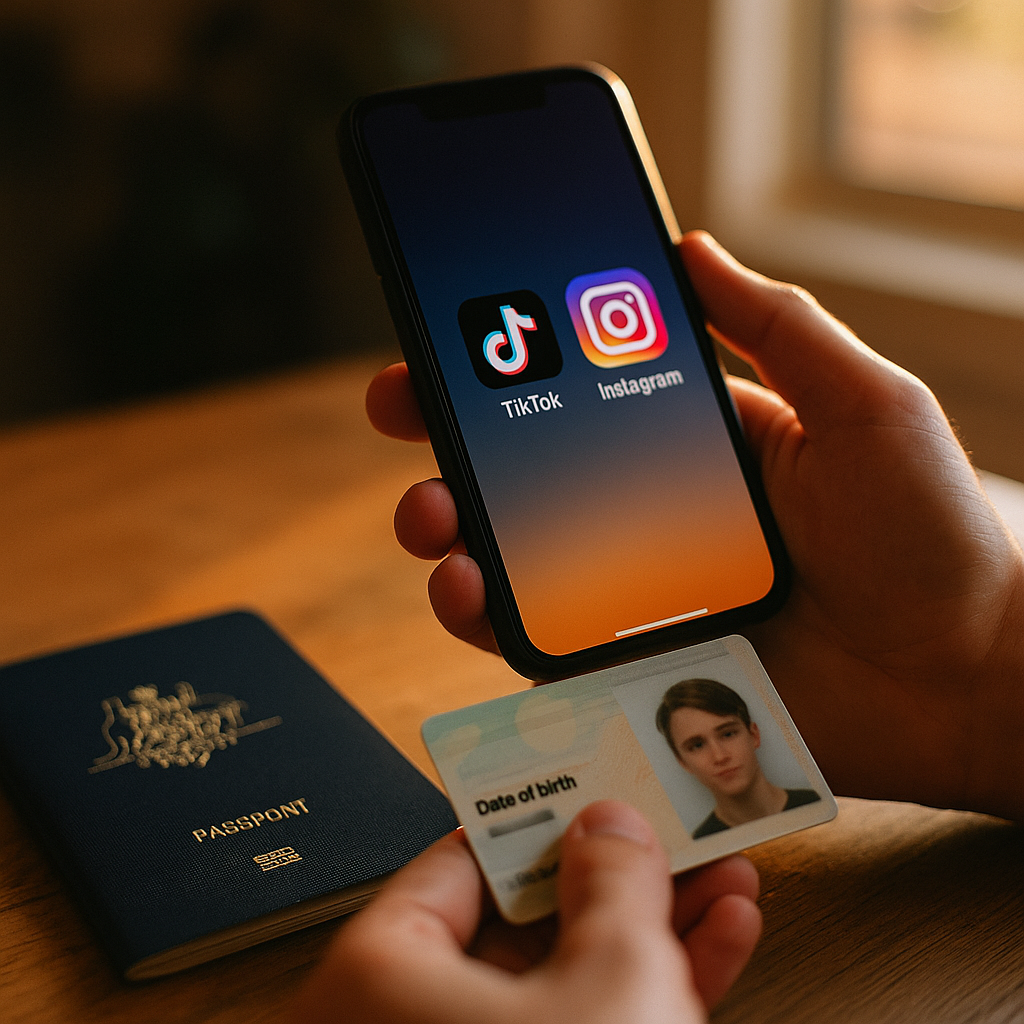
Australia just doubled the maximum penalties for systematic age-verification failures on social platforms. If your influencer campaigns are still running on pre-regulation campaign architecture and generic creator agreements, you are one compliance audit away from a very expensive problem. TikTok and Instagram age-verification compliance in Australia is no longer a platform-side issue — it is a brand-side liability.
What the Penalty Increase Actually Means for Brands
The Australian government’s decision to double maximum financial penalties for systematic platform failures under its online safety framework sends a clear signal: regulators are done waiting for voluntary action. The focus has historically been on platforms themselves, but the enforcement architecture is shifting. Brands and agencies that activate campaigns targeting or reaching underage audiences — whether intentionally or through audience bleed — are increasingly exposed.
The revised penalties apply to systemic failures, which regulators define broadly. A single brand campaign using demographic targeting that consistently reaches under-16 audiences on TikTok or Instagram, without contractual safeguards, can contribute to the evidence base regulators use to establish systemic failure. You may not be the direct defendant, but you could be the evidence.
Brands that treat age-verification compliance as purely a platform obligation are misreading the regulatory direction. Australian authorities are building enforcement cases from the bottom up — creator content, targeting settings, and audience data are all in scope.
Where Campaign Architecture Breaks Down
Most influencer campaign setups were designed for performance, not compliance. The standard workflow — brief the creator, agree on deliverables, approve content, track conversions — has almost no compliance layer built in. That is the gap regulators will exploit.
Three structural weaknesses appear consistently across brand programs:
- Audience targeting without age-floor enforcement: Brands using TikTok’s interest-based or community targeting often rely on the platform’s default age settings rather than enforcing explicit 18+ or 16+ audience restrictions at the campaign level. If you are running community-based TikTok targeting, check whether your age gates are actually active or just assumed.
- Creator briefs with no audience accountability: Standard briefs specify deliverables, hashtags, and posting windows. Almost none specify the creator’s obligation to disclose their actual audience demographics before activation or to flag audience composition changes during a campaign.
- Attribution setups that ignore demographic data: When brands configure attribution windows in creator contracts, they are usually focused on purchase events and conversion lag. Audience age composition rarely appears in the attribution or reporting framework.
Each of these gaps is fixable. None of them require abandoning your TikTok or Instagram strategy. But they do require deliberate restructuring before your next campaign activates.
Updating Creator Agreement Language: What to Add Now
This is where legal teams and marketing teams tend to talk past each other. Legal wants broad indemnification language. Marketing wants the deal closed before the campaign window closes. The result is usually a contract that protects no one specifically.
For Australian market campaigns, creator agreements should now include four explicit provisions:
- Audience demographic warranty: The creator warrants that their audience, as verified through platform analytics, meets the brand’s minimum age threshold at the time of signing and at the time of posting. Require a screenshot of Instagram Insights or TikTok Creator Analytics (minimum 30-day window) as an exhibit to the contract.
- Notification obligation: If the creator’s audience composition shifts materially (a reasonable standard is more than 15% change in the under-18 cohort), they are obligated to notify the brand within 48 hours and pause any scheduled content pending review.
- Content restriction clause: For regulated product categories (alcohol, gambling, financial services, certain food categories), the contract must explicitly prohibit the creator from posting outside of platform-native age-gating tools, even if the brand approves the content separately.
- Audit cooperation requirement: In the event of a regulatory inquiry, the creator agrees to provide campaign analytics data to the brand within a specified timeframe (5 business days is the emerging standard). This protects the brand’s ability to respond to the regulator’s disclosure requests in a timely and accurate way.
These provisions are not hypothetical. Brands working with Australian legal counsel are already inserting versions of these clauses into standard creator MSAs and campaign-specific SOWs.
Platform Tools You Should Already Be Using
Both TikTok and Instagram provide brand-side controls that most campaign managers underuse. On TikTok, the Ads Manager allows you to set minimum audience age at the ad group level, which overrides interest and behavioral targeting for underage users. If you are running shoppable TikTok campaigns that combine paid amplification with organic creator content, the paid layer’s age restrictions do not automatically apply to the organic posts. That is a gap you need to close manually through campaign architecture.
On Instagram, the situation is similar. Branded content tools allow brands to control boosting parameters, but the creator’s organic post is not subject to those controls unless you specifically structure the deal as a Paid Partnership with restricted boosting only. The Meta Business tools for creator collaborations have improved, but they require intentional configuration, not just activation.
For brands managing creator rosters at scale, platforms like Grin, Aspire, and Creator.co now offer compliance-flag features that surface creators whose audience demographics fall outside specified parameters. These tools are not perfect, but they create an auditable record showing that due diligence was performed, which matters in any regulatory inquiry.
The Agency Accountability Question
If you work through a media agency or influencer marketing agency, the compliance question becomes more complex. Who holds the creator agreement? Who is responsible for verifying audience demographics? Who owns the documentation trail if a regulator asks for it?
The default answer — that the agency handles it — is not sufficient anymore. Brands need to review their agency agreements and confirm that compliance obligations are explicitly assigned, not assumed. This is especially relevant for brands running multi-platform strategies across TikTok and Instagram simultaneously, where audience overlap and different regulatory treatments of each platform create compounding exposure.
Agencies themselves are updating their own operating procedures. If your agency cannot provide a written compliance protocol for Australian campaigns, that is a meaningful gap to address before your next brief goes out.
The brand that can demonstrate a documented, repeatable compliance process — from creator selection through post-campaign reporting — will be in a structurally better position than one relying on platform defaults and contract boilerplate.
Rethinking Creator Selection Criteria
Compliance risk is not evenly distributed across creator types. Creators with large followings in the 13-17 demographic bracket carry materially higher risk for regulated-product campaigns, regardless of the creator’s own age. This means audience composition should become a formal selection criterion, not an afterthought.
The shift toward interest-graph-based creator selection actually helps here. When you select creators based on content affinity and audience interest clusters rather than raw follower counts, you tend to find creators whose audiences skew older and are more intentionally assembled around specific topics. That is both a performance advantage and a compliance advantage.
For brands in categories like alcohol, financial services, or high-sugar foods, the ACCC’s advertising guidelines and the Online Safety Act enforcement framework should be reviewed together, not in isolation. The interaction between advertising standards and online safety obligations creates obligations that neither framework fully addresses on its own.
Brands operating in the Australian market should also be watching the eSafety Commissioner’s guidance as it evolves, particularly on age assurance technology requirements, which are moving faster than most marketing teams realise.
What Happens If You Get This Wrong
The worst-case scenario is not just a fine. It is the evidentiary trail. Regulators building a systemic failure case against a platform will gather examples of brand campaigns that reached underage audiences through that platform. Your campaign could be exhibit A. Even if your brand is not the primary target, being named in a systemic failure case creates reputational exposure that no crisis comms budget fully absorbs.
The smarter framing is risk-adjusted ROI. A campaign that reaches a slightly smaller, age-verified audience is worth more, not less, than one with broad reach that includes regulatory exposure. Performance marketers who understand TikTok’s community-driven strategy already know that precise audience alignment outperforms raw scale. Compliance and performance are pointing in the same direction.
For detailed guidance on how Australian digital advertising law interacts with platform terms, the OAIC’s privacy frameworks are a useful starting reference, particularly as age-verification mechanisms increasingly involve data collection.
Start with your current creator MSA template. Pull the last three campaign agreements you executed for the Australian market and identify whether any of the four contractual provisions above are present. If none of them are, that is your immediate next step, not a future compliance project.
Frequently Asked Questions
Does Australia’s doubled penalty regime apply directly to brands, or only to platforms like TikTok and Instagram?
The doubled maximum penalties apply primarily to platforms for systemic failures under Australia’s online safety legislation. However, brands are not insulated. If brand campaigns contribute to documented patterns of underage audience exposure, brands can be cited as contributing evidence in systemic failure investigations, and they face separate exposure under advertising standards enforced by bodies like Ad Standards Australia. Brand-side liability is indirect but real.
What specific audience age threshold should brands use for Australian campaigns?
Australia’s Online Safety Act focuses on protections for under-16s, but many regulated product categories (alcohol, gambling, financial services) require 18+ audience enforcement. Brands should apply the more restrictive threshold relevant to their product category. For unregulated products, the minimum recommended practice is to exclude audiences under 16 from targeted campaigns and document that exclusion in your campaign settings.
How do I verify a creator’s audience age composition before signing an agreement?
Require creators to provide a platform analytics export covering at least 30 days prior to campaign start. On TikTok, this is available through TikTok Creator Center analytics. On Instagram, it appears in Instagram Insights under the Audience tab. Make this export a contractual exhibit, not an informal attachment. Third-party tools like Modash, HypeAuditor, or Grin can provide supplementary audience demographic data and create an independent verification record.
Does using TikTok’s paid amplification age restrictions protect the brand if the creator’s organic post reaches underage users?
No. Paid campaign age restrictions apply only to the paid distribution layer. The creator’s organic post operates under the platform’s default settings unless the creator has independently applied age restrictions to their account or content. Brands must contractually require creators to apply account-level or content-level age restrictions on organic posts tied to regulated-product campaigns, separate from any paid amplification controls.
Should brands pause Australian TikTok and Instagram campaigns while updating compliance frameworks?
Pausing is not necessary for most brands, but it depends on product category and current contract status. Brands in regulated categories (alcohol, gambling, financial services) running campaigns with creators whose audience age composition is unverified should prioritise rapid contract and targeting remediation. Unregulated consumer brands have more time but should implement the four contractual provisions into their next renewal cycle without delay.
Top Influencer Marketing Agencies
The leading agencies shaping influencer marketing in 2026
Agencies ranked by campaign performance, client diversity, platform expertise, proven ROI, industry recognition, and client satisfaction. Assessed through verified case studies, reviews, and industry consultations.
Moburst

-
2

The Shelf
Boutique Beauty & Lifestyle Influencer AgencyA data-driven boutique agency specializing exclusively in beauty, wellness, and lifestyle influencer campaigns on Instagram and TikTok. Best for brands already focused on the beauty/personal care space that need curated, aesthetic-driven content.Clients: Pepsi, The Honest Company, Hims, Elf Cosmetics, Pure LeafVisit The Shelf → -
3

Audiencly
Niche Gaming & Esports Influencer AgencyA specialized agency focused exclusively on gaming and esports creators on YouTube, Twitch, and TikTok. Ideal if your campaign is 100% gaming-focused — from game launches to hardware and esports events.Clients: Epic Games, NordVPN, Ubisoft, Wargaming, Tencent GamesVisit Audiencly → -
4

Viral Nation
Global Influencer Marketing & Talent AgencyA dual talent management and marketing agency with proprietary brand safety tools and a global creator network spanning nano-influencers to celebrities across all major platforms.Clients: Meta, Activision Blizzard, Energizer, Aston Martin, WalmartVisit Viral Nation → -
5

The Influencer Marketing Factory
TikTok, Instagram & YouTube CampaignsA full-service agency with strong TikTok expertise, offering end-to-end campaign management from influencer discovery through performance reporting with a focus on platform-native content.Clients: Google, Snapchat, Universal Music, Bumble, YelpVisit TIMF → -
6

NeoReach
Enterprise Analytics & Influencer CampaignsAn enterprise-focused agency combining managed campaigns with a powerful self-service data platform for influencer search, audience analytics, and attribution modeling.Clients: Amazon, Airbnb, Netflix, Honda, The New York TimesVisit NeoReach → -
7

Ubiquitous
Creator-First Marketing PlatformA tech-driven platform combining self-service tools with managed campaign options, emphasizing speed and scalability for brands managing multiple influencer relationships.Clients: Lyft, Disney, Target, American Eagle, NetflixVisit Ubiquitous → -
8

Obviously
Scalable Enterprise Influencer CampaignsA tech-enabled agency built for high-volume campaigns, coordinating hundreds of creators simultaneously with end-to-end logistics, content rights management, and product seeding.Clients: Google, Ulta Beauty, Converse, AmazonVisit Obviously →