


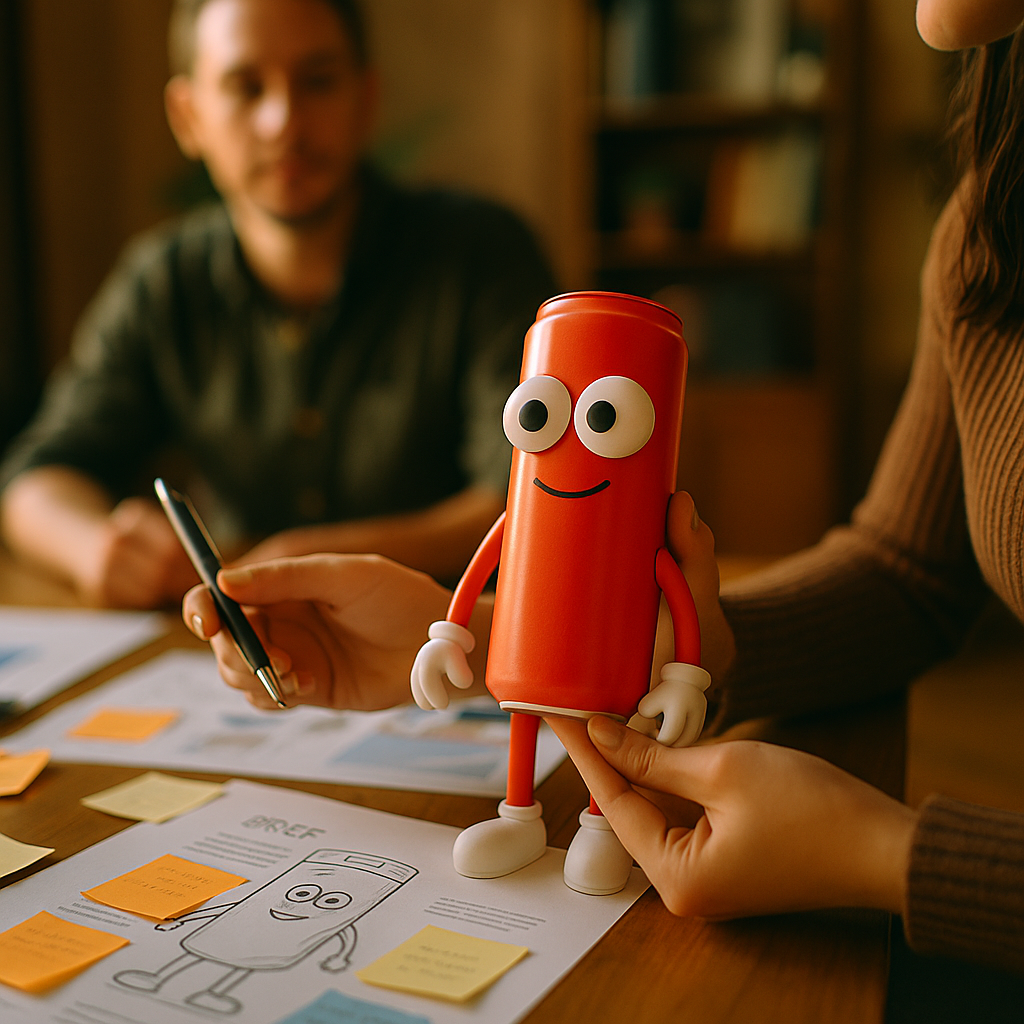
A ketchup bottle with a Reddit account. A protein shaker that “narrates” a gym bro’s failures. A humidifier that fogs up the camera like it’s got feelings. Welcome to the product-as-character format, where the item itself — not the creator — carries the plot. Brands running this format on TikTok are seeing completion rates climb because viewers stay to see what the “character” does next, not just what it does functionally.
This isn’t mascot marketing repackaged. It’s something stranger and more effective: creators treating inanimate objects as co-stars with motives, moods, and comic timing. And it’s quietly becoming one of the highest-retention formats in creator content.
What Is Product-as-Character Content, Exactly?
The format assigns personality to a product. Sometimes literally — a stop-motion water bottle with googly eyes narrating its day. Sometimes implied — a creator talking to a skincare serum like it’s a stubborn houseguest that won’t leave. Either way, the product stops being a prop held up to camera and starts driving the narrative.
Compare this to a standard demo video, where the creator is the star and the product is supporting cast. Here, the roles flip. The creator becomes the straight man; the product gets the jokes, the drama, the redemption arc.
When the product becomes the character, the brand’s core attributes get absorbed into a story instead of a specs list — and stories are what people rewatch, share, and remember.
It overlaps with formats covered in our ASMR product demo guide and shares DNA with narrative-engine briefs for microdrama brands, but it’s distinct enough to deserve its own playbook.
Why It’s Working Right Now
Attention is scarce and skepticism is high. Audiences have been pitched to so many times that a straightforward “here’s why you should buy this” clip triggers an instant scroll-past reflex. Anthropomorphizing the product sidesteps that defense mechanism. It’s disarming. It’s a little absurd. And absurdity, used well, buys you three extra seconds of attention — which on TikTok or Reels is basically an eternity.
There’s also a measurable commercial logic here. eMarketer has tracked rising fatigue with traditional testimonial-style UGC, while platforms increasingly reward format novelty in their algorithms. Sprout Social’s engagement research consistently shows humor and narrative-driven content outperforming direct-response creative on watch time — see Sprout Social’s platform benchmarks for category-level comparisons. Product-as-character content sits right at that intersection: novel format, built-in humor, narrative hook.
The Brand Logic: Why This Isn’t Just a Gimmick
From a brand strategist’s chair, the real question is never “is this cute?” It’s “does this move metrics?” Three reasons this format earns its budget line:
- It survives the mute button. A lot of product-as-character content works visually first, dialogue second. That matters when a huge share of mobile video is watched without sound.
- It’s inherently rewatchable. Comedic timing and sight gags reward a second viewing in a way that a straightforward tutorial doesn’t. Rewatches boost average view duration, which platforms weight heavily in distribution.
- It de-risks the claim. When the product is the “character” making outlandish statements, the brand gets a layer of comedic distance from literal product claims — useful, but not a compliance loophole, which we’ll get to.
It also plays well with product categories that are otherwise hard to make interesting. Cleaning supplies, financial apps, B2B SaaS tools, insurance — anything with a low natural “cool factor” benefits from a character-driven wrapper. Compare that to categories like beauty or fashion, where haul and tutorial formats already carry inherent visual interest.
Briefing the Format Without Killing the Charm
Here’s where most brand teams go wrong: they try to script the personality instead of setting boundaries for it. A product-as-character brief should never hand the creator dialogue. It should hand them a personality profile and let the creator’s instincts do the writing.
A workable brief structure looks like this:
- Personality anchor: Is the product anxious, smug, overconfident, deadpan? Pick one adjective cluster and stick to it across every video in the series.
- Non-negotiable claims: List the two or three functional facts that must appear somewhere in the video, even in joke form. This is where your legal and marketing teams align before the creator ever touches a script.
- Prohibited exaggerations: Spell out what the “character” cannot claim, even as a bit. If the product is a supplement, it cannot joke about curing anything. If it’s a financial app, it cannot joke about guaranteed returns.
- Tone guardrails, not scene direction: Tell creators what NOT to do rather than scripting every beat. Overdirected personality content reads as fake instantly.
This mirrors the brief philosophy we’ve outlined in functional claims compliance guidance — give creators the facts that must survive, then let them build the fiction around it.
A Quick Compliance Reality Check
Because the product is technically “speaking,” some brand teams assume disclosure rules get fuzzy. They don’t. The FTC’s endorsement guidance still applies regardless of who — or what — is delivering the message. If a creator was paid or given free product, the disclosure requirement doesn’t disappear because a ketchup bottle is doing the talking. Brief disclosure placement explicitly, and don’t let creative novelty become an excuse to skip #ad tags.
This is also where UK-based campaigns need to check in with ICO guidance if any data capture or targeted advertising is layered onto the content, particularly for interactive or app-based product-character executions.
Formats That Pair Well With This Approach
Product-as-character rarely works as a single standalone post. It performs best as a series, because personality needs repetition to land. A few pairing options:
- Serialized character arcs across a week or month, similar to the structure in TikTok series briefs built around cliffhangers. Give the “character” a running storyline — a rivalry, a redemption, a running joke about being underestimated.
- Reaction-style pairings, where a human creator reacts to the product’s antics, borrowing structure from split-screen reaction briefs.
- Myth-busting installments, where the “character” defends itself against misconceptions — a natural extension of the approach in our myth-busting video format coverage.
Combining formats keeps a single character concept from going stale after three or four posts, which is roughly when audiences start noticing the seams.
Where This Format Breaks Down
Not every product deserves a personality. Luxury categories especially struggle here — anthropomorphizing a $3,000 handbag risks reading as parody, which is fine if you’re doing intentional self-aware comedy, disastrous if you’re not. Heritage and legacy brands need to tread carefully too; the tone can clash with decades of brand equity built on gravitas rather than gags. If you’re working in that space, our heritage brand activation guide covers formats better suited to that positioning.
The other failure mode: over-produced “character” content that feels like a Pixar pitch deck instead of native creator content. If your product-as-character video needs a full animation studio and six weeks of post-production, you’ve left the creator economy and entered ad-agency territory. Budget and timeline expectations should reflect that distinction from the start — see our format taxonomy and budget guide for how this format should be costed against others.
Measuring It Properly
Standard engagement metrics apply, but weight these three higher than usual:
- Rewatch rate / average view duration — the clearest signal the “character” is landing.
- Comment sentiment specifically about the product’s “personality” — are people quoting the product’s lines back, giving it a nickname, tagging friends with in-jokes?
- Series retention — if you’re running this as a serialized concept, track drop-off between installment one and installment three. Sharp drop-off means the personality isn’t sticky enough to justify a continued format.
For campaigns layering commerce on top, tie these engagement signals back to conversion lift using the same attribution windows you’d apply to any other creator format — HubSpot’s content marketing benchmarks are a useful baseline for setting realistic expectations by category, available at HubSpot’s marketing resources.
Next step: pick one low-stakes SKU, write a one-line personality brief instead of a script, and test a three-part series before committing full-quarter budget to the format. If rewatch rate and comment sentiment climb by the third installment, you’ve found your product’s voice — scale from there.
FAQs
What makes product-as-character content different from a standard product demo?
In a standard demo, the creator is the star and the product is a supporting prop. In product-as-character content, the product itself drives the narrative, personality, and comedic or emotional arc, with the creator often playing a supporting role.
Does anthropomorphizing a product create FTC compliance risks?
The format itself doesn’t change disclosure obligations. If a creator is compensated or gifted product, standard endorsement disclosure rules from the FTC still apply, regardless of whether the product is “speaking” in character.
Which product categories work best for this format?
Categories that are functionally unexciting on their own — cleaning products, insurance, SaaS tools, household goods — tend to benefit most, since personality gives them a hook that raw features can’t provide.
How long should a product-as-character series run before judging performance?
Three to five installments is usually enough to see whether rewatch rate, comment sentiment, and retention are trending upward. Sharp audience drop-off after the first or second video signals the concept isn’t sticky enough to continue.
Can this format work for luxury or heritage brands?
It’s higher-risk in those categories. Luxury and heritage brands generally carry equity built on prestige and gravitas, which can clash with a comedic personality-driven format unless executed with deliberate self-awareness.
FAQs
What makes product-as-character content different from a standard product demo?
In a standard demo, the creator is the star and the product is a supporting prop. In product-as-character content, the product itself drives the narrative, personality, and comedic or emotional arc, with the creator often playing a supporting role.
Does anthropomorphizing a product create FTC compliance risks?
The format itself doesn’t change disclosure obligations. If a creator is compensated or gifted product, standard endorsement disclosure rules from the FTC still apply, regardless of whether the product is “speaking” in character.
Which product categories work best for this format?
Categories that are functionally unexciting on their own — cleaning products, insurance, SaaS tools, household goods — tend to benefit most, since personality gives them a hook that raw features can’t provide.
How long should a product-as-character series run before judging performance?
Three to five installments is usually enough to see whether rewatch rate, comment sentiment, and retention are trending upward. Sharp audience drop-off after the first or second video signals the concept isn’t sticky enough to continue.
Can this format work for luxury or heritage brands?
It’s higher-risk in those categories. Luxury and heritage brands generally carry equity built on prestige and gravitas, which can clash with a comedic personality-driven format unless executed with deliberate self-awareness.
Top Influencer Marketing Agencies
The leading agencies shaping influencer marketing in 2026
Agencies ranked by campaign performance, client diversity, platform expertise, proven ROI, industry recognition, and client satisfaction. Assessed through verified case studies, reviews, and industry consultations.
Moburst

-
2

The Shelf
Boutique Beauty & Lifestyle Influencer AgencyA data-driven boutique agency specializing exclusively in beauty, wellness, and lifestyle influencer campaigns on Instagram and TikTok. Best for brands already focused on the beauty/personal care space that need curated, aesthetic-driven content.Clients: Pepsi, The Honest Company, Hims, Elf Cosmetics, Pure LeafVisit The Shelf → -
3

Audiencly
Niche Gaming & Esports Influencer AgencyA specialized agency focused exclusively on gaming and esports creators on YouTube, Twitch, and TikTok. Ideal if your campaign is 100% gaming-focused — from game launches to hardware and esports events.Clients: Epic Games, NordVPN, Ubisoft, Wargaming, Tencent GamesVisit Audiencly → -
4

Viral Nation
Global Influencer Marketing & Talent AgencyA dual talent management and marketing agency with proprietary brand safety tools and a global creator network spanning nano-influencers to celebrities across all major platforms.Clients: Meta, Activision Blizzard, Energizer, Aston Martin, WalmartVisit Viral Nation → -
5

The Influencer Marketing Factory
TikTok, Instagram & YouTube CampaignsA full-service agency with strong TikTok expertise, offering end-to-end campaign management from influencer discovery through performance reporting with a focus on platform-native content.Clients: Google, Snapchat, Universal Music, Bumble, YelpVisit TIMF → -
6

NeoReach
Enterprise Analytics & Influencer CampaignsAn enterprise-focused agency combining managed campaigns with a powerful self-service data platform for influencer search, audience analytics, and attribution modeling.Clients: Amazon, Airbnb, Netflix, Honda, The New York TimesVisit NeoReach → -
7

Ubiquitous
Creator-First Marketing PlatformA tech-driven platform combining self-service tools with managed campaign options, emphasizing speed and scalability for brands managing multiple influencer relationships.Clients: Lyft, Disney, Target, American Eagle, NetflixVisit Ubiquitous → -
8

Obviously
Scalable Enterprise Influencer CampaignsA tech-enabled agency built for high-volume campaigns, coordinating hundreds of creators simultaneously with end-to-end logistics, content rights management, and product seeding.Clients: Google, Ulta Beauty, Converse, AmazonVisit Obviously →