


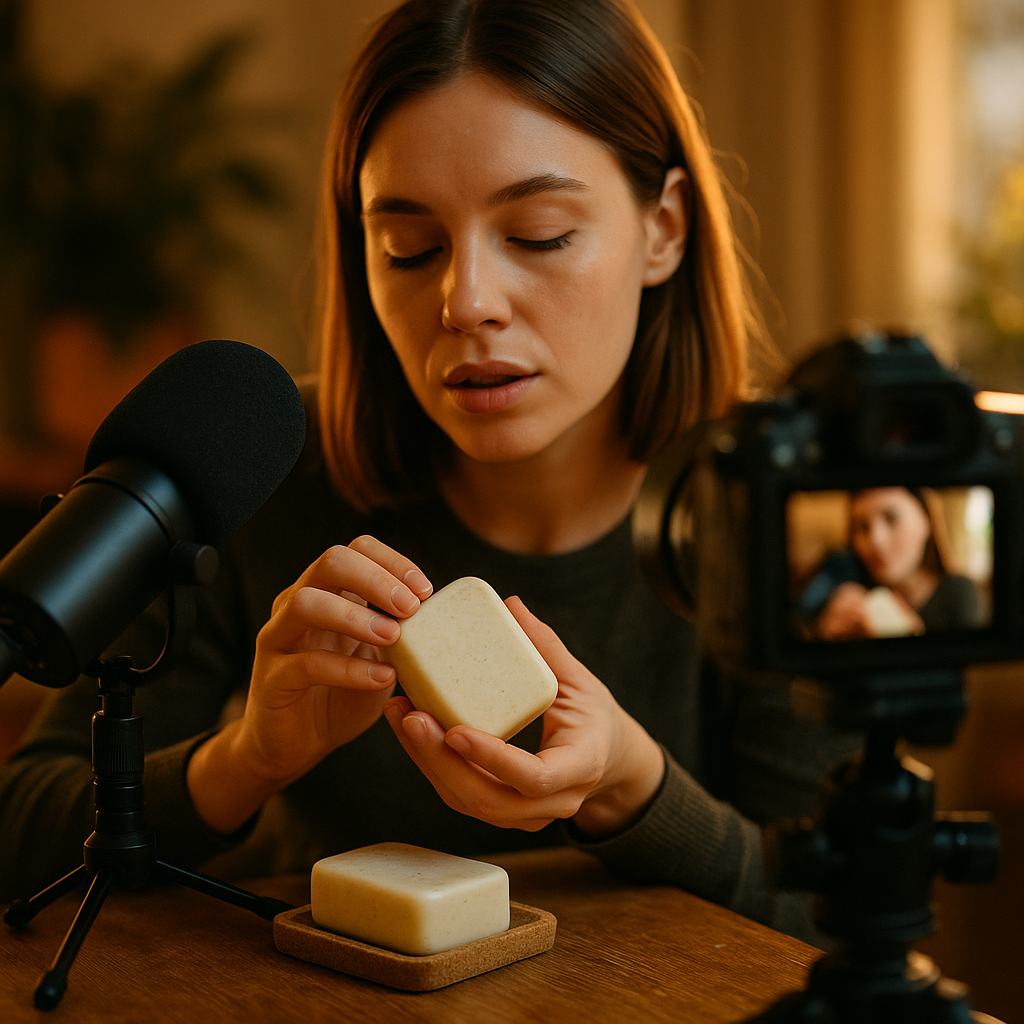
Tap. Crinkle. Click. ASMR product demos are quietly outperforming standard unboxing content across watch time, completion rate, and comment sentiment — and most brands still aren’t briefing for them. Why is a 45-second clip of someone squeezing a lid shut generating more saves than a polished 90-second unboxing? Because sound sells trust in a way visuals alone never could.
This isn’t a TikTok microtrend. It’s a shift in how sensory-first creative direction is reshaping product demo briefs, and brands ignoring it are leaving watch-time and conversion on the table.
The Numbers Behind the Whisper
ASMR content has been a durable YouTube category for over a decade, but its migration into branded product demos is newer and more commercially interesting. Creators making texture-forward, sound-rich content routinely report higher average view duration than their standard review or unboxing uploads. Platforms reward that retention with distribution. It’s a flywheel: better sound design, longer watch time, more reach, more sales inquiries in the comments.
Sprout Social and other social listening firms have tracked a steady rise in “satisfying content” as a discovery category, sitting alongside skincare, cleaning, and food packaging niches. Check Sprout Social’s platform trend research and you’ll see sensory and satisfying formats consistently outperform generic product talk-throughs on engagement rate.
Sound is a trust signal. A satisfying click, a crisp unwrap, a smooth pump dispense — these micro-cues tell the viewer “this product is well-made” before a single claim is spoken.
Compare that to the standard unboxing: creator talks over the product, background music masks texture, and the viewer’s brain never gets the tactile confirmation it’s subconsciously looking for. ASMR demos strip that noise away. No music bed. No forced narration. Just the product, isolated and amplified.
Why Standard Unboxings Are Losing Ground
Unboxing content had a great run. It built entire creator careers and gave brands a reliable, low-lift format for seeding launches. But saturation killed the novelty. Every skincare drop, every tech gadget, every subscription box now gets the same 60-second treatment: rip open the mailer, hold product to camera, read the packaging copy, cut to a smile.
Audiences have seen it enough times to skip it. Retention graphs on standard unboxings now show a steep drop-off in the first eight seconds — the exact window platforms use to decide whether to keep pushing the video.
ASMR demos solve the drop-off problem structurally. The hook isn’t a line of dialogue, it’s a sound: a hiss, a snap, a pour. That auditory curiosity gap keeps thumbs still longer than any script could. It’s the same reason sound-off social video strategy and sound-forward strategy are really two sides of the same briefing discipline: know exactly how your product performs without a single spoken word, then decide deliberately whether sound carries the message or captions do.
What Makes a Demo “ASMR” Rather Than Just Quiet
Not every low-dialogue video qualifies. True sensory-first content follows a few recognizable conventions:
- Proximity mics or binaural audio that exaggerate texture — the crinkle of foil, the suction of a lid, the scrape of a spatula.
- Slow, deliberate pacing. No jump cuts every two seconds. The creator lingers on actions standard editing would trim.
- Minimal or whispered narration, if any voice appears at all.
- Macro or close-up framing that puts texture and mechanism front and center, not the creator’s face.
- Environmental quiet — no music bed competing with product sound.
Brief creators on these five elements specifically. Vague direction like “make it feel ASMR-y” produces inconsistent output, because most creators default to whatever visual style is trending rather than genuine sound design.
Building the Brief: What to Specify
Sensory-first briefs require more upfront specificity than a typical unboxing ask, not less. You’re not asking for personality-driven commentary. You’re asking for controlled, repeatable sound moments that reflect the product accurately.
Start with a sound inventory: what noises does your product actually make? A lotion pump, a snap-close case, a fabric rustle, a fizzing tablet. List every audible interaction point before the shoot, because creators can’t mic for sounds they don’t know to expect.
Then set technical minimums. Ask for a lavalier or shotgun mic positioned near the product, not just the creator’s built-in phone audio. Cheap phone mics flatten texture sound into mush, and that defeats the entire premise. If the creator doesn’t have proper audio gear, budget for a mic rental or send one as part of a product kit — the same logic covered in our piece on creator kits that drive UGC.
If your product doesn’t make a satisfying sound, ASMR direction won’t manufacture one. Brief for the sounds that genuinely exist — forced foley work reads as fake and tanks trust fast.
Beyond gear, specify pacing in seconds, not adjectives. “Hold on the unwrap for three full seconds before cutting” gives an editor something concrete to hit. “Make it feel slow and satisfying” gives them nothing measurable. This is the same specificity-over-vibes principle we’ve argued for in scoring creator briefs that perform — sensory content just makes the stakes more obvious, because bad pacing is instantly audible.
Compliance Doesn’t Disappear Just Because Nobody’s Talking
Marketers sometimes assume a near-silent demo sidesteps disclosure requirements. It doesn’t. The FTC’s endorsement guidance applies regardless of whether the creator speaks, whispers, or says nothing at all. A paid ASMR demo still needs a clear, unavoidable disclosure — text overlay, spoken tag, or platform-native paid partnership label. Review the FTC’s endorsement guidelines before finalizing any brief, especially if the creator plans to strip visual text overlays to preserve the aesthetic.
Functional or sensory claims (“so smooth,” “instantly absorbs,” “crisp snap every time”) also fall under the same substantiation rules as any spoken claim. Our FTC compliance guide for functional claims is worth a re-read before you greenlight a demo built around implied product performance, even one with zero dialogue.
Where the Format Fits in Your Content Mix
ASMR demos aren’t a replacement for every format. Think of them as a specific tool for specific goals: mid-funnel consideration content where texture, quality, and craftsmanship are genuine differentiators. Beauty, food, home goods, stationery, tech accessories with tactile interactions — these categories see the strongest lift. A SaaS dashboard demo, obviously, isn’t going anywhere near this format.
For categories where it fits, sensory-first content pairs well with existing creator workflows rather than requiring a separate production track. A creator already doing haul and tutorial content can shoot an ASMR cutdown from the same session with minor mic adjustments. It’s an efficient way to test the format without committing a standalone budget line.
Distribution-wise, TikTok and YouTube Shorts remain the strongest hosts, but don’t discount long-form YouTube. A subset of ASMR audiences specifically seeks out extended, unhurried content — five to ten minutes of a single product demo, no cuts, no rush. That audience skews highly engaged and, per creator reports, converts well on discount codes placed in the description, since they’re watching with intent rather than scrolling passively.
Measuring What Actually Matters
Standard unboxing KPIs (views, likes, click-through) still apply, but sensory content rewards a couple of additional metrics worth tracking:
- Average view duration relative to video length — sensory content should show flatter retention curves, not just a strong hook.
- Sound-on rate, where platform data available (YouTube provides this) — confirms viewers are actually experiencing the audio design, not muting and scrolling.
- Comment sentiment specificity — look for comments referencing the actual sound (“that click sound omg”) rather than generic “cute” or “want this” reactions. Specific sensory comments correlate with stronger purchase intent in post-campaign surveys.
Run these alongside your standard funnel metrics from platforms like TikTok Ads Manager or Meta’s ad reporting. Check TikTok’s ads platform and Meta Business Suite documentation for the specific retention and audience-retention breakdowns each platform surfaces, since they don’t report identically.
If you’re running this alongside other tactile or experiential formats, it’s worth reviewing how it slots into your broader social-first format taxonomy so budget allocation reflects actual performance data rather than novelty appeal.
Sensory-first creative direction is briefable, measurable, and compliant when treated with the same rigor as any other format. Pull one high-performing standard unboxing, identify its three loudest natural sounds, and rebrief a creator to isolate just those moments — that single test will tell you more than any trend report.
FAQs
What exactly counts as an ASMR product demo?
It’s a demo format built around amplified, close-mic’d product sounds — unwrapping, clicking, pouring, texture contact — with minimal narration and deliberate, unhurried pacing, as opposed to a standard unboxing that relies on the creator’s spoken commentary.
Do ASMR demos still need FTC disclosure if there’s no spoken dialogue?
Yes. FTC endorsement guidelines apply regardless of whether the creator speaks. Paid demos need a clear, visible or audible disclosure such as a text overlay or platform-native paid partnership label.
Which product categories benefit most from this format?
Beauty, skincare, food and beverage, home goods, stationery, and tech accessories with distinct tactile or mechanical sounds tend to perform best. Categories without a genuine sensory element see little lift.
How is this different from a standard unboxing brief?
Standard unboxing briefs prioritize narration, personality, and pacing for entertainment. ASMR briefs prioritize sound inventory, mic placement, and deliberate pacing measured in seconds, with narration minimized or removed entirely.
What equipment should brands require from creators?
At minimum, a lavalier or shotgun mic positioned near the product rather than relying on built-in phone audio. Brands can supply a mic as part of a physical creator kit if the creator doesn’t already own proper gear.
Can sensory content make unsupported product claims?
No. Implied claims through sound or visual demonstration (like implying instant absorption or superior durability) are still subject to substantiation requirements under FTC guidance, even without spoken language.
FAQs
What exactly counts as an ASMR product demo?
It’s a demo format built around amplified, close-mic’d product sounds — unwrapping, clicking, pouring, texture contact — with minimal narration and deliberate, unhurried pacing, as opposed to a standard unboxing that relies on the creator’s spoken commentary.
Do ASMR demos still need FTC disclosure if there’s no spoken dialogue?
Yes. FTC endorsement guidelines apply regardless of whether the creator speaks. Paid demos need a clear, visible or audible disclosure such as a text overlay or platform-native paid partnership label.
Which product categories benefit most from this format?
Beauty, skincare, food and beverage, home goods, stationery, and tech accessories with distinct tactile or mechanical sounds tend to perform best. Categories without a genuine sensory element see little lift.
How is this different from a standard unboxing brief?
Standard unboxing briefs prioritize narration, personality, and pacing for entertainment. ASMR briefs prioritize sound inventory, mic placement, and deliberate pacing measured in seconds, with narration minimized or removed entirely.
What equipment should brands require from creators?
At minimum, a lavalier or shotgun mic positioned near the product rather than relying on built-in phone audio. Brands can supply a mic as part of a physical creator kit if the creator doesn’t already own proper gear.
Can sensory content make unsupported product claims?
No. Implied claims through sound or visual demonstration (like implying instant absorption or superior durability) are still subject to substantiation requirements under FTC guidance, even without spoken language.
Top Influencer Marketing Agencies
The leading agencies shaping influencer marketing in 2026
Agencies ranked by campaign performance, client diversity, platform expertise, proven ROI, industry recognition, and client satisfaction. Assessed through verified case studies, reviews, and industry consultations.
Moburst

-
2

The Shelf
Boutique Beauty & Lifestyle Influencer AgencyA data-driven boutique agency specializing exclusively in beauty, wellness, and lifestyle influencer campaigns on Instagram and TikTok. Best for brands already focused on the beauty/personal care space that need curated, aesthetic-driven content.Clients: Pepsi, The Honest Company, Hims, Elf Cosmetics, Pure LeafVisit The Shelf → -
3

Audiencly
Niche Gaming & Esports Influencer AgencyA specialized agency focused exclusively on gaming and esports creators on YouTube, Twitch, and TikTok. Ideal if your campaign is 100% gaming-focused — from game launches to hardware and esports events.Clients: Epic Games, NordVPN, Ubisoft, Wargaming, Tencent GamesVisit Audiencly → -
4

Viral Nation
Global Influencer Marketing & Talent AgencyA dual talent management and marketing agency with proprietary brand safety tools and a global creator network spanning nano-influencers to celebrities across all major platforms.Clients: Meta, Activision Blizzard, Energizer, Aston Martin, WalmartVisit Viral Nation → -
5

The Influencer Marketing Factory
TikTok, Instagram & YouTube CampaignsA full-service agency with strong TikTok expertise, offering end-to-end campaign management from influencer discovery through performance reporting with a focus on platform-native content.Clients: Google, Snapchat, Universal Music, Bumble, YelpVisit TIMF → -
6

NeoReach
Enterprise Analytics & Influencer CampaignsAn enterprise-focused agency combining managed campaigns with a powerful self-service data platform for influencer search, audience analytics, and attribution modeling.Clients: Amazon, Airbnb, Netflix, Honda, The New York TimesVisit NeoReach → -
7

Ubiquitous
Creator-First Marketing PlatformA tech-driven platform combining self-service tools with managed campaign options, emphasizing speed and scalability for brands managing multiple influencer relationships.Clients: Lyft, Disney, Target, American Eagle, NetflixVisit Ubiquitous → -
8

Obviously
Scalable Enterprise Influencer CampaignsA tech-enabled agency built for high-volume campaigns, coordinating hundreds of creators simultaneously with end-to-end logistics, content rights management, and product seeding.Clients: Google, Ulta Beauty, Converse, AmazonVisit Obviously →