


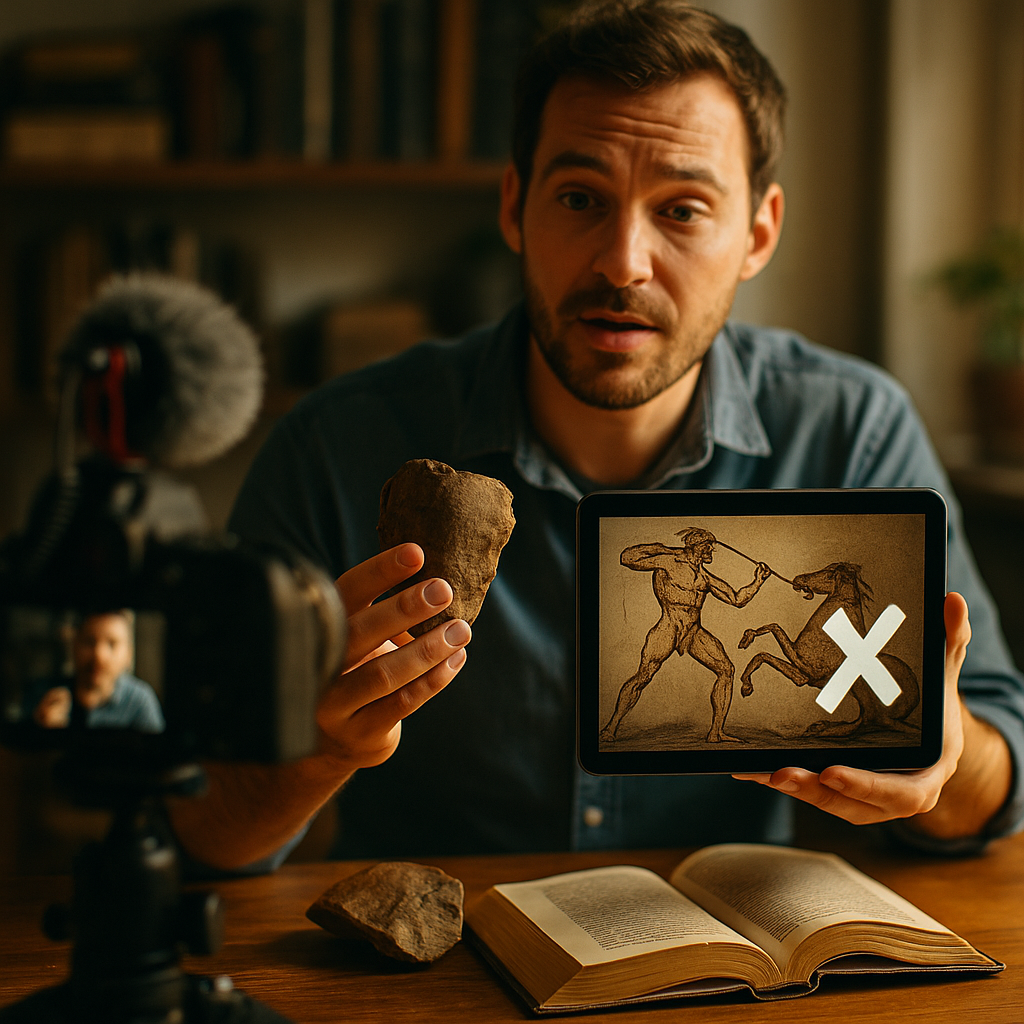
73% of consumers say they trust product information from creators more than from brands themselves, according to recent Sprout Social research on social trust. So why are most brands still buying paid placements that read like ad copy with a ring light? The myth-busting video format flips that script, using creators to debunk category misconceptions instead of just pitching features — and it’s becoming one of the sharpest tools for building category authority in a crowded feed.
This isn’t a new tactic dressed up in new language. It’s a format maturing fast, with its own briefing conventions, compliance guardrails, and measurement models. If your competitive set is still doing unboxings and haul videos, myth-busting content is where you get ahead of them.
What Category Authority Actually Means Here
Category authority isn’t brand awareness. It’s the difference between “people know your name” and “people trust your brand to tell them the truth about a whole category.” A skincare brand that only talks about its own SPF formula builds product awareness. A skincare brand that partners with a dermatologist-creator to debunk five sunscreen myths — including ones that don’t even mention the brand — builds authority over the entire conversation around sun protection.
That authority compounds. Once an audience trusts you as the source that corrects misinformation, they default to you when a new myth or trend surfaces. It’s earned media logic applied to owned creator relationships.
Myth-busting content works because it resolves tension the audience already feels — confusion, skepticism, or conflicting advice — before it ever asks them to consider a purchase.
Compare that to the traditional testimonial format, which asks viewers to trust a stranger’s opinion about a product they’ve never used. Myth-busting content asks viewers to trust a stranger’s correction of something they already suspected was wrong. That’s a much lower trust bar to clear, and it’s why completion rates on this format tend to outperform standard review content.
The Brief: What Separates Credible Myth-Busting From Sponsored Fluff
Most myth-busting videos fail for one reason: they’re not actually myth-busting. They’re product pitches wearing a disguise. The creator says “myth: sunscreen isn’t needed indoors” and then pivots straight into “that’s why you need [Brand] SPF 50,” and the audience smells the setup a mile away.
A credible brief needs three non-negotiables:
- The myth has to be real. Pull from actual search queries, Reddit threads, or customer service tickets. Fabricated myths get called out in the comments within hours.
- The correction has to stand alone. If the fact-check only makes sense with the product attached, it’s not a myth-bust, it’s an ad. Brief creators to explain the “why” using science, data, or expert sourcing — not brand claims.
- The brand mention comes last, not first. Structure the script so the product appears as one possible solution among the ones the audience already knows, not the entire point of the video.
This is the same discipline that underpins the original myth-busting video format playbook — the brief has to protect the creator’s credibility as fiercely as it protects the brand’s message.
Where Creators Should Get Their “Myths” From
Don’t hand creators a list of myths written by your marketing team. That’s the fastest way to produce content that feels manufactured. Instead, source myths from:
- Customer support tickets and FAQ pages (real confusion, not hypothetical)
- Comment sections on competitor content
- Search Console data showing “is it true that…” style queries
- Reddit and TikTok comment threads where your category gets discussed unprompted
Creators with category expertise — nurses, financial advisors, mechanics, estheticians — are far more effective here than lifestyle creators, because their correction carries built-in authority. Audiences don’t need to be told to trust them; the credential does the work.
Format Mechanics: Pacing, Structure, Proof
The strongest myth-busting videos follow a rhythm that’s closer to a mini-documentary than a typical branded post: state the myth, pause, deliver the correction, show proof, then (only then) connect it to a solution. Rushing the proof step is the most common mistake. Viewers need to see the “why,” not just hear the creator assert it.
Proof can take several forms — a cited study, a demonstration, a side-by-side comparison, or an on-screen graphic pulling from a credible source like a Statista data point or an FTC consumer guidance page. The proof step is also where compliance teams should focus review, since unsubstantiated claims here create real legal exposure.
Runtime matters too. Data from eMarketer on short-form completion rates suggests myth-busting content performs best between 45 and 90 seconds on TikTok and Reels — long enough to build the tension-resolution arc, short enough to avoid drop-off before the payoff.
Compliance Isn’t Optional — It’s the Whole Point
Here’s the irony: a format built on correcting misinformation is especially vulnerable to compliance failures if brands get sloppy with disclosure or substantiation. The FTC’s endorsement guidance applies fully here. If a creator is paid to bust a myth and mention your product, that’s a material connection requiring clear disclosure, no matter how educational the framing feels.
There’s also a subtler risk: overcorrection. A creator eager to sound authoritative might overstate a “fact” that isn’t fully substantiated, especially around health, finance, or beauty claims. This is where legal and marketing teams need to work from the same brief, not separate documents.
Brands running functional or performance claims through creators should be reviewing the same guardrails used in functional claims compliance work — substantiation on file before the script is approved, not after the video goes live.
The compliance bar for myth-busting content is higher than standard sponsored posts, because the format’s entire value proposition rests on the audience believing the correction is true.
Measuring What Actually Matters
Standard engagement metrics undersell this format. Likes and shares matter, but the real signal is in comment sentiment and saves. If viewers are saving the video to reference later, or tagging friends with “wait, is this true?”, that’s category authority building in real time.
Track these specifically:
- Comment sentiment shift — are viewers debating the myth, or citing your correction as settled?
- Save rate — myth-busting content that gets bookmarked signals reference value, a strong proxy for trust.
- Branded search lift — a spike in searches combining your brand name with the myth topic (e.g., “[Brand] SPF indoors”) indicates the video reshaped consideration, not just awareness.
- Share-to-DM ratio — myths shared privately, not just publicly, often precede purchase conversations among friends.
This measurement approach borrows heavily from save-driven formats covered in carousel briefs built for saves and ROI, since both formats rely on reference value rather than pure reach.
Where This Fits in a Broader Content Mix
Myth-busting shouldn’t be a standalone campaign. It works best woven into a content taxonomy alongside formats like day-in-the-life or before-and-after content, where the myth-bust earns trust and the follow-up formats convert it. If you’re mapping out format allocation across a quarter, this pairs naturally with the structure laid out in a social-first format taxonomy, where each format serves a distinct stage of the funnel rather than duplicating the same message.
Brands also see strong results pairing myth-busting openers with before-and-after brief structures — the myth-bust earns attention and trust, and the transformation content converts it into consideration.
Picking the Right Creators (This Is Not a Volume Play)
Resist the urge to spread myth-busting briefs across a large roster. This format depends on perceived expertise, and audiences can tell when a creator is reciting a script outside their lane. A beauty influencer with no medical background debunking dermatological myths reads as inauthentic, even if the facts are correct.
Prioritize:
- Creators with genuine subject-matter credentials or demonstrated category depth
- Creators whose existing audience already engages with educational or explainer content
- Micro and mid-tier creators over mega-influencers — smaller, engaged audiences tend to trust corrections more readily than mass audiences skeptical of celebrity endorsements
One well-sourced, well-produced myth-bust from a credible niche creator will outperform five generic versions from creators without domain authority. Quality of source trumps quantity of posts, every time.
If you’re building creator vetting into your workflow, the same scaling principles from scaling briefs without losing authenticity apply directly: standardize the structure, not the voice.
The Next Move
Start with one real, sourced myth from your customer service data, brief a single credible creator to bust it with the brand mentioned last, and measure saves and branded search lift before scaling to a series. Category authority isn’t won with volume — it’s won with the first correction people actually remember.
FAQs
What makes a myth-busting video different from a standard testimonial or review?
Testimonials ask viewers to trust a stranger’s opinion about a product. Myth-busting videos ask viewers to trust a correction of something they already suspected was wrong, which requires less trust to accept and typically drives higher completion and save rates.
Does myth-busting content need FTC disclosure if it doesn’t feel like an ad?
Yes. If a creator is compensated and mentions your product or brand, FTC endorsement guidance requires clear disclosure regardless of how educational or non-promotional the content feels.
What creators work best for this format?
Creators with genuine subject-matter credibility — professionals, specialists, or long-time category experts — perform better than general lifestyle creators, because their correction carries built-in authority the audience doesn’t have to be convinced of.
How long should a myth-busting video run?
Most high-performing versions run between 45 and 90 seconds on short-form platforms, long enough to build the tension-and-resolution arc without losing viewers before the payoff.
How do you measure success beyond likes and views?
Track comment sentiment shift, save rate, branded search lift around the myth topic, and share-to-DM ratio. These signals indicate the content is reshaping trust and consideration, not just generating passive engagement.
FAQs
Top Influencer Marketing Agencies
The leading agencies shaping influencer marketing in 2026
Agencies ranked by campaign performance, client diversity, platform expertise, proven ROI, industry recognition, and client satisfaction. Assessed through verified case studies, reviews, and industry consultations.
Moburst

-
2

The Shelf
Boutique Beauty & Lifestyle Influencer AgencyA data-driven boutique agency specializing exclusively in beauty, wellness, and lifestyle influencer campaigns on Instagram and TikTok. Best for brands already focused on the beauty/personal care space that need curated, aesthetic-driven content.Clients: Pepsi, The Honest Company, Hims, Elf Cosmetics, Pure LeafVisit The Shelf → -
3

Audiencly
Niche Gaming & Esports Influencer AgencyA specialized agency focused exclusively on gaming and esports creators on YouTube, Twitch, and TikTok. Ideal if your campaign is 100% gaming-focused — from game launches to hardware and esports events.Clients: Epic Games, NordVPN, Ubisoft, Wargaming, Tencent GamesVisit Audiencly → -
4

Viral Nation
Global Influencer Marketing & Talent AgencyA dual talent management and marketing agency with proprietary brand safety tools and a global creator network spanning nano-influencers to celebrities across all major platforms.Clients: Meta, Activision Blizzard, Energizer, Aston Martin, WalmartVisit Viral Nation → -
5

The Influencer Marketing Factory
TikTok, Instagram & YouTube CampaignsA full-service agency with strong TikTok expertise, offering end-to-end campaign management from influencer discovery through performance reporting with a focus on platform-native content.Clients: Google, Snapchat, Universal Music, Bumble, YelpVisit TIMF → -
6

NeoReach
Enterprise Analytics & Influencer CampaignsAn enterprise-focused agency combining managed campaigns with a powerful self-service data platform for influencer search, audience analytics, and attribution modeling.Clients: Amazon, Airbnb, Netflix, Honda, The New York TimesVisit NeoReach → -
7

Ubiquitous
Creator-First Marketing PlatformA tech-driven platform combining self-service tools with managed campaign options, emphasizing speed and scalability for brands managing multiple influencer relationships.Clients: Lyft, Disney, Target, American Eagle, NetflixVisit Ubiquitous → -
8

Obviously
Scalable Enterprise Influencer CampaignsA tech-enabled agency built for high-volume campaigns, coordinating hundreds of creators simultaneously with end-to-end logistics, content rights management, and product seeding.Clients: Google, Ulta Beauty, Converse, AmazonVisit Obviously →