


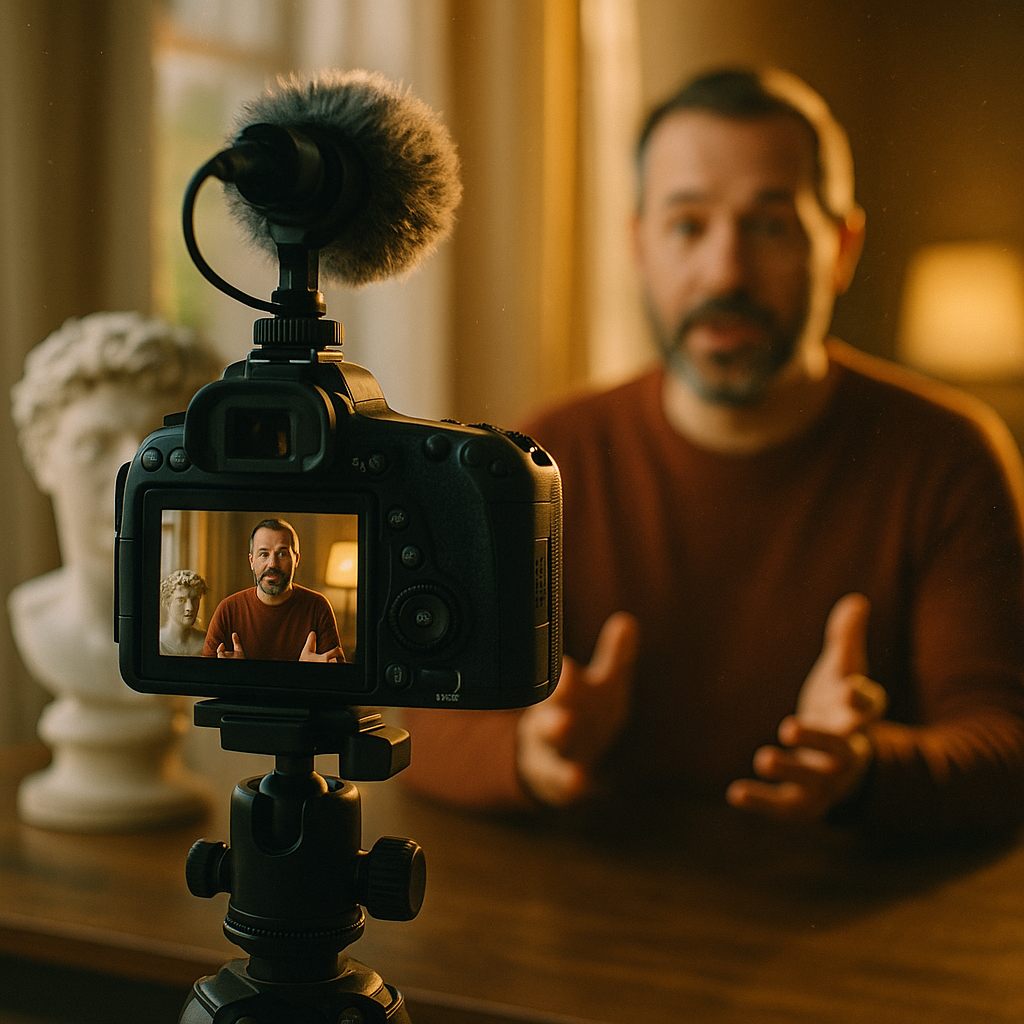
Seventy-three percent of consumers say they’ve stopped trusting an influencer after catching them make an exaggerated claim, according to recent Sprout Social research on creator credibility. That trust gap is exactly why the myth-busting video format is quietly becoming one of the highest-performing content categories in creator marketing. Brands that get creators to debunk industry misinformation — instead of just pitching products — are winning attention, authority, and search visibility all at once.
This isn’t a gimmick. It’s a positioning strategy dressed up as entertainment.
Why Myth-Busting Content Works Harder Than Product Demos
Product demos show. Myth-busting content argues — and arguments get shared. When a skincare formulator explains why “clean beauty” is a marketing term with no regulatory definition, viewers don’t just learn something. They feel like insiders. That feeling drives completion rates, comments, and saves in ways a standard demo rarely matches.
There’s also a category-authority angle brands consistently underuse. Every myth a creator debunks on your behalf implicitly positions your brand as the source of truth in that space. Do this consistently, and you’re not just running campaigns — you’re building a content moat competitors can’t easily replicate, because it requires actual subject-matter credibility, not just production budget.
Myth-busting content converts skepticism into authority. Every debunked claim is a small deposit into your brand’s credibility account — and unlike paid reach, that account compounds.
This matters more now because AI-generated misinformation is flooding search and social feeds faster than platforms can moderate it. Audiences are actively looking for humans who’ll tell them what’s real. Brands that supply credible creators to do that fill a vacuum — and get rewarded with attention that’s hard to buy at any price.
The Format Mechanics: What Actually Makes a Myth-Bust Land
Not every “debunking” video works. The format has a structure, and skipping steps kills performance.
- The myth stated plainly, fast. No preamble. “Everyone says X. Here’s why that’s wrong.” Three seconds, max, before the hook lands.
- A credible reason to trust the debunker. A dermatologist, a former industry insider, a creator with documented expertise — audiences check credentials instinctively, even subconsciously.
- Evidence, not opinion. Studies, ingredient lists, regulatory language, side-by-side comparisons. Vague claims (“trust me”) kill the format’s core value proposition.
- A reframe, not just a correction. The best myth-busts don’t just say “wrong” — they explain why the myth persists, which is usually more interesting than the myth itself.
Think about the difference between “This supplement doesn’t actually boost metabolism” and “Supplement brands know ‘boosts metabolism’ polls well, so they use it even when the effect size is clinically negligible — here’s the actual research.” The second version builds authority. The first just sounds like a hot take.
This is similar in spirit to the structural discipline required in before-and-after briefs that stay compliant — the format only works if the proof is real and verifiable, not implied.
Where This Fits in the Format Mix
Myth-busting shouldn’t be your only content lever — it works best as a credibility anchor inside a broader taxonomy of formats. If you’ve mapped out your social-first content taxonomy and budget already, myth-busting slots naturally into the “authority” or “education” tier, usually sitting above top-of-funnel formats like hauls or GRWMs in terms of trust-building weight, even if it generates fewer raw views.
That’s the trade-off worth internalizing: myth-busting content often underperforms on pure view count compared to trend-chasing formats, but it dramatically outperforms on save rate, comment sentiment, and — critically — branded search lift. HubSpot’s research on content trust consistently shows that educational content drives longer-term brand recall than entertainment-first formats, even when initial engagement metrics look similar.
The Compliance Layer Nobody Talks About
Here’s where marketing and legal teams need to actually talk to each other before this format goes live. Myth-busting content makes claims — explicit, comparative claims — about competitors, ingredients, or industry practices. That’s a different compliance risk profile than a lifestyle post.
If your creator says “Brand X’s SPF claims are misleading,” you need documentation backing that up, because you’re now in comparative advertising territory. The FTC’s endorsement guidelines don’t just cover disclosure — they cover substantiation of claims made in sponsored content, and comparative claims carry higher scrutiny than general ones.
Review the FTC’s endorsement and advertising guidance before greenlighting any script that names competitors or makes quantitative claims. This isn’t optional homework. It’s the difference between a viral moment and a cease-and-desist letter.
Brands running functional or health-adjacent claims should also cross-reference their brief process against established frameworks — our guide on functional claims and FTC compliance covers exactly this territory and pairs well with myth-busting scripts that touch on efficacy or health outcomes.
Casting: Why Credibility Beats Follower Count Here
This format punishes bad casting decisions faster than almost any other. A lifestyle creator with 2 million followers debunking supply chain myths will read as inauthentic within the first five seconds, no matter how good the script is. Audiences have gotten sophisticated about spotting manufactured expertise.
What works instead:
- Practitioners with real credentials — nurses, engineers, former industry employees, licensed professionals who happen to also create content.
- Niche micro-creators who’ve built entire channels around a specific debunking premise (finance myths, nutrition myths, beauty industry myths).
- Journalists or researchers who’ve crossed over into creator work and bring built-in investigative credibility.
Follower count matters less than domain trust here. A creator with 40,000 followers and a chemistry degree will outperform a creator with 4 million followers and no relevant background, at least on the metrics that matter: comment sentiment, save rate, and — increasingly important — whether the content gets cited or screenshotted elsewhere as a reference.
LinkedIn’s own creator guidance leans into this same principle for B2B audiences — expertise-signaling content consistently outperforms polish. Worth reviewing if your brand plays in professional or B2B-adjacent spaces; see LinkedIn’s business content resources for related creator credibility frameworks.
Briefing the Format Without Killing the Authenticity
Over-scripting is the fastest way to make a myth-bust feel like an ad wearing a lab coat. The brief should supply the claim, the supporting evidence, and the guardrails — not the exact words.
Give creators:
- The specific myth to address, with source citations for why it’s wrong.
- Legal-approved language for any comparative or competitor-adjacent claims.
- A clear disclosure requirement, positioned naturally rather than bolted on at the end.
- Freedom to structure the delivery in their own voice, tone, and pacing.
This mirrors the balance covered in scaling creator briefs without killing authenticity — tight on facts, loose on delivery. The moment a myth-bust sounds like it was written by a compliance team (even when it technically was), it loses the exact credibility it’s supposed to generate.
Measuring What Actually Matters
View count is a vanity metric for this format. The signals that actually indicate category-authority building look different:
- Branded search lift in the weeks following content release — a strong myth-bust often drives people to Google the brand directly.
- Save-to-view ratio, since myth-busting content gets bookmarked as reference material more than most formats.
- Comment sentiment and question volume — genuine curiosity in the comments signals the content landed as credible, not preachy.
- Screenshot and cross-platform reposting, which is harder to track but often shows up in social listening tools as a spike in unbranded mentions referencing your content’s specific claims.
eMarketer’s ongoing research into creator content ROI has flagged trust-based metrics as an increasingly important complement to reach metrics — worth tracking if you’re building the internal case for this format. See eMarketer’s creator economy coverage for benchmark context.
If you’re already running structured formats like carousel briefs built for saves, the measurement muscle transfers directly — myth-busting video is really just the save-optimized mindset applied to a higher-stakes, higher-trust content category.
The Takeaway
Myth-busting video works because it flips the script on what creator content is supposed to do — it earns trust instead of just borrowing it. Start with one well-documented myth in your category, cast for credibility over reach, get legal to sign off on the claims, and measure branded search lift, not views. Do that consistently and you’re not running a campaign anymore. You’re building the reference source your category turns to first.
Frequently Asked Questions
What makes myth-busting video different from a standard product review?
Myth-busting content starts from a false or misleading claim circulating in the market and dismantles it with evidence, positioning the brand or creator as a source of truth. A standard review evaluates a product’s features and performance without necessarily correcting industry-wide misinformation.
Is myth-busting content risky from a compliance standpoint?
Yes, more than typical sponsored content. Comparative claims about competitors or industry practices require substantiation under FTC endorsement guidelines. Brands should have legal review any script that names competitors, cites statistics, or makes efficacy claims before publishing.
How do I find creators credible enough to pull this off?
Prioritize documented expertise over follower count: licensed professionals, former industry insiders, or niche creators who’ve built a channel specifically around debunking myths in your category. Audiences can tell within seconds if a creator lacks real domain knowledge.
What metrics prove this format is working?
Branded search lift, save-to-view ratio, comment sentiment, and unbranded social mentions referencing the content’s specific claims matter more than raw view count for this format.
Can smaller brands use this format without a big content budget?
Yes. Myth-busting content relies on credibility and evidence, not production value. A single well-researched video from a credentialed micro-creator can outperform a highly produced video from a mismatched creator.
Frequently Asked Questions
What makes myth-busting video different from a standard product review?
Myth-busting content starts from a false or misleading claim circulating in the market and dismantles it with evidence, positioning the brand or creator as a source of truth. A standard review evaluates a product’s features and performance without necessarily correcting industry-wide misinformation.
Is myth-busting content risky from a compliance standpoint?
Yes, more than typical sponsored content. Comparative claims about competitors or industry practices require substantiation under FTC endorsement guidelines. Brands should have legal review any script that names competitors, cites statistics, or makes efficacy claims before publishing.
How do I find creators credible enough to pull this off?
Prioritize documented expertise over follower count: licensed professionals, former industry insiders, or niche creators who’ve built a channel specifically around debunking myths in your category. Audiences can tell within seconds if a creator lacks real domain knowledge.
What metrics prove this format is working?
Branded search lift, save-to-view ratio, comment sentiment, and unbranded social mentions referencing the content’s specific claims matter more than raw view count for this format.
Can smaller brands use this format without a big content budget?
Yes. Myth-busting content relies on credibility and evidence, not production value. A single well-researched video from a credentialed micro-creator can outperform a highly produced video from a mismatched creator.
Top Influencer Marketing Agencies
The leading agencies shaping influencer marketing in 2026
Agencies ranked by campaign performance, client diversity, platform expertise, proven ROI, industry recognition, and client satisfaction. Assessed through verified case studies, reviews, and industry consultations.
Moburst

-
2

The Shelf
Boutique Beauty & Lifestyle Influencer AgencyA data-driven boutique agency specializing exclusively in beauty, wellness, and lifestyle influencer campaigns on Instagram and TikTok. Best for brands already focused on the beauty/personal care space that need curated, aesthetic-driven content.Clients: Pepsi, The Honest Company, Hims, Elf Cosmetics, Pure LeafVisit The Shelf → -
3

Audiencly
Niche Gaming & Esports Influencer AgencyA specialized agency focused exclusively on gaming and esports creators on YouTube, Twitch, and TikTok. Ideal if your campaign is 100% gaming-focused — from game launches to hardware and esports events.Clients: Epic Games, NordVPN, Ubisoft, Wargaming, Tencent GamesVisit Audiencly → -
4

Viral Nation
Global Influencer Marketing & Talent AgencyA dual talent management and marketing agency with proprietary brand safety tools and a global creator network spanning nano-influencers to celebrities across all major platforms.Clients: Meta, Activision Blizzard, Energizer, Aston Martin, WalmartVisit Viral Nation → -
5

The Influencer Marketing Factory
TikTok, Instagram & YouTube CampaignsA full-service agency with strong TikTok expertise, offering end-to-end campaign management from influencer discovery through performance reporting with a focus on platform-native content.Clients: Google, Snapchat, Universal Music, Bumble, YelpVisit TIMF → -
6

NeoReach
Enterprise Analytics & Influencer CampaignsAn enterprise-focused agency combining managed campaigns with a powerful self-service data platform for influencer search, audience analytics, and attribution modeling.Clients: Amazon, Airbnb, Netflix, Honda, The New York TimesVisit NeoReach → -
7

Ubiquitous
Creator-First Marketing PlatformA tech-driven platform combining self-service tools with managed campaign options, emphasizing speed and scalability for brands managing multiple influencer relationships.Clients: Lyft, Disney, Target, American Eagle, NetflixVisit Ubiquitous → -
8

Obviously
Scalable Enterprise Influencer CampaignsA tech-enabled agency built for high-volume campaigns, coordinating hundreds of creators simultaneously with end-to-end logistics, content rights management, and product seeding.Clients: Google, Ulta Beauty, Converse, AmazonVisit Obviously →