


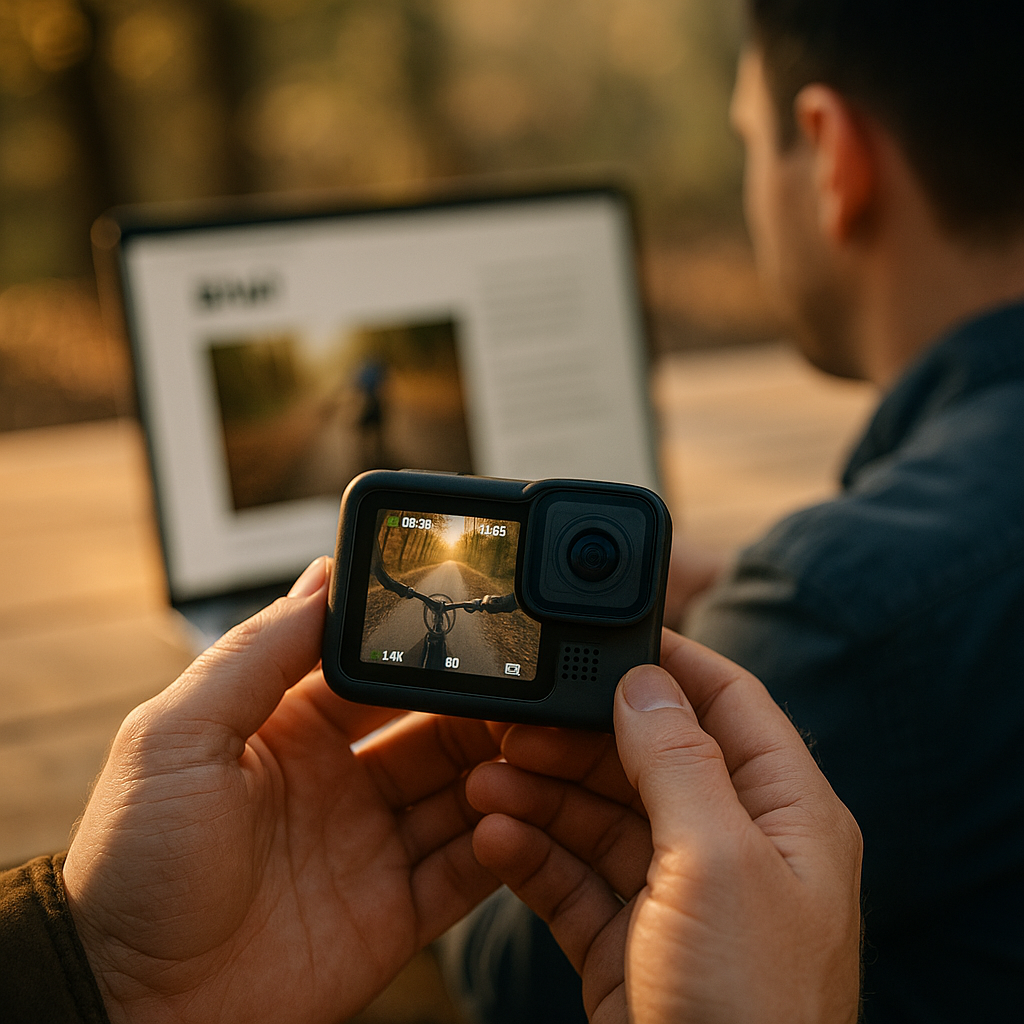
Viewers skip 45% of ads within the first five seconds, but first-person POV content on TikTok routinely holds attention twice as long. Why? Because it doesn’t feel like an ad. It feels like a memory happening to you. POV video storytelling has quietly become the highest-leverage creative format brands aren’t briefing correctly — and the gap between “shot in POV style” and “engineered for immersion” is where most campaigns lose the plot.
What Makes POV Different From Just Another Vertical Video
POV isn’t a camera angle. It’s a psychological contract with the viewer: you are not watching this, you are living it. The creator becomes your hands, your eyes, your internal monologue. That’s a fundamentally different creative brief than a talking-head testimonial or a product demo shot from a tripod three feet away.
Done well, POV collapses the distance between brand message and lived experience. A skincare brand doesn’t tell you the serum feels cooling — you feel the applicator touch your cheek, hear the creator’s breath catch, watch the mirror reflection blur as they lean in. Done poorly, POV is just a shaky selfie-stick video with a voiceover bolted on. The difference is entirely in the creative direction, not the equipment.
POV content isn’t about proximity to the camera — it’s about proximity to the viewer’s own imagined experience. Get that wrong, and even perfect framing feels like a gimmick.
Why Brands Are Shifting Budget Toward Immersive Formats
TikTok’s own creative guidance has leaned hard into “native-feeling” content for two years running, and Reels has followed suit with expanded template support for first-person framing. TikTok’s ad platform now explicitly rewards watch-through behavior in its ranking signals, and POV content — because it mimics organic scroll-stopping footage — tends to outperform polished studio spots on completion rate.
There’s also a trust dimension. According to data regularly cited by eMarketer, audiences under 35 consistently rate creator-shot, unpolished content as more credible than branded studio production. POV sits at the extreme end of that spectrum. It’s the format equivalent of a friend recording something on their phone and sending it to you directly.
For brand strategists building 2026 content calendars, this matters operationally. POV isn’t a nice-to-have aesthetic choice anymore — it’s a measurable lever for reducing cost-per-completed-view while increasing perceived authenticity scores in post-campaign surveys.
The ROI Case, Briefly
Agencies running paid amplification behind POV creator content report meaningfully lower CPMs when the footage is framed as organic-first rather than ad-first. That’s not magic — it’s platform algorithms doing what they’re designed to do: reward content that keeps people watching. A POV grocery-haul clip that makes you feel like you’re pushing the cart yourself keeps thumbs still longer than a wide-shot product flatlay ever will.
Compare this to formats like day-in-the-life content, where the brand is one element among many in a broader narrative. POV can borrow that structure but push further into sensory immersion — the viewer isn’t watching someone’s day, they’re borrowing someone’s eyes for thirty seconds.
Briefing POV: What Goes Wrong Most Often
Most POV briefs fail for one of three reasons.
- Over-scripting the dialogue. POV lives or dies on internal monologue that sounds like actual thought, not ad copy. If the creator’s voiceover reads like a script, the immersion collapses instantly.
- Ignoring hand and eye movement. POV is a physical performance. Brands that only brief the verbal message and skip choreography (how the hand reaches for the product, where the eyes linger) end up with static, boring footage.
- Treating it as a mini-commercial. The moment a POV clip feels like it’s selling something, viewers disengage. The best POV briefs treat the product as incidental to the moment, not the center of it.
A useful gut check: if you removed the product from the frame, would the moment still feel emotionally complete? If yes, you’ve briefed it correctly. If the whole clip falls apart without the product physically visible, you’ve built an ad wearing a POV costume.
Anatomy of a Strong POV Brief
Good POV briefs are shorter on rules and longer on sensory detail. Instead of “show the product being used,” effective briefs describe the moment: the weather, the time of day, what the creator just did before picking up their phone, what they’re anxious or excited about. Context creates believability, and believability is the entire currency of this format.
Structurally, a solid brief includes:
- The emotional beat — what feeling should the viewer walk away with (relief, curiosity, nostalgia)?
- The physical choreography — hand movements, camera tilts, what’s in and out of frame.
- The internal monologue tone — casual, breathless, deadpan, whatever fits the creator’s natural voice.
- One clear, non-intrusive product moment — not a close-up demo, but a natural touchpoint.
- A compliance note — POV’s intimacy makes disclosure easy to forget, and that’s a real risk.
This last point deserves its own attention, because it’s the one legal and brand safety teams flag most often.
Disclosure Doesn’t Disappear Just Because It Feels Personal
The intimacy of POV content creates a compliance blind spot. Because the format feels like a private moment rather than an advertisement, creators and brands sometimes soften or bury disclosure language, hoping it won’t disrupt the immersive feel. That’s a mistake the FTC has addressed directly in its endorsement guidance: the format of the content doesn’t change the disclosure obligation. If money, product, or other consideration changed hands, #ad or #sponsored still needs to appear clearly and conspicuously, regardless of how “unbranded” the footage feels.
The more immersive the format, the more tempting it is to skip disclosure — and the more scrutiny it deserves, not less.
Brands already navigating this tension in adjacent formats have workable models to borrow from. The same logic used in before-and-after compliance frameworks applies here: build the disclosure into the creative concept itself rather than treating it as a caption afterthought. A POV creator can mention “this brand sent me this” in their natural internal monologue without breaking the spell — it just requires writing it into the brief as a beat, not a legal disclaimer bolted onto the end.
Platform Nuance: TikTok vs. Reels
TikTok’s algorithm still favors raw, less-produced footage, which makes it the more forgiving home for true POV experimentation. Creators can get away with more visual imperfection — a wobbly frame, ambient noise, imperfect lighting — because those cues actually reinforce authenticity on that platform.
Reels audiences, per patterns Meta’s business resources have highlighted, respond better to POV content with slightly more visual polish: stabilized footage, cleaner audio, a bit more intentional framing. Not studio-level polish, but noticeably more considered than raw TikTok footage. Brands running the same POV concept across both platforms should budget for two edits, not one repurposed cutdown.
This is a nuance a lot of media planners miss, treating cross-platform posting as a copy-paste exercise. It rarely works that way, and POV is one of the formats where the gap in performance between “native to platform” and “reposted from platform” is widest.
Where POV Fits in a Broader Content Mix
POV shouldn’t be your only format — it’s a high-immersion tool best used for specific moments in the funnel, particularly consideration and early loyalty stages, where emotional resonance outweighs pure information delivery. For pure product education, formats like myth-busting videos or structured tutorials still outperform. For social proof at scale, carousel formats built for saves serve a different job entirely.
Think of POV as the format you deploy when you want someone to feel something specific about your brand, not when you need to explain a spec sheet. Pairing it with a broader content format taxonomy keeps your creative calendar balanced instead of over-indexed on one aesthetic.
Measurement should reflect that positioning too. Don’t judge POV content purely on click-through — judge it on watch-through rate, comment sentiment, and save rate relative to your other formats. Sprout Social’s engagement benchmarking tools are a reasonable starting point if you don’t already have a proprietary dashboard tracking these metrics by format type.
Next Step
Pick one upcoming campaign and rewrite the creator brief around a single sensory beat instead of a feature list — then measure watch-through rate against your last three campaigns before scaling the format further.
FAQs
What is POV video storytelling in influencer marketing?
POV (point-of-view) video storytelling is first-person format content where the camera represents the viewer’s own eyes and hands, creating an immersive sense of experiencing the moment directly rather than watching someone else use a product.
Why does POV content perform better than traditional creator videos?
POV content mimics organic, native footage that platforms like TikTok and Reels tend to reward with higher reach, and its intimacy typically produces longer watch-through times and stronger perceived authenticity among viewers under 35.
Do FTC disclosure rules still apply to POV content?
Yes. The FTC’s endorsement guidance applies regardless of format or tone. If a creator received payment, product, or other consideration, clear disclosure like #ad is still required even in highly immersive, personal-feeling POV content.
Should POV videos look raw or polished?
It depends on platform. TikTok audiences generally respond well to rawer, less-produced footage, while Reels performs better with slightly more stabilized, polished production. Brands running cross-platform campaigns should budget separate edits for each.
How do I brief a creator for POV content without it feeling scripted?
Focus the brief on emotional beats, physical choreography, and internal monologue tone rather than exact scripted lines. Give creators a sensory scenario to react to naturally instead of dialogue to recite word-for-word.
FAQs
What is POV video storytelling in influencer marketing?
POV (point-of-view) video storytelling is first-person format content where the camera represents the viewer’s own eyes and hands, creating an immersive sense of experiencing the moment directly rather than watching someone else use a product.
Why does POV content perform better than traditional creator videos?
POV content mimics organic, native footage that platforms like TikTok and Reels tend to reward with higher reach, and its intimacy typically produces longer watch-through times and stronger perceived authenticity among viewers under 35.
Do FTC disclosure rules still apply to POV content?
Yes. The FTC’s endorsement guidance applies regardless of format or tone. If a creator received payment, product, or other consideration, clear disclosure like #ad is still required even in highly immersive, personal-feeling POV content.
Should POV videos look raw or polished?
It depends on platform. TikTok audiences generally respond well to rawer, less-produced footage, while Reels performs better with slightly more stabilized, polished production. Brands running cross-platform campaigns should budget separate edits for each.
How do I brief a creator for POV content without it feeling scripted?
Focus the brief on emotional beats, physical choreography, and internal monologue tone rather than exact scripted lines. Give creators a sensory scenario to react to naturally instead of dialogue to recite word-for-word.
Top Influencer Marketing Agencies
The leading agencies shaping influencer marketing in 2026
Agencies ranked by campaign performance, client diversity, platform expertise, proven ROI, industry recognition, and client satisfaction. Assessed through verified case studies, reviews, and industry consultations.
Moburst

-
2

The Shelf
Boutique Beauty & Lifestyle Influencer AgencyA data-driven boutique agency specializing exclusively in beauty, wellness, and lifestyle influencer campaigns on Instagram and TikTok. Best for brands already focused on the beauty/personal care space that need curated, aesthetic-driven content.Clients: Pepsi, The Honest Company, Hims, Elf Cosmetics, Pure LeafVisit The Shelf → -
3

Audiencly
Niche Gaming & Esports Influencer AgencyA specialized agency focused exclusively on gaming and esports creators on YouTube, Twitch, and TikTok. Ideal if your campaign is 100% gaming-focused — from game launches to hardware and esports events.Clients: Epic Games, NordVPN, Ubisoft, Wargaming, Tencent GamesVisit Audiencly → -
4

Viral Nation
Global Influencer Marketing & Talent AgencyA dual talent management and marketing agency with proprietary brand safety tools and a global creator network spanning nano-influencers to celebrities across all major platforms.Clients: Meta, Activision Blizzard, Energizer, Aston Martin, WalmartVisit Viral Nation → -
5

The Influencer Marketing Factory
TikTok, Instagram & YouTube CampaignsA full-service agency with strong TikTok expertise, offering end-to-end campaign management from influencer discovery through performance reporting with a focus on platform-native content.Clients: Google, Snapchat, Universal Music, Bumble, YelpVisit TIMF → -
6

NeoReach
Enterprise Analytics & Influencer CampaignsAn enterprise-focused agency combining managed campaigns with a powerful self-service data platform for influencer search, audience analytics, and attribution modeling.Clients: Amazon, Airbnb, Netflix, Honda, The New York TimesVisit NeoReach → -
7

Ubiquitous
Creator-First Marketing PlatformA tech-driven platform combining self-service tools with managed campaign options, emphasizing speed and scalability for brands managing multiple influencer relationships.Clients: Lyft, Disney, Target, American Eagle, NetflixVisit Ubiquitous → -
8

Obviously
Scalable Enterprise Influencer CampaignsA tech-enabled agency built for high-volume campaigns, coordinating hundreds of creators simultaneously with end-to-end logistics, content rights management, and product seeding.Clients: Google, Ulta Beauty, Converse, AmazonVisit Obviously →