


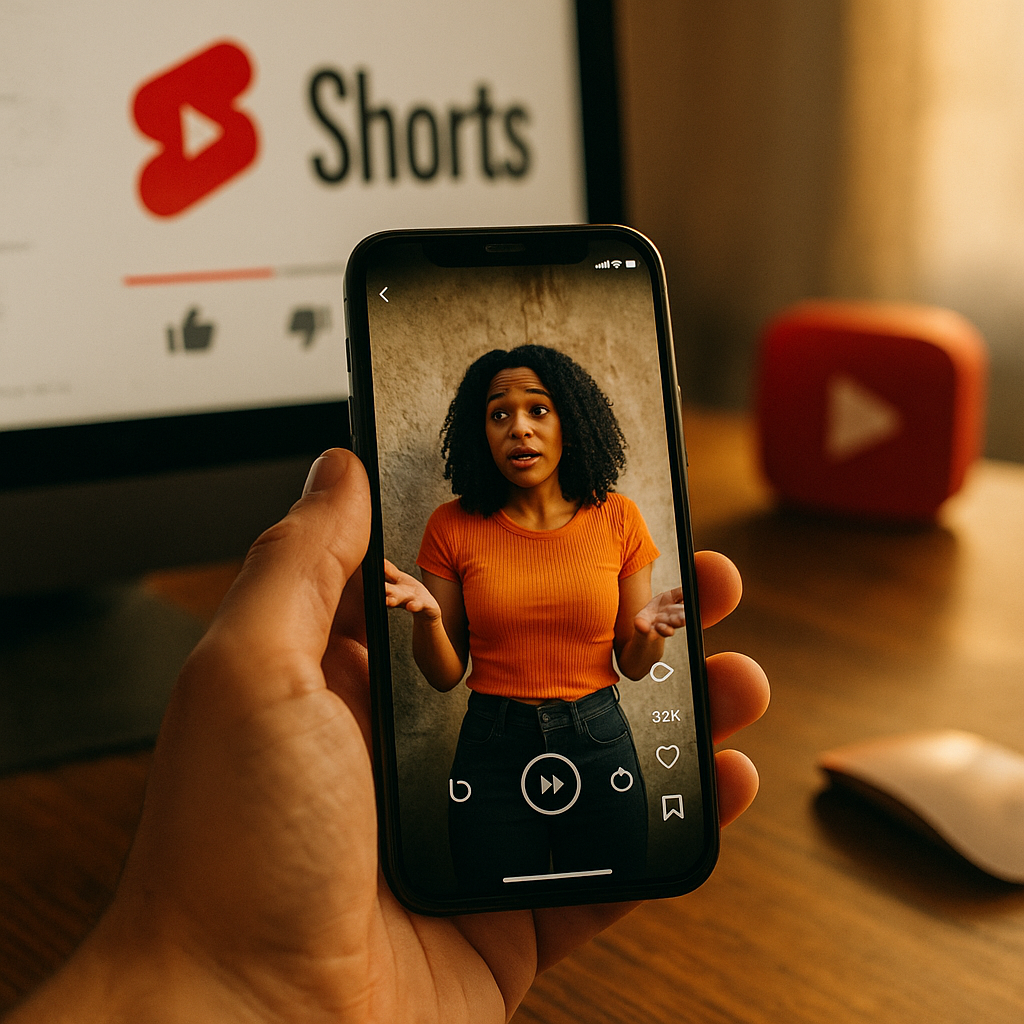
YouTube now pushes over 200 billion Shorts views a day, and the algorithm powering that firehose has quietly rewritten the rules for sponsored content. Loop completion, not likes, decides distribution. If your brand’s Shorts strategy still leans on clever captions and a strong opening line, you’re optimizing for a system that stopped existing months ago. This is the YouTube Shorts watch-time algorithm playbook for brands that need Q3 performance, not vanity metrics.
The Metric That Actually Moves the Needle
Forget average view duration as your north star. YouTube’s Shorts ranking system now weights replay rate and loop count more heavily than raw watch-time seconds, according to guidance Google has published through its Creator Insider channel and support documentation. A 9-second Short that gets watched twice outperforms a 40-second Short watched once and abandoned.
Why? Because loops are the clearest behavioral signal that content satisfies intent. YouTube’s recommendation model, built on the same deep-learning backbone as long-form suggestions, treats a rewatch as a five-star review. It costs nothing, requires no extra click, and it’s nearly impossible to fake at scale.
A Short that loops twice at 9 seconds can outrank a Short watched once at 40 seconds — completion and replay now matter more than duration.
Hooks Aren’t Dead, But They’ve Changed Jobs
The old hook formula — shock, question, or bold claim in the first 3 seconds — still applies. But its job has shifted. In earlier iterations of the algorithm, the hook’s role was to prevent swipe-away. Now it also has to set up the loop. That means your opening frame and your closing frame need to be designed together, not written separately by a creative team racing against a deadline.
Practically, this means storyboarding backward. Start with the last frame. Ask: does this frame create a reason to watch the first frame again? If a viewer’s brain doesn’t register “wait, how did we get here,” the loop breaks and so does your distribution.
- Open on the visual payoff, then rewind to explain it (a proven Shorts structure for product reveals)
- End on a question the opening line answers, forcing a mental replay
- Use a match cut where the final frame visually mirrors the first, so the loop feels seamless rather than abrupt
Brands running sponsored Shorts with creators should brief this explicitly. Most creators default to the old hook-and-payoff structure because it’s what worked on TikTok for years. It’s your job as the brand partner to push for loop-aware scripting, especially since the underlying hooks-and-loops mechanics reward structural discipline over cleverness.
Structuring the Loop: A Practical Framework
There’s no single template, but four structures consistently outperform in Q3 testing across CPG, beauty, and app-install verticals:
- The Boomerang Cut: Final action visually reverses the opening action. Works well for transformation content (before/after, unboxing, room reveals).
- The Unanswered Question: Open with a question, deliver value, but withhold the payoff until the very last second, which sits one beat before the natural loop point.
- The Rhythmic Loop: Music or voiceover cadence resets exactly at the video’s end, so audio continuity tricks the ear into expecting a seamless restart.
- The Compounding Punchline: Each loop reveals a new layer of the joke or product detail, rewarding repeat viewing rather than just tolerating it.
Test all four with the same product message before committing budget. Creative fatigue on Shorts sets in fast, usually within seven to ten days of heavy rotation, so having a bench of loop structures ready matters more than perfecting one.
What Changed Heading Into Q3
YouTube rolled out updates to Shorts ranking signals that put more emphasis on session-level engagement, meaning a Short’s performance is now judged partly by what a viewer does immediately after watching it. Did they stay in the Shorts feed? Did they click to the creator’s channel? Did they search for the brand?
This has real implications for sponsored content briefs. A Short that ends with a hard CTA (“link in bio, buy now”) can actually suppress distribution if it causes viewers to exit the feed immediately rather than staying to watch another Short. YouTube’s system reads that exit as a negative signal for the recommendation loop, even if it’s a conversion win for the brand.
The fix isn’t to remove CTAs. It’s to sequence them. Place the product mention mid-loop, not at the terminal frame, so the viewer’s exit (if it happens) isn’t tied to the algorithm’s last impression of the content.
Brand Safety and Disclosure Still Apply
None of this loop engineering matters if the sponsored content isn’t properly disclosed. The FTC’s endorsement guidelines require clear and conspicuous disclosure regardless of format length, and YouTube’s paid promotion toggle should be standard on every branded Short, no exceptions. Agencies running multi-market campaigns should also check regional requirements; the UK’s ICO guidance and ASA rules differ slightly from FTC language.
Compliance risk on Shorts is easy to underestimate because the format feels casual. It isn’t. Enforcement actions in the past two years have specifically named short-form vertical video as a growth area for undisclosed sponsorships, per FTC enforcement updates. Build the disclosure into the loop structure itself, ideally as an on-screen tag that persists through the replay, rather than a caption viewers scroll past.
Measuring What Matters: Beyond Views
If your reporting deck still leads with total views, you’re presenting vanity metrics to people who’ve heard that story before. Push your creator partners and your analytics team toward these instead:
- Average views per viewer (loop proxy): YouTube doesn’t expose raw replay count publicly, but average view duration exceeding the video’s actual length is a strong loop signal.
- Swipe-away rate at 3 seconds: Your hook diagnostic. Anything above 35-40% means the opening frame needs rework, regardless of loop quality.
- Session continuation rate: Available through YouTube Studio’s audience retention data, this tells you whether your Short kept viewers in-feed or pushed them out.
- Branded search lift: Cross-reference campaign dates against Google Trends or your own search console data for branded query spikes.
Third-party tools like Sprout Social and platforms tracked by eMarketer’s short-form video benchmarks are starting to build loop-rate estimates into their reporting suites. Ask your MMP or social listening vendor whether they’ve added this yet; if not, push them to.
Briefing Creators Without Killing Their Voice
The tension every brand manager knows: creators hate rigid scripts, but loop structures require precision. The workaround isn’t a tighter script. It’s a tighter brief on structure, with total freedom on execution.
Give creators the loop mechanic (boomerang, unanswered question, rhythmic, compounding) as a creative constraint, not a script. Most experienced Shorts creators will recognize these patterns immediately since they’re already using informal versions of them organically. What they need from the brand is the product moment placement and the disclosure requirement, not dialogue.
This mirrors what’s worked in TikTok’s stitch and duet formats, where structural briefs outperform scripted ones for authenticity metrics. The same logic transfers to YouTube Shorts almost directly, since the two platforms’ short-form algorithms have converged on similar completion-and-replay logic over the past two cycles.
Where This Fits in a Broader Short-Form Strategy
Shorts shouldn’t operate in isolation from your other short-form channels. If you’re running TikTok Shop affiliate programs, the creative lessons on commission structures that attract strong creators apply almost identically to how you’d structure Shorts creator payouts tied to loop-friendly content performance. And if your team is also managing Instagram’s algorithm shifts, the retention logic driving Instagram’s creator targeting problems stems from the same root cause: briefs written for the old rules of a platform that’s already moved on.
Budget allocation should reflect this. If loop-optimized Shorts are outperforming standard vertical video by even 20-30% in session continuation (a realistic range based on early Q3 testing across mid-size CPG accounts), that’s a signal to shift production budget away from one-off hero videos and toward a higher-frequency, loop-tested cadence.
The Bottom Line for Q3 Planning
Build your Q3 Shorts briefs around loop structure first, hook second, CTA placement third. Test all four loop formats within the first two weeks of any sponsored campaign, kill the underperformers fast, and report on session continuation instead of view count when you talk to leadership about ROI.
Frequently Asked Questions
What is the YouTube Shorts watch-time algorithm actually measuring?
It measures a combination of completion rate, replay/loop behavior, and what a viewer does immediately after the Short ends, such as staying in the Shorts feed or exiting. Loop count and session continuation now carry more ranking weight than raw watch-time seconds alone.
How long should a brand-sponsored YouTube Short be for best performance?
There’s no fixed ideal length. Shorts between 7 and 15 seconds tend to loop more easily because the replay decision happens faster, but longer Shorts (30-60 seconds) can perform well if the content structure earns a genuine second watch rather than relying on brevity alone.
Does adding a strong call-to-action hurt Shorts performance?
It can, if placed at the very end and it causes viewers to exit the feed immediately. YouTube’s system may read that exit as a negative signal. Placing the CTA mid-video, before the loop point, tends to preserve both distribution and conversion intent.
How do brands disclose sponsorships properly on Shorts?
Use YouTube’s built-in paid promotion toggle on every sponsored Short, and ensure on-screen disclosure text is visible throughout, not just in the caption. This satisfies FTC clear-and-conspicuous requirements and similar international regulations.
What’s the biggest mistake brands make when briefing creators for Shorts?
Over-scripting dialogue while under-specifying structure. Creators need clear guidance on loop mechanics and where the product moment sits in the video, but should retain creative freedom over tone, delivery, and pacing.
Top Influencer Marketing Agencies
The leading agencies shaping influencer marketing in 2026
Agencies ranked by campaign performance, client diversity, platform expertise, proven ROI, industry recognition, and client satisfaction. Assessed through verified case studies, reviews, and industry consultations.
Moburst

-
2

The Shelf
Boutique Beauty & Lifestyle Influencer AgencyA data-driven boutique agency specializing exclusively in beauty, wellness, and lifestyle influencer campaigns on Instagram and TikTok. Best for brands already focused on the beauty/personal care space that need curated, aesthetic-driven content.Clients: Pepsi, The Honest Company, Hims, Elf Cosmetics, Pure LeafVisit The Shelf → -
3

Audiencly
Niche Gaming & Esports Influencer AgencyA specialized agency focused exclusively on gaming and esports creators on YouTube, Twitch, and TikTok. Ideal if your campaign is 100% gaming-focused — from game launches to hardware and esports events.Clients: Epic Games, NordVPN, Ubisoft, Wargaming, Tencent GamesVisit Audiencly → -
4

Viral Nation
Global Influencer Marketing & Talent AgencyA dual talent management and marketing agency with proprietary brand safety tools and a global creator network spanning nano-influencers to celebrities across all major platforms.Clients: Meta, Activision Blizzard, Energizer, Aston Martin, WalmartVisit Viral Nation → -
5

The Influencer Marketing Factory
TikTok, Instagram & YouTube CampaignsA full-service agency with strong TikTok expertise, offering end-to-end campaign management from influencer discovery through performance reporting with a focus on platform-native content.Clients: Google, Snapchat, Universal Music, Bumble, YelpVisit TIMF → -
6

NeoReach
Enterprise Analytics & Influencer CampaignsAn enterprise-focused agency combining managed campaigns with a powerful self-service data platform for influencer search, audience analytics, and attribution modeling.Clients: Amazon, Airbnb, Netflix, Honda, The New York TimesVisit NeoReach → -
7

Ubiquitous
Creator-First Marketing PlatformA tech-driven platform combining self-service tools with managed campaign options, emphasizing speed and scalability for brands managing multiple influencer relationships.Clients: Lyft, Disney, Target, American Eagle, NetflixVisit Ubiquitous → -
8

Obviously
Scalable Enterprise Influencer CampaignsA tech-enabled agency built for high-volume campaigns, coordinating hundreds of creators simultaneously with end-to-end logistics, content rights management, and product seeding.Clients: Google, Ulta Beauty, Converse, AmazonVisit Obviously →