


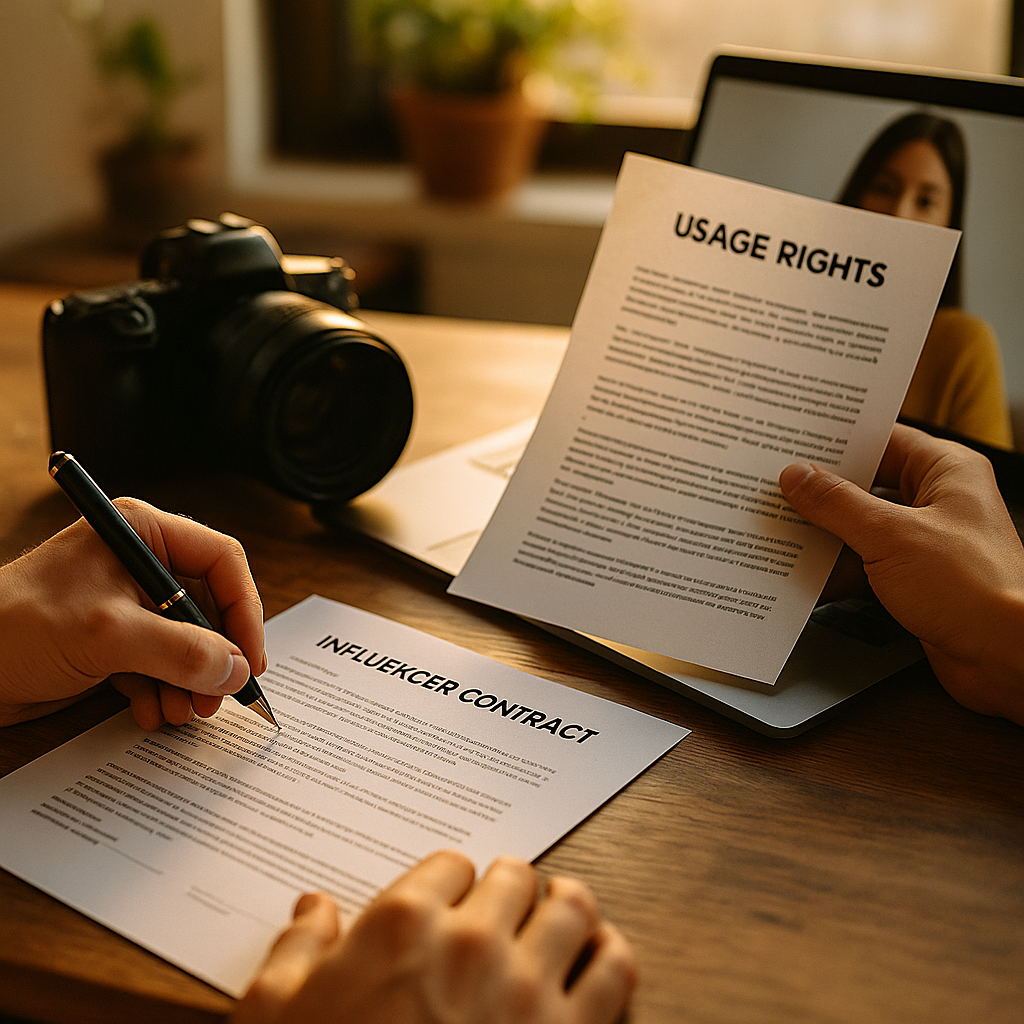
In 2025, brands seeking to unlock maximum value from influencer marketing must master influencer usage-rights strategies. The rules and best practices have evolved along with digital consumption trends. Here’s how forward-thinking marketers can fully leverage content rights for ROI and legal clarity—while keeping creators and audiences happy.
Understanding Modern Influencer Usage Rights Agreements
Influencer usage rights now extend far beyond simple social media posts. In 2025, usage rights encompass cross-channel redistribution, paid ads, offline campaigns, and AI-driven content amplifications. Clarity matters: Brands must negotiate and document rights carefully to avoid legal pitfalls and protect relationships with creators.
There are three primary types of influencer usage rights:
- Organic rights: Sharing content as originally posted on the influencer’s own channels.
- Paid rights: Using content for ads or boosted posts across digital platforms.
- Full transfer rights: Allowing the brand to use, edit, and repurpose content across any channel, often globally and indefinitely.
Adhering to transparent, written agreements is now the industry standard. Marketers should also specify geographic scope, channel lists, and timeframes. Ambiguity remains one of the top drivers of contract disputes in the influencer space.
Maximizing ROI Through Strategic Content Repurposing
Smart influencer usage-rights strategies let brands get more out of every partnership. Repurposing influencer-created content—from Instagram Stories to TikTok reviews—can drive results across owned, paid, and earned channels.
High-performing 2025 strategies include:
- Paid Social Amplification: Running influencer content as ads on Instagram, TikTok, YouTube, or LinkedIn to reach lookalike audiences quickly.
- On-Site Reuse: Embedding influencer videos and testimonials on product pages to enhance credibility and conversion rates.
- Email & CRM Integration: Incorporating influencer visuals in newsletters and loyalty campaigns for extra engagement.
- Omnichannel Campaigns: Leveraging the same piece of influencer content for digital billboards, print, or even TV spots, where the contract allows.
Investing in broad yet ethical usage rights means every dollar spent on influencer content goes further—improving cost efficiency and campaign consistency.
Legal Trends and Compliance for Influencer Content in 2025
The legal landscape around influencer usage rights has become more complex in 2025. New disclosure requirements and data privacy laws mean both brands and influencers must adapt. Contracts must address:
- Clear disclosure of sponsored content as per the latest advertising standards.
- Copyright and usage rights, particularly with AI-generated enhancements or remixing.
- Consent for biometric data if faces, voices, or likenesses are to be used in synthetic media.
- Adherence to international frameworks (e.g., GDPR, CCPA) for influencers based in or targeting multiple countries.
Remember, implied rights are not enough. According to a 2024 ANA report, more than 42% of influencer marketing legal disputes stemmed from unclear or undocumented content usage terms. In 2025, expect even more scrutiny as AI expands content possibilities and risks.
Building Win-Win Relationships With Influencers
The best influencer usage-rights strategies are founded on mutual respect. In 2025, creators seek fair compensation and creative credit for their work. Brands that prioritize open communication and flexible negotiation build lasting partnerships—and better campaign results.
Top tips for brands:
- Negotiate Upfront: Discuss and document all intended usages before signing contracts, especially for paid amplification or multi-channel rights.
- Compensate Fairly: Offer higher rates for broader, longer, or more exclusive rights to incentivize influencer buy-in.
- Respect Creative Boundaries: Allow creators to review and approve edited or repurposed content, maintaining authentic voice.
- Provide Attribution: When repurposing, credit the influencer as the source unless your agreement states otherwise.
- Invest in Relationships: Approach contracts as the start of a long-term collaboration, not just a one-off transaction.
This balance boosts both legal compliance and brand reputation, leading to more organic support from creators.
Future-Proofing Your Influencer Usage-Rights Strategy
Influencer marketing will continue to evolve rapidly in 2025, powered by AI, new content formats, and shifting regulations. Smart brands are already future-proofing their contracts and processes to stay ahead.
Key steps include:
- Template Upgrades: Adopt legal templates that account for AI co-created content, voice/image cloning, and dynamic distribution channels.
- Software Solutions: Use digital contract platforms for version tracking, e-signatures, and compliance alerts.
- Continuous Training: Educate marketing and legal teams on the latest digital rights and influencer trends through regular workshops.
- Scenario Planning: Map out “what-if” scenarios (such as new channel launches or regulatory changes) to maintain campaign agility.
By embedding flexibility and foresight into your usage-rights strategies now, your brand will stay compliant and competitive.
Measuring Success: Analytics for Usage Rights Optimization
In 2025, data-driven measurement ensures brands maximize influencer investments. Track how repurposed content performs across channels:
- Engagement rates on repurposed and boosted influencer content versus branded content.
- Attribution models to tie influencer content to sales, leads, or CRM growth.
- Cost-per-engagement and ROI calculations for each usage scenario.
- Compliance metrics—such as timely contract renewals and flagging approaching expirations.
Brands combining strong analytics with legal rigor will achieve sustainable, scalable influencer ROI in 2025.
Conclusion
Mastering influencer usage-rights strategies in 2025 revolves around clear contracts, mutual value, legal compliance, and agile content distribution. Embrace these best practices to secure ROI, avoid pitfalls, and build lasting partnerships with creators—ready for whatever the fast-moving digital landscape brings next.
FAQs: Influencer Usage-Rights Strategies in 2025
-
What are influencer usage rights?
Influencer usage rights refer to the legal permissions brands obtain to use creator content beyond its original posting—including ads, websites, and other channels. Terms covering scope, duration, and purpose must be agreed in writing.
-
How are fees determined for influencer content usage in 2025?
Fees depend on the extent (channels, geography, timing) of rights needed. Broader or exclusive rights require higher payment. Many contracts now include additional compensation for AI or offline usage.
-
What are common legal pitfalls in influencer usage rights?
Unclear contracts, lack of consent, and insufficient disclosure are the top legal issues in 2025. Always specify rights, channels, and duration in signed agreements to stay compliant.
-
Can brands use influencer content for AI training or synthetic media?
Yes, but only if contracts expressly cover AI or synthetic usage scenarios. Always request specific consent for using biometric data, voice, or likeness in such contexts to avoid future disputes.
-
How can brands maintain positive influencer relationships?
Transparency, fair compensation, and honoring creative intentions are key. Always negotiate rights upfront, involve creators in content changes, and attribute their work if your agreement allows.
Top Influencer Marketing Agencies
The leading agencies shaping influencer marketing in 2026
Agencies ranked by campaign performance, client diversity, platform expertise, proven ROI, industry recognition, and client satisfaction. Assessed through verified case studies, reviews, and industry consultations.
Moburst

-
2

The Shelf
Boutique Beauty & Lifestyle Influencer AgencyA data-driven boutique agency specializing exclusively in beauty, wellness, and lifestyle influencer campaigns on Instagram and TikTok. Best for brands already focused on the beauty/personal care space that need curated, aesthetic-driven content.Clients: Pepsi, The Honest Company, Hims, Elf Cosmetics, Pure LeafVisit The Shelf → -
3

Audiencly
Niche Gaming & Esports Influencer AgencyA specialized agency focused exclusively on gaming and esports creators on YouTube, Twitch, and TikTok. Ideal if your campaign is 100% gaming-focused — from game launches to hardware and esports events.Clients: Epic Games, NordVPN, Ubisoft, Wargaming, Tencent GamesVisit Audiencly → -
4

Viral Nation
Global Influencer Marketing & Talent AgencyA dual talent management and marketing agency with proprietary brand safety tools and a global creator network spanning nano-influencers to celebrities across all major platforms.Clients: Meta, Activision Blizzard, Energizer, Aston Martin, WalmartVisit Viral Nation → -
5

The Influencer Marketing Factory
TikTok, Instagram & YouTube CampaignsA full-service agency with strong TikTok expertise, offering end-to-end campaign management from influencer discovery through performance reporting with a focus on platform-native content.Clients: Google, Snapchat, Universal Music, Bumble, YelpVisit TIMF → -
6

NeoReach
Enterprise Analytics & Influencer CampaignsAn enterprise-focused agency combining managed campaigns with a powerful self-service data platform for influencer search, audience analytics, and attribution modeling.Clients: Amazon, Airbnb, Netflix, Honda, The New York TimesVisit NeoReach → -
7

Ubiquitous
Creator-First Marketing PlatformA tech-driven platform combining self-service tools with managed campaign options, emphasizing speed and scalability for brands managing multiple influencer relationships.Clients: Lyft, Disney, Target, American Eagle, NetflixVisit Ubiquitous → -
8

Obviously
Scalable Enterprise Influencer CampaignsA tech-enabled agency built for high-volume campaigns, coordinating hundreds of creators simultaneously with end-to-end logistics, content rights management, and product seeding.Clients: Google, Ulta Beauty, Converse, AmazonVisit Obviously →