


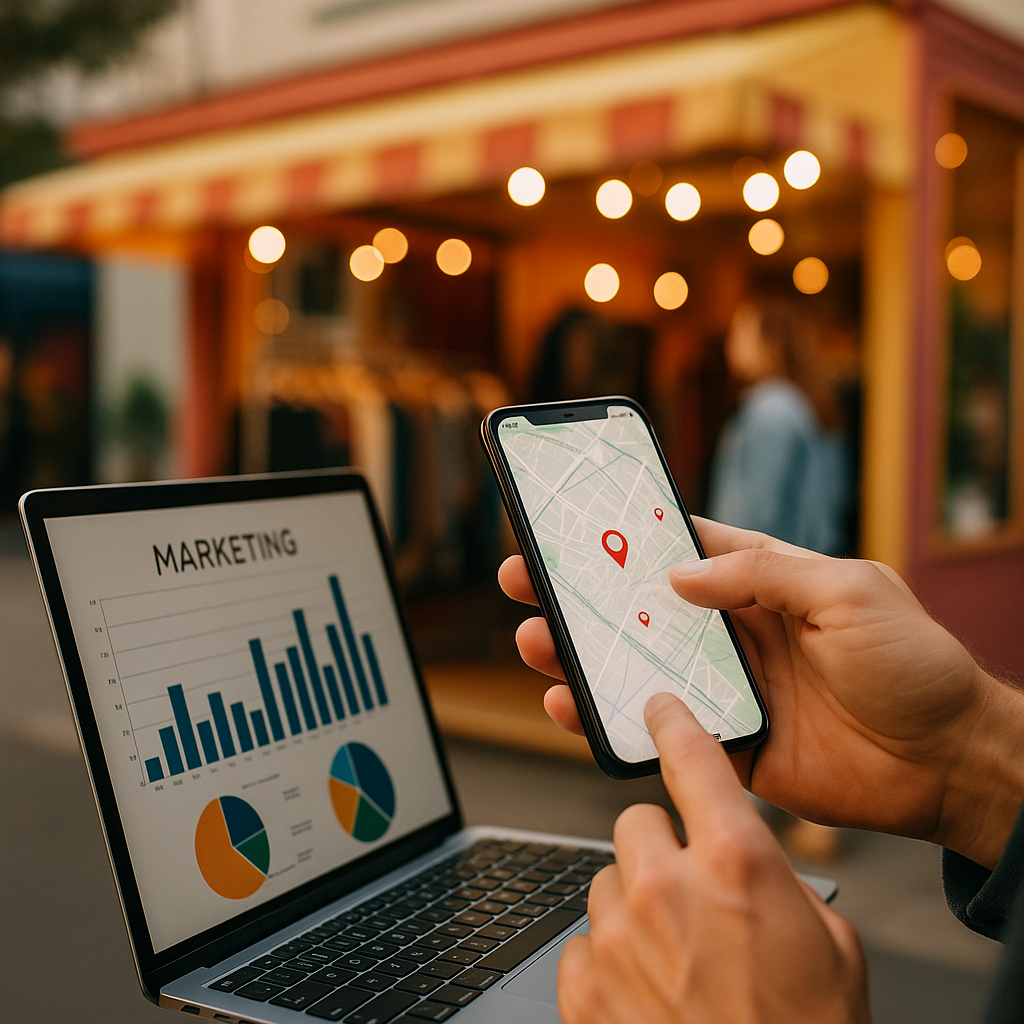
In 2025, pop-up retail wins when it meets shoppers where they already are—and when it speaks to what they need in that moment. Mastering Location-Based Marketing Strategies For Pop-Up Retail Success means using real-world signals like foot traffic, nearby events, and local intent to drive discovery, visits, and repeat purchases. The best part: you can measure it quickly, iterate faster, and outsmart bigger competitors—if you know what to do next.
Location-based marketing for pop-up shops: Choose the right place with data, not guesswork
Pop-ups are temporary, but the decision behind the location should be rigorous. Treat your location as a performance channel: it has a cost, an audience, and an expected return. Start by defining what “success” means for your pop-up: revenue, email/SMS sign-ups, product trials, content creation, wholesale leads, or all of the above.
Build a simple location scorecard before you sign anything:
- Audience fit: Does the area match your target demographics and lifestyle? Use platform insights (Meta, Google) and local census or city data where available.
- Footfall quality: High traffic isn’t always high intent. Look for “destination” traffic (near gyms, transit nodes, popular cafes, event venues) that aligns with your product.
- Competitive context: Nearby complementary brands can help; direct substitutes can dilute. Map what’s within a 5–10 minute walk.
- Friction factors: Parking, transit access, safety perceptions, construction, and weather exposure affect walk-ins.
- Signal density: More signals (events, offices, universities, hotels) create more targeting opportunities in ads and partnerships.
How to validate demand fast: Run a 7–10 day “pre-pop-up” test using geo-targeted ads to the neighborhood(s) you’re considering, driving to a landing page with a waitlist. Compare cost per signup, click-to-signup rate, and the top ZIP codes. This gives you evidence before committing to rent and build-out.
Answering the common follow-up: What if you’re a small brand with limited data? Use proxies: local search interest for your category (“matcha near me,” “vintage streetwear,” “clean skincare”), competitor review density, and the event calendar. Then run a lightweight ad test and a local influencer seeding drop to verify response.
Geo-targeting and geofencing ads: Drive visits with precise, privacy-aware targeting
Geo-targeting reaches people in a defined area (city, radius, ZIP code). Geofencing adds a boundary around a specific place (a mall, a venue, a competitor) and serves ads to people who enter that boundary, depending on platform capabilities and user consent. In 2025, your edge comes from precision plus restraint: relevance without creepiness.
Set up a three-layer targeting structure:
- Layer 1 (Primary radius): 0.5–2 miles around the pop-up for dense areas; 3–8 miles for suburban. Goal: immediate foot traffic.
- Layer 2 (Intent corridors): Transit lines, parking areas, office clusters, hotels, campuses—places that feed your street. Goal: intercept commuters and visitors.
- Layer 3 (Event and competitor adjacency): Target around relevant events or complementary retailers. Goal: piggyback on existing demand.
Creative that converts for pop-ups: Use short, specific copy: what’s happening, where, and why now. Include hours, a map pin, and a single incentive tied to location (e.g., “Show this ad for a free sample today”). Avoid generic brand slogans that don’t answer “why visit now?”
Measurement that executives trust: Use UTM tags for every ad, a dedicated “Directions” button, and a unique in-store offer code. Where available, use platform “store visits” modeling cautiously and triangulate with:
- POS time-series spikes aligned to campaigns
- QR scans and landing-page traffic by location
- Redemption rate of local codes
- Incremental lift tests (holdout zones) when budget allows
EEAT and privacy note: Be explicit about what you collect. If you use Wi-Fi sign-in or SMS capture, state what messages customers will receive and how to opt out. Trust boosts conversion, especially for new-to-market pop-ups.
Local SEO for pop-up retail: Get discovered when shoppers search “near me”
Many pop-ups rely too much on paid social, then wonder why foot traffic is inconsistent. Local search is often the missing engine—especially for shoppers already in the area. Even if your pop-up runs for a short time, you can still capture high-intent searches.
Action plan for strong local discovery:
- Create a dedicated landing page: Include address, dates, hours, parking/transit tips, accessibility details, and a “What’s in-store” list. Add a store locator block if you have multiple activations.
- Publish a pop-up-specific listing: Use Google Business Profile options that fit your setup. If you cannot create a separate listing, update your primary profile with temporary hours and a prominent “Pop-up” post. Keep details consistent across platforms.
- Use structured content: Clearly state neighborhood names and nearby landmarks in natural language (not keyword stuffing). This helps match local intent queries.
- Collect and respond to reviews quickly: A simple ask at checkout (“If you loved your visit, a quick review helps us stay here”) increases review velocity. Respond with specifics to show authenticity.
What to publish during the pop-up: Post short updates: new arrivals, limited drops, live demos, partner events. Each post should answer a searcher’s next question: “Is it open today?” “What’s unique?” “How long is the line?” When possible, add photos from the actual location to confirm credibility.
Common follow-up: Can local SEO work if the pop-up lasts only two weeks? Yes—because the goal is not long-term ranking dominance; it’s capturing immediate intent. Fast indexing comes from a clear landing page, consistent citations (website + key directories), and high-engagement posts that earn taps for directions and calls.
Proximity marketing with mobile offers: Convert nearby intent into in-store action
Once you can reach people nearby, the next step is to move them from “aware” to “walking in.” Proximity marketing pairs location relevance with a low-friction reason to visit now. The best offers feel like a local perk, not a discount trap.
Offer frameworks that protect your brand:
- Value-add: free customization, gift wrapping, engraving, sample flight, styling consult, mini facial, product fitting.
- Scarcity with integrity: limited daily drops, timed bundles, “first 50 visitors” gifts—only if you can fulfill consistently.
- Community tie-in: donate a portion to a local cause for purchases made on a specific day; partner with nearby studios or cafes.
Make redemption effortless: Use one tap to map directions, a scannable QR at the door, and a short code at checkout. Train staff to ask one question: “Did you see us on Instagram, Google, or walking by?” Capture this in your POS notes to improve attribution.
On-site experience matters for EEAT: Your messaging must match reality. If you advertise “exclusive items,” ensure they are visible. If you promise “under 5 minutes,” staff accordingly. Trust is earned in the last 20 feet: signage, lighting, staff confidence, and clear pricing reduce bounce-outs.
Answering a practical follow-up: What if foot traffic is high but conversions are low? Audit three things in order: (1) front-of-store clarity (what do you sell and price range), (2) queue friction (payment speed, fitting rooms, demo stations), and (3) offer alignment (is the incentive meaningful for this neighborhood?). Then adjust creative to pre-qualify visitors.
Pop-up analytics and attribution: Prove ROI and optimize in real time
Pop-ups move fast, so measurement must be lightweight and decision-ready. You don’t need perfect attribution—you need reliable direction. Build a system that connects four data sources: ads, website, in-store actions, and inventory.
Minimum viable measurement stack:
- Campaign tracking: UTMs on every link; separate landing pages for each neighborhood or partner when possible.
- In-store tracking: QR codes by zone (window, entrance, fitting/demo, checkout) to learn what drives engagement.
- Offer codes: One code per channel (Google, Instagram, partner, street team). Keep codes short and readable.
- CRM capture: SMS/email signup tied to a clear benefit (drop alerts, early access, receipts, warranty, local events).
What to monitor daily during the activation:
- Walk-ins (manual counter works) vs. transactions
- Conversion rate by hour and day
- Average order value and attach rate (add-ons)
- Top-selling SKUs and stockouts
- Cost per store visit proxy (ad spend divided by incremental visits) and cost per acquisition (spend divided by new customers captured)
Optimization playbook: If mornings underperform, shift budget to lunch and early evening. If directions clicks are strong but visits aren’t, improve signage, update parking notes, and add a “what to expect” photo carousel. If a partner channel drives high-AOV customers, deepen that partnership with an in-store co-hosted moment.
How to report results credibly: Combine quantitative results (sales, sign-ups, traffic, conversion) with qualitative proof (customer quotes, staff observations, product feedback themes). This demonstrates expertise and real-world learning—key for repeatable pop-up growth.
Local partnerships and experiential activations: Turn neighborhoods into your marketing channel
Location-based marketing is stronger when the neighborhood participates. Partnerships reduce acquisition costs, add credibility, and create content-worthy moments that feed your paid and organic loops. Prioritize partners with shared customers and complementary use cases.
High-leverage partner types:
- Cafes and restaurants: receipt-based offers, co-branded menu items during your run, table tents with QR directions.
- Fitness and wellness studios: “class + pop-up perk” bundles and post-class sampling moments.
- Hotels and tour operators: concierge cards, lobby mini-displays, “visitor essentials” kits.
- Local creators: neighborhood-focused micro-influencers who can physically show the route, parking, and in-store experience.
Design an activation that earns attention: Offer a scheduled reason to show up: a live customization bar, product lab demo, limited drop, expert Q&A, or community workshop. Make it easy to attend: clear time windows, RSVP optional, and a visible agenda. Capture content in a way that respects customers: signage that filming is occurring and opt-out options.
Follow-up that extends the pop-up: After the visit, send a single high-value message: care tips, how-to styling, restock alerts, or a “local thank you” offer that can be redeemed online. This turns a temporary event into a durable customer relationship.
FAQs
What is location-based marketing for pop-up retail?
It’s the practice of using geographic signals—where people are, what’s nearby, and local intent—to promote a pop-up and drive measurable visits and sales. It includes geo-targeted ads, local search optimization, proximity offers, and neighborhood partnerships.
What’s the difference between geo-targeting and geofencing?
Geo-targeting targets people within a broader area like a radius or ZIP code. Geofencing focuses on a defined boundary around a specific place and can trigger ads to people who enter that area, depending on platform capabilities and user consent.
How long before a pop-up should I start local marketing?
Start 2–4 weeks ahead for awareness and list-building, then shift to “visit now” messaging 3–5 days before opening. If the pop-up is short, begin immediately with a landing page, map directions, and a clear opening-week incentive.
What are the best KPIs for pop-up location-based campaigns?
Track walk-ins, conversion rate, average order value, cost per signup, directions clicks, offer redemptions, and revenue by daypart. For brand-building, track new customer capture (SMS/email), review volume, and partner-driven traffic.
How do I measure store visits without expensive tools?
Use a manual door count, POS transaction timestamps, unique offer codes per channel, QR scans, and a short “how did you hear about us?” prompt at checkout. Compare performance against a pre-campaign baseline and use holdout neighborhoods if possible.
Are location-based tactics risky for privacy?
They can be if implemented carelessly. Use consent-based platforms, avoid sensitive targeting, disclose data use clearly, and provide easy opt-outs for SMS/email. Relevance builds trust only when customers feel respected.
What’s the fastest way to increase foot traffic during a slow day?
Deploy a tight-radius campaign (0.5–2 miles) with a same-day value-add offer, update your listing/posts with “open now” details, and activate one nearby partner (cafe or studio) with a time-bound perk that sends people immediately.
Pop-up retail succeeds when location becomes a strategic advantage, not just an address. By combining smart site selection, geo-targeted promotion, local search visibility, proximity offers, and tight measurement, you can drive consistent foot traffic and prove ROI in days—not months. Build trust with clear disclosures and on-site delivery that matches your marketing. Your next pop-up can feel inevitable to the neighborhood—if you plan it that way.