


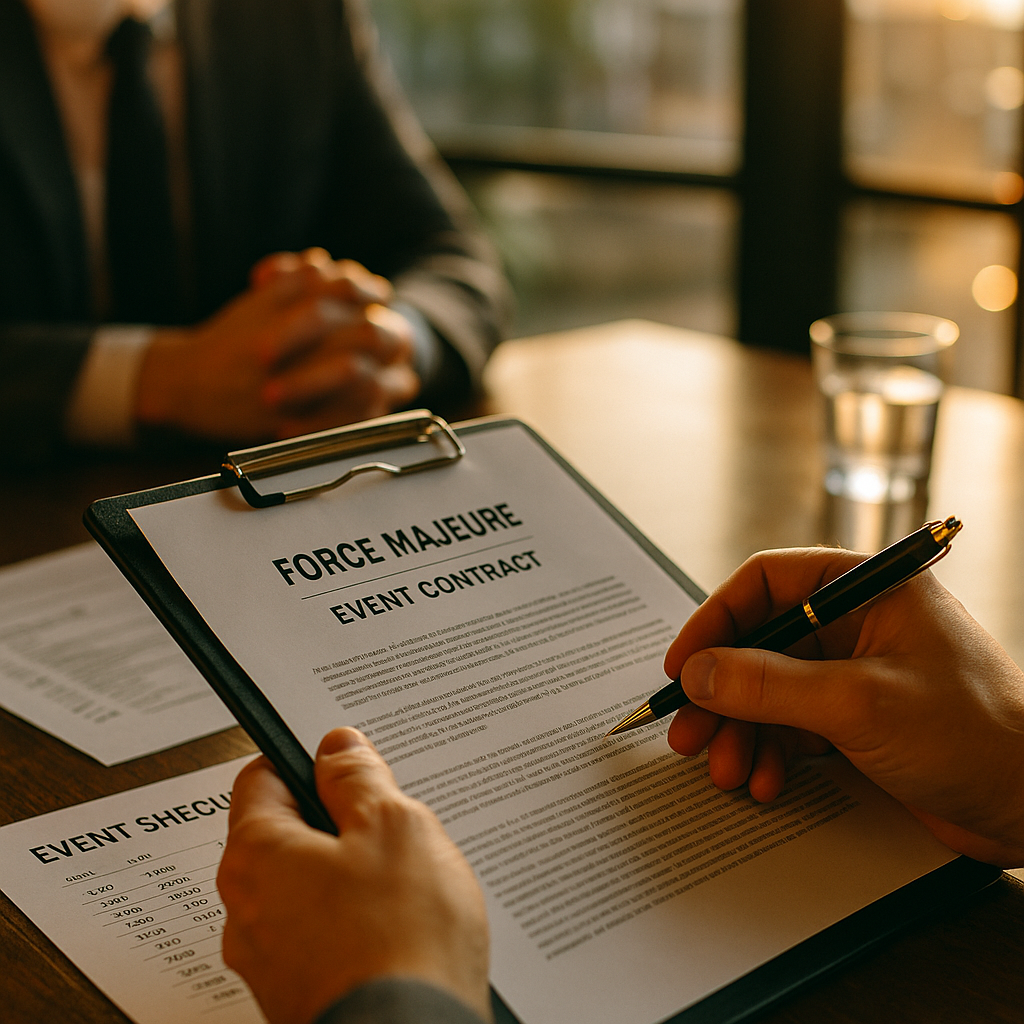
When drafting or signing event contracts, handling “force majeure” is essential to safeguard your business against unexpected circumstances. Incorporating clear force majeure clauses ensures that natural disasters, pandemics, and other unforeseeable events are addressed. Ready to learn how to negotiate, interpret, and enforce effective force majeure terms in your next event contract?
Understanding Force Majeure in Event Agreements
Force majeure definition is crucial for anyone working with event contracts. Force majeure refers to unforeseeable circumstances—such as earthquakes, severe weather, government actions, strikes, or pandemics—that prevent involved parties from fulfilling contractual obligations. By specifying what qualifies, event planners and vendors gain certainty about rights and remedies if the unexpected occurs.
But not all disruptions are covered. For instance, financial hardship or declining ticket sales do not qualify—events must truly be outside the reasonable control of either party. Legal experts recommend detailing examples in the contract, such as:
- Natural disasters—floods, hurricanes, wildfires
- Acts of terrorism or war
- Government-imposed restrictions or quarantines
- Epidemics and pandemics
- Utility failures through no fault of either party
Properly defining force majeure in writing avoids confusion and limits disputes in uncertain times.
Crafting a Robust Force Majeure Clause for Risk Management
Force majeure clause drafting is more than just copying boilerplate language into your event contract. To optimize risk management, tailor the language to the unique requirements and region of your event. Review state and local laws—some jurisdictions strictly interpret these clauses, while others are more flexible.
Key elements to include are:
- Clear definition: List specific qualifying events and reference what does not count (like economic hardship).
- Notice requirements: State how and when parties must notify each other if invoking force majeure.
- Mitigation obligations: Detail the steps each party should take to lessen damages or resume event performance.
- Termination or delays: Specify how long the force majeure must last before the contract can be canceled or postponed.
- Remedies: Address deposits, refunds, and rescheduling options, so parties know their options ahead of time.
Customizing your force majeure clause with these components increases enforceability and minimizes complications if disaster strikes.
Negotiating Force Majeure Terms With Venues and Vendors
Force majeure negotiation has become increasingly important since global events like the COVID-19 pandemic exposed contractual gaps. Before signing, discuss:
- The types of events that will be covered, as needs may differ from the venue to caterers or entertainment providers.
- How much flexibility is available regarding rescheduling or refunds.
- The process for documenting a triggering event and the necessary evidence required.
- Shared responsibilities for mitigating loss—including potential cost-sharing or insurance utilization.
Transparency during negotiation ensures mutual understanding and helps prevent costly disputes. It demonstrates professionalism and preparedness, building trust with venues, vendors, and stakeholders alike.
Increasingly, major venues in 2025 allow for digital notifications and will negotiate for explicit pandemic and cyberattack language to bring clarity in uncertain times. Always confirm that your negotiated terms reflect the realities and risks for your specific event type and size.
Triggering and Enforcing a Force Majeure Event
Force majeure enforcement depends on timely, documentable action. If an event qualifies, affected parties should:
- Notify all parties as early as possible, following the contract’s requirements (often in writing, within a set timeframe).
- Provide solid proof of the force majeure event—such as government orders, news reports, or meteorological data.
- Detail efforts to mitigate damages, like seeking alternative venues or suppliers.
- Outline a clear plan for postponement, rescheduling, or termination as stated in the contract.
Courts may enforce or reject claims depending on these steps. If you’re unsure, consult an attorney experienced in contract law to ensure compliance. Keep organized records; these will be invaluable for resolving claims or negotiating with insurers. Technology in 2025—like automated contract platforms—can aid in tracking deadlines and communications related to force majeure.
Insurance and Financial Protection for Force Majeure Risks
Force majeure insurance is a vital layer of protection. Many event organizers in 2025 now invest in tailored coverage that complements contract clauses. Event cancellation policies often specifically address force majeure, reimbursing costs incurred due to covered events like weather, government action, or communicable disease outbreaks.
When evaluating insurance options:
- Review policy exclusions—some policies now separate coverage for pandemics or terrorism.
- Align insurance deadlines with contract terms, ensuring timely filing of claims for force majeure.
- Consult both your broker and attorney to optimize language and benefits between your contract and your insurance.
Insurance cannot replace good contracts, but they work together to secure your finances and business reputation should the unexpected upend your plans.
Best Practices for Updating Force Majeure Provisions in 2025
Force majeure provision updates are no longer optional after the lessons learned from recent global events. Event professionals in 2025 should make annual clause reviews standard policy, considering:
- New and emerging risks, including climate-related disasters and cyber incidents
- Regulatory changes in event hosting locations
- The evolving nature of pandemics and public health emergencies
Technology has also improved the way contracts are reviewed and enforced. Legal tech tools now analyze existing clauses for gaps or outdated language and recommend best-in-class wording tailored to a business’s risk profile. Maintain archived versions of all event agreements to track improvements and stay compliant with both local and international best practices.
Proactive, thoughtful force majeure management is now an industry standard, protecting event investments and ensuring smooth crisis response.
Frequently Asked Questions: Handling Force Majeure in Event Contracts
- What qualifies as a force majeure event in event contracts?
Events must be unforeseeable, outside the control of both parties, and prevent contract fulfillment. Typical examples include natural disasters, government orders, or pandemics. - Should pandemic risk always be named specifically in a force majeure clause?
In 2025, best practice is to expressly mention communicable diseases and pandemics, as some courts require explicit wording. - How can I prove a force majeure event?
Provide documentation such as government orders, news coverage, and correspondence outlining how the event impacted your contractual obligations. - Who bears costs if an event is canceled due to force majeure?
This depends on your contract. Force majeure clauses should allocate financial risks—such as refunds, rescheduling fees, or retained deposits—in advance. - Can I get insurance to cover force majeure risks in events?
Yes. Specialized event cancellation or force majeure insurance policies are available and often complement detailed contractual protections. - How often should I update my force majeure clauses?
Review at least annually or when planning events in new locations, adapting for fresh risks and regulatory updates.
In summary, handling “force majeure” in event contracts relies on precise definitions, proactive negotiation, and regular clause updates. Combining solid legal language with robust insurance provides full-spectrum protection—giving you the confidence to plan ambitious events, no matter what unexpected challenges arise.