


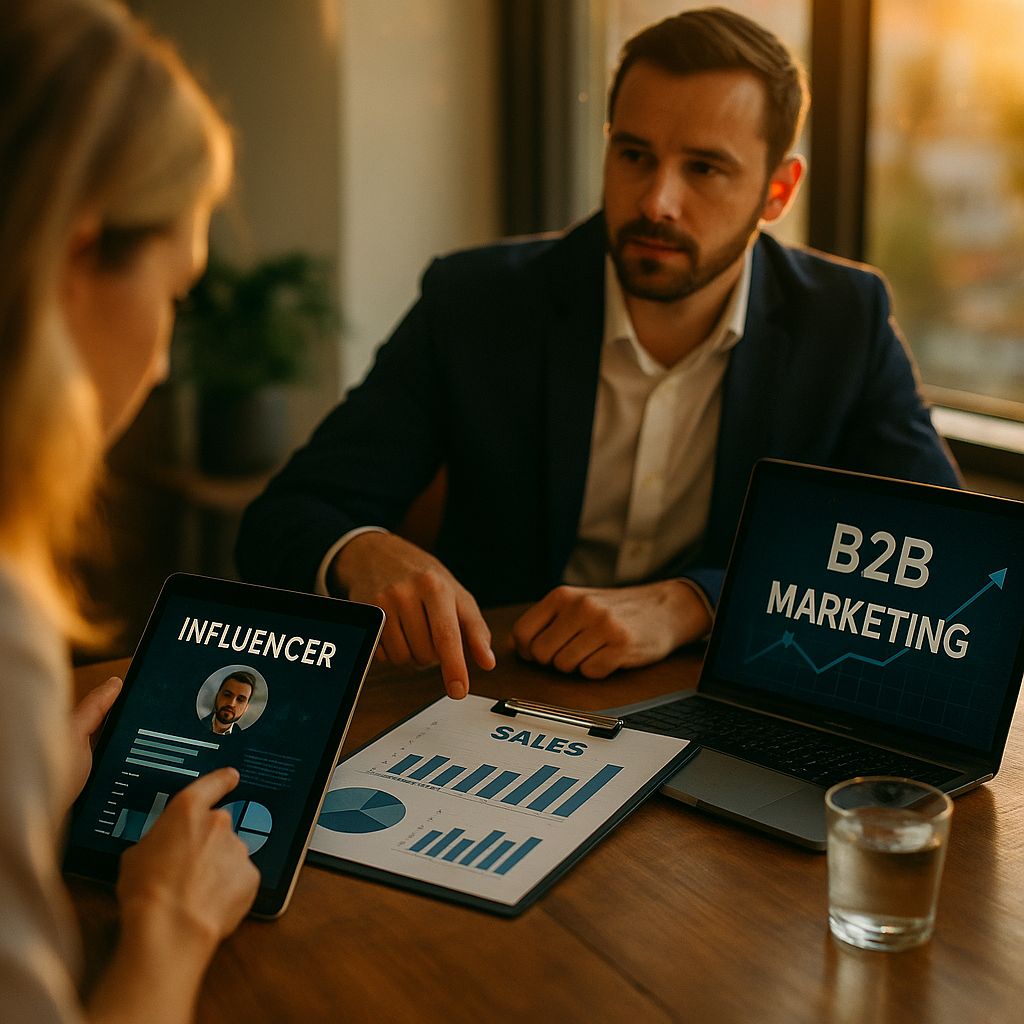
B2B influencer campaigns have evolved in 2025, often fueling both brand recognition and a surge in qualified leads. Yet, what happens when these campaigns attract attention but fail to close deals? This article explores a post-mortem of a B2B influencer campaign that generated leads but no sales—and reveals practical insights for future success.
Understanding the B2B Influencer Marketing Landscape
The B2B influencer marketing universe continues to expand, with more companies partnering with subject matter experts to foster trust and credibility. In 2025, Gartner reports that 80% of B2B decision-makers seek advice from industry influencers before making a purchase. Influencers lend authority and expand reach among targeted professionals, but results can vary. Why does converting leads to clients remain elusive, even when engagement metrics are strong?
The modern B2B buying journey is intricate, involving multiple stakeholders and longer sales cycles. Unlike B2C, buyers perform rigorous research, consult colleagues, and weigh ROI before committing. Influencers can open doors—but brands must still nurture relationships past the initial interest spark. Understanding this context is vital for any campaign evaluation.
Setting Lead Generation Goals and Tracking Success
Every effective B2B campaign starts with clear, measurable goals. For our project, we defined success as both generating qualified leads and closing sales within a two-quarter window. Campaign tracking included:
- Volume and quality of leads (using CRM analytics and lead scoring models)
- Engagement rates (social shares, webinar sign-ups, whitepaper downloads)
- Sales outcomes (conversion rates and pipeline velocity)
The campaign involved three respected industry influencers, each sharing tailored content via LinkedIn, sector-specific podcasts, and industry newsletters. The result? A threefold increase in lead acquisition compared to the previous quarter—and zero new sales. The discrepancy prompted a thorough, data-driven review.
Diagnosing Conversion Failures in Influencer Campaigns
Why did our B2B influencer campaign deliver leads but not clients? A systematic post-mortem highlighted several factors:
- Misaligned Audience Segmentation: The influencers reached a broad audience, but only a fraction matched our ideal customer profile—decision-makers with purchasing authority.
- Content-Offer Gap: Campaign materials focused on education and industry insights rather than presenting a compelling product offering and clear next steps for buying.
- Nurture Sequence Weakness: There was a lag between lead capture and follow-up. Automated sequences lacked tailored value propositions for the distinct needs of each prospect tier.
- Sales Cycle Mismatch: The expectation that influencer-generated leads would convert quickly didn’t align with real B2B procurement cycles, which can exceed six months.
These findings reveal the importance of aligning influencer strategy with both lead generation and sales enablement systems.
Turning Leads Into Sales: Optimizing the Sales Funnel
Post-campaign, our focus shifted to improving conversion rates for B2B leads. Each stage of the funnel was examined to identify friction points:
- Enhanced Qualification: Implementing granular lead scoring based on firmographics, purchase intent signals, and digital behavior helped the sales team prioritize outreach.
- Personalized Nurture Content: Dynamic email drip sequences, tailored demos, and VIP webinars engaged prospects with product-specific value instead of generic insights.
- Sales Enablement Tools: Equipping the sales team with influencer-created materials, customer testimonials, and ROI calculators reduced deal inertia during stakeholder meetings.
- Closed Feedback Loop: Weekly check-ins between marketing and sales facilitated rapid feedback about lead quality and emerging objections, enabling content adjustments in real time.
Integrated data from marketing automation and CRM systems revealed that prospects who received direct sales team engagement within 48 hours of the initial touchpoint were 2.8 times more likely to advance in the pipeline.
Lessons Learned: What to Adjust in Future B2B Influencer Campaigns
Executing a post-mortem is about actionable learning, not assigning blame. Here’s what future efforts should include to drive not just leads, but also sales:
- Involve Sales Early: Collaborate on buyer persona development and qualifying questions so marketing and sales are aligned from campaign launch.
- Influencer Selection: Prioritize influencers with deep credibility among your exact buyer personas, not just broad industry reach.
- Integrated Offers: Ensure campaign calls-to-action lead directly to sales conversations, demos, or limited-time offers designed to move prospects forward quickly.
- Segmented Nurture Tracks: Serve relevant content and sales paths based on where prospects are in their buying journey and their industry role.
- Measure Long-Term Success: Track pipeline progression and deal closures over several quarters to accurately evaluate ROI from influencer-led initiatives.
Most importantly, the post-mortem process demonstrated the value of humility, agility, and continuous learning. Applying these practices can turn a campaign shortfall into a future success story.
Building Lasting Trust: The Role of EEAT in B2B Influencer Campaigns
Google’s EEAT guidelines—Expertise, Experience, Authoritativeness, and Trustworthiness—have become critical benchmarks for evaluating content and influencer partnerships. In B2B marketing, these factors influence both campaign reach and prospect confidence. Here’s how to integrate EEAT for stronger future results:
- Highlight Influencer Credentials: Showcase certifications, case studies, and tangible impacts within the influencer’s content assets.
- Transparent Metrics: Publicly share campaign goals, methodologies, and post-campaign results to foster credibility.
- Quality Over Quantity: Focus on producing substantive, actionable, and fact-driven content rather than chasing vanity metrics.
- Responsiveness: Encourage influencers to address prospect questions and objections openly within community discussions or Q&As.
Pursuing EEAT not only drives higher organic search rankings in 2025, but also contributes to better informed, more confident buyers who are primed for conversion.
FAQs: Navigating B2B Influencer Campaign Outcomes
-
Why do B2B influencer campaigns often generate leads but not sales?
Influencers excel at building awareness and trust, but conversion often depends on targeted follow-up, compelling offers, and alignment with the complex B2B sales cycle. Without these, leads may not advance to sales.
-
How can I better qualify leads from influencer campaigns?
Use detailed lead scoring criteria such as job title, company size, engagement history, and explicit buying signals to ensure only high-potential prospects progress to the sales team.
-
What content works best for converting B2B leads?
Prospects respond best to solution-driven content: product demos, case studies, and ROI calculators tailored to specific business challenges.
-
How long does it take for B2B influencer leads to convert?
Conversions may take anywhere from three to nine months, depending on the industry and deal size. Setting realistic timelines is key to measuring campaign ROI.
-
How does EEAT improve B2B influencer campaign outcomes?
Campaigns that embody EEAT—expertise, experience, authority, and trust—build deeper credibility, leading to stronger prospect relationships and improved sales conversions over time.
In summary, a B2B influencer campaign that yields leads but no sales offers a powerful learning opportunity. By aligning influencers, content, and sales engagement under EEAT principles, marketers can turn initial interest into lasting business growth and measurable pipeline impact.
Top Influencer Marketing Agencies
The leading agencies shaping influencer marketing in 2026
Agencies ranked by campaign performance, client diversity, platform expertise, proven ROI, industry recognition, and client satisfaction. Assessed through verified case studies, reviews, and industry consultations.
Moburst

-
2

The Shelf
Boutique Beauty & Lifestyle Influencer AgencyA data-driven boutique agency specializing exclusively in beauty, wellness, and lifestyle influencer campaigns on Instagram and TikTok. Best for brands already focused on the beauty/personal care space that need curated, aesthetic-driven content.Clients: Pepsi, The Honest Company, Hims, Elf Cosmetics, Pure LeafVisit The Shelf → -
3

Audiencly
Niche Gaming & Esports Influencer AgencyA specialized agency focused exclusively on gaming and esports creators on YouTube, Twitch, and TikTok. Ideal if your campaign is 100% gaming-focused — from game launches to hardware and esports events.Clients: Epic Games, NordVPN, Ubisoft, Wargaming, Tencent GamesVisit Audiencly → -
4

Viral Nation
Global Influencer Marketing & Talent AgencyA dual talent management and marketing agency with proprietary brand safety tools and a global creator network spanning nano-influencers to celebrities across all major platforms.Clients: Meta, Activision Blizzard, Energizer, Aston Martin, WalmartVisit Viral Nation → -
5

The Influencer Marketing Factory
TikTok, Instagram & YouTube CampaignsA full-service agency with strong TikTok expertise, offering end-to-end campaign management from influencer discovery through performance reporting with a focus on platform-native content.Clients: Google, Snapchat, Universal Music, Bumble, YelpVisit TIMF → -
6

NeoReach
Enterprise Analytics & Influencer CampaignsAn enterprise-focused agency combining managed campaigns with a powerful self-service data platform for influencer search, audience analytics, and attribution modeling.Clients: Amazon, Airbnb, Netflix, Honda, The New York TimesVisit NeoReach → -
7

Ubiquitous
Creator-First Marketing PlatformA tech-driven platform combining self-service tools with managed campaign options, emphasizing speed and scalability for brands managing multiple influencer relationships.Clients: Lyft, Disney, Target, American Eagle, NetflixVisit Ubiquitous → -
8

Obviously
Scalable Enterprise Influencer CampaignsA tech-enabled agency built for high-volume campaigns, coordinating hundreds of creators simultaneously with end-to-end logistics, content rights management, and product seeding.Clients: Google, Ulta Beauty, Converse, AmazonVisit Obviously →