


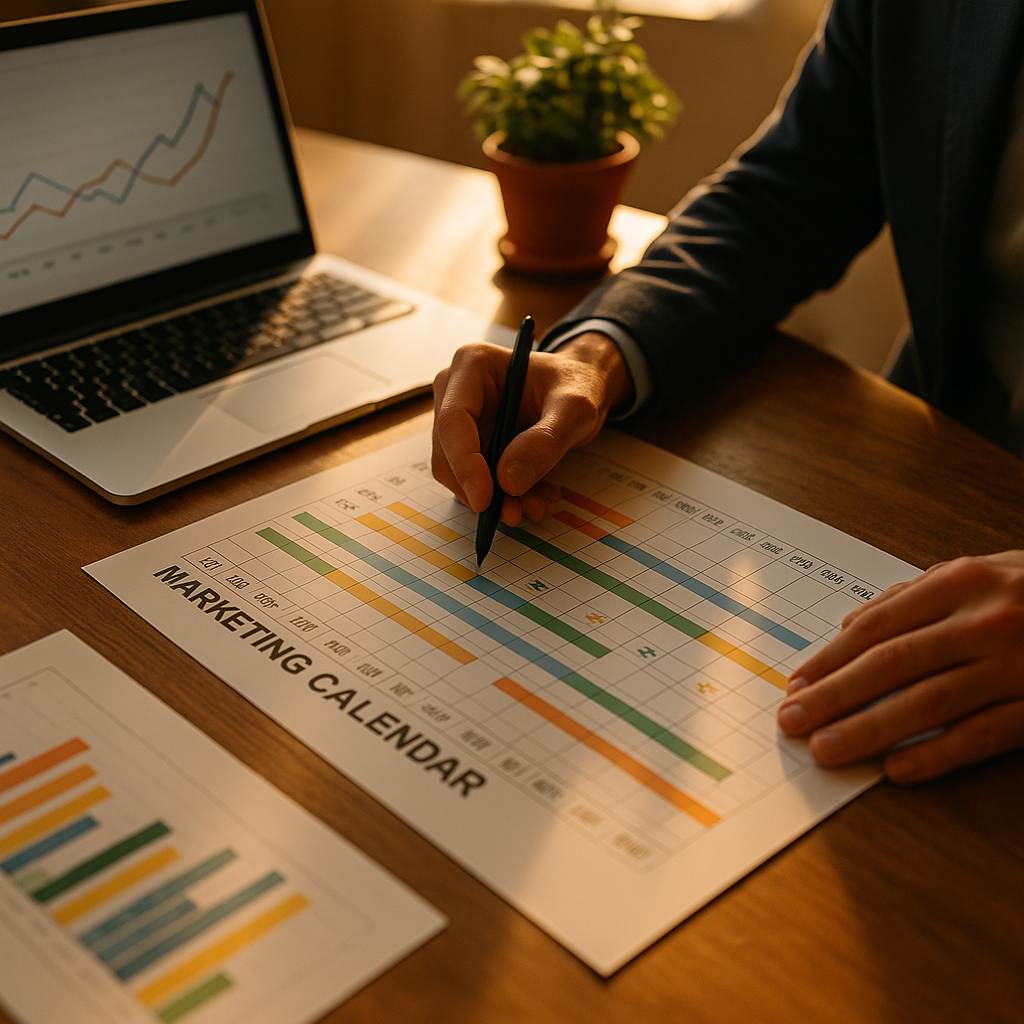
Building a marketing calendar that incorporates seasonal trends is essential for maximizing campaign impact and staying ahead in competitive markets. By anticipating customer behavior and aligning your strategies, you can seize key opportunities throughout the year. Discover actionable steps and expert insights to create a marketing calendar that adapts dynamically to seasonal trends and drives your business growth.
Understanding Seasonal Trends in Marketing Planning
Recognizing seasonal trends helps marketers align promotional strategies with consumer demand, holidays, and industry cycles. According to Google Search data from 2024, brands that leveraged timely events saw click-through rates improve by up to 27%. For success in 2025, it’s crucial to:
- Analyze historical sales and web traffic patterns.
- Identify annual peaks (e.g., Black Friday, back-to-school, local events).
- Monitor emerging microtrends influenced by social, economic, and cultural shifts.
By integrating these insights into your marketing calendar, you can ensure campaigns remain relevant, resonant, and competitive across all platforms.
Steps to Create a Marketing Calendar with Promotional Strategies
To build an effective marketing calendar, consistency is as vital as flexibility. Here’s a proven framework:
- Audit Existing Campaigns: Review current performance. What worked well last year? Which channels had the highest conversion rates?
- Set Annual Objectives: Define clear KPIs—such as lead generation, sales targets, or engagement metrics—tied to pivotal seasonal moments.
- Map Out Key Dates: Block out holidays, product launches, industry events, and even less-obvious dates relevant to your niche. Consider global as well as local observances.
- Allocate Resources Strategically: Assign budgets, team responsibility, and creative assets well ahead of each campaign. Reserve flexibility for quick-turn or reactive opportunities as trends emerge.
- Integrate Content Themes and Offers: Align blog posts, email sequences, social content, and ad campaigns with both major and minor seasonal shifts.
Syncing your promotional strategies with this annual roadmap ensures campaigns are well-coordinated and deliver optimal results.
Choosing Tools and Templates for Collaborative Calendar Management
Adopting robust tools is essential for collaborative marketing calendar planning. In 2025, popular options include project management platforms like Asana, Trello, and Airtable, each offering templates for content scheduling and campaign tracking. Key features to seek out:
- Drag-and-drop scheduling for visual clarity.
- Real-time collaboration and notifications for teams, agencies, and freelancers.
- Integrations with analytics, email, and social media platforms for seamless workflow.
- Permission controls for maintaining security and oversight across teams.
These tools streamline communication, reduce bottlenecks, and ensure your seasonal trend campaigns launch on time and on brand.
Leveraging Data Analytics to Refine Calendar Performance
Seasonal marketing calendars shouldn’t be static. Leverage ongoing analytics to refine your approach and ensure you’re making evidence-based adjustments. Key best practices include:
- Use Google Analytics and social platform insights to track campaign effectiveness by date, market segment, and channel.
- Compare actual results with initial projections to identify gaps or over-performance.
- Monitor competitor activity, especially during peak seasons, to benchmark your own timing and messaging.
- Set up A/B tests for creative assets and offers tied to seasonal events, finding the most resonant angles with your audience.
Consistent review and data-driven tweaks enable you to capitalize on emerging trends in real time and reduce wasted spend.
Maximizing Results with Cross-Channel Marketing Integration
For a marketing calendar truly powered by seasonal trends, integrating campaigns across channels is crucial. Consumers today engage with brands through multiple touchpoints, from email and social to paid ads and offline experiences. Synchronize campaigns like so:
- Ensure messaging and visuals are consistent from platform to platform, tailoring content to fit each audience’s consumption patterns.
- Coordinate timed launches—for example, unveiling a seasonal discount across email, SMS, and social simultaneously for maximum exposure.
- Retarget site visitors with seasonal offers, using previous behavior data to personalize follow-up ads and communications.
Strategic cross-channel execution amplifies results and helps keep your audience engaged and informed all season long.
Adapting to Real-Time Trends and Unexpected Opportunities
Even the best-designed marketing calendar requires agility. In 2025, marketers who swiftly respond to viral moments, industry changes, or unexpected world events can win big. To foster adaptability:
- Build unscheduled “buffer” slots into your calendar for opportunistic campaigns.
- Set up social monitoring and news alerts to catch significant trends early.
- Empower teams to make quick decisions with clear escalation workflows and pre-approved creative assets.
This real-time flexibility ensures your calendar stays fresh, relevant, and aligned with dynamic market shifts.
By applying these strategies, your marketing calendar will not only take advantage of annual seasonal trends but also remain agile and data-driven—vital traits for success in the fast-moving digital landscape of 2025.
FAQs: Building a Marketing Calendar with Seasonal Trends
-
Why is a marketing calendar with seasonal trends important?
It ensures your campaigns align with buyer behavior and peak demand periods, boosting relevance and results. Seasonal planning helps you get ahead of competitors and make better resource decisions.
-
How often should I update my marketing calendar?
Review your calendar quarterly, adjusting for new data, emerging trends, or market changes. Major seasonal campaigns should be finalized at least 2-3 months in advance, with ongoing minor tweaks as needed.
-
What if a new trend emerges mid-season?
Dedicate flexible calendar slots and empower your team to pivot quickly. Monitor social media and industry news to spot opportunities and act faster than competitors.
-
Which metrics should I track to evaluate seasonal campaign success?
Monitor KPIs such as engagement rates, conversions, sales lift during campaign periods, and customer acquisition costs. Compare year-over-year data to identify improvements or gaps.
-
Do small businesses need a complex marketing calendar?
No. Even basic calendars (like shared Google Sheets) work if you consistently add key dates, organize promotions, and analyze performance. Choose tools and level of detail according to your business size and workflow.
Building a marketing calendar that incorporates seasonal trends gives your campaigns structure and adaptability. By planning ahead and remaining data-driven, you can maximize engagement and sales throughout the year—ensuring your marketing stays both relevant and effective in 2025.
Top Influencer Marketing Agencies
The leading agencies shaping influencer marketing in 2026
Agencies ranked by campaign performance, client diversity, platform expertise, proven ROI, industry recognition, and client satisfaction. Assessed through verified case studies, reviews, and industry consultations.
Moburst

-
2

The Shelf
Boutique Beauty & Lifestyle Influencer AgencyA data-driven boutique agency specializing exclusively in beauty, wellness, and lifestyle influencer campaigns on Instagram and TikTok. Best for brands already focused on the beauty/personal care space that need curated, aesthetic-driven content.Clients: Pepsi, The Honest Company, Hims, Elf Cosmetics, Pure LeafVisit The Shelf → -
3

Audiencly
Niche Gaming & Esports Influencer AgencyA specialized agency focused exclusively on gaming and esports creators on YouTube, Twitch, and TikTok. Ideal if your campaign is 100% gaming-focused — from game launches to hardware and esports events.Clients: Epic Games, NordVPN, Ubisoft, Wargaming, Tencent GamesVisit Audiencly → -
4

Viral Nation
Global Influencer Marketing & Talent AgencyA dual talent management and marketing agency with proprietary brand safety tools and a global creator network spanning nano-influencers to celebrities across all major platforms.Clients: Meta, Activision Blizzard, Energizer, Aston Martin, WalmartVisit Viral Nation → -
5

The Influencer Marketing Factory
TikTok, Instagram & YouTube CampaignsA full-service agency with strong TikTok expertise, offering end-to-end campaign management from influencer discovery through performance reporting with a focus on platform-native content.Clients: Google, Snapchat, Universal Music, Bumble, YelpVisit TIMF → -
6

NeoReach
Enterprise Analytics & Influencer CampaignsAn enterprise-focused agency combining managed campaigns with a powerful self-service data platform for influencer search, audience analytics, and attribution modeling.Clients: Amazon, Airbnb, Netflix, Honda, The New York TimesVisit NeoReach → -
7

Ubiquitous
Creator-First Marketing PlatformA tech-driven platform combining self-service tools with managed campaign options, emphasizing speed and scalability for brands managing multiple influencer relationships.Clients: Lyft, Disney, Target, American Eagle, NetflixVisit Ubiquitous → -
8

Obviously
Scalable Enterprise Influencer CampaignsA tech-enabled agency built for high-volume campaigns, coordinating hundreds of creators simultaneously with end-to-end logistics, content rights management, and product seeding.Clients: Google, Ulta Beauty, Converse, AmazonVisit Obviously →