


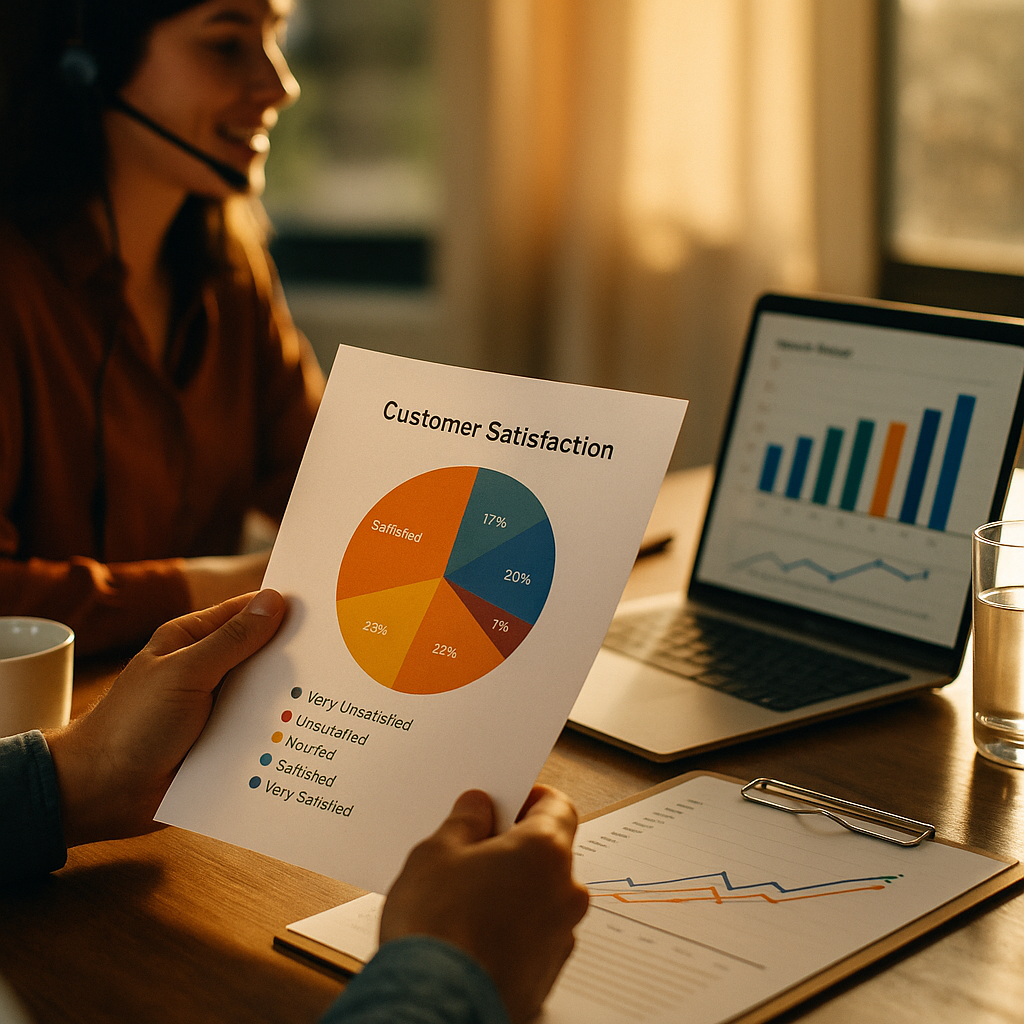
Implementing a customer-led growth strategy can transform your organization, but understanding its true impact requires a clear measurement framework. Crafting a structured approach centered on customer data and insights will help you drive sustained, meaningful results. Discover how to build and execute a framework for measuring the success of a customer-led growth strategy below.
Defining Customer-Led Growth and Its Success Metrics
A customer-led growth strategy places customers at the heart of business decision-making, ensuring products, services, and experiences align with their evolving needs. Key to this approach is measuring success through metrics that reflect customer impact, not just business outcomes. Success metrics might include:
- Customer Satisfaction Scores (CSAT): Gauge how well the company meets or exceeds customer expectations.
- Net Promoter Score (NPS): Measures customer likelihood to recommend your brand.
- Customer Lifetime Value (CLV): Calculates the projected revenue from long-term customer relationships.
- Retention and Churn Rates: Track how well you retain or lose customers over time.
- Product Adoption: Evaluate how quickly and widely customers embrace new features or offerings.
Aligning on these customer-centric metrics ensures any assessment of your strategy is rooted in the real impact on your most valuable asset: your customers.
Building a Customer Data Ecosystem for Actionable Insights
Your measurement framework relies on comprehensive, actionable data. In 2025, modern organizations deploy integrated customer data platforms (CDPs) and CRM systems to create a unified view. Best practices for building a customer data ecosystem include:
- Identify Key Data Sources: Gather data from digital touchpoints, support channels, product usage, surveys, and social interactions.
- Centralize Data: Implement a single source of truth with your CDP or CRM to avoid silos.
- Ensure Data Quality and Compliance: Regularly audit data accuracy and uphold privacy standards like GDPR and CCPA.
- Enable Real-Time Analytics: Use technologies that allow instant access and analysis to act rapidly on customer needs.
An actionable data ecosystem empowers your teams to make customer-led decisions backed by reliable intelligence, accelerating both innovation and service improvements.
Mapping the Customer Journey and Touchpoints
Understanding the entire customer journey—from awareness to advocacy—is essential for measuring the effectiveness of your customer-led growth strategy. To do this:
- Create Customer Personas: Use demographic, psychographic, and behavioral data to define segments.
- Map Each Stage: Illustrate every step customers take, highlighting decision points, pain points, and moments of delight.
- Connect Metrics to Touchpoints: Track engagement, conversion, and satisfaction metrics at each critical interaction.
- Listen and Iterate: Conduct regular interviews and feedback sessions to validate and refine your journey map.
By linking metrics directly to journey stages, you reveal precisely where your strategy is working—and where refinements are needed to improve growth outcomes.
Implementing Continuous Feedback Loops
Real customer-led growth strategies thrive on ongoing learning. Create mechanisms to capture, analyze, and respond to customer feedback seamlessly. Proven steps include:
- Multi-Channel Feedback Collection: Leverage surveys, user interviews, review platforms, and social listening tools.
- Establish Data Review Cadence: Schedule regular cross-functional meetings to assess feedback trends and themes.
- Close the Loop with Customers: Demonstrate action on insights by updating your audience and showing how feedback drives improvements.
- Foster a Test-and-Learn Culture: Pilot new features based on feedback, then measure the customer and business impact.
Embedding feedback loops means your strategy remains dynamic, customer preferences are addressed in real time, and growth initiatives are always grounded in genuine user needs.
Analyzing Outcomes and Optimizing for Customer-Centric Growth
With data, journey maps, and feedback in place, success relies on thoughtful outcome analysis. To drive continuous improvement:
- Benchmark Against Clear Targets: Align your metrics with industry standards and internal benchmarks.
- Segment Analysis: Compare results across segments to identify high-value opportunities and at-risk areas.
- Root Cause Investigation: When metrics lag, use tools like the Five Whys or fishbone diagrams to trace underlying issues.
- Data Storytelling: Present findings visually to align teams and executives around customer-driven insights and opportunities.
- Iterate and Test: Use agile methodologies to implement changes rapidly and measure impact in short cycles.
Optimizing your customer-led growth strategy means proactively responding to data, seizing quick wins, and investing in transformational improvements that foster loyalty and sustainable growth.
Conclusion: Prioritize Measurement for Sustainable Customer-Led Growth
Measuring the success of a customer-led growth strategy demands a holistic, data-driven framework. By following the steps above, you’ll not only prove impact but also unlock continuous growth aligned with real customer needs. Make customer success the foundation for every growth initiative and foster enduring loyalty in a competitive, evolving market.
Frequently Asked Questions About Measuring Customer-Led Growth
-
What is a customer-led growth strategy?
A customer-led growth strategy prioritizes the voice and needs of customers in all business decisions, focusing on delivering experiences and products that drive long-term value and loyalty.
-
Which metrics best measure customer-led growth?
Key metrics include Net Promoter Score (NPS), Customer Satisfaction (CSAT), Customer Lifetime Value (CLV), retention and churn rates, and engagement or adoption rates of new offerings.
-
How frequently should I review success metrics?
Establish a regular cadence, such as monthly or quarterly, for reviewing KPIs. More frequent reviews may be necessary during high-change periods or product launches.
-
How do feedback loops enhance customer-led growth?
Feedback loops enable companies to dynamically respond to customer needs, making your strategy more agile and increasing the likelihood of high retention and satisfaction rates.
-
Why is data centralization important in measuring customer-led growth?
Centralizing data eliminates silos, improves accuracy, and enables 360-degree visibility into your customers, making measurement more reliable and actionable for strategic decisions.
-
Can small businesses implement a customer-led growth measurement framework?
Absolutely. Even with limited resources, small businesses can use affordable CRM tools, simplified feedback methods, and focused journey mapping to measure and improve their customer-led growth efforts.
Top Influencer Marketing Agencies
The leading agencies shaping influencer marketing in 2026
Agencies ranked by campaign performance, client diversity, platform expertise, proven ROI, industry recognition, and client satisfaction. Assessed through verified case studies, reviews, and industry consultations.
Moburst

-
2

The Shelf
Boutique Beauty & Lifestyle Influencer AgencyA data-driven boutique agency specializing exclusively in beauty, wellness, and lifestyle influencer campaigns on Instagram and TikTok. Best for brands already focused on the beauty/personal care space that need curated, aesthetic-driven content.Clients: Pepsi, The Honest Company, Hims, Elf Cosmetics, Pure LeafVisit The Shelf → -
3

Audiencly
Niche Gaming & Esports Influencer AgencyA specialized agency focused exclusively on gaming and esports creators on YouTube, Twitch, and TikTok. Ideal if your campaign is 100% gaming-focused — from game launches to hardware and esports events.Clients: Epic Games, NordVPN, Ubisoft, Wargaming, Tencent GamesVisit Audiencly → -
4

Viral Nation
Global Influencer Marketing & Talent AgencyA dual talent management and marketing agency with proprietary brand safety tools and a global creator network spanning nano-influencers to celebrities across all major platforms.Clients: Meta, Activision Blizzard, Energizer, Aston Martin, WalmartVisit Viral Nation → -
5

The Influencer Marketing Factory
TikTok, Instagram & YouTube CampaignsA full-service agency with strong TikTok expertise, offering end-to-end campaign management from influencer discovery through performance reporting with a focus on platform-native content.Clients: Google, Snapchat, Universal Music, Bumble, YelpVisit TIMF → -
6

NeoReach
Enterprise Analytics & Influencer CampaignsAn enterprise-focused agency combining managed campaigns with a powerful self-service data platform for influencer search, audience analytics, and attribution modeling.Clients: Amazon, Airbnb, Netflix, Honda, The New York TimesVisit NeoReach → -
7

Ubiquitous
Creator-First Marketing PlatformA tech-driven platform combining self-service tools with managed campaign options, emphasizing speed and scalability for brands managing multiple influencer relationships.Clients: Lyft, Disney, Target, American Eagle, NetflixVisit Ubiquitous → -
8

Obviously
Scalable Enterprise Influencer CampaignsA tech-enabled agency built for high-volume campaigns, coordinating hundreds of creators simultaneously with end-to-end logistics, content rights management, and product seeding.Clients: Google, Ulta Beauty, Converse, AmazonVisit Obviously →