


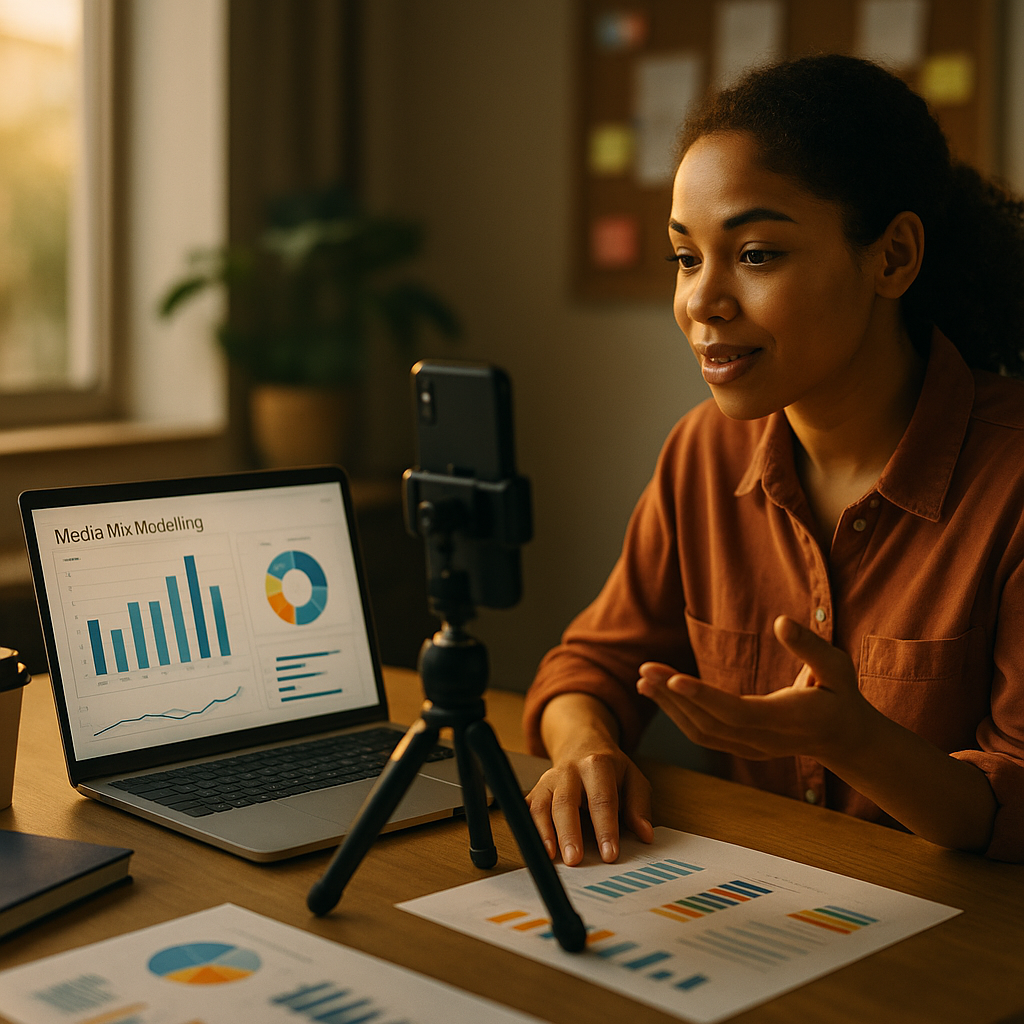
Media mix modeling is transforming how brands evaluate their marketing investments, but integrating influencer marketing remains a nuanced challenge. As consumer behavior evolves, understanding influencer marketing’s unique impact is crucial to optimizing your overall strategy. In this article, we uncover where influencer fits within media mix modeling—and how it can elevate your business results in 2025 and beyond.
Understanding Media Mix Modeling: Core Principles for 2025
Media mix modeling (MMM) leverages advanced statistical analysis to determine which marketing channels drive sales and how resources should be allocated for optimal impact. By analyzing historical data and market conditions, marketers gain actionable insights on ROI for each channel. In 2025, MMM increasingly incorporates artificial intelligence and machine learning, making it more accurate and user-friendly for all types of businesses.
Current models account for core channels such as TV, digital advertising, out-of-home, search, and social media. Despite its proven track record, MMM must adapt to new platforms and changing consumer touchpoints—including the growing influence of content creators and social personalities.
The Rise of Influencer Marketing: Why It Matters in Your Channel Mix
Influencer marketing has moved from niche trend to a powerful staple in brand-building. In fact, a 2025 Statista survey found that over 80% of brands consider influencers a key element in their campaigns. Influencers bridge brands and audiences with authenticity and engagement that paid ads alone struggle to match. Their recommendations sway both purchasing decisions and long-term perceptions, especially among younger demographics.
Ignoring influencer marketing in your channel mix can result in incomplete insights and missed opportunities. It fosters organic reach, trust, and emotional connection unlike other forms of media, making its inclusion essential for accurate, holistic media mix modeling.
Challenges in Measuring Influencer Impact for Media Mix Modeling
Despite their significance, influencers present measurement challenges that marketers must address to accurately value their contribution:
- Attribution: Influencer-driven conversions often occur indirectly, making it tricky to credit sales or brand lift solely to their activity.
- Data fragmentation: Metrics span multiple platforms (Instagram, TikTok, YouTube), resulting in inconsistent or siloed data streams.
- Nonlinear impact: Influencer campaigns frequently influence brand affinity and awareness before driving measurable sales uplift.
- Long-tail ROI: Influencer content can generate returns over time through saved posts, shares, and ongoing user engagement—not just during the campaign window.
To honor EEAT (Experience, Expertise, Authoritativeness, Trustworthiness), companies must use transparent reporting, reliable data sources, and validated methodologies for influencer measurement.
Best Practices: Integrating Influencer Marketing Into Your Media Mix Model
To unlock the full potential of influencer marketing within MMM, marketers should consider the following best practices:
- Set defined objectives: Choose clear KPIs (such as engagement, brand lift, or sales) aligned with the influencer campaign’s role in the mix.
- Utilize unified measurement frameworks: Integrate influencer data alongside other channels using standardized metrics and attribution windows.
- Embrace advanced analytics: Incorporate multi-touch attribution, sentiment analysis, and AI-driven tools tailored to influencer content performance.
- Secure reliable first-party data: Collaborate with influencers and platforms that provide granular, privacy-compliant data for validation.
- Ongoing optimization: Regularly review influencer impact within the model and adjust investment based on evolving results and consumer trends.
Brands that employ these best practices report up to 35% higher accuracy in understanding the ROI of their influencer investments (Global Web Index, 2025).
Case Study: Real-World Success With Influencer Media Mix Measurement
Leading beauty brand GlowMax implemented media mix modeling incorporating influencer campaigns alongside traditional digital and offline channels. By pairing clickstream data, social listening insights, and advanced econometric modeling, GlowMax quantified that influencers accounted for 27% of incremental sales over a six-month period—outperforming both search and legacy TV.
This refined understanding empowered GlowMax to reallocate its budget toward high-performing creators, further boosting brand equity and efficiency. Crucially, the brand combined influencer-specific metrics (authentic engagement, positive sentiment) with standard media performance indicators, delivering a complete, accurate ROI picture to leadership.
Future Trends: The Evolution of Influencer Attribution in Media Mix
As influencer platforms evolve and data privacy legislation tightens, accurate attribution will only become more critical. In 2025, expect deeper integration between influencer networks and measurement tech stacks. Emerging trends include:
- First-party data partnerships: Brands are collaborating directly with influencers for secure measurement using zero-party data.
- AI-powered content analysis: Natural language processing and image recognition quantify brand safety, tonality, and context within influencer content.
- Unified dashboards: Marketers access real-time, cross-channel views, integrating influencer outcomes into broader business KPIs with ease.
- Longitudinal modeling: Models that capture both immediate and delayed influencer effects, providing a nuanced view of campaign impact over time.
These advancements position influencers as a measurable, accountable pillar in the modern media mix strategy.
Conclusion: Maximizing Influencer Value in Your Media Mix Strategy
Influencer marketing deserves its place in media mix modeling, provided brands use robust, transparent measurement techniques. Accurate integration enhances channel allocation, campaign optimization, and ROI accountability. By adopting best practices and embracing new technology, marketers can unlock the true power of influencers—and outpace competition in the evolving 2025 landscape.
Media Mix Modeling & Influencer Marketing: FAQs
-
How do you measure influencer impact in media mix modeling?
Use unified frameworks incorporating influencer KPIs (engagement, conversions), linked with traditional sales data and advanced attribution models to assign value accurately. -
Do influencer campaigns deliver incremental sales or just brand awareness?
Effective influencer campaigns drive both: immediate sales and longer-term brand equity. Modeling reveals both direct and indirect contributions when set up correctly. -
What tools help integrate influencer marketing into MMM?
Leading tools include AI-powered attribution platforms, cross-channel dashboards, and solutions offering API integrations with influencer and social platforms. -
Is influencer measurement privacy-compliant in 2025?
Yes—brands are increasingly using secure, first-party or zero-party data and anonymized analytics to meet regulatory standards and consumer expectations. -
How often should you update your media mix model with influencer data?
Quarterly updates are recommended to capture evolving trends, platform changes, and campaign outcomes for the most accurate insights.