


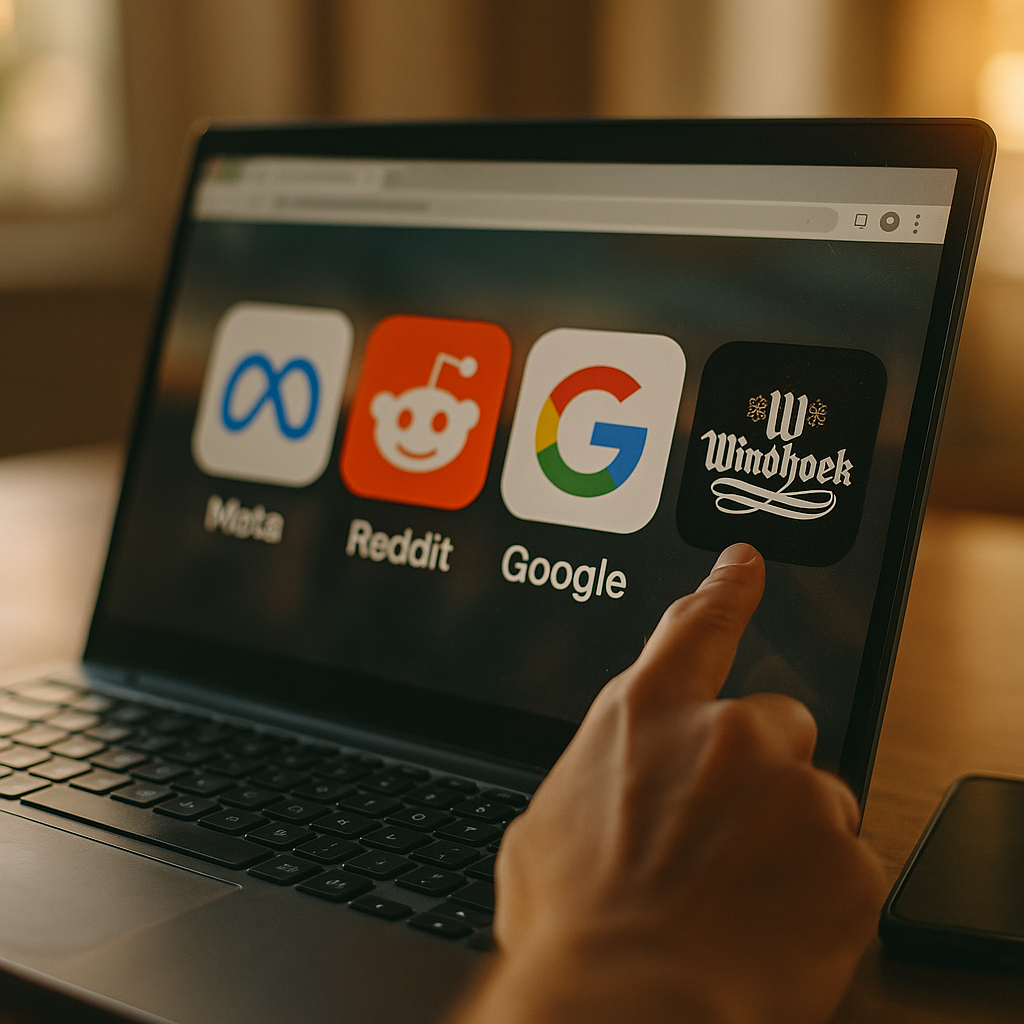
Four companies. One roundup. Wildly different bets on where marketing technology goes next. Ad Age’s latest emerging technology roundup quietly mapped out the next eighteen months of brand tech investment, and most marketers are reading the headlines without seeing the pattern underneath. Meta is chasing AI-native ad formats. Reddit is defending authenticity as a product feature. Google is fusing search with agentic AI. And Windhoek — yes, the beer brand — is proving that even legacy CPG players are rethinking their tech stack. Here’s what it actually means for your budget.
Why This Roundup Matters More Than the Usual Trend Piece
Most “emerging tech” coverage is speculative fluff. Ad Age’s roundup is different because it’s tracking capital allocation, not conference-stage hype. When Meta, Reddit, and Google all move in the same quarter, that’s not coincidence. That’s a signal that the platforms brands depend on are recalibrating what they’ll sell, what they’ll measure, and what they’ll charge for.
Windhoek’s inclusion is the wildcard that makes this list useful. A regional beer brand experimenting with generative production tools tells you something the platform giants can’t: adoption risk is now a board-level conversation, not just an agency one. Brands watched a viral beer ad backlash unfold over AI imagery just months ago. Windhoek’s move suggests some marketers are pressing forward anyway, betting that production efficiency outweighs trust risk. That’s a bet every CMO needs to evaluate for their own category.
Meta’s AI-Native Ad Push: Efficiency Play or Control Grab?
Meta’s roadmap centers on generative ad creation tools that build full campaigns from a product photo and a prompt. Advantage+ was the opening move. What’s rolling out now goes further: automated variant testing, AI-written copy tuned to individual user signals, and creative assembly that happens inside Meta’s walled garden with minimal advertiser input.
The pitch is efficiency. The reality is control consolidation. Every brand that leans into Meta’s automated creative tools is handing over more of the “how” and keeping less of the “why.” That’s fine if performance holds. It’s a problem if you can’t explain to a CFO why creative decisions are now a black box.
The platforms building the deepest AI automation are also the ones asking brands to trust them with the least amount of creative oversight — and that trade-off deserves a line item in your risk assessment, not just your media plan.
Practically, this means marketing teams need a parallel measurement layer that doesn’t depend entirely on Meta’s own attribution. If you’re already worried about vanity metrics losing relevance, automated creative just adds another variable you can’t fully audit. Build your own creative performance benchmarks before you hand the keys over.
What Brands Should Actually Do Here
- Run automated and human-directed creative in parallel for at least one full quarter before reallocating budget.
- Demand creative-level reporting, not just campaign-level ROAS, from your Meta rep.
- Flag AI-generated assets internally for legal review, especially in regulated categories like finance, health, or alcohol.
Reddit Bets on Authenticity as Infrastructure
Reddit’s emerging tech story isn’t about generative AI at all. It’s about defending the thing that makes Reddit valuable in the first place: unscripted, community-driven conversation. Reddit has been investing heavily in AI-powered spam and bot detection, not to chase automation trends but to protect the signal-to-noise ratio that makes its ad inventory worth buying.
This matters because bot traffic now outpaces human traffic on parts of the open web, and brands are starting to notice that engagement numbers don’t always mean people. Reddit’s anti-spam infrastructure is a direct response to that erosion of trust, and it changes how brands should approach seeding and community engagement on the platform.
We covered this shift in detail already: Reddit’s AI anti-spam moves are cutting fake engagement and forcing a full rethink of how brands seed conversations. The short version? Astroturfing on Reddit is getting harder, and that’s good news for brands willing to do organic community work the right way. It’s bad news for anyone whose Reddit strategy was built on quick, scaled seeding tactics.
Reddit is positioning itself as the anti-algorithm platform at exactly the moment brands are losing faith in algorithmic reach. That’s not a small bet. It’s a direct challenge to Meta’s automation-first approach, and it gives brands a genuine choice between two philosophies of platform trust.
Google’s Agentic Search Layer Changes the Funnel
Google’s contribution to the roundup is arguably the most disruptive: agentic AI features embedded directly into Search and Shopping, where the AI doesn’t just answer a query, it completes a task. Compare products, filter by budget, add to cart, all without the user clicking through to a brand’s website.
That’s a fundamental funnel change. AI referral traffic is already splitting the marketing funnel in two, separating brand discovery from brand visit in ways traditional attribution wasn’t built to handle. Google’s agentic layer accelerates that split. If an AI agent can complete a purchase decision on a brand’s behalf, the brand’s own site becomes a fulfillment endpoint rather than a persuasion surface.
For marketers, this raises an uncomfortable question: how do you build brand preference into a system where an AI agent, not a human, is making the comparison? The answer isn’t more landing pages. It’s structured data, verified product feeds, and consistent brand signals across every surface an AI might scrape. Google’s own Search Console documentation is a reasonable starting point for auditing how machine-readable your product data actually is.
Consider this: 94% of B2B buyers already use AI in some part of their research process. If that pattern holds for consumer categories, and early signs suggest it does, brands that haven’t optimized for agentic discovery are already behind.
Where the Budget Should Actually Go
Stop thinking about “SEO budget” and “paid search budget” as separate lines. Agentic search blurs that distinction. What matters now is whether your product and brand data is structured well enough for an AI agent to trust it, recommend it, and complete a transaction with confidence. That’s a technical investment as much as a marketing one, and it likely means pulling engineering resources into a conversation that used to belong entirely to the marketing team.
Windhoek’s Smaller Bet, Bigger Implication
Windhoek doesn’t have Google’s budget or Meta’s reach. What it has is a real-world test case: a legacy consumer brand experimenting with generative production tools in a category where trust is fragile and regulatory scrutiny is high. That’s precisely why it belongs in this roundup.
The brand’s approach signals something the bigger players can’t: mid-market and regional brands are no longer waiting for the “safe” version of AI creative tools to arrive. They’re testing now, accepting some reputational risk, because the cost of standing still feels higher than the cost of a misstep. Whether that’s the right calculus depends heavily on category and audience.
Alcohol brands sit in one of the most trust-sensitive spaces in advertising. The AI trust paradox that CMOs are grappling with applies directly here: the categories with the most to gain from AI production efficiency are often the ones with the least room for error.
Windhoek’s experiment is a live test of a question every CMO in a trust-sensitive category is quietly asking: how much AI-generated content can a legacy brand absorb before consumers notice, and does noticing even matter if the work performs?
What Brand Tech Investment Priorities Should Look Like Now
Pulling these four threads together, a clear investment hierarchy emerges for brand tech investment priorities heading into the next planning cycle:
- Structured data and product feeds — non-negotiable if agentic search is going to shape discovery.
- Independent measurement layers — don’t let platform-native AI tools be your only source of truth on performance.
- Community and trust infrastructure — Reddit’s bet suggests authentic engagement is becoming a premium asset, not a nice-to-have.
- Calculated creative risk-taking — Windhoek shows smaller brands can move fast, but only with legal and comms teams looped in early.
None of this requires abandoning existing platform relationships. It requires diversifying dependency. A brand that’s 80% reliant on one platform’s AI stack for creative, measurement, and discovery is a brand with a single point of failure. Industry data from eMarketer and Statista consistently shows ad tech consolidation accelerating, which makes diversification harder but more urgent.
If you’re rebuilding budget allocation for the next cycle, this is also a good moment to revisit how creator and influencer spend fits into the picture. Creator spend is up sharply while brand linkage lags, which tells you measurement gaps aren’t limited to platform AI tools. They run through the entire modern marketing stack.
The Bottom Line for Planning
Ad Age’s roundup isn’t really about four unrelated companies. It’s about four different bets on where trust, automation, and discovery collide next. Meta is betting brands will trade control for efficiency. Reddit is betting authenticity becomes a premium product. Google is betting agents replace clicks. Windhoek is betting speed beats caution. Your job isn’t to pick one winner. It’s to hedge across all four, with budget and governance built for a stack that won’t sit still.
FAQs
What did Ad Age’s emerging technology roundup actually cover?
The roundup tracked recent technology moves from Meta, Reddit, Google, and Windhoek, highlighting how each company is investing in AI-driven advertising, community trust infrastructure, agentic search, and generative content production respectively.
Why does Windhoek matter in a roundup dominated by tech giants?
Windhoek represents how mid-market and regional consumer brands are adopting generative AI tools despite trust risks, offering a real-world test case that larger platforms can’t provide on their own.
How should brands prioritize tech investment based on these signals?
Prioritize structured product data for agentic search, build independent measurement systems separate from platform-native AI tools, invest in authentic community engagement, and approach generative creative tools with legal and risk review built in.
Is Meta’s AI-native advertising push a risk for brand control?
Yes. Automated creative tools shift more creative decision-making inside Meta’s own systems, reducing advertiser visibility into why specific ad variants are served, which complicates internal reporting and creative accountability.
What does Google’s agentic search shift mean for SEO and paid search budgets?
It blurs the line between SEO and paid search entirely. Brands need machine-readable, structured product data that AI agents can trust and act on, not just optimized landing pages for human visitors.
Visible FAQ (duplicate for schema)
The takeaway isn’t which platform to trust most. It’s building a stack resilient enough that no single AI roadmap decision — Meta’s, Google’s, or anyone else’s — can derail your brand’s performance overnight.
Top Influencer Marketing Agencies
The leading agencies shaping influencer marketing in 2026
Agencies ranked by campaign performance, client diversity, platform expertise, proven ROI, industry recognition, and client satisfaction. Assessed through verified case studies, reviews, and industry consultations.
Moburst

-
2

The Shelf
Boutique Beauty & Lifestyle Influencer AgencyA data-driven boutique agency specializing exclusively in beauty, wellness, and lifestyle influencer campaigns on Instagram and TikTok. Best for brands already focused on the beauty/personal care space that need curated, aesthetic-driven content.Clients: Pepsi, The Honest Company, Hims, Elf Cosmetics, Pure LeafVisit The Shelf → -
3

Audiencly
Niche Gaming & Esports Influencer AgencyA specialized agency focused exclusively on gaming and esports creators on YouTube, Twitch, and TikTok. Ideal if your campaign is 100% gaming-focused — from game launches to hardware and esports events.Clients: Epic Games, NordVPN, Ubisoft, Wargaming, Tencent GamesVisit Audiencly → -
4

Viral Nation
Global Influencer Marketing & Talent AgencyA dual talent management and marketing agency with proprietary brand safety tools and a global creator network spanning nano-influencers to celebrities across all major platforms.Clients: Meta, Activision Blizzard, Energizer, Aston Martin, WalmartVisit Viral Nation → -
5

The Influencer Marketing Factory
TikTok, Instagram & YouTube CampaignsA full-service agency with strong TikTok expertise, offering end-to-end campaign management from influencer discovery through performance reporting with a focus on platform-native content.Clients: Google, Snapchat, Universal Music, Bumble, YelpVisit TIMF → -
6

NeoReach
Enterprise Analytics & Influencer CampaignsAn enterprise-focused agency combining managed campaigns with a powerful self-service data platform for influencer search, audience analytics, and attribution modeling.Clients: Amazon, Airbnb, Netflix, Honda, The New York TimesVisit NeoReach → -
7

Ubiquitous
Creator-First Marketing PlatformA tech-driven platform combining self-service tools with managed campaign options, emphasizing speed and scalability for brands managing multiple influencer relationships.Clients: Lyft, Disney, Target, American Eagle, NetflixVisit Ubiquitous → -
8

Obviously
Scalable Enterprise Influencer CampaignsA tech-enabled agency built for high-volume campaigns, coordinating hundreds of creators simultaneously with end-to-end logistics, content rights management, and product seeding.Clients: Google, Ulta Beauty, Converse, AmazonVisit Obviously →