


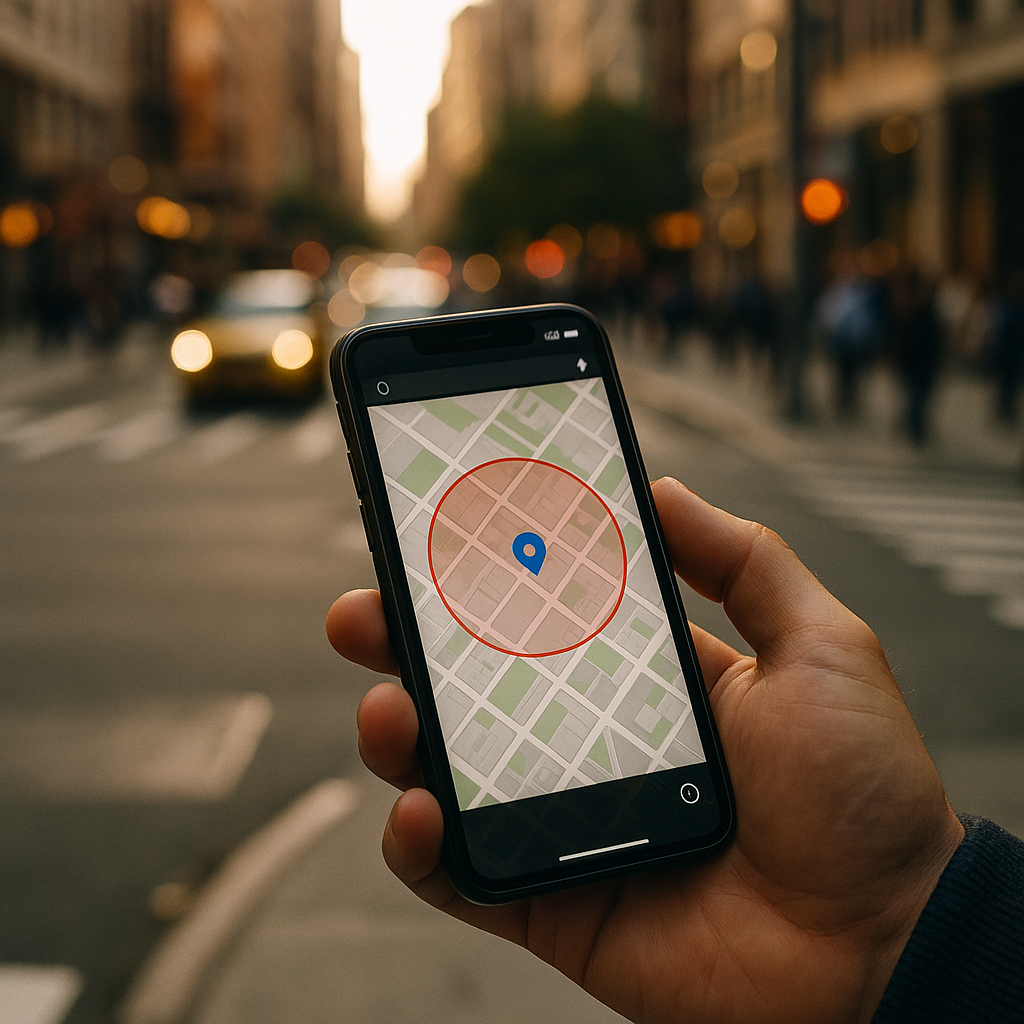
In 2026, micro geofencing in high density urban environments is moving from experimental tactic to practical growth channel. As cities grow more connected, brands, venues, transit operators, and retailers need location precision that works across stacked floors, dense foot traffic, and fast-moving audiences. The shift is not just technical; it changes how local engagement, privacy, and measurement work at street level.
What micro geofencing means for urban location targeting
Traditional geofencing typically draws a virtual perimeter around a broad area such as a store radius, neighborhood, or event venue. That model works in suburban settings, but dense city centers create a different reality. Streets are narrow, buildings are vertical, GPS signals reflect off surfaces, and a person can be physically close to a location without having any real purchase intent.
Micro geofencing solves this by shrinking the target zone and combining multiple signals to improve relevance. Instead of targeting everyone within several blocks, a brand may target people at a specific entrance, on a certain floor, inside a transit platform, or in a queue zone. The goal is not simply to know that someone is nearby. The goal is to understand context well enough to trigger a useful, timely action.
In practice, urban location targeting now blends:
- GPS and assisted GPS for broad positioning
- Wi-Fi and Bluetooth beacons for finer indoor or near-entry signals
- Cell-tower and device motion data for continuity when GPS weakens
- Map, floor-plan, and point-of-interest data to interpret where a user actually is
- Time, dwell, and movement patterns to distinguish passing by from meaningful presence
This shift matters because the economics of city marketing are unforgiving. Media waste compounds quickly when every block contains competing storefronts, office towers, stations, and residential units. Micro geofencing reduces that waste by aligning location triggers with real-world intent instead of simple proximity.
It also supports better customer experience. A commuter leaving a station at 8:15 a.m. should not receive the same message as a shopper browsing a luxury department store at 2:00 p.m., even if both are within 150 meters of the same café. Smaller, smarter fences make that distinction possible.
Why high density urban environments demand more precision
High density urban environments amplify every weakness of broad geofencing. Signal interference is common. A person on the twelfth floor may appear close to a ground-level business. Foot traffic changes by hour, weather, event schedules, and transit delays. Even a well-placed radius can pull in office workers who never enter a retail corridor or residents who have no interest in a nearby commercial offer.
That is why precision is no longer optional in dense cities. For marketers and operators, the main drivers behind the shift include:
- Vertical complexity: Multi-story retail, offices, hotels, and transit hubs require floor-aware targeting.
- Compressed competition: Adjacent businesses often sell similar products, so relevance must be sharper.
- Fast decision windows: Urban consumers move quickly; offers must arrive at the exact moment they can act.
- Higher privacy expectations: People are more sensitive to intrusive or obviously imprecise location-based outreach.
- Operational use cases: Smart cities, venue management, and mobility services need sub-zone awareness, not neighborhood-level estimates.
A useful example is quick-service retail near major stations. A standard radius around a station may include people inside offices, in cabs, underground on platforms, or simply passing through a connected concourse. A micro geofence can isolate platform exits, sidewalk approach paths, or a store’s pickup shelf. That difference improves both targeting efficiency and operational planning.
The same applies beyond advertising. Property managers use micro geofencing for amenity usage insights. Event operators use it to manage ingress, concession demand, and crowd distribution. Transit agencies use it to improve passenger communications. In each case, smaller geofences help organizations act on real movement patterns instead of rough assumptions.
How location-based marketing is evolving with new data signals
Location-based marketing in 2026 is less about drawing circles on a map and more about combining signals into confidence-based decisions. Experienced teams no longer ask, “Is this person near the store?” They ask, “How confident are we that this person is at a relevant micro-location, showing relevant behavior, with a message that adds value right now?”
That shift reflects a more mature operating model. Rather than relying on one signal source, successful programs layer data quality controls and decision logic:
- Define the business event: store entry, queue arrival, venue section dwell, curbside pickup, or cross-visit behavior.
- Map physical reality: entrances, barriers, sidewalks, levels, platform edges, and neighboring businesses.
- Select signal combinations: beacon plus dwell time, Wi-Fi plus motion, or GPS plus map matching.
- Set confidence thresholds: only trigger when signal agreement and dwell indicate meaningful presence.
- Measure the downstream action: visit lift, redemption, app action, repeat footfall, or operational improvement.
This makes campaigns more credible and more measurable. It also aligns with Google’s helpful content principles and EEAT expectations. Readers and decision-makers want evidence, practical guidance, and realistic limitations. The most trustworthy organizations explain what micro geofencing can do, what it cannot do, and what trade-offs affect performance.
For example, no responsible expert should promise perfect indoor accuracy across every city block and building type. Accuracy depends on device settings, consent, available infrastructure, environmental conditions, and the quality of spatial data. Stronger content and stronger strategy both acknowledge those variables upfront.
Another major change is the rise of first-party and consent-based activation. As privacy rules tighten and consumers demand transparency, marketers are leaning more on opted-in app users, loyalty members, and contextual messaging within known customer journeys. This reduces risk while often increasing performance because the audience is more qualified to begin with.
Best practices for proximity marketing in crowded city zones
Proximity marketing succeeds in crowded city zones when the message, trigger, and measurement framework are tightly connected. Precision without strategy still leads to wasted spend. The most effective teams start with specific use cases and user value, then build technical execution around them.
Use these best practices:
- Target entry points, not just addresses: In cities, the front door matters more than the map pin. Build fences around entrances, escalators, exits, and pickup areas.
- Use dwell thresholds: A person standing for two minutes near a storefront may be more valuable than someone moving past within five seconds.
- Separate passersby from destination visitors: Motion patterns and repeat exposure can distinguish someone commuting through an area from someone intending to engage.
- Adjust by time and density: Lunchtime, commute windows, concerts, and weather shifts can change foot traffic quality dramatically.
- Test message utility: Discounts are not always the answer. Directions, wait times, pickup readiness, or limited-stock alerts may outperform promotions.
- Cap frequency aggressively: Urban users encounter constant stimuli. Relevance drops fast if messaging feels repetitive or intrusive.
- Validate against on-the-ground truth: Walk the site, inspect entrances, review floor plans, and confirm neighboring signal noise before launch.
Many teams also underestimate the importance of creative alignment. If the geofence is micro-specific, the message should reflect that specificity. “Skip the line at the west entrance” is stronger than “Visit us nearby.” “Your pickup is ready on level 2” is stronger than a generic reminder. The closer the creative matches the physical situation, the more natural the experience feels.
Measurement should also move beyond click-through rate. In dense urban settings, better indicators often include verified arrivals, incremental visits, redemption by micro-zone, queue reduction, basket size, and repeat behavior. These metrics give a clearer picture of actual business impact.
Privacy, compliance, and trust in hyperlocal advertising
Hyperlocal advertising only works long term if trust keeps pace with technical capability. Consumers are increasingly aware of how location data can be used. Regulators and platform policies continue to raise the bar for disclosure, consent, and data minimization. In 2026, the strongest programs are designed with privacy as a core product requirement, not a legal afterthought.
That means organizations should:
- Obtain clear consent before collecting or using precise location data
- Explain the benefit of sharing location, such as faster pickup, relevant alerts, or venue navigation
- Minimize data retention and keep only what is necessary for the use case
- Avoid sensitive targeting tied to health, religion, children, or other protected contexts unless explicitly lawful and appropriate
- Provide simple controls for opting out or adjusting notification preferences
Trust also depends on restraint. Just because a platform can detect a user in a micro-zone does not mean every presence should trigger outreach. Good judgment matters. High-performing brands often trigger fewer messages, not more, because they prioritize relevance and user control.
From an EEAT standpoint, credibility comes from transparent claims, clear definitions, and operational detail. If you are evaluating a vendor or internal strategy, look for teams that can explain signal hierarchy, confidence scoring, false-positive mitigation, and privacy safeguards in plain language. Vague promises are a warning sign. Competent practitioners can show how their system performs in actual urban conditions.
The future of smart city geofencing and business impact
Smart city geofencing is expanding the use of micro-location intelligence beyond commercial messaging. Municipal services, venue operations, transportation systems, and property ecosystems increasingly rely on fine-grained spatial awareness to improve flow, safety, and convenience.
Several trends are shaping this next phase:
- More indoor-outdoor continuity: Systems are becoming better at recognizing transitions from street to lobby to elevator to floor.
- AI-assisted signal interpretation: Models can better distinguish probable intent, route patterns, and anomalous movement.
- Real-time operational activation: Staffing, digital signage, curb management, and queue handling can all respond to micro-zone conditions.
- Stronger first-party ecosystems: Apps, loyalty programs, building systems, and payments increasingly connect to location-aware experiences.
- Greater accountability: Buyers expect incrementality testing, transparent attribution, and defensible privacy practices.
For businesses, the impact is straightforward. Micro geofencing can improve conversion efficiency, reduce wasted impressions, support better on-site experiences, and reveal how people actually move through complex urban places. For public and semi-public operators, it can support better communication, safety planning, and service allocation.
Still, success depends on disciplined execution. Start with one use case where micro-location precision clearly matters. Build the geofence around real-world movement, not map assumptions. Test signal quality on site. Use consented data. Measure business outcomes, not vanity metrics. Then expand gradually.
The organizations winning with micro geofencing in dense cities are not chasing novelty. They are applying location intelligence carefully, with clear user value and rigorous measurement. That is why this shift is lasting: it solves a real urban problem that broad geofencing never fully addressed.
FAQs about micro geofencing
What is the difference between geofencing and micro geofencing?
Standard geofencing usually covers a broader radius around a location. Micro geofencing uses much smaller zones and often combines several signals to identify precise areas such as entrances, floors, pickup points, or venue sections.
Why is micro geofencing especially useful in dense cities?
Dense cities create signal interference, vertical complexity, and heavy foot traffic. Broad geofences often capture irrelevant audiences. Micro geofencing improves relevance by focusing on exact zones where intent and action are more likely.
How accurate is micro geofencing in urban environments?
Accuracy varies by infrastructure, device settings, consent level, building materials, and available signals. It is usually more reliable when GPS is combined with Wi-Fi, Bluetooth, motion data, and strong spatial mapping. No provider should promise perfect accuracy in every setting.
Does micro geofencing work indoors?
Yes, but indoor performance generally depends on supplemental signals such as Wi-Fi, Bluetooth beacons, and detailed floor-plan data. Indoor use cases often perform best when the environment has been mapped and tested on site.
What industries benefit most from micro geofencing?
Retail, restaurants, events, sports venues, malls, transit, hospitality, property management, healthcare navigation, and smart city services can all benefit. The strongest fit is any environment where exact place and timing shape user behavior.
Is micro geofencing privacy compliant?
It can be, if organizations use clear consent, transparent disclosures, data minimization, and lawful targeting practices. Privacy compliance depends on the market, platform policies, and how the data is collected, stored, and activated.
What metrics should teams track?
Track verified visits, dwell quality, redemption, incremental lift, repeat visitation, app actions, queue outcomes, and operational efficiency. In dense urban settings, these metrics usually matter more than clicks alone.
How should a company start with micro geofencing?
Begin with one high-value use case, such as store entry, curbside pickup, or event ingress. Audit the physical space, choose signal sources, set confidence rules, test on site, and measure a business outcome tied directly to the trigger.
Micro geofencing is reshaping how organizations operate in dense urban spaces by replacing broad radius targeting with precise, context-aware location intelligence. The strongest results come from combining accurate signals, clear consent, practical user value, and disciplined measurement. In 2026, the takeaway is simple: smaller geofences work best when strategy, privacy, and real-world urban behavior are designed together from the start.