


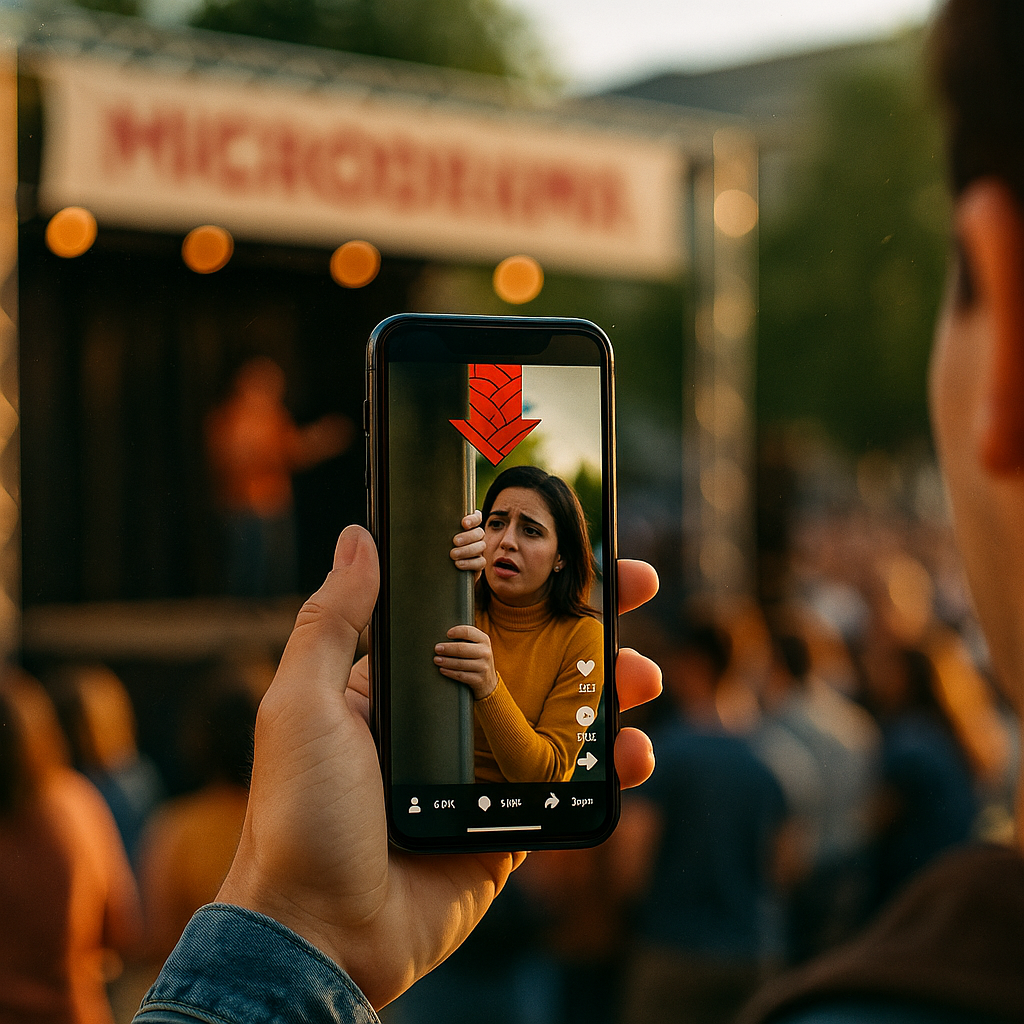
Microdrama is no longer a fringe experiment. In 2024, platforms like ReelShort and DramaBox were pulling in more combined app revenue than some mid-tier streaming services, and brand-backed episodes now headline dedicated festival showcases. Vertical short drama has quietly become a line item in brand content budgets, not a novelty test. So why are CMOs suddenly greenlighting three-minute soap operas with product placements baked into the plot?
What Is a Microdrama Festival, Exactly?
A microdrama festival is exactly what it sounds like: a curated showcase of vertical, episodic short drama, usually 60 to 180 seconds per episode, screened or streamed in competition format. Think Cannes, but for cliffhanger-driven content built for phones. Events have popped up across Asia, the Middle East, and North America, often sponsored by the same platforms distributing the content: ReelShort, DramaBox, Netflix’s short-form experiments, and TikTok’s own drama verticals.
These festivals matter to brands for one reason: they legitimize the format. When a category gets its own awards circuit, procurement teams stop treating it as “weird TikTok stuff” and start asking for line items. That’s a meaningful shift in how budgets get approved internally.
The Numbers Behind the Vertical Drama Boom
Short drama apps generated well over a billion dollars in global consumer spend in 2024, according to mobile analytics firms tracking the category, and growth hasn’t slowed. eMarketer’s coverage of short-form video consumption consistently shows vertical formats outperforming horizontal content on completion rates, especially among users under 35.
Brands running microdrama-style sponsored series are seeing watch-through rates that traditional 15-second ads simply cannot touch, because the format is built on cliffhangers, not interruptions.
That retention math is the whole pitch. A branded three-episode arc with a genuine plot hook keeps viewers watching for the payoff, not skipping after three seconds like they would with a pre-roll ad. For a deeper breakdown of how creators structure these arcs for maximum carryover, see three episode micro dramas and how retention gets scripted into the hook itself.
Why Brands Are Buying Into the Format
Three reasons, and none of them are vanity metrics.
- Attention density. Vertical drama holds eyes longer than almost any other short-form category, which matters when CPMs keep climbing across every major platform.
- Native commerce integration. A plot twist can double as a product reveal. Viewers don’t feel sold to because the story demands the object exists.
- Repeatable IP. Unlike a one-off UGC ad, a drama series builds a recurring audience that returns for the next episode, which is a retention mechanic most brand content categories never achieve.
This last point is underrated. Most influencer content is disposable: one post, one flight, done. A microdrama series behaves more like a TV show. Brands get a built-in reason for audiences to come back weekly, which is exactly the mechanic covered in recurring shoppable episodes and how they train watch habits over time.
From Soap Opera Beats to Checkout Buttons
The real innovation isn’t the drama itself, it’s what’s stitched underneath it. Shoppable overlays, affiliate links in the caption, and in-app checkout triggered at the cliffhanger moment have turned narrative tension into a conversion mechanic. Shoppable micro drama content is already proving that a well-placed cliffhanger converts better than a hard CTA, because the viewer wants resolution, and resolution is one tap away.
Production teams building these series lean on scripting frameworks borrowed from long-form soap operas: the love triangle, the secret identity, the betrayal reveal. Compressed into sixty-second episodes, these tropes still work because audiences already know the grammar. You don’t need to explain a cliffhanger to someone who grew up on telenovelas or K-dramas; the muscle memory does the work.
Brands that get this right treat the drama as the hook and the product as the McGuffin, not the other way around. Get that balance wrong and the content reads as an ad wearing a costume, which kills completion rates fast. Agencies producing this content at scale are also borrowing opener techniques from other short-form categories, including the scripting logic found in discovery feed hooks, since the first three seconds of a microdrama episode still has to win the algorithm before it can win the plot.
What’s the Real Production Model Here?
This is where brand teams get surprised. Microdrama production isn’t influencer content with a bigger budget, it’s closer to indie film production compressed into a weekend shoot. Studios are standing up vertical-only sound stages, hiring soap opera writers to script 90-second beats, and casting actors who can deliver a full emotional arc before the viewer’s thumb twitches toward the next video.
Budgets vary wildly. A scrappy brand-funded series can run a few thousand dollars per episode using creator talent and a phone rig. A studio-backed festival entry with union actors, professional lighting, and a composer can run into six figures for a ten-episode arc. Most mid-market brands land somewhere in between, partnering with production houses that specialize in the format rather than building capability in-house.
That specialization matters because the format has its own pacing rules. A traditional branded video might spend 10 seconds establishing context. A microdrama episode has maybe 3 seconds before the algorithm, and the viewer, decide whether to keep watching. Teams that treat this like standard video production, with slow establishing shots and gentle brand reveals, tend to flop. Teams that borrow pacing discipline from formats like storytime format content, where the hook does the heavy lifting, tend to win.
Risk, Compliance, and the Fine Print Brands Skip
Here’s the part legal teams need to read before anyone signs a production contract. Branded entertainment content, even when it’s dressed up as drama, is still subject to disclosure rules. The FTC’s endorsement guidelines apply regardless of whether the sponsorship is obvious or buried in episode three of a love triangle plot. If a brand funded the series or the product placement influenced the script, that relationship needs disclosure, full stop.
There’s also a platform-specific wrinkle. Several platforms distributing microdrama content run aggressive originality and anti-recycling filters, which means repurposing a single script across multiple regional versions can trigger suppression. Teams adapting this content internationally should study how creators are navigating that exact problem in original shorts design, because the penalties for duplicate-feeling content are real and they hit reach hard.
And one more thing nobody wants to budget for: rights clearance. If you’re casting actors across multiple episodes with ongoing storylines, you need contracts that cover sequel use, not just single-video usage. Skip that step and you’ll find yourself renegotiating mid-series, usually at a worse rate, usually under a deadline.
Where This Goes Next
Expect the festival circuit to keep formalizing. Award categories, brand sponsorship tiers, and even talent agencies specializing in vertical drama actors are already emerging. HubSpot’s content marketing research has long shown that serialized content outperforms one-off assets on engagement, and microdrama is just the most extreme, most mobile-native expression of that principle. Brands that treat this as a passing trend will miss the window; the ones building repeatable IP now will own the category before procurement catches up to the pricing.
Frequently Asked Questions
FAQs
What counts as a microdrama in brand marketing terms?
A microdrama is a vertical, episodic video series, typically under three minutes per episode, structured around cliffhangers and serialized plot arcs. Brands use it as sponsored entertainment rather than a direct ad format.
How much does it cost to produce a branded microdrama series?
Costs range from a few thousand dollars per episode for creator-led, lightweight productions to six figures for studio-backed series with professional casts and multi-episode arcs. Most mid-market brands fall in the low-to-mid five figure range for a short series.
Do microdrama episodes need FTC disclosure?
Yes. If a brand funds, influences, or benefits from the content, standard endorsement and sponsorship disclosure rules apply, regardless of how the content is dressed up narratively.
How is microdrama different from regular influencer UGC?
Microdrama relies on scripted, serialized storytelling with professional or semi-professional casting, while traditional UGC is typically unscripted and single-video. Microdrama also builds a recurring audience across episodes rather than relying on one-off views.
Can microdrama content drive direct sales, or is it just brand awareness?
Both. Many brands now embed shoppable links or in-app checkout triggers at cliffhanger moments, turning narrative tension directly into conversion opportunities rather than treating the series as awareness-only content.
Next step: before greenlighting a microdrama pilot, audit your legal team’s disclosure language and your production partner’s rights clearance for sequel use. That single review will save more budget than any casting decision you make.
Top Influencer Marketing Agencies
The leading agencies shaping influencer marketing in 2026
Agencies ranked by campaign performance, client diversity, platform expertise, proven ROI, industry recognition, and client satisfaction. Assessed through verified case studies, reviews, and industry consultations.
Moburst

-
2

The Shelf
Boutique Beauty & Lifestyle Influencer AgencyA data-driven boutique agency specializing exclusively in beauty, wellness, and lifestyle influencer campaigns on Instagram and TikTok. Best for brands already focused on the beauty/personal care space that need curated, aesthetic-driven content.Clients: Pepsi, The Honest Company, Hims, Elf Cosmetics, Pure LeafVisit The Shelf → -
3

Audiencly
Niche Gaming & Esports Influencer AgencyA specialized agency focused exclusively on gaming and esports creators on YouTube, Twitch, and TikTok. Ideal if your campaign is 100% gaming-focused — from game launches to hardware and esports events.Clients: Epic Games, NordVPN, Ubisoft, Wargaming, Tencent GamesVisit Audiencly → -
4

Viral Nation
Global Influencer Marketing & Talent AgencyA dual talent management and marketing agency with proprietary brand safety tools and a global creator network spanning nano-influencers to celebrities across all major platforms.Clients: Meta, Activision Blizzard, Energizer, Aston Martin, WalmartVisit Viral Nation → -
5

The Influencer Marketing Factory
TikTok, Instagram & YouTube CampaignsA full-service agency with strong TikTok expertise, offering end-to-end campaign management from influencer discovery through performance reporting with a focus on platform-native content.Clients: Google, Snapchat, Universal Music, Bumble, YelpVisit TIMF → -
6

NeoReach
Enterprise Analytics & Influencer CampaignsAn enterprise-focused agency combining managed campaigns with a powerful self-service data platform for influencer search, audience analytics, and attribution modeling.Clients: Amazon, Airbnb, Netflix, Honda, The New York TimesVisit NeoReach → -
7

Ubiquitous
Creator-First Marketing PlatformA tech-driven platform combining self-service tools with managed campaign options, emphasizing speed and scalability for brands managing multiple influencer relationships.Clients: Lyft, Disney, Target, American Eagle, NetflixVisit Ubiquitous → -
8

Obviously
Scalable Enterprise Influencer CampaignsA tech-enabled agency built for high-volume campaigns, coordinating hundreds of creators simultaneously with end-to-end logistics, content rights management, and product seeding.Clients: Google, Ulta Beauty, Converse, AmazonVisit Obviously →