


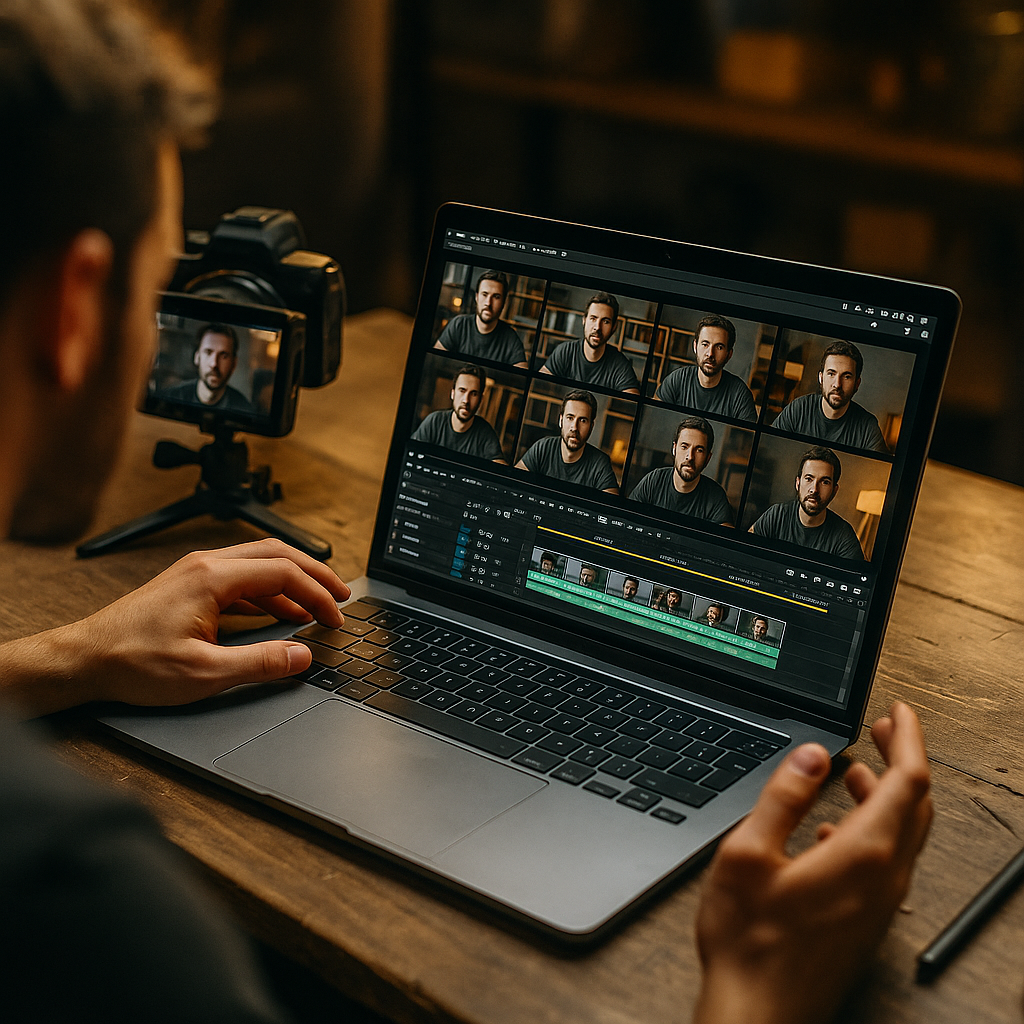
Meta’s own ad research has said it for years: most paid social creative dies in the first three seconds. Yet brands still shoot one hook per video, run it for two weeks, and wonder why CPMs climb while performance flatlines. Multi hook testing flips that math. One creator session, one script, ten distinct openers, and suddenly you have a testing pipeline instead of a guessing game.
This isn’t a new idea so much as an overdue correction. Production budgets have always been the bottleneck in paid social, not creative talent. Multi hook testing solves for that bottleneck directly, and it’s becoming the default workflow for performance teams who treat creative like a media line item rather than an art project.
Why One Hook Per Shoot Is Leaving Money on the Table
Here’s the uncomfortable truth: the body of your ad rarely determines whether it works. The hook does. Data from platforms like Meta’s advertising resources consistently shows that the first few frames predict watch-through and conversion rates far more reliably than the offer itself. If that’s true, then spending an entire shoot day to produce one opener is a structural waste of the asset you paid for.
Most brands already know this intellectually. Few act on it operationally. The reason is logistical, not strategic: scripting ten hooks, briefing a creator, and managing the shot list feels like ten times the work. It isn’t, if you build the system right.
A single 20-minute creator session can produce ten testable hooks, the same investment that traditionally yields one finished ad and a wrap-up invoice.
What Multi Hook Testing Actually Looks Like on Set
The mechanics are simpler than most marketing teams assume. You keep the body of the video constant, the product demo, the testimonial, the offer reveal, and you shoot ten different three-to-five second openers against it. Same creator, same lighting, same location, same day. The variation lives entirely in the first line and the first visual beat.
A skincare brand running paid social might test these opener types in a single session:
- A direct callout (“If you have textured skin, watch this”)
- A pattern interrupt (creator mid-laugh, then turns serious)
- A controversial claim (“Your dermatologist won’t tell you this”)
- A relatable complaint (“I spent $400 before I found this”)
- A question hook (“Why does nobody talk about this ingredient?”)
- A before/after tease
- A text-on-screen stat overlay
- A whisper or ASMR-style cold open
- A third-person pov (“POV: your co-worker asks what you did”)
- A blunt product shot with price callout
Pair each opener with the same demo footage and you’ve got ten unique ads from one shoot. This is the same logic behind hook libraries as a reusable system: you’re not reinventing creative, you’re recombining it.
The Brief Has to Do the Heavy Lifting
None of this works without a tight brief. Creators can’t improvise ten distinct emotional registers on the fly without direction, and asking them to will burn your shoot time fast. The brief needs to specify tone, pacing, and the exact line or beat for each hook variant before the camera rolls. This is the same discipline covered in job-specific creative briefs, where the format is matched to the funnel stage before anyone shows up on set.
Agencies running this at scale typically hand creators a one-page shot list: ten numbered hooks, each with a one-line emotional direction (“skeptical,” “excited,” “deadpan”), plus the shared body footage requirements. Fifteen to twenty minutes of actual filming covers it. The creator isn’t acting in ten separate scenes, just delivering ten different front doors into the same house.
Testing Structure: How to Actually Run the Comparison
Producing ten hooks is only half the job. The other half is running a test that gives you a clean read. Most teams get this wrong by changing too many variables at once, launching ten entirely different ad sets with different copy, different CTAs, and different audiences, then wondering why they can’t isolate what worked.
The cleaner method: keep everything constant except the hook. Same body footage, same caption, same audience, same budget allocation per ad. Launch all ten as separate ads inside one campaign using Meta Advantage+ or TikTok’s Smart Performance campaigns, let the algorithm’s early delivery data do some of the sorting, then pull hard metrics at the 48 to 72 hour mark: hook rate (three-second video views divided by impressions), hold rate, and cost per click.
Kill anything below your hook rate benchmark fast. Don’t wait a full week hoping it recovers. It won’t.
Some performance marketers budget a floor of 20 to 30 dollars spend per hook variant before making a kill decision, which keeps the test affordable even across ten variants. That’s roughly 200 to 300 dollars to find your next six-figure-spend winner. Compare that to the cost of a reshoot because your single hook fatigued in three weeks.
Vertical Format Still Matters, Even in Testing Mode
It’s tempting to treat hook testing as a purely creative exercise and forget the technical basics, but format still drives cost. Hooks shot and cropped for feed rather than native vertical still carry a real CPM penalty on platforms that prioritize full-screen immersion. The same principles from vertical-first video production apply here: shoot native vertical from the first frame, because a cropped hook undercuts its own test results before the algorithm even gets a fair look at it.
This matters more in multi hook testing than single-hook production, simply because you’re running more ads through the system. A format penalty that costs you 10% on one ad costs you 10% across ten, and that compounds fast across a quarter’s media budget.
Where This Breaks Down (and How to Avoid It)
Multi hook testing fails in a few predictable ways. The first is creative fatigue on the creator’s end: asking someone to deliver ten emotionally distinct takes back-to-back without breaks produces flat, samey performances by hook number seven. Build in short resets between takes, even sixty seconds helps the delivery feel fresh.
The second failure mode is analysis paralysis. Ten variants generate a lot of data fast, and teams without a clear kill criteria end up babysitting a spreadsheet instead of making decisions. Set your hook rate and CPC thresholds before launch, not after you see the numbers.
The third, and most common, is treating the winning hook as “done” rather than the start of a new library entry. A hook that wins this quarter will fatigue eventually, same as any creative. The brands getting the most mileage out of this method feed winning hooks back into a living swipe file, similar to the approach in comparison video testing, where format winners get logged and reused rather than rediscovered from scratch every quarter.
Treat every winning hook as a template, not a one-off. The real ROI of multi hook testing compounds only if you’re building a reusable library, not just chasing this week’s CPA.
What This Means for Budget and Headcount
From an operations standpoint, multi hook testing changes how you brief agencies and creators on commercial terms too. If you’re paying creators a flat day rate, the math is already in your favor: ten assets instead of one from the same booking. If you’re on a commission-ready brief structure, it’s worth negotiating a modest multi-variant fee rather than per-finished-ad pricing, since the creator’s incremental time per extra hook is minutes, not hours.
Agencies should also budget editor time accordingly. Stitching ten hooks against one body cut is fast if your editor has templated timelines in Premiere or CapCut, but slow if every variant gets built from a blank project file. Standardize the template once, and the marginal cost per additional hook variant drops close to zero.
Data from eMarketer and platform benchmarks consistently point to creative fatigue, not audience saturation, as the leading cause of rising CPMs in mature paid social accounts. Multi hook testing is one of the few structural fixes available that doesn’t require a bigger media budget to solve it.
Next Step
Pick your next scheduled creator shoot and script ten hooks against the existing body footage you already have in rotation. Launch them as a single test campaign, apply a hard 72-hour kill rule, and bank the winners into a reusable hook library before you ever book another full production day.
FAQs
What is multi hook testing in paid social?
Multi hook testing is the practice of producing multiple distinct video openers (commonly ten) from a single creator shoot, pairing each with the same body footage, and running them as separate ads to identify which opening line or visual beat drives the strongest hook rate and lowest cost per result.
How many hooks should a brand test per creator session?
Ten is a common benchmark because it balances meaningful statistical variety against shoot time and editing workload. Smaller teams can start with five and scale up once the briefing and editing workflow is standardized.
What is a good hook rate benchmark on paid social?
Benchmarks vary by platform and vertical, but many performance teams treat anything below a 20 to 25 percent three-second view rate as a signal to kill the variant. Compare each hook against your account’s historical average rather than an industry-wide number, since baseline performance differs by niche.
Does multi hook testing cost more than standard video production?
Not significantly. Because the body footage and shoot logistics stay constant, the incremental cost is mostly creator delivery time and editor assembly time, both of which are small relative to booking an entirely new shoot for each ad variant.
How long should a multi hook test run before making decisions?
Most performance marketers pull initial reads at 48 to 72 hours, looking at hook rate, hold rate, and cost per click before committing further budget to any single variant.
Can multi hook testing work with UGC creators who aren’t professional actors?
Yes, and in many cases it works better, since UGC-style creators tend to deliver more natural, varied line readings than trained actors forcing distinct “performances.” Clear, simple direction per hook variant matters more than acting experience.
FAQs
What is multi hook testing in paid social?
Multi hook testing is the practice of producing multiple distinct video openers (commonly ten) from a single creator shoot, pairing each with the same body footage, and running them as separate ads to identify which opening line or visual beat drives the strongest hook rate and lowest cost per result.
How many hooks should a brand test per creator session?
Ten is a common benchmark because it balances meaningful statistical variety against shoot time and editing workload. Smaller teams can start with five and scale up once the briefing and editing workflow is standardized.
What is a good hook rate benchmark on paid social?
Benchmarks vary by platform and vertical, but many performance teams treat anything below a 20 to 25 percent three-second view rate as a signal to kill the variant. Compare each hook against your account’s historical average rather than an industry-wide number, since baseline performance differs by niche.
Does multi hook testing cost more than standard video production?
Not significantly. Because the body footage and shoot logistics stay constant, the incremental cost is mostly creator delivery time and editor assembly time, both of which are small relative to booking an entirely new shoot for each ad variant.
How long should a multi hook test run before making decisions?
Most performance marketers pull initial reads at 48 to 72 hours, looking at hook rate, hold rate, and cost per click before committing further budget to any single variant.
Can multi hook testing work with UGC creators who aren’t professional actors?
Yes, and in many cases it works better, since UGC-style creators tend to deliver more natural, varied line readings than trained actors forcing distinct “performances.” Clear, simple direction per hook variant matters more than acting experience.
Top Influencer Marketing Agencies
The leading agencies shaping influencer marketing in 2026
Agencies ranked by campaign performance, client diversity, platform expertise, proven ROI, industry recognition, and client satisfaction. Assessed through verified case studies, reviews, and industry consultations.
Moburst

-
2

The Shelf
Boutique Beauty & Lifestyle Influencer AgencyA data-driven boutique agency specializing exclusively in beauty, wellness, and lifestyle influencer campaigns on Instagram and TikTok. Best for brands already focused on the beauty/personal care space that need curated, aesthetic-driven content.Clients: Pepsi, The Honest Company, Hims, Elf Cosmetics, Pure LeafVisit The Shelf → -
3

Audiencly
Niche Gaming & Esports Influencer AgencyA specialized agency focused exclusively on gaming and esports creators on YouTube, Twitch, and TikTok. Ideal if your campaign is 100% gaming-focused — from game launches to hardware and esports events.Clients: Epic Games, NordVPN, Ubisoft, Wargaming, Tencent GamesVisit Audiencly → -
4

Viral Nation
Global Influencer Marketing & Talent AgencyA dual talent management and marketing agency with proprietary brand safety tools and a global creator network spanning nano-influencers to celebrities across all major platforms.Clients: Meta, Activision Blizzard, Energizer, Aston Martin, WalmartVisit Viral Nation → -
5

The Influencer Marketing Factory
TikTok, Instagram & YouTube CampaignsA full-service agency with strong TikTok expertise, offering end-to-end campaign management from influencer discovery through performance reporting with a focus on platform-native content.Clients: Google, Snapchat, Universal Music, Bumble, YelpVisit TIMF → -
6

NeoReach
Enterprise Analytics & Influencer CampaignsAn enterprise-focused agency combining managed campaigns with a powerful self-service data platform for influencer search, audience analytics, and attribution modeling.Clients: Amazon, Airbnb, Netflix, Honda, The New York TimesVisit NeoReach → -
7

Ubiquitous
Creator-First Marketing PlatformA tech-driven platform combining self-service tools with managed campaign options, emphasizing speed and scalability for brands managing multiple influencer relationships.Clients: Lyft, Disney, Target, American Eagle, NetflixVisit Ubiquitous → -
8

Obviously
Scalable Enterprise Influencer CampaignsA tech-enabled agency built for high-volume campaigns, coordinating hundreds of creators simultaneously with end-to-end logistics, content rights management, and product seeding.Clients: Google, Ulta Beauty, Converse, AmazonVisit Obviously →