


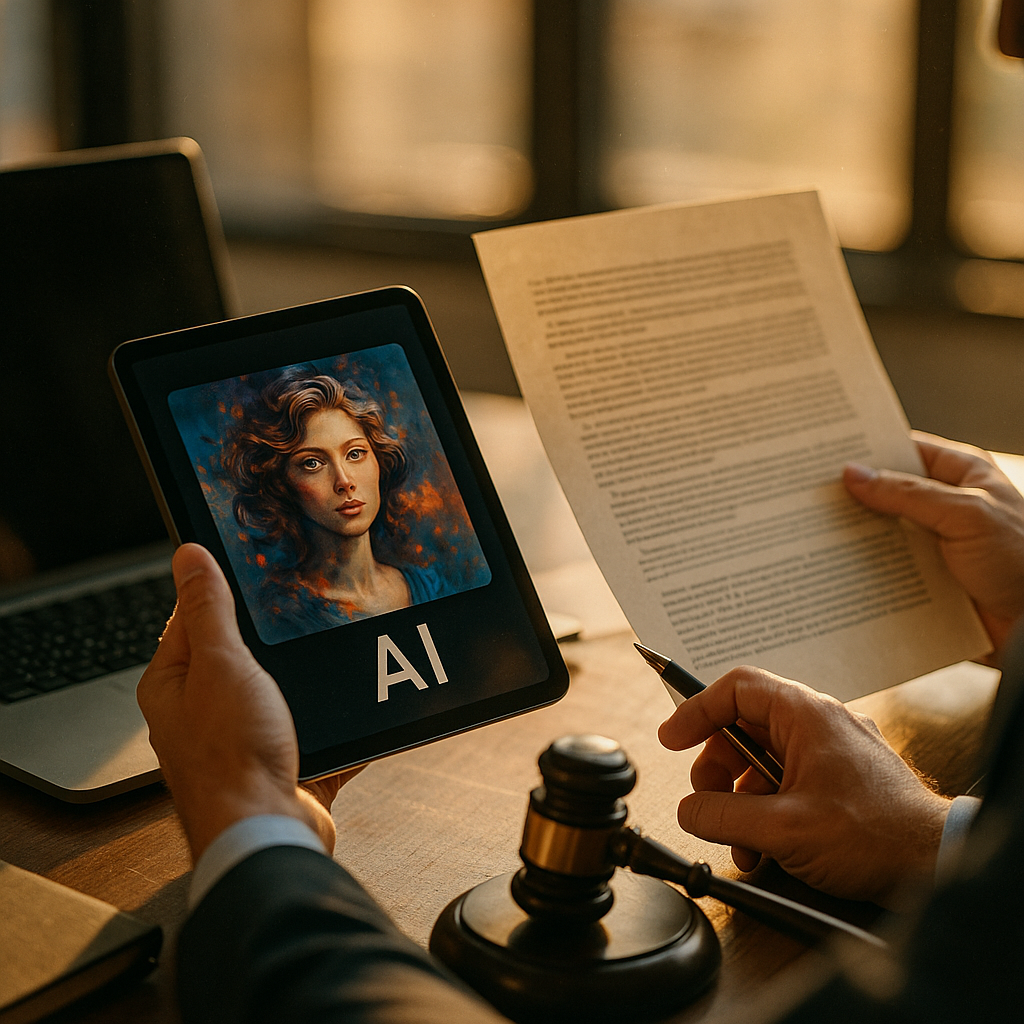
Using AI to imitate a recognizable creative voice can speed up production, but the legal risks of using AI to mimic a specific artists style in ads are growing fast in 2026. Brands, agencies, and platforms now face sharper scrutiny from courts, regulators, and consumers. Before launching a campaign, marketers need to understand where inspiration ends and liability begins.
Copyright infringement and AI art style imitation
One of the first questions marketers ask is whether AI art style imitation violates copyright law. The answer is nuanced. In many jurisdictions, copyright protects specific original works, not a general artistic style by itself. That means an artist typically cannot claim exclusive ownership over broad traits like color palette, brushwork mood, or composition tendencies alone.
However, that does not make AI-generated ad creative safe. The real legal risk often arises when the output is substantially similar to protected works or when the AI system was trained, prompted, or fine-tuned in a way that reproduces identifiable elements from a living artist’s catalog. If an ad resembles a specific copyrighted piece closely enough, a rightsholder may argue infringement even if the prompt asked only for “something in the style of” that artist.
For advertisers, the practical issue is not just whether a style is protected in theory. It is whether the final asset contains enough expressive overlap to trigger a claim. Courts and claimants may examine:
- Whether the AI output reproduces distinctive composition, character design, or recurring visual motifs
- Whether the ad references a named artist in prompts, briefs, or approval documents
- Whether the underlying model was trained on unauthorized copies of the artist’s works
- Whether consumers would perceive the output as a near-copy rather than a loose influence
Advertising raises the stakes because commercial use tends to invite stronger enforcement. Artists may tolerate fan experiments online, but a paid campaign tied to product sales is more likely to draw legal action. Even if the brand ultimately prevails, litigation costs, injunction risks, and campaign delays can erase any short-term savings from AI production.
A safer approach is to brief AI tools around abstract art direction rather than a named creator. Describe emotional tone, visual era, texture, composition logic, or target audience response. Then run every output through human legal and creative review before publication.
Right of publicity in advertising and artist identity
Right of publicity in advertising is often the more dangerous issue when AI mimics a specific artist. While copyright focuses on protected works, publicity rights protect a person’s identity, persona, and commercial value. If an ad uses AI to evoke a known artist so clearly that consumers believe the artist endorsed, participated in, or licensed the campaign, the brand could face a publicity or false endorsement claim.
This risk is not limited to musicians or celebrities with household-name fame. Visual artists, illustrators, designers, and photographers may have commercially valuable identities, especially if their style functions as a market signature. If the campaign says or strongly implies “made by,” “approved by,” or “in collaboration with” the artist when that is not true, exposure increases significantly.
Common red flags include:
- Prompts that use the artist’s full name to generate ad assets
- Copy suggesting the ad is “inspired by” a living artist without permission
- Visual cues that make consumers assume official endorsement
- Voice, likeness, or signature elements combined with visual style mimicry
In 2026, marketers also need to consider state-by-state variation. Publicity laws differ on scope, duration, available damages, and whether a claim extends to distinctive traits beyond name and face. A campaign distributed nationally may therefore create uneven risk across multiple jurisdictions.
The compliance takeaway is simple: if the ad trades on a real artist’s market identity, get a written license or change the concept. Legal review should happen before production, not after media is booked.
Trademark and false endorsement risks in AI-generated ads
Trademark and false endorsement risks often overlap with publicity issues, but they deserve separate attention. Trademark law can be triggered when a brand’s use of AI-generated creative causes confusion about source, sponsorship, approval, or affiliation. An artist’s name, studio name, logo, signature, or other source-identifying marks may be protected even if the broader style is not.
For example, an ad that says “crafted in the style of [Artist Name]” may seem like harmless attribution. In practice, it can imply affiliation, especially in a sponsored campaign. If the artist has licensed products, prints, collaborations, or branded services, the confusion argument gets stronger.
Marketers should also remember that false endorsement claims can arise under unfair competition laws. You do not need to copy a registered logo to create legal trouble. If the total impression of the ad leads consumers to believe there is a partnership, that can be enough to prompt a dispute.
Ask these questions before launch:
- Does the ad mention the artist by name anywhere in creative, metadata, or campaign copy?
- Would an average consumer think the artist approved the work?
- Does the campaign mimic packaging, signatures, exhibition branding, or recognizable source signals?
- Has the legal team reviewed landing pages, social captions, and influencer talking points as well as the ad itself?
Brands often focus on the visual asset and forget the surrounding materials. But taglines, alt text, social captions, and press releases can become evidence of intent. If internal documents show the campaign aimed to “make it feel exactly like Artist X,” that language may undermine the defense later.
Training data compliance and AI licensing issues
Training data compliance is a fast-moving area that directly affects advertising risk. Even when a generated image does not look like a direct copy, the model behind it may have been trained on copyrighted works without consent. Plaintiffs have increasingly challenged AI developers and commercial users over unauthorized ingestion, reproduction, and derivative exploitation.
For advertisers, this creates two separate layers of exposure. First, the AI vendor may face claims about how the model was built. Second, the brand using the output may still be pulled into disputes if the ad benefits from unlawfully sourced training data or violates the vendor’s terms. A vendor promise that “the tool is commercially safe” is helpful, but it should not replace due diligence.
When evaluating AI vendors for ad production, marketers should look for:
- Clear documentation about training sources and licensing practices
- Contractual indemnities, with realistic caps and enforcement terms
- Output ownership and usage rights stated in plain language
- Policies restricting prompts that target living artists or specific copyrighted works
- Audit trails showing how assets were generated and edited
Procurement and legal teams should also verify whether the platform allows commercial use for paid advertising, not just general business use. Some licenses are narrower than they appear. Others shift all legal responsibility to the user. That is a poor fit for a national or global campaign.
Human review remains essential. The more customized the output, the easier it is to spot problematic similarities before launch. Keep prompt logs, revision history, approvals, and vendor terms in a central record. If a claim arises, those materials can help show good-faith compliance efforts and reduce reputational damage.
Consumer protection and disclosure for synthetic creative
Consumer protection and disclosure rules matter because AI-generated creative can mislead audiences in ways that go beyond intellectual property. If an ad creates the false impression that a real artist made the work, approved the campaign, or collaborated with the brand, regulators may view that as deceptive marketing.
Deception analysis usually focuses on the net impression of the ad. Even if no statement is technically false, the overall presentation can still mislead. In 2026, this is especially relevant on social platforms where short-form creative, fast swipes, and blended organic-paid formats leave little room for nuance.
Disclosure can help, but it is not a cure-all. A tiny note buried on a landing page will not fix a confusing ad. If the concept relies on making consumers think a known artist was involved, the campaign may remain risky even with a disclaimer.
Useful compliance practices include:
- Stating clearly when creative is AI-generated or AI-assisted if that fact affects consumer understanding
- Avoiding copy that hints at collaboration unless a signed agreement exists
- Testing ads with real users to see whether they infer endorsement or authorship incorrectly
- Reviewing influencer scripts and creator briefs for implied affiliation claims
Brands should also think beyond legal liability. Audiences increasingly care about creative ethics. If an ad appears to exploit a working artist’s signature look without consent, backlash can spread quickly. Public criticism can trigger campaign pullbacks, media waste, and brand trust erosion even before any formal lawsuit arrives.
Risk management best practices for commercial AI use
Risk management for commercial AI use should be structured, not ad hoc. The goal is not to avoid AI entirely. It is to use it in a way that supports innovation without stepping into predictable legal traps. Brands that treat AI governance as part of marketing operations are in a stronger position than those relying on last-minute approvals.
Build your process around a few core rules.
- Do not target living artists by name in prompts for ads unless you have a license.
- Use original art direction language focused on mood, form, audience, and brand objectives rather than imitation.
- Establish legal review thresholds for campaigns involving AI-generated visuals, music, voice, or copy.
- Vet vendors carefully for training data practices, commercial rights, and indemnity terms.
- Document your process so you can show responsible use if challenged.
- Train creative teams on copyright, publicity, trademark, and disclosure basics.
If your campaign genuinely needs a recognizable artist connection, the best path is still the traditional one: negotiate a license or commission the artist. That approach can feel slower, but it usually creates stronger creative outcomes, safer rights clearance, and better brand storytelling.
Marketers should also use an escalation framework. If a concept references a real person, resembles a known body of work, or depends on audience recognition of a specific aesthetic signature, route it to counsel. Waiting until a takedown letter arrives is far more expensive than pausing a concept in development.
Finally, remember that laws and platform policies continue to evolve. Internal guidance should be reviewed regularly in 2026 as courts, regulators, and AI providers refine the boundaries of lawful commercial use.
FAQs about AI style mimicry in ads
Is it illegal to use AI to copy an artist’s style in an advertisement?
Not automatically, because style alone is not always protected by copyright. But an ad can still create legal risk through substantial similarity to protected works, false endorsement, publicity violations, trademark confusion, or deceptive marketing practices. Commercial use makes claims more likely.
Can a brand say “in the style of” a living artist in ad copy?
That is risky. It may imply affiliation, approval, or licensing, especially in paid advertising. If the artist is identifiable and the campaign trades on their reputation, the brand should assume elevated exposure and seek legal review or permission before using that language.
Does adding a disclaimer solve the problem?
No. A disclaimer may reduce confusion in some cases, but it will not cure an ad that is otherwise misleading or too close to a specific artist’s protected work or commercial identity. Regulators and courts look at the overall impression, not just fine print.
What if the AI tool says its outputs are safe for commercial use?
That helps, but it is not enough on its own. You still need to review the vendor’s terms, training data representations, indemnity language, and prompt restrictions. Brands should not rely solely on marketing claims from AI platforms when legal exposure is significant.
Are deceased artists treated differently from living artists?
Sometimes. Copyright duration, publicity rights, and estate control vary by jurisdiction. A deceased artist’s name, works, or persona may still be protected. Do not assume a historical or famous artist is free to use in advertising without rights analysis.
What is the safest way to use AI in ad creative?
Use AI to generate original concepts based on abstract creative direction, not a named person’s signature style. Keep humans in the loop, clear rights carefully, vet vendors, and escalate sensitive campaigns to counsel before launch.
AI can accelerate ad production, but it does not erase legal boundaries. In 2026, the safest rule is straightforward: do not use AI to evoke a specific artist’s market identity without permission. Brands should treat style mimicry as a rights-clearance issue, not just a creative shortcut. Careful vendor vetting, human review, and clear internal policies will prevent avoidable disputes.