


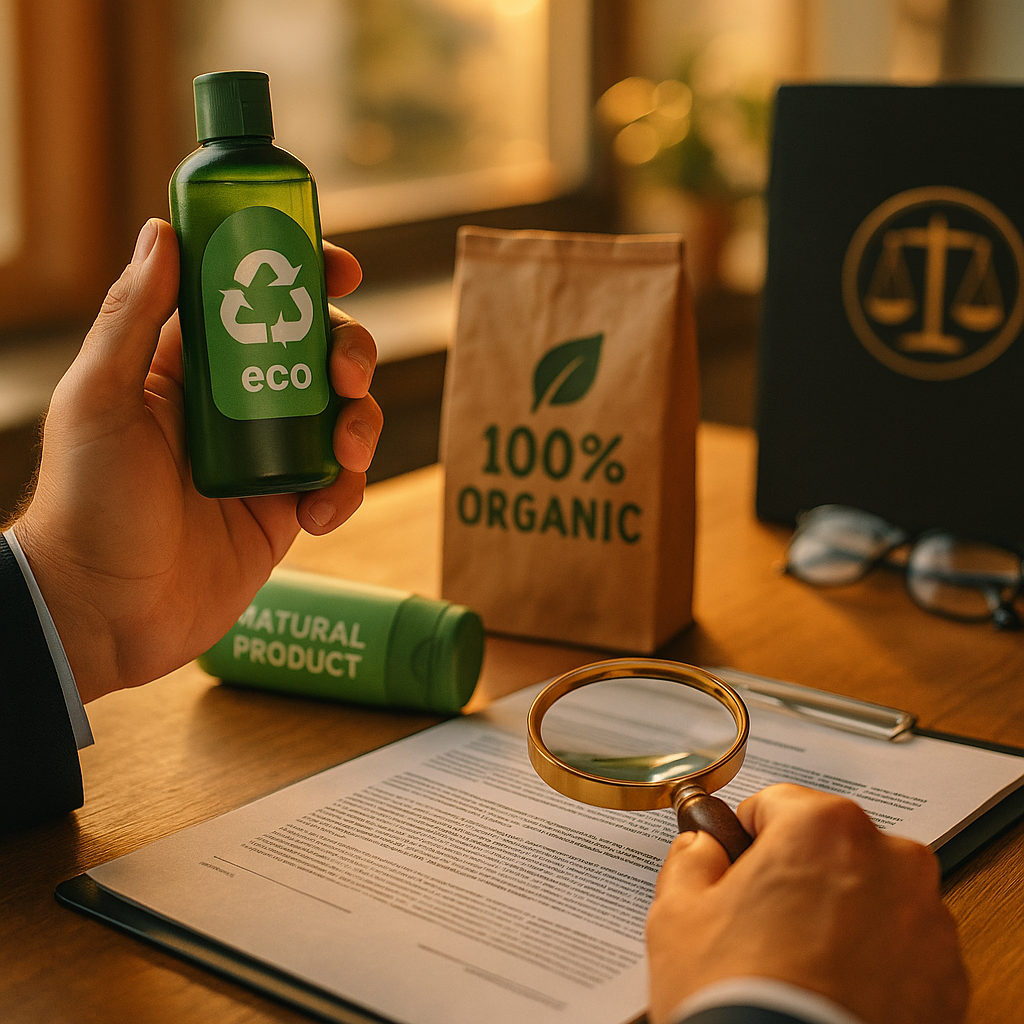
Complying with greenwashing and environmental marketing regulations is essential for businesses aiming to build consumer trust and avoid legal penalties. As sustainability becomes a market expectation, navigating complex guidelines can be challenging. Ready to learn how your company can market its environmental impact responsibly while staying on the right side of the law?
Understanding Greenwashing Risks and Consumer Protection Laws
Greenwashing refers to the deceptive practice where a company exaggerates or fabricates its environmental initiatives to mislead consumers. Environmental marketing regulations are designed to protect buyers from such misinformation and ensure fair competition among businesses. Violating these laws can result in hefty fines, lawsuits, reputational damage, or orders to retract misleading advertisements.
Globally, regulatory agencies — including the U.S. Federal Trade Commission (FTC), the European Union, and other national bodies — are intensifying their scrutiny of environmental claims. Under their purview, terms like “eco-friendly,” “compostable,” “carbon neutral,” and “recyclable” must be substantiated by credible evidence. It is no longer enough to “sound green”; you must prove it.
In 2025, studies by NielsenIQ reveal that 73% of consumers worldwide trust environmental product claims only when they are verifiable, demonstrating a shift toward accountability and transparency in green marketing.
Crafting Accurate Environmental Claims for Marketing Compliance
To comply with environmental marketing regulations, companies must ensure that all green claims are factual, clear, and not misleading. This process begins by analyzing every environmental assertion you intend to use in your campaigns. For instance:
- Specificity: Vague language (“green,” “safe for the planet”) must be replaced with precise claims (“contains 70% recycled material”).
- Evidence: Back claims with third-party certifications, scientific studies, or transparent supply chain data.
- Comparative Context: Give consumers context for comparisons (e.g., “uses 25% less energy than our 2023 model”).
Reviewing your marketing materials across websites, product packaging, and social media ensures consistent compliance. Recordkeeping is also critical: store documentation like laboratory tests, life cycle analyses, or audit trails to support your environmental claims if challenged by regulators or customers.
Key Environmental Marketing Regulations and Authorized Certifications
Staying compliant involves understanding the latest standards and using recognized certifications. Some important benchmarks in 2025 include:
- FTC Green Guides: These offer practical guidance on how claims may be interpreted and specify how to avoid misleading wording in the U.S.
- EU Green Claims Directive: This sets strict requirements on substantiating environmental claims and prohibits using vague or generic language in the European Union.
- Certain Certifications: Certifications from groups like ENERGY STAR, Forest Stewardship Council (FSC), and Cradle to Cradle provide third-party validation and are globally trusted.
Tip: Always verify that certifying organizations themselves are reputable and up-to-date, as false badges can trigger severe penalties and undermine consumer trust.
If your business sells in multiple countries, ensure harmonization of compliance strategies across all jurisdictions — what’s legal in one region may not be permitted in another.
Implementing Internal Controls for Green Marketing
Preventing inadvertent greenwashing requires robust internal controls. Companies should establish clear policies for creating, reviewing, and approving all sustainability-related content. Consider these internal steps:
- Train Marketing Teams: Regular education on current environmental laws and guidelines helps prevent accidental non-compliance.
- Create Approval Processes: Route all marketing claims through a compliance officer or legal counsel before publication.
- Monitor Supplier Statements: Demand verifiable data from suppliers for upstream environmental claims, especially for raw materials and packaging.
- Audit Regularly: Periodic reviews ensure that all claims remain accurate, especially as business practices evolve or regulations change.
Encourage a culture of transparency. Reward honest reporting and penalize attempts to mask environmental shortcomings. This minimises both regulatory and reputational risks.
Building Transparency and Consumer Trust Amid Greenwashing Concerns
Consumer skepticism toward environmental marketing is justified in light of historic greenwashing scandals. The antidote is radical transparency. Use digital tools to provide real-time data, such as QR codes leading directly to sustainability reports, or supply chain trackers that detail product lifecycles.
Proactively address limitations — if your product isn’t 100% recyclable, say so and explain your improvement plans. Invite third-party audits and publish results openly. Honest dialogue and traceable proof reassures both regulators and consumers. Brands like Patagonia and Unilever have built reputations on such forthright communication, earning loyal customers and reducing regulatory risk.
Best Practices for Ongoing Green Marketing Compliance in 2025
The regulatory landscape for environmental marketing is evolving rapidly. To maintain ongoing compliance, businesses should:
- Monitor Regulatory Updates: Designate team members to track new or updated green marketing rules and adapt policies accordingly.
- Engage External Experts: Consult environmental legal specialists or compliance auditors to review complex or high-stake claims.
- Encourage Consumer Feedback: Provide channels for customers to question, challenge, or verify your claims, fostering mutual engagement and continual improvement.
Adopting a proactive, rather than reactive, compliance approach not only prevents violations but also positions your brand as an industry leader in responsible marketing.
Proper compliance with greenwashing and environmental marketing regulations secures customer trust and shields your business from legal pitfalls. Stay current, be specific, and always back your claims with credible evidence. Responsible environmental marketing is not just good ethics — it’s good business in 2025.
FAQs: Greenwashing and Environmental Marketing Regulations
-
What counts as greenwashing in 2025?
Greenwashing includes making misleading, vague, or unverifiable environmental claims. This ranges from overstating recyclability or carbon neutrality to using unapproved green certifications.
-
How can a company prove its environmental claims?
Use third-party lab tests, credible audits, and recognized eco-certifications. Documentation of processes and transparent reporting are key for substantiation.
-
Are there penalties for non-compliance with green marketing regulations?
Yes, penalties range from fines and forced retractions to lawsuits and significant reputational harm. Regulators in multiple regions are increasing enforcement in 2025.
-
What should a business do if it made an inaccurate environmental claim?
Immediately correct the information, issue a public statement, and review internal processes to prevent recurrence. Proactivity reduces potential penalties and restores consumer trust.
-
Which certifications are most trusted for environmental claims?
Certifications such as ENERGY STAR, Forest Stewardship Council (FSC), and Cradle to Cradle are widely recognized when issued by reputable third parties.
Top Influencer Marketing Agencies
The leading agencies shaping influencer marketing in 2026
Agencies ranked by campaign performance, client diversity, platform expertise, proven ROI, industry recognition, and client satisfaction. Assessed through verified case studies, reviews, and industry consultations.
Moburst

-
2

The Shelf
Boutique Beauty & Lifestyle Influencer AgencyA data-driven boutique agency specializing exclusively in beauty, wellness, and lifestyle influencer campaigns on Instagram and TikTok. Best for brands already focused on the beauty/personal care space that need curated, aesthetic-driven content.Clients: Pepsi, The Honest Company, Hims, Elf Cosmetics, Pure LeafVisit The Shelf → -
3

Audiencly
Niche Gaming & Esports Influencer AgencyA specialized agency focused exclusively on gaming and esports creators on YouTube, Twitch, and TikTok. Ideal if your campaign is 100% gaming-focused — from game launches to hardware and esports events.Clients: Epic Games, NordVPN, Ubisoft, Wargaming, Tencent GamesVisit Audiencly → -
4

Viral Nation
Global Influencer Marketing & Talent AgencyA dual talent management and marketing agency with proprietary brand safety tools and a global creator network spanning nano-influencers to celebrities across all major platforms.Clients: Meta, Activision Blizzard, Energizer, Aston Martin, WalmartVisit Viral Nation → -
5

The Influencer Marketing Factory
TikTok, Instagram & YouTube CampaignsA full-service agency with strong TikTok expertise, offering end-to-end campaign management from influencer discovery through performance reporting with a focus on platform-native content.Clients: Google, Snapchat, Universal Music, Bumble, YelpVisit TIMF → -
6

NeoReach
Enterprise Analytics & Influencer CampaignsAn enterprise-focused agency combining managed campaigns with a powerful self-service data platform for influencer search, audience analytics, and attribution modeling.Clients: Amazon, Airbnb, Netflix, Honda, The New York TimesVisit NeoReach → -
7

Ubiquitous
Creator-First Marketing PlatformA tech-driven platform combining self-service tools with managed campaign options, emphasizing speed and scalability for brands managing multiple influencer relationships.Clients: Lyft, Disney, Target, American Eagle, NetflixVisit Ubiquitous → -
8

Obviously
Scalable Enterprise Influencer CampaignsA tech-enabled agency built for high-volume campaigns, coordinating hundreds of creators simultaneously with end-to-end logistics, content rights management, and product seeding.Clients: Google, Ulta Beauty, Converse, AmazonVisit Obviously →