


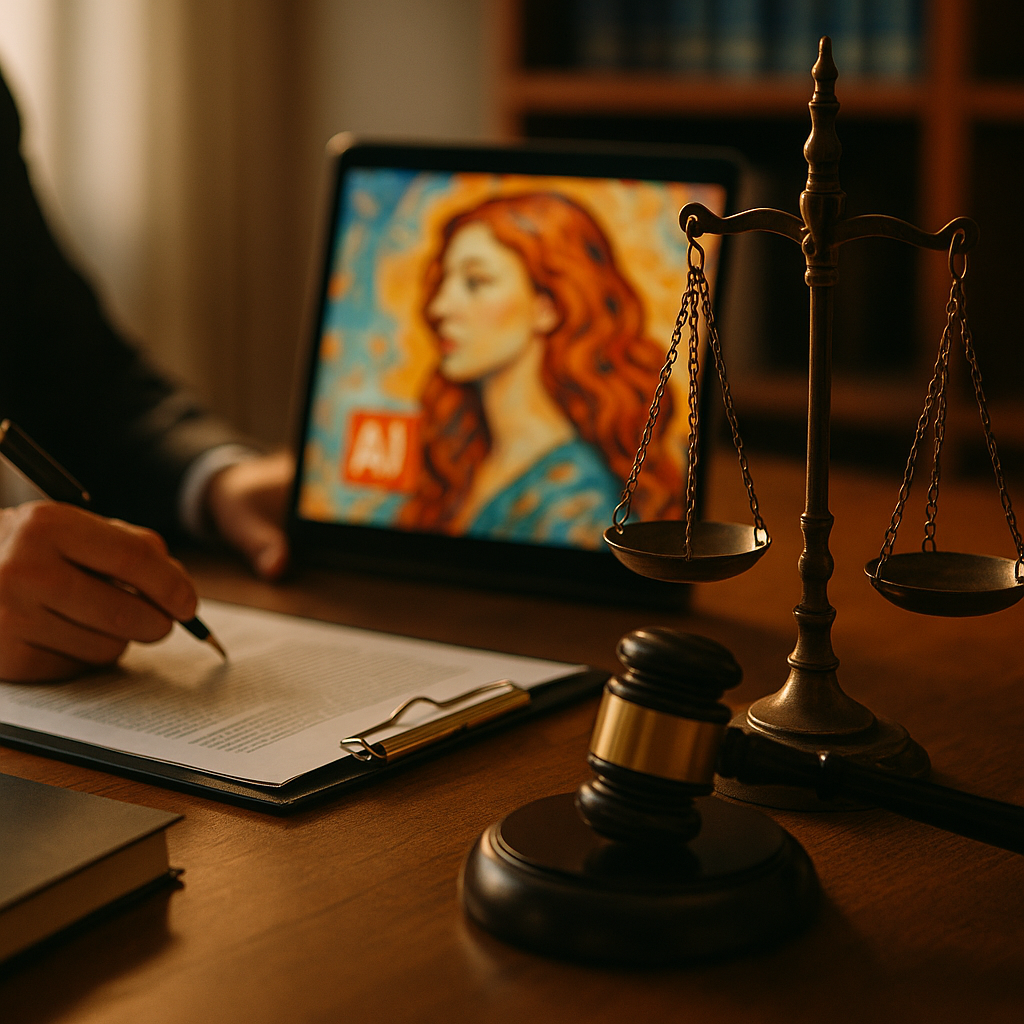
Brands now create visuals, voiceovers, and music in seconds, but the legal risks of using AI to mimic a specific artist’s style in ads are growing fast. What feels like efficient creative production can trigger copyright disputes, right of publicity claims, consumer deception concerns, and platform enforcement. Before your next campaign launches, understand where imitation crosses a legal line.
Copyright infringement risks in AI-generated artist-style ads
Using AI to generate ad creative “in the style of” a named artist can create immediate copyright infringement exposure, even when no exact work is copied pixel for pixel. Copyright law generally protects original expression, not broad ideas or artistic methods. That distinction matters, but it does not guarantee safety for advertisers.
If an AI output is substantially similar to protected elements of a specific work, the brand, agency, or platform using it may face claims that the ad is an unauthorized derivative work. This risk rises when prompts reference a living artist by name, feed the model with that artist’s works, or produce outputs that echo recognizable composition, color treatment, signature motifs, or character design choices associated with copyrighted pieces.
Advertisers often ask a practical question: Can a style itself be copyrighted? In many jurisdictions, style alone is difficult to protect as copyright. But a campaign can still be risky if the resulting ad borrows enough protected expression from one or more underlying works. Courts and regulators look at facts, not just labels. Calling something “inspired by” or “an homage” will not fix unlawful similarity.
There is also a separate risk in the training and input stage. If a company fine-tunes a model on copyrighted artworks without permission, the legal analysis may extend beyond the final ad. Plaintiffs may challenge the copying involved in model development, not just the generated output. In 2026, this remains an active litigation area, and legal standards continue to evolve across jurisdictions.
From an EEAT perspective, the safest advice is operational, not theoretical:
- Do not prompt with a specific artist’s name unless you have documented permission or a strong legal basis.
- Avoid reference uploads of copyrighted works you do not control.
- Run similarity review with legal and creative leads before publication.
- Keep provenance records showing prompts, tools, edits, and human review.
Those steps will not eliminate every dispute, but they materially reduce the chance that an ad campaign looks like deliberate copying.
Right of publicity and voice cloning legal issues
Many ad teams focus on visual art, but the right of publicity can be even more dangerous when AI mimics a specific artist’s identity. This body of law protects commercial use of a person’s name, image, likeness, voice, and other recognizable traits. For advertising, that matters because endorsement is implied even when the ad never says the artist approved it.
If your campaign uses AI to generate a voice that sounds like a famous singer, a narrator that resembles a known actor, or visuals that strongly evoke a living illustrator’s recognizable persona, you may trigger right of publicity claims. These cases can succeed even when copyright claims are weak, because the focus is not authorship of a work. The focus is unauthorized commercial exploitation of identity.
Brands sometimes assume risk disappears if they avoid the celebrity’s exact name. That assumption is dangerous. Courts often consider whether an ordinary audience would recognize who is being evoked. A soundalike voice in a product ad, for example, may create liability if consumers reasonably believe the artist participated or endorsed the campaign.
Follow-up question: What if the artist is not a celebrity? Publicity rights vary by jurisdiction, but many laws protect individuals beyond A-list public figures. In addition, false endorsement, unfair competition, and passing off theories may apply where publicity rights are narrower.
To lower risk in ad production:
- Never use AI voice cloning for a recognizable performer without written consent covering advertising use.
- Do not brief creators to “sound like” or “look like” a specific person in campaign materials.
- Review state, national, and international publicity rules where the ad will run, since standards differ.
- Audit vendor terms to confirm the provider is not shifting all liability to your brand.
In advertising, implied endorsement is often the issue that turns a creative shortcut into a legal problem.
Trademark and false endorsement concerns for brand advertising
Trademark law enters the picture when AI-generated ads create confusion about source, sponsorship, or endorsement. If a campaign references a known artist by name in prompts, metadata, alt text, ad copy, or social captions, consumers may infer a relationship that does not exist. That can support false endorsement or unfair competition claims.
This is especially relevant when the artist’s name functions as a commercial identifier. A contemporary artist may have registered trademarks covering their name, studio brand, merchandise, exhibitions, or collaborations. Even without a registration, a famous name can carry strong common-law rights.
The risk is not limited to naming the artist directly. AI-generated visuals that imitate a creator’s signature branding style, logo-like signatures, recurring symbols, or branded characters can also create confusion. In paid ads, confusion is judged in a commercial context, which usually makes scrutiny tougher than in editorial or purely expressive settings.
Advertisers should also consider disclosure limits. A disclaimer such as “AI-generated, not affiliated with Artist X” may help in some contexts, but it is not a cure-all. If the overall impression of the ad still suggests endorsement, the disclaimer may carry little weight. Small-print disclosures are particularly weak in fast-moving mobile and social ad environments.
Ask your team these practical questions before launch:
- Would an average consumer think the artist approved this campaign?
- Does the ad use the artist’s name, signature, stage persona, or recognizable markers?
- Is the ad promoting a product category where celebrity collaborations are common?
- Would press coverage likely describe the campaign as modeled on a specific artist?
If the answer to any of these is yes, your legal review should be elevated. Trademark and endorsement disputes move quickly because the alleged harm is commercial and public-facing.
FTC advertising compliance and consumer deception rules
Even if an artist never sues, consumer protection law can still create exposure. In 2026, regulators remain focused on deceptive advertising, manipulated media, and undisclosed AI use where consumers may be misled. For brands, the Federal Trade Commission and similar authorities care about the net impression of an ad, not just technical legal distinctions between style and copying.
If an AI-generated ad makes viewers believe a specific artist collaborated, performed, narrated, illustrated, or approved a product when they did not, that may be considered deceptive. This is particularly serious in influencer-style campaigns, music ads, fashion drops, entertainment promotions, and cause marketing, where endorsement affects purchasing behavior.
Another common question is: Do we have to disclose that AI was used? There is no universal rule requiring disclosure in every ad. But if failing to disclose AI use would mislead a reasonable consumer about who created or endorsed the content, disclosure may become necessary. This is a facts-and-context analysis, and platform policies can be stricter than the baseline law.
Regulatory and platform risk often overlap:
- Ad platforms may reject or limit deceptive synthetic media under their own policies.
- Consumer complaints can trigger investigations even without a private lawsuit.
- Internal documents matter; if briefs show intentional imitation of a named artist, that can undermine a good-faith defense.
The strongest compliance approach is to treat AI-generated creative like any other substantiated ad claim. If the ad suggests a collaboration, get permission. If there is no collaboration, do not hint at one. Clear internal governance is often the difference between responsible experimentation and avoidable enforcement risk.
Licensing agreements and risk management for AI creative teams
The best way to manage AI advertising legal risks is to build process, not rely on after-the-fact fixes. Creative speed is valuable, but legal defensibility requires documented rights, review standards, and vendor controls.
Start with licensing. If your concept genuinely depends on a specific artist’s style or persona, negotiate a license. A proper agreement can define scope, media, territory, duration, moral rights treatment where applicable, approval rights, compensation, and AI-specific uses such as training, fine-tuning, editing, and synthetic derivatives. Without that clarity, even a friendly collaboration can create later disputes.
Next, tighten contracts with agencies, freelancers, and AI vendors. Many advertisers assume the tool provider stands behind the output. Often the opposite is true. Terms may place the legal burden on the customer, disclaim non-infringement warranties, and allow broad provider use of your prompts and materials. Legal teams should review:
- Indemnity provisions and who pays if a claim is filed
- Representations and warranties about training data and output rights
- Usage restrictions on commercial advertising, voice cloning, and celebrity likeness
- Data retention and whether your prompts may be reused
- Content moderation rules for living artists and public figures
Then establish a practical internal review workflow:
- Briefing rule: ban requests to mimic named artists unless legal pre-approval exists.
- Creation rule: use original mood boards built from licensed or owned assets.
- Review rule: screen outputs for substantial similarity, identity mimicry, and implied endorsement.
- Approval rule: require signoff from legal, brand, and creative leadership on higher-risk campaigns.
- Recordkeeping rule: preserve prompts, source files, editing history, and rights documentation.
This framework demonstrates expertise, experience, and trustworthiness because it reflects how responsible ad teams actually reduce disputes in production environments.
Moral rights and global legal differences advertisers must know
For multinational campaigns, moral rights and cross-border legal differences can change the risk profile significantly. In some jurisdictions, artists have stronger rights to object to distortions, modifications, or uses that harm their honor or reputation, even when economic rights are licensed or limited. An AI-generated ad that twists a recognizable artist’s aesthetic into a controversial product message can therefore create claims beyond standard copyright analysis.
Global campaigns also raise conflicts on publicity rights, performer protections, unfair competition rules, and platform obligations. What seems relatively defensible in one market may be high-risk in another. This matters because digital ads rarely stay confined to one territory. A social campaign launched locally can quickly become international through reposts, earned media, and audience sharing.
Advertisers should answer these follow-up questions early:
- Where will the ad run, and where might it spread?
- Is the mimicked artist living, deceased, or represented by an estate?
- Do local laws recognize postmortem publicity rights?
- Could the use be viewed as derogatory or reputation-harming?
One more operational point matters in 2026: insurers and investors increasingly ask whether AI governance exists. If a claim arises, the absence of policy, review, and vendor diligence can increase both financial and reputational damage. That makes legal compliance not just a defense issue, but a business resilience issue.
FAQs about legal risks of using AI to mimic a specific artist’s style in ads
Is it legal to ask AI to create an ad “in the style of” a famous artist?
It can be risky. Style alone may not always be protected by copyright, but the resulting output can still infringe copyrighted works, violate publicity rights, or create false endorsement issues. In ads, the commercial context makes these claims more likely.
Can an artist sue if the ad does not copy any single artwork exactly?
Yes. Claims may focus on substantial similarity, unauthorized derivative use, voice or likeness imitation, false endorsement, unfair competition, or deceptive advertising. Exact duplication is not required for liability.
Does adding a disclaimer solve the problem?
Usually not by itself. If the overall impression suggests the artist created, approved, or participated in the ad, a disclaimer may be too weak to prevent confusion or deception.
Are AI voice clones more dangerous than visual style mimicry?
Often yes. Voice cloning in advertising can trigger strong right of publicity and false endorsement claims because audiences easily associate a recognizable voice with a real person.
What if the artist is dead?
Risk may still exist. Copyright may remain active, estates may control trademarks, and some jurisdictions recognize postmortem publicity rights. Always check the relevant territories.
Can we use AI safely in ad creative at all?
Yes. Use AI with original prompts, licensed or owned inputs, strong review procedures, and no imitation of identifiable artists or personalities without permission. AI itself is not the problem; unauthorized mimicry is.
What is the safest option if we want a recognizable artistic feel?
Hire the artist, license the style through a clear agreement, or brief your team to develop a fresh creative direction based on broad, non-identifying influences rather than a named individual.
The legal risks of using AI to mimic a specific artist’s style in ads are real because commercial campaigns can implicate copyright, publicity, trademark, and deception laws at once. In 2026, the safest takeaway is simple: do not imitate a recognizable artist in advertising without permission, contracts, and review. Build original concepts, document your process, and treat AI speed as secondary to legal clarity.