


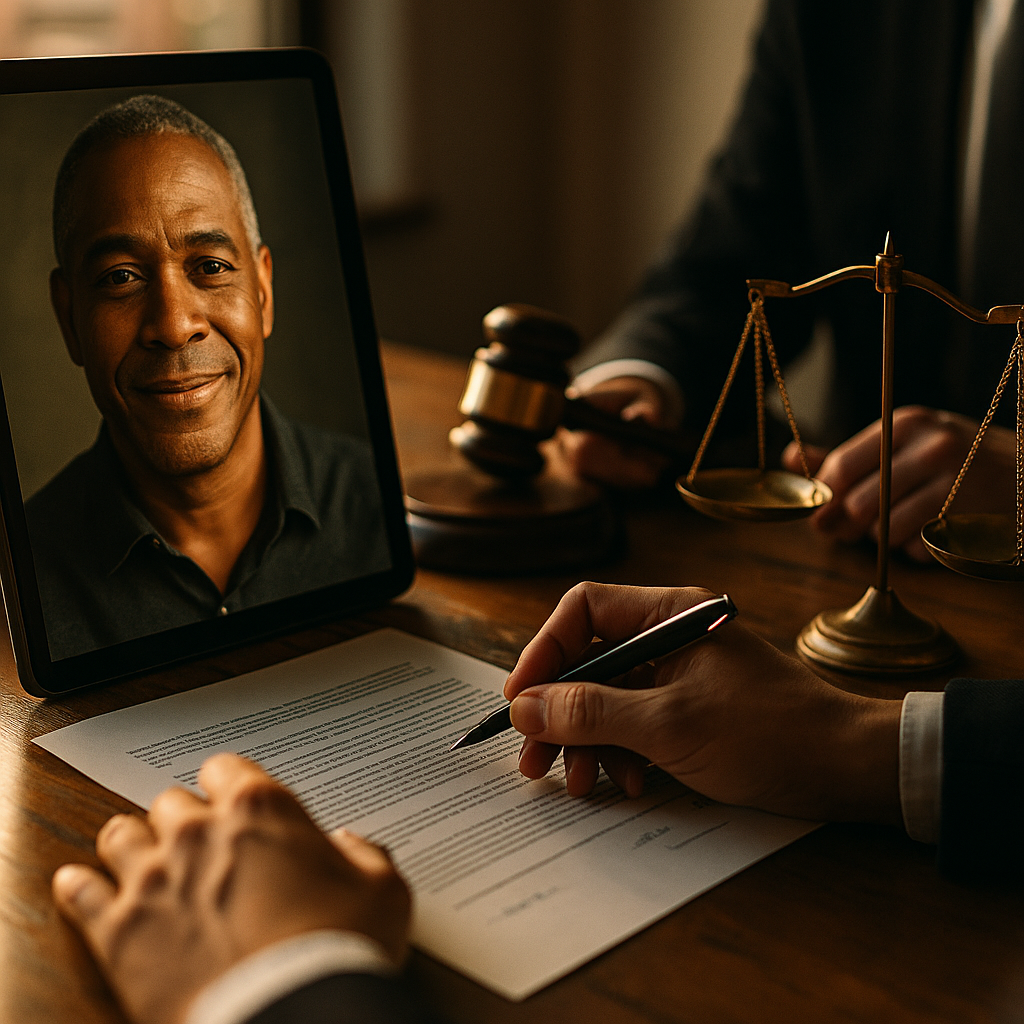
Posthumous creator likeness licensing sits at the crossroads of intellectual property, privacy, contracts, and public expectations. Estates, brands, studios, and platforms can unlock real value from a deceased creator’s image, voice, or persona, but the legal terrain is uneven and risky. Rights vary by jurisdiction, deal terms can conflict, and one misstep can trigger litigation. What should decision-makers check first?
Right of publicity laws and posthumous creator likeness licensing
The core legal issue in posthumous creator likeness licensing is usually the right of publicity. This right protects commercial uses of a person’s name, image, voice, signature, and other identifying traits. In 2026, the biggest challenge is that publicity rights are not uniform. Some jurisdictions recognize them clearly after death, while others provide limited protection or none at all.
That variation matters because a licensing campaign rarely stays in one place. A virtual performance may stream globally. A fashion collaboration may launch in multiple states and countries. A social platform activation may target audiences everywhere at once. If an estate assumes the deceased creator’s likeness is protected equally across all markets, it may overpromise rights it does not fully control.
Brands and licensees should ask several threshold questions early:
- Does the relevant jurisdiction recognize a postmortem right of publicity?
- How long does that right last after death?
- Who owns or controls it: the estate, heirs, a trust, or another entity?
- What specific traits are protected: image, voice, catchphrases, digital avatar, motion style?
- Are there statutory registration or filing requirements?
Conflicts also arise when uses blend commercial and expressive elements. A documentary, biopic, game, immersive experience, or AI-generated tribute may qualify for free speech defenses in some contexts, yet still trigger publicity claims in others. Courts often examine whether the use is transformative, misleading, or primarily commercial. That means the same campaign can look lawful in one venue and risky in another.
For estates, the practical lesson is simple: confirm chain of title before negotiating. For brands, never rely on a press release or family statement alone. Request evidence of authority, including wills, probate orders, trust documents, prior licenses, and any assignments affecting the likeness rights.
Estate management disputes in deceased celebrity licensing
Many legal problems do not start with outside infringement. They start inside the estate. Deceased celebrity licensing often involves multiple stakeholders with competing views about value, ethics, and control. Heirs may disagree over whether the creator would have approved a partnership. Managers may claim surviving contractual rights. Business partners may argue that certain persona elements belong to a company, not the estate personally.
These disputes can delay or derail licensing deals even when demand is strong. A licensee may believe it secured broad rights, only to discover another family member or corporate entity is challenging the transaction. In practice, this leads to injunction threats, payment holds, insurance issues, and reputation damage.
Common estate-side conflict points include:
- Whether the personal representative had authority to grant the license
- Whether prior agreements transferred rights to publishers, labels, studios, or merchandisers
- Whether heirs must unanimously approve uses
- How royalties are split among beneficiaries
- Whether the proposed use harms the creator’s legacy or moral expectations
Buyers of likeness rights should perform enhanced diligence, not just legal diligence. That includes governance diligence. Ask who must approve creative materials, who resolves disputes, and whether there is a deadlock mechanism. If the estate operates through a special purpose entity, confirm that the operating documents authorize licensing, digital asset creation, and enforcement actions.
This is where experienced counsel adds real value. Helpful content should not pretend a template agreement solves structural ownership problems. It does not. If title is contested, the safest approach is often to pause launch planning until the estate clarifies authority in writing and backs it with indemnities that are actually creditworthy.
Copyright and trademark issues in digital likeness rights
Licensing a deceased creator’s identity is not the same as licensing all related assets. Digital likeness rights frequently overlap with copyright and trademark law, but they are distinct. Confusing these rights is one of the costliest mistakes in posthumous campaigns.
Copyright may protect photographs, films, sound recordings, artwork, writings, and some digital models. Trademark may protect names, logos, signatures, slogans, or source-identifying elements used in commerce. Publicity rights protect persona. A license to use a creator’s likeness does not automatically include the right to use a famous portrait photo, a signature logo, or a clip from a performance.
For example, an estate may control publicity rights, while a photographer owns the image copyright and a production company owns archival footage. A record label may control specific audio assets. A separate company may own trademark registrations tied to the creator’s brand. If a campaign uses all of them, each permission may require separate clearance.
To reduce legal exposure, parties should map assets by category:
- Persona assets: name, face, voice, signature traits, style markers
- Copyright assets: photos, video, audio, writings, artwork, 3D scans
- Trademark assets: brand names, logos, slogans, product marks
- Contractual restrictions: union rules, endorsement exclusivity, prior approvals
This asset-by-asset approach is especially important in synthetic media projects. If a company builds a digital double, it may need rights not only in the likeness itself but also in training materials, reference media, motion capture sessions, and the final rendered output. Without clear ownership terms, disputes may arise over who can reuse the avatar later, modify it, or license it into new formats.
License language should define deliverables precisely. “Likeness” is too vague for modern exploitation. Specify whether rights include voice simulation, multilingual dubbing, gesture replication, style emulation, interactive chatbot functionality, or future media not yet known. Ambiguity creates litigation leverage later.
AI avatar compliance and consent in postmortem publicity rights
The rise of synthetic media has pushed postmortem publicity rights into a more sensitive zone. AI-generated avatars, cloned voices, and interactive recreations create commercial opportunities, but they also raise sharper legal and ethical questions. Even where the estate has authority, the intended use may still attract claims based on deception, unfair competition, false endorsement, consumer protection, or defamation-like reputational harm.
One practical issue is consent quality. Did the creator leave instructions about digital resurrection, voice cloning, or AI training? If not, the estate may legally approve a project in some jurisdictions, but public backlash can still undermine the deal. Courts and regulators increasingly care about transparency in synthetic content, particularly when consumers could believe the deceased person directly endorsed a product or created new speech.
For that reason, robust compliance now goes beyond obtaining a signature on a license agreement. It should include:
- Documented authority for AI and digital replica uses
- Clear consumer disclosures where content could mislead
- Creative review rights for the estate over sensitive outputs
- Restrictions on political, adult, defamatory, or otherwise high-risk categories
- Security controls preventing unauthorized model reuse or leakage
- Audit rights covering training data, generated content, and sublicensing
Another common question is whether an estate can license a creator’s “style.” Usually, style alone is harder to lock down than identifiable persona traits. But if the output evokes the creator so strongly that consumers think it is officially connected to them, risk rises. This is why legal teams should work closely with product, creative, and trust-and-safety functions before launch.
Insurance can help, but only to a point. Media liability and IP policies may exclude certain AI-related claims or require strict underwriting disclosures. Decision-makers should confirm coverage before announcing any high-profile recreation. In 2026, insurers commonly ask detailed questions about rights provenance, approval workflows, and disclosure practices.
Contract drafting strategies for estate licensing agreements
Strong paperwork is the best defense against future conflict. In estate licensing agreements, broad business goals must translate into detailed operational rules. If a deal touches a deceased creator’s likeness, the contract should address not only what is allowed but how approvals, quality control, payment, and enforcement will work in practice.
At a minimum, the agreement should define:
- The exact licensed rights and excluded rights
- Permitted media, channels, territories, and term length
- Whether rights are exclusive or nonexclusive
- Approval rights over scripts, visuals, edits, captions, and product categories
- Royalty structure, guarantees, audit rights, and reporting deadlines
- Morals, reputation, and brand safety restrictions
- AI-specific limitations on training, generation, storage, and reuse
- Infringement monitoring and enforcement responsibilities
- Representations, warranties, indemnities, and liability caps
- Termination triggers and post-termination takedown obligations
Quality control deserves special attention. A vague clause requiring the licensee to maintain “high standards” is weak. Better language sets objective review procedures, turnaround times, escalation paths, and deemed approval rules. This helps prevent launch paralysis while preserving legacy protection.
Payment provisions should also match the exploitation model. A static museum exhibit, a streaming documentary, a game skin, and an AI companion product produce revenue differently. The royalty base, deductions, bundled revenue treatment, and platform reporting rights should reflect that reality. If they do not, disputes are almost guaranteed.
Finally, choose dispute resolution carefully. Public lawsuits can damage the creator’s legacy and the brand’s reputation. Confidential arbitration may be attractive, but it should not obscure urgent takedown rights or emergency injunctive relief. The best clause balances speed, confidentiality, and enforceability across relevant jurisdictions.
Reputation management and enforcement in legacy brand protection
Legal rights only matter if they are monitored and enforced. Legacy brand protection has become more demanding as unauthorized digital replicas spread rapidly across marketplaces, social platforms, fan communities, and generative content tools. Estates and licensees must decide how aggressively to police misuse without alienating legitimate fans or chilling tribute culture.
A smart enforcement program starts with risk ranking. Not every unlicensed use deserves the same response. Fraudulent endorsements, counterfeit merchandise, deceptive AI avatars, and harmful deepfakes usually warrant fast action. Noncommercial fan art may call for a lighter touch unless it confuses consumers or crosses clear boundaries.
Effective protection usually combines legal, technical, and communications measures:
- Trademark watches, platform monitoring, and marketplace scans
- Notice-and-takedown workflows for unauthorized content
- Preservation of evidence before making claims
- Standard response templates tailored by severity level
- Public-facing guidelines explaining acceptable tribute uses
- Coordination between legal, PR, licensing, and digital trust teams
Reputation risk is not limited to infringers. Authorized deals can fail publicly if audiences view them as exploitative, inaccurate, or inconsistent with the creator’s values. That risk is highest when the creator’s new digital presence appears to say things they never said, support causes they never supported, or sell products that clash with their life’s work.
The best estates protect both legal value and narrative integrity. They document decision principles, involve credible stewards of the creator’s legacy, and communicate clearly about how and why a project was approved. That approach supports Google’s helpful-content expectations too: readers want practical, experience-based guidance, not abstract legal jargon detached from real decisions.
FAQs about legal risks in posthumous creator likeness licensing
Who owns a deceased creator’s likeness rights?
It depends on the jurisdiction and the creator’s estate planning documents. Rights may pass to heirs, a trust, an estate representative, or an entity that received an assignment. Always verify ownership with formal records before signing a deal.
Does a license from the family automatically cover all uses?
No. Family approval alone may be insufficient if another party owns related copyright, trademark, or contractual rights. You may need multiple permissions for photos, footage, recordings, logos, and endorsement-related materials.
Can an estate approve an AI-generated avatar of a deceased creator?
Often yes, but legality depends on local law, the estate’s authority, and how the avatar will be used. Consumer deception, false endorsement, and reputational harm remain major risks even when the estate signs off.
How long do postmortem publicity rights last?
There is no universal term. Duration varies by jurisdiction and sometimes by whether statutory formalities were met. Because campaigns are often multi-market, legal teams should review each target territory separately.
What is the biggest contract risk in these deals?
Ambiguity. If the agreement does not clearly define the licensed persona elements, media formats, approval rights, AI uses, and payment structure, disputes are likely. Precision matters more than broad drafting.
Can expressive works use a deceased creator’s likeness without a license?
Sometimes. Films, books, commentary, parody, and other expressive works may have free speech defenses. But the analysis is fact-specific, and promotional uses tied to those works can create separate exposure.
Should brands avoid posthumous licensing entirely because of the risks?
No. Many deals are lawful and valuable when diligence is thorough, rights are clearly documented, and creative use respects both the law and the creator’s legacy. The key is disciplined clearance, careful drafting, and transparent execution.
Understanding these risks helps estates and brands turn a sensitive opportunity into a defensible strategy. The clearest takeaway is practical: verify ownership, clear overlapping rights, draft specifically, and treat AI uses with extra caution. In 2026, successful posthumous creator likeness licensing depends on legal precision, transparent approvals, and respect for legacy. If any of those pieces are missing, pause before launch.